
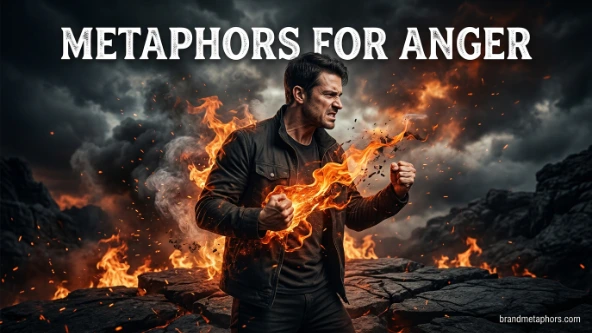
A Quiet Moment Before the Storm: Introduction to Anger Metaphors
It often begins quietly. A tightness in the jaw during a conversation that doesn’t go your way. A sudden heat rising in your chest when someone interrupts you for the third time. Or the way your thoughts start to spiral, sharp and fast, like sparks striking dry wood. Anger rarely arrives alone—it brings a whole landscape of sensations with it.
This is why metaphors for anger matter so much. We don’t just feel anger; we experience it as something physical, almost alive. We say it “boils,” “explodes,” or “smolders” because ordinary words are not enough to capture its force. Metaphors turn invisible emotion into something we can see, understand, and sometimes even manage.
In writing, storytelling, and daily communication, anger metaphors give shape to chaos. They help us explain ourselves when logic fails. More importantly, they help us reflect on our emotional patterns with clarity instead of confusion. Whether you are a writer, a student, or simply someone trying to understand your feelings better, learning how anger is described can also teach you how to handle it more wisely.
Understanding Metaphors for Anger and Emotional Expression
Metaphors for anger are figurative comparisons that describe anger through familiar images like fire, storms, pressure, or animals. Instead of saying “I am angry,” we say “I am boiling with rage” or “I saw red.” These expressions are not literal, but they carry emotional truth.
Anger is complex—it can be sudden or slow, explosive or silent. That is why one metaphor is never enough. Different metaphors highlight different shades of anger: its intensity, its buildup, or its aftermath.
In literature and everyday speech, these metaphors help us:
- Communicate emotional intensity clearly
- Understand psychological states more deeply
- Express feelings in creative and relatable ways
Writers from Shakespeare to modern novelists have relied on anger metaphors to bring characters to life. When Macbeth rages, it is not just anger—it is a storm inside a fractured mind. When modern films show silent fury, it often feels like ice cracking beneath the surface.
Anger metaphors are not just decorative language—they are emotional tools.
Fire and Flames: The Most Powerful Metaphor for Anger
One of the most common metaphors for anger is fire. Anger “burns,” “ignites,” “flames up,” or “blazes out of control.” Fire captures anger’s heat, speed, and danger.
Meaning & Explanation
Fire represents anger because both can start small and grow rapidly. A single spark—an insult, a misunderstanding—can turn into a wildfire of emotion.
Example Sentence
“Her anger flared like a wildfire, consuming every calm thought in its path.”
Storytelling Moment
Imagine a marketplace argument. At first, it is just words. Then one harsh phrase lands wrong. Suddenly, voices rise, hands gesture wildly, and the atmosphere becomes scorching. Bystanders step back as if heat itself is pushing them away.
Alternative Expressions
- Burning with rage
- Smoldering anger
- Fiery temper
- Flaming outburst
Sensory Details
Heat in the face, clenched fists, rapid heartbeat—fire metaphors often match physical sensations of anger.
Creative Prompt
Think of a time you felt angry. Describe it as a type of fire. Was it a slow-burning ember or an uncontrollable blaze?
Storms and Thunder: When Anger Becomes Weather
Anger is often described as a storm—thunder, lightning, dark clouds gathering overhead.
Meaning & Explanation
Storm metaphors emphasize unpredictability and emotional turbulence. Like weather, anger can build quietly before breaking suddenly.
Example Sentence
“His silence was the calm before a storm, and everyone knew the thunder was coming.”
Literary Reference
In many classic novels, storm imagery reflects inner conflict. In Wuthering Heights, emotional chaos mirrors the wild moors, where nature itself feels furious.
Alternative Expressions
- Emotional storm
- Thunderous rage
- Lightning anger
- Tempest of emotions
Sensory Details
Low pressure in the chest, distant rumbling thoughts, sudden bursts of shouting like thunderclaps.
Interactive Exercise
Describe your last disagreement using weather imagery. Was it a drizzle of irritation or a hurricane of emotion?
Pressure Cooker Rage: When Anger Builds Silently

Not all anger explodes immediately. Sometimes it builds slowly, like pressure trapped inside a sealed container.
Meaning & Explanation
This metaphor highlights suppressed emotions. The longer anger is contained, the more dangerous it becomes.
Example Sentence
“She stayed quiet during the meeting, but her anger was a pressure cooker about to burst.”
Real-Life Example
In workplaces or families, people often suppress frustration to avoid conflict. But unspoken resentment accumulates until a small trigger releases everything at once.
Alternative Expressions
- Bottled-up anger
- Ticking time bomb
- Building tension
- Internal pressure
Sensory Details
Tight chest, clenched jaw, forced smiles hiding inner strain.
Bonus Writing Tip
Use this metaphor to create suspense in storytelling. Readers can feel the “inevitable explosion” coming.
Creative Prompt
Write a short paragraph where anger is never directly expressed but always felt building beneath the surface.
Red-Hot Vision: The “Seeing Red” Metaphor Explained
“Seeing red” is a powerful metaphor for anger that connects emotion with perception.
Meaning & Explanation
It suggests that anger distorts judgment. When someone is extremely angry, they may lose clarity or control.
Example Sentence
“He saw red when he heard the accusation and couldn’t think rationally.”
Cultural Note
In many cultures, red symbolizes danger, passion, or aggression. This makes it a universal color for intense emotion.
Alternative Expressions
- Blinded by rage
- Red haze
- Tunnel vision anger
- Emotional blindness
Sensory Details
Pulsing temples, narrowed vision, sound becoming distant or sharp.
Interactive Prompt
Think of a situation where emotions changed how you perceived a moment. Rewrite it as if your “vision changed color.”
Animals of Anger: Wild Metaphors in Human Emotion
Anger is often compared to animals—feral, unpredictable, and instinct-driven.
Meaning & Explanation
Animal metaphors show anger as something primal. It strips away control and reveals raw instinct.
Example Sentence
“His anger roared like a caged lion finally set free.”
Literary Reference
In fables and mythology, anger is often animalistic—dragons breathing fire, wolves snarling, bulls charging.
Alternative Expressions
- Raging beast
- Snarling fury
- Wild temper
- Untamed emotion
Sensory Details
Deep growls in the throat, pacing movements, sharp breathing.
Creative Exercise
Choose an animal and describe how your anger would behave if it became that creature.
Silent Anger: Ice, Stillness, and Emotional Coldness
Not all anger is loud. Some anger is cold, silent, and deeply controlled.
Meaning & Explanation
Ice metaphors represent suppressed or controlled anger that may be more dangerous because it is hidden.
Example Sentence
“Her voice was calm, but her words carried ice that cut deeper than shouting ever could.”
Alternative Expressions
- Cold fury
- Frozen rage
- Silent resentment
- Ice-calm anger
Sensory Details
Numbness, slow breathing, controlled speech with sharp edges.
Bonus Insight
Cold anger is often more strategic. In storytelling, it can signal emotional distance or calculated revenge.
Explosive Anger: When Emotions Detonate Like Bombs
Explosive metaphors describe sudden, uncontrollable bursts of anger.
Meaning & Explanation
This metaphor emphasizes speed and destruction—anger that erupts without warning.
Example Sentence
“His frustration exploded like a bomb after hours of silence.”
Alternative Expressions
- Blow up
- Emotional detonation
- Burst of rage
- Sudden outburst
Sensory Details
Sudden shouting, adrenaline rush, feeling of release followed by exhaustion.
Interactive Prompt
Rewrite a calm conversation turning into an “emotional explosion.” Focus on pacing and intensity.
Using Anger Metaphors in Writing and Daily Life
Anger metaphors are powerful tools for communication. Writers use them to create emotional depth, while individuals use them to better understand their feelings.
In Writing
- Use fire metaphors for intensity
- Use weather metaphors for mood shifts
- Use ice metaphors for hidden emotions
In Social Media
Short posts like “Today felt like walking through a thunderstorm of emotions” are relatable and expressive.
In Daily Life
Instead of saying “I’m angry,” try:
- “I feel like I’m burning inside”
- “I’m at my boiling point”
- “I need to cool down before I speak”
Emotional Benefit
Metaphors help distance you from raw emotion, making it easier to process and communicate calmly.
Why Anger Metaphors Matter in Emotional Understanding
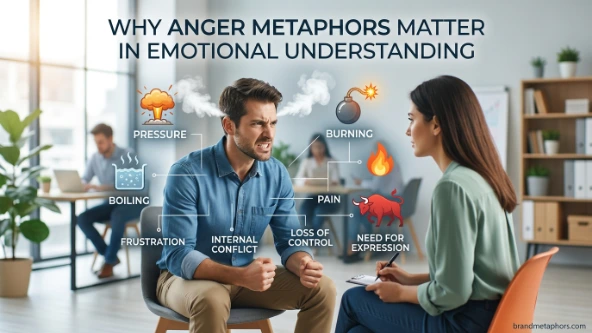
Anger metaphors are more than poetic language—they are psychological mirrors. They help us:
- Recognize emotional patterns
- Express feelings safely
- Understand others with empathy
- Turn overwhelming emotions into structured thought
By naming anger as fire, storm, or ice, we give it form—and what has form can be understood. And what is understood becomes easier to manage.
Interactive Practice: Create Your Own Anger Metaphor
Take a moment and try this exercise:
- Think of a recent moment when you felt angry.
- Choose a category: fire, weather, animal, ice, or explosion.
- Describe your anger using that image.
- Add sensory detail (heat, sound, movement, color).
Example: “My anger was a locked furnace—quiet on the outside, glowing red-hot within.”
Conclusion
Anger is one of the most powerful human emotions—raw, immediate, and deeply physical. But through metaphors, it becomes something we can see, describe, and understand. Whether it is fire burning through reason, a storm shaking inner calm, or ice freezing emotional expression, each metaphor reveals a different truth about how we experience rage.
By learning and using metaphors for anger, we do more than improve language—we improve emotional awareness. We learn to pause, reflect, and express ourselves with clarity instead of chaos. And in that space between feeling and expression, understanding begins.
FAQs About Metaphors for Anger
1. What are common metaphors for anger?
Common metaphors include fire, storms, pressure cookers, explosions, animals, and ice to describe different intensities of anger.
2. Why do we use metaphors for anger?
Metaphors help us express complex emotions in relatable and vivid ways, making feelings easier to understand and communicate.
3. What does “seeing red” mean?
It means becoming so angry that rational thinking is overwhelmed, often leading to impulsive reactions.
4. How can anger metaphors help in writing?
They add emotional depth, imagery, and relatability to characters and scenes, making writing more engaging.
5. Can metaphors help control anger?
Yes, they can help you recognize and reframe emotions, creating distance that allows for calmer reflection and response.