
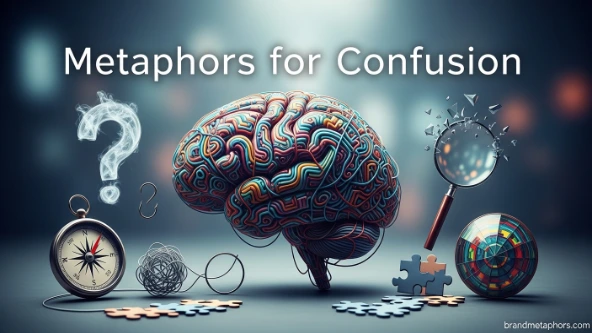
Introduction: When the Mind Feels Like a Maze
Have you ever stood in the middle of a grocery store aisle, forgetting why you came there in the first place? Or stared at a text message so long that the words began to blur into nonsense? Confusion is one of the most universal human experiences. It arrives quietly sometimes, like mist rolling over a field, and other times it crashes in like a storm that rattles every thought loose from its place.
Because confusion is such an emotional and sensory experience, plain language often fails to capture it. That is where metaphors for confusion become powerful. Metaphors turn invisible emotions into vivid images. They help writers paint emotional landscapes, help speakers connect with audiences, and help everyday people explain feelings that are otherwise difficult to describe.
Whether you are a student crafting creative essays, a storyteller shaping emotional scenes, a poet searching for sharper imagery, or simply someone who loves expressive language, learning metaphors for confusion can enrich your vocabulary and deepen your communication.
In this article, we will explore imaginative and meaningful metaphors that describe uncertainty, mental chaos, and emotional disorientation. Along the way, you will discover examples, writing prompts, storytelling techniques, and practical ways to use these metaphors in daily life.
Why Metaphors for Confusion Matter in Writing and Speech
Confusion is abstract. You cannot hold it in your hands or point directly at it. Yet everyone knows how it feels. Metaphors bridge that gap between feeling and understanding.
Instead of saying:
- “I was confused.”
You can say:
- “My thoughts were tangled like headphones in a pocket.”
Suddenly, the emotion becomes visual and relatable.
Metaphors for confusion help:
- Create emotional depth in storytelling
- Make conversations more engaging
- Improve poetry and creative writing
- Add personality to social media captions
- Help readers empathize with characters
- Turn ordinary descriptions into memorable imagery
Writers throughout history have used confusion as symbolic weather, darkness, labyrinths, storms, broken maps, and shifting mirrors. These images stay with readers because they awaken the senses.
Imagine the difference between:
- “He didn’t understand.”
and
- “He wandered through the conversation like a traveler lost in fog.”
One sentence informs. The other immerses.
Confusion as a Fog: The Most Classic Metaphor
One of the most common metaphors for confusion is fog. Fog hides what is ahead. It blurs shapes and removes certainty from the landscape.
Meaning and Symbolism
Fog represents:
- Unclear thinking
- Emotional uncertainty
- Lack of direction
- Mental exhaustion
It works beautifully because confusion often feels exactly like walking through dense mist without seeing where the path leads.
Example Sentences
- “Her mind was wrapped in fog after the shocking news.”
- “I tried to focus, but confusion drifted through my thoughts like morning mist.”
- “The instructions disappeared into a fog of complicated jargon.”
Alternative Expressions
- Brain fog
- A cloudy mind
- Lost in the mist
- Mentally overcast
Emotional Texture
Fog metaphors often feel quiet, lonely, and dreamlike. They are ideal for reflective writing and emotional scenes.
Mini Storytelling Example
A student sits in a silent exam hall. The questions look familiar, yet every answer slips away. Panic rises slowly. Outside the window, real fog covers the parking lot. Inside, the same fog fills his thoughts.
That mirrored imagery creates atmosphere and emotional resonance.
The Maze Metaphor: Lost Inside Your Own Thoughts
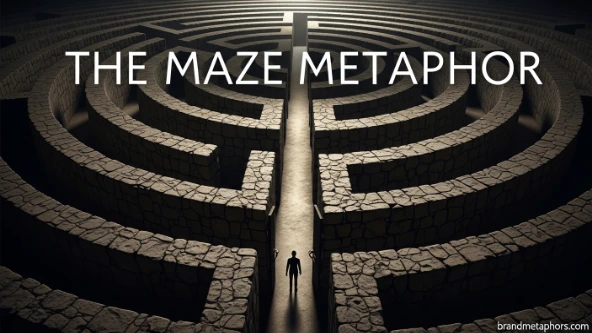
A maze is another powerful metaphor for confusion. Unlike fog, a maze suggests movement without progress.
Why It Works
When confused, people often:
- Overthink
- Circle the same ideas repeatedly
- Search desperately for clarity
- Reach dead ends mentally
A maze perfectly captures that frustration.
Example Sentences
- “Her thoughts became a maze with no exit.”
- “I wandered through a labyrinth of conflicting advice.”
- “The meeting felt like navigating endless corridors without signs.”
Alternative Ways to Express It
- Mental labyrinth
- Endless hallway of questions
- Twisting corridors of doubt
Literary Connection
Greek mythology’s Labyrinth and the Minotaur symbolize fear, uncertainty, and psychological struggle. Modern writers still use maze imagery to describe emotional and intellectual confusion.
Bonus Tip for Writers
Maze metaphors work especially well in:
- Mystery novels
- Psychological fiction
- Academic stress scenes
- Emotional arguments
They add tension and movement to internal conflict.
Metaphors for Confusion Related to Storms and Chaos
Sometimes confusion does not feel quiet at all. Sometimes it feels violent.
Storm metaphors describe overwhelming mental noise and emotional turbulence.
1. A Tornado of Thoughts
Meaning
Thoughts spinning uncontrollably.
Example
- “A tornado of questions tore through her mind.”
Emotional Effect
Urgent, panicked, overwhelming.
2. A Thunderstorm in the Brain
Meaning
Mental conflict mixed with emotional intensity.
Example
- “His brain crackled like a thunderstorm ready to burst.”
Sensory Detail
Lightning, noise, pressure, electricity.
3. Waves Crashing Against the Shore
Meaning
Thoughts repeatedly hitting the mind.
Example
- “Confusion came in waves all afternoon.”
Best Use
Emotional storytelling and introspective writing.
Tangled Thread Metaphors for Mental Confusion
One of the most relatable metaphors for confusion involves tangled objects.
Everyone has experienced untangling wires, necklaces, or strings. That physical frustration mirrors mental confusion perfectly.
Meaning
- Overcomplicated thinking
- Mixed emotions
- Disorganized ideas
Examples
- “My thoughts were tangled like Christmas lights.”
- “The conversation knotted itself into confusion.”
- “Every explanation only tied the problem tighter.”
Alternative Comparisons
- Tangled yarn
- Knotted rope
- Twisted vines
Real-Life Relatability
These metaphors work because they connect abstract thinking with everyday annoyance. Readers instantly understand the feeling.
Creative Writing Prompt
Write about a difficult life decision using only tangled-object imagery. Compare emotions to knots, strings, ropes, or weaving patterns.
Confusion as Darkness and Shadows
Darkness has symbolized uncertainty for centuries. Humans naturally fear what they cannot see clearly.
Why Darkness Works as a Metaphor
Confusion often creates:
- Fear
- Isolation
- Vulnerability
- Hesitation
Darkness intensifies all those emotions.
Example Sentences
- “She stumbled through the darkness of uncertainty.”
- “His understanding flickered like a weak candle.”
- “Questions cast long shadows across her mind.”
Alternative Expressions
- Lost in the dark
- Shadowed thoughts
- A blackout of understanding
Literary and Cultural References
In many novels and films, darkness represents emotional confusion before transformation or discovery. Characters often “find the light” after periods of uncertainty.
Emotional Tone
Darkness metaphors can feel:
- Mysterious
- Poetic
- Dramatic
- Introspective
Funny and Relatable Metaphors for Confusion
Not every confusion metaphor needs to be dramatic. Humor can make confusion feel human and charming.
Here are some lighthearted metaphors.
1. Like a Cat Chasing a Laser Pointer
Meaning
Distracted and unable to focus.
Example
- “My brain bounced around like a cat chasing a laser pointer.”
2. Like Trying to Assemble Furniture Without Instructions
Meaning
Frustrating confusion.
Example
- “The math homework felt like assembling furniture with missing screws.”
3. Like a Browser with 100 Tabs Open

Meaning
Mental overload.
Example
- “My brain was a browser with too many tabs crashing at once.”
Why These Work
Modern, humorous metaphors feel relatable and conversational. They are excellent for:
- Social media captions
- Blogs
- Casual storytelling
- Dialogue writing
Nature Metaphors for Confusion
Nature provides endless imagery for emotional states.
Drifting in the Ocean
Confusion can feel directionless.
- “I drifted through the conversation like a boat without a compass.”
Sandstorm Imagery
A sandstorm blinds and disorients.
- “Questions swirled around him like desert sand.”
Falling Leaves
Confusion sometimes feels scattered and fragile.
- “Her thoughts scattered like leaves in autumn wind.”
Cracked Ice
Uncertainty can feel unstable.
- “He stepped through the discussion like someone walking on thin ice.”
Nature metaphors often feel poetic and cinematic.
How to Create Your Own Metaphors for Confusion
You do not need to rely only on existing metaphors. You can create original ones.
Here is a simple process.
Step 1: Identify the Feeling
Ask yourself:
- Does the confusion feel heavy?
- Fast?
- Scary?
- Embarrassing?
- Endless?
Step 2: Match It to a Physical Experience
Think of something sensory that feels similar.
Examples:
- Traffic jam
- Broken compass
- Flickering light
- Puzzle missing pieces
Step 3: Build the Comparison
Formula:
Confusion feels like + sensory experience
Examples:
- “Her thoughts were like birds trapped in a glass room.”
- “My memory became a bookshelf after an earthquake.”
Bonus Creativity Tip
Use unusual comparisons for stronger originality. Readers remember fresh imagery.
Using Confusion Metaphors in Creative Writing
Strong metaphors transform ordinary writing into emotional storytelling.
Before
- “He felt confused.”
After
- “He stood mentally ankle-deep in quicksand, every answer sinking before he could grasp it.”
The second version creates tension and imagery.
Tips for Writers
- Use sensory details
- Avoid cliché overload
- Match the metaphor to tone
- Keep comparisons emotionally consistent
Example in Fiction
“The detective pinned photographs across the wall, but the clues twisted together like vines choking a forgotten garden.”
That sentence creates mystery and emotional texture simultaneously.
Best Genres for Confusion Metaphors
- Psychological thrillers
- Poetry
- Literary fiction
- Fantasy
- Personal essays
Interactive Exercises to Practice Metaphors for Confusion
Practicing metaphors improves creative thinking.
Exercise 1: Finish the Sentence
Complete these creatively:
- “My thoughts were like…”
- “The meeting became a…”
- “Her confusion spread through the room like…”
Try avoiding common answers.
Exercise 2: Sensory Challenge
Describe confusion using:
- A smell
- A texture
- A sound
- A weather condition
Example:
- “Confusion sounded like radios playing different songs at once.”
Exercise 3: Rewrite Plain Sentences
Turn this:
- “I didn’t understand the lesson.”
Into something vivid:
- “The lesson floated above my head like smoke slipping through fingers.”
Exercise 4: Social Media Caption Practice
Create poetic captions using confusion metaphors.
Examples:
- “Currently navigating a maze built from overthinking.”
- “Brain fog thicker than winter mornings.”
These exercises sharpen both creativity and emotional expression.
Bonus Tips for Using Metaphors in Daily Life and Social Media
Metaphors are not only for novels and poetry. They work beautifully in everyday communication.
In Social Media
Metaphors make captions memorable.
Examples:
- “My thoughts are buffering.”
- “Today feels like walking through static.”
- “Mentally stuck in a traffic jam.”
In Conversations
Metaphors help others empathize quickly.
Instead of:
- “I’m stressed.”
Try:
- “My brain feels like a crowded train station.”
In Journaling
Metaphors uncover emotional nuance.
Ask yourself:
- If my confusion were weather, what would it be?
- If it were a place, where would I be standing?
In Public Speaking
Metaphors make speeches more engaging and relatable.
People remember imagery more than abstract explanation.
Common Mistakes When Using Metaphors for Confusion
Even beautiful metaphors can lose impact if overused.
1. Mixing Too Many Images
Avoid:
- “My brain was a foggy tornado maze.”
Choose one dominant image.
2. Using Overly Familiar Clichés
Examples like “lost at sea” can feel repetitive unless refreshed creatively.
Instead try:
- “Like rowing through invisible currents.”
3. Forcing Comparisons
A metaphor should feel natural emotionally.
If it sounds confusing itself, simplify it.
4. Overloading Every Sentence
Too many metaphors can exhaust readers. Balance imagery with clarity.
Strong writing breathes.
The Emotional Power Behind Confusion Metaphors
Confusion is more than misunderstanding. Often it hides deeper emotions:
- Fear
- Grief
- Change
- Curiosity
- Self-doubt
Metaphors help reveal those hidden layers.
A teenager unsure about the future may describe life as “a map with erased roads.” A grieving person may feel “trapped in thick underwater silence.” These comparisons communicate emotional truth more deeply than literal language.
That is why metaphors matter. They turn private feelings into shared understanding.
They help people feel seen.
And sometimes, naming confusion beautifully makes it slightly easier to bear.
FAQs About Metaphors for Confusion
1. What is a metaphor for confusion?
A metaphor for confusion compares confusion to another image or experience, such as fog, mazes, storms, or tangled strings, to make the feeling more vivid and relatable.
2. Why are metaphors useful in writing?
Metaphors create emotional depth, improve imagery, and help readers connect more strongly with ideas and characters.
3. What are some common metaphors for confusion?
Popular examples include:
- Lost in a maze
- Brain fog
- A tangled web
- Walking in darkness
- A storm of thoughts
4. Can metaphors for confusion be funny?
Yes. Humorous metaphors like “a browser with too many tabs open” or “assembling furniture without instructions” make confusion relatable and entertaining.
5. How can I create original confusion metaphors?
Think about how confusion feels emotionally, then compare it to a sensory or physical experience such as weather, movement, objects, or sounds.
Conclusion
Confusion is part of being human. Everyone experiences moments when thoughts blur, emotions knot themselves together, or certainty disappears into shadow. Yet language gives us a way to navigate those moments.
Metaphors for confusion transform invisible mental struggles into vivid scenes readers can see, hear, and feel. A foggy road, a twisting maze, a crashing storm, tangled threads, flickering lights — each metaphor captures a different shade of uncertainty.
For writers, these comparisons create emotional atmosphere and unforgettable imagery. For everyday communication, they add warmth, humor, and honesty. And for readers, they offer recognition: the comforting realization that others have wandered through similar mental landscapes.
The next time confusion visits, try describing it creatively instead of resisting it. You may discover that language itself becomes a lantern in the fog.