
Introduction (The Quiet Power of What We Cannot See)
There is a moment just after sunset when the world seems to pause. Shadows stretch across the ground, familiar shapes begin to blur, and the sky slowly loses its color as if it is being gently erased. In that in-between space, darkness does not arrive suddenly—it gathers, breathes, and settles. For many, it brings discomfort or fear. For others, it brings calm, reflection, or even inspiration. But one thing is certain: darkness is never just the absence of light. It is a powerful symbol woven into language, literature, and everyday speech.
Metaphors for darkness help us understand emotions, experiences, and ideas that are difficult to explain directly. We use darkness to describe confusion, grief, uncertainty, or even hidden strength and mystery. It becomes a language for what we feel but cannot always express.
In real life, these metaphors shape how we interpret challenges, personal struggles, and moments of change. By exploring them deeply, we uncover not only how we speak about darkness—but how we understand ourselves within it.
The Nature of Darkness as a Metaphor
Darkness is one of the oldest and most universal metaphors in human expression. At its simplest level, it represents the absence of light, but symbolically it goes far beyond that. It becomes a space where knowledge is unclear, emotions are intense, and direction feels uncertain.
In everyday life, people often say they are “in the dark” when they lack information. A student confused by a lesson, or a person waiting for unclear news, both experience this metaphorical darkness. It reflects not just ignorance but also vulnerability—the feeling of being without guidance.
Emotional Interpretation
Darkness also carries emotional weight. It can symbolize sadness, loneliness, or fear of the unknown. When someone says they are “surrounded by darkness,” they may be describing emotional pain rather than physical surroundings.
Symbol of Possibility
Interestingly, darkness is not always negative. It can also represent rest, secrecy, and potential. Just as seeds grow underground in darkness, human ideas often form in unseen mental spaces before becoming clear.
Darkness as Confusion and Uncertainty
One of the most common metaphorical uses of darkness is to represent confusion. When people say “everything went dark,” they are often describing moments when clarity disappears and decisions feel impossible.
In real-life situations, this might happen during major life changes—such as choosing a career path, dealing with unexpected loss, or facing uncertain futures. The “darkness” here is not physical but mental and emotional.
H3: Walking Without Direction
Imagine walking through a forest at night without a flashlight. Each step is uncertain, and every sound feels amplified. This reflects how uncertainty feels in life decisions—each choice carries risk because the outcome cannot be seen clearly.
H3: The Mental Fog
Darkness is also described as “fog” in the mind. Thoughts become tangled, and clarity feels distant. This metaphor helps explain anxiety or overthinking in relatable terms.
Ultimately, this type of darkness teaches patience. It reminds us that clarity often comes only after time, reflection, and experience.
Darkness as Fear and the Unknown
Fear is one of the strongest emotional connections to darkness. Throughout history, humans have feared the dark because it hides threats and removes visual certainty. This primal response has evolved into powerful metaphors.
When people describe fear as “a dark shadow,” they are expressing how it follows them silently, even when no danger is visible.
H3: The Hidden Threat
Darkness symbolizes what cannot be seen but might exist. In storytelling, it often represents danger lurking just out of sight. This makes it a powerful way to describe anxiety or emotional fear.
H3: Fear of the Future
Many people experience “darkness ahead” when they feel uncertain about the future. This does not mean the future is bad—it means it is unknown.
This metaphor helps people articulate deep emotional fear in a simple and relatable way.
Darkness as Emotional Pain and Grief
Darkness is frequently used to express emotional suffering. Phrases like “dark times” or “dark place” describe periods of sadness, grief, or depression.
These metaphors allow people to communicate complex emotional experiences that are otherwise difficult to express.
H3: The Weight of Silence
Grief often feels like silence wrapped in darkness. The world continues, but internally everything feels paused. This metaphor captures emotional isolation.
H3: Healing Within Darkness
Interestingly, darkness is also part of healing. Just as wounds heal out of sight, emotional recovery often happens quietly. This shows that darkness is not only suffering—it can also be transformation.
Darkness as Mystery and Curiosity
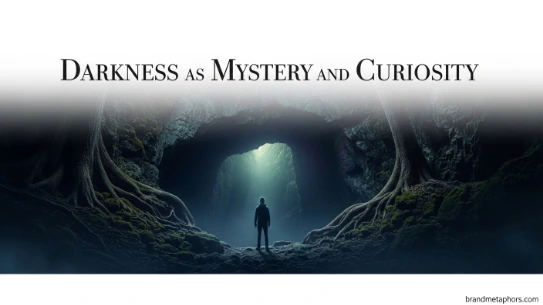
Not all darkness is negative. It often represents mystery, imagination, and curiosity. In literature and storytelling, darkness creates intrigue and depth.
A mysterious character or situation is often described as “dark,” meaning it is not fully understood. This creates emotional and intellectual engagement.
H3: The Beauty of the Unknown
Human curiosity is naturally drawn to what is not visible. Darkness invites exploration and imagination. It allows stories to unfold gradually, keeping readers engaged.
H3: Hidden Depths
People are often described as having “dark depths,” meaning they have complex inner lives. This metaphor acknowledges that not everything about a person is immediately visible or understandable.
Darkness in Literature and Storytelling
Writers have long used darkness as a symbolic tool to represent conflict, transformation, and emotional depth. It is rarely just a setting—it is a character in itself.
H3: Symbol of Conflict
In many stories, darkness represents struggle between good and evil, knowledge and ignorance, or hope and despair. It creates tension that drives narratives forward.
H3: Transformation Through Darkness
Characters often go through “dark chapters” before emerging stronger. This metaphor reflects personal growth through hardship.
Darkness as Inner Reflection
Darkness is also deeply connected to introspection. When external distractions fade, internal thoughts become louder.
People often find clarity in quiet, dark environments where they are forced to confront their own thoughts.
H3: The Stillness of Night
Nighttime, often associated with darkness, provides emotional quiet. It allows reflection without interruption.
H3: Facing the Self
Inner darkness can also represent confronting fears, regrets, or hidden emotions. This process, though uncomfortable, often leads to personal growth.
Darkness as Protection and Safety
Surprisingly, darkness can also represent safety. It provides concealment and rest, allowing recovery from overstimulation and stress.
H3: Rest and Recovery
Sleep occurs in darkness, symbolizing restoration. The absence of light allows the body and mind to reset.
H3: Emotional Shelter
Sometimes people retreat into “darkness” emotionally to protect themselves from external pressures. This metaphor highlights the need for boundaries and rest.
Misunderstandings About Darkness Metaphors
A common misunderstanding is that darkness always symbolizes negativity. In reality, its meaning depends on context.
Darkness can represent fear, but also peace. It can mean confusion, but also potential. Reducing it to only negative meanings limits its richness.
H3: One Symbol, Many Meanings
Language evolves through context. A “dark idea” in one context may mean harmful, while in another it may mean complex or unexplored.
H3: Balance in Interpretation
Understanding metaphors requires emotional awareness. Darkness is not something to reject—it is something to interpret.
Darkness as Growth and Transformation
Many powerful transformations begin in metaphorical darkness. It is in uncertain, unseen moments that growth often begins.
Just as plants grow in soil before breaking into light, human development often begins in invisible emotional spaces.
H3: Silent Development
Growth is not always visible. People often change internally before external progress becomes noticeable.
H3: Emerging Into Light
Darkness is temporary in this metaphor. It represents a phase, not a destination.
Cultural Perspectives on Darkness
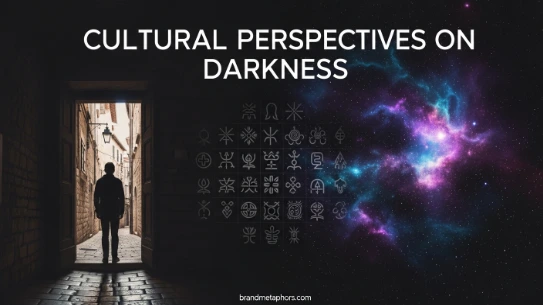
Different cultures interpret darkness in unique ways. While some view it with caution, others see it as sacred or meaningful.
In many traditions, darkness represents creation, beginnings, or spiritual depth rather than fear alone.
H3: Dual Symbolism
Darkness often exists alongside light as a balance rather than opposition. Together, they create meaning.
H3: Ritual and Meaning
In some cultures, nighttime rituals emphasize reflection, silence, and connection to deeper understanding.
Practical Lessons from Darkness Metaphors
Metaphors for darkness are not just literary tools—they offer life lessons. They help people understand emotional complexity and resilience.
Darkness teaches patience during uncertainty, courage during fear, and reflection during emotional pain.
It also reminds us that clarity often follows confusion, and growth often follows difficulty.
By recognizing these patterns, individuals can approach challenges with greater emotional intelligence and acceptance.
Conclusion
Darkness, as a metaphor, is far more than absence or fear. It is a rich symbolic space that represents confusion, grief, mystery, protection, and transformation. Through it, we learn how humans process uncertainty and emotional depth in ways language alone cannot fully capture.
From moments of fear to periods of growth, darkness shapes how we understand change and inner experience. It is not an ending but often a beginning disguised in silence.
When we view darkness not as something to avoid but as something to understand, we gain a more balanced perspective on life’s complexities. In that understanding, even the darkest moments carry meaning, guiding us quietly toward clarity.
FAQs
What does darkness symbolize in simple terms?
Darkness usually symbolizes the unknown, confusion, fear, or emotional struggle, but it can also mean rest or mystery.
Why do people use darkness as a metaphor?
People use it because it helps describe emotions and experiences that are difficult to explain directly.
Is darkness always a negative symbol?
No, darkness can also represent peace, reflection, growth, and hidden potential.
What does “feeling in the dark” mean?
It means feeling confused, uninformed, or uncertain about a situation.
How is darkness used in storytelling?
It is often used to show conflict, mystery, emotional struggle, or transformation in characters.
Can darkness represent personal growth?
Yes, it can symbolize internal change and development during difficult or unseen phases.
Why is darkness important in human expression?
It helps people express complex emotions and understand experiences like fear, grief, and uncertainty more clearly.