
Introduction
Picture a crowded courtroom where silence hangs heavy in the air. A judge lifts a small wooden gavel, pauses for a moment, and brings it down with a firm strike. In that instant, something more than a decision is delivered—it feels as though balance has been restored, or perhaps disturbed. But what is justice, really? Is it the sound of that gavel, the weight of the law, or something deeper that lives within human conscience?
Justice is one of the most essential and complex ideas in human life. We talk about it in courts, in conversations, and even in our private thoughts when we feel wronged or vindicated. Yet, because it is abstract, we often rely on metaphors to make sense of it. Metaphors for justice help us visualize fairness, morality, and accountability in ways that feel tangible and relatable. They shape how we understand right and wrong, influence our decisions, and guide societies. This article explores these metaphors in depth—unpacking their meanings, emotional layers, and practical lessons for everyday life.
Justice as a Scale: The Balance of Fairness
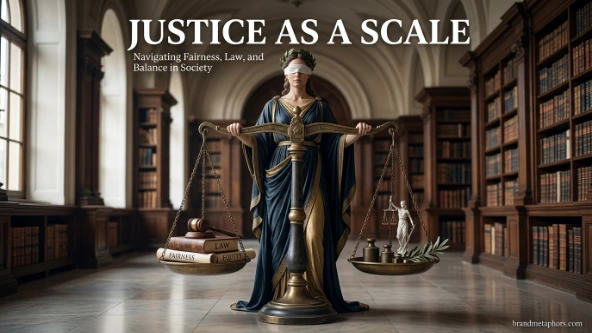
One of the most widely recognized metaphors for justice is the scale. It represents the idea that fairness requires balance—equal consideration of all sides before reaching a decision. Imagine placing two arguments on opposite sides of a scale. Each fact, emotion, and perspective adds weight. Justice emerges when the scale settles evenly.
This metaphor emphasizes neutrality. It reminds us that justice should not lean toward bias, favoritism, or personal interest. In everyday life, this could mean listening to both sides of a disagreement before forming an opinion, rather than jumping to conclusions.
The Emotional Weight of Decisions
Sometimes, the scale feels uneven because emotions add invisible weight. Anger, sympathy, or prejudice can tip the balance without us realizing it. The metaphor teaches us to recognize these influences and strive for fairness despite them.
Real-Life Reflection
Think about a workplace conflict. If a manager listens only to one employee, the scale tips unfairly. But when both voices are heard, justice has a chance to emerge. The metaphor encourages patience, careful judgment, and awareness of bias.
Justice as a Blindfold: Impartiality and Equality
The image of justice wearing a blindfold suggests that fairness should be free from external influences—status, wealth, appearance, or identity. It symbolizes impartiality, where decisions are made based solely on truth and principles.
In real life, however, maintaining this blindfold can be challenging. People naturally notice differences and form judgments. The metaphor reminds us to consciously “close our eyes” to irrelevant factors and focus on what truly matters.
When the Blindfold Slips
There are moments when bias creeps in. For instance, favoring a friend in an argument or judging someone based on their background. These situations highlight how fragile impartiality can be.
Practical Lesson
Practicing this metaphor means asking yourself: Would I make the same decision if the roles were reversed? This simple question helps restore fairness and aligns actions with true justice.
Justice as a Sword: Strength and Enforcement
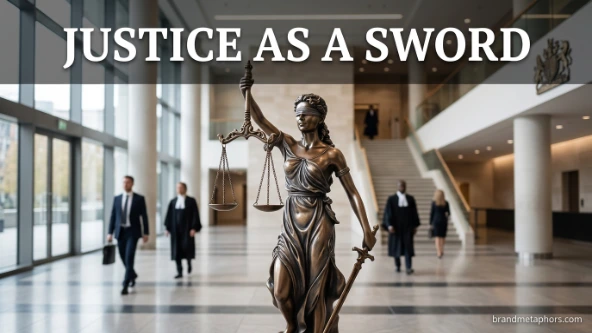
While scales represent balance, the sword symbolizes action. Justice is not only about deciding what is right—it is also about enforcing it. The sword reflects authority, protection, and the power to uphold laws.
This metaphor reveals a more forceful side of justice. Sometimes fairness requires difficult decisions and firm consequences. Without enforcement, justice becomes merely an idea rather than a reality.
The Double-Edged Nature
A sword can protect, but it can also harm if misused. Similarly, justice can become harsh or oppressive when applied without wisdom or compassion.
Everyday Example
Consider rules in a classroom. If a teacher never enforces them, chaos follows. But if rules are enforced too strictly, students may feel controlled. Justice lies in balancing firmness with understanding.
Justice as a Journey: A Continuous Process
Justice is often imagined as a destination, but it can also be seen as a journey—ongoing, evolving, and sometimes uncertain. This metaphor highlights that fairness is not always immediate or perfect.
Life presents situations where justice unfolds slowly. Social change, legal reforms, and personal growth all take time. The journey metaphor teaches patience and persistence.
Steps Along the Path
Each decision, action, and reflection becomes a step forward. Even small acts of fairness contribute to the larger journey.
Personal Connection
Think of resolving a long-standing conflict with a friend. It may take multiple conversations, misunderstandings, and efforts to rebuild trust. Justice, in this sense, is not a single moment but a process of healing and understanding.
Justice as Light: Revealing Truth
Light is a powerful metaphor for justice because it represents clarity and truth. Just as light removes darkness, justice uncovers hidden facts and exposes wrongdoing.
This metaphor emphasizes transparency. In both personal and societal contexts, justice thrives when truth is visible and accessible.
Shadows and Deception
Without light, shadows distort reality. Lies, secrecy, and misinformation can obscure justice. The metaphor encourages honesty and openness.
Real-Life Application
In relationships, being truthful—even when it is uncomfortable—helps resolve conflicts fairly. Light, in this sense, becomes a guide toward understanding and resolution.
Justice as a Mirror: Reflection and Accountability
A mirror metaphor suggests that justice reflects our actions back to us. It implies accountability—what we do eventually returns to us in some form.
This perspective shifts justice from an external system to an internal one. It invites self-reflection and personal responsibility.
Looking Within
When conflicts arise, it is easy to blame others. The mirror metaphor challenges us to ask: What role did I play? This can lead to growth and better decisions.
Everyday Insight
For example, if someone feels consistently misunderstood, reflecting on communication habits may reveal areas for improvement. Justice, here, becomes self-awareness.
Justice as a Foundation: Building Society
Justice can also be seen as the foundation upon which societies are built. Like a strong base supports a building, fairness supports trust, stability, and cooperation.
Without justice, relationships and communities weaken. This metaphor highlights the importance of fairness in maintaining social harmony.
Cracks in the Foundation
When injustice occurs—corruption, inequality, or discrimination—it creates cracks that can destabilize entire systems.
Practical Lesson
Supporting justice in small ways, such as treating others fairly or standing up against wrongdoing, helps strengthen this foundation.
Justice as a Compass: Guiding Moral Direction
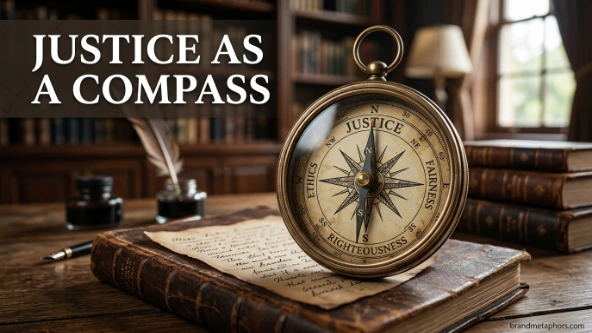
A compass metaphor portrays justice as a guide that points toward what is right. It helps individuals navigate complex situations where the correct path is not always clear.
This metaphor emphasizes moral direction rather than strict rules. It encourages thoughtful decision-making based on values.
Losing Direction
Sometimes, people ignore their moral compass due to pressure, fear, or convenience. This can lead to choices that feel wrong in hindsight.
Daily Application
When faced with a tough decision, asking “What feels right?” can help align actions with justice. The compass metaphor encourages integrity.
Justice as a Bridge: Connecting Differences
Justice can act as a bridge between conflicting perspectives, cultures, or individuals. It allows understanding to flow where division once existed.
This metaphor highlights the role of fairness in resolving conflicts and building connections.
Crossing the Bridge
Reaching justice often requires empathy—understanding another person’s experience. This can transform disagreement into mutual respect.
Real-Life Scenario
In community disputes, open dialogue can bridge gaps and lead to fair solutions. Justice becomes a shared effort rather than a battle.
Justice as a Seed: Growth Over Time
A seed metaphor suggests that justice grows gradually. Small acts of fairness can develop into significant change over time.
This perspective emphasizes hope and patience. Even when justice seems absent, efforts can lead to future progress.
Nurturing the Seed
Like a plant, justice requires care—attention, effort, and persistence.
Personal Insight
Acts like honesty, kindness, and standing up for others may seem small, but they contribute to a larger culture of fairness.
Justice as a Shield: Protection and Safety
Justice can also be seen as a shield that protects individuals from harm and wrongdoing. It represents security and the assurance that rights will be defended.
This metaphor emphasizes the protective role of laws and ethical systems.
When the Shield Fails
If justice is weak or absent, people may feel vulnerable or unsafe. This highlights the importance of strong and fair systems.
Everyday Meaning
Supporting others, speaking out against injustice, and respecting boundaries all contribute to this protective shield.
Justice as a Flame: Passion for Fairness
A flame metaphor captures the emotional intensity behind justice. It represents passion, determination, and the drive to correct wrongs.
This metaphor shows that justice is not only logical but also deeply emotional.
Controlling the Fire
While passion can inspire action, it must be guided to avoid destructive outcomes.
Real-Life Reflection
Advocating for fairness, whether in small or large ways, often begins with a spark of concern that grows into meaningful action.
Justice as a Puzzle: Complexity and Understanding
Justice is rarely simple. The puzzle metaphor reflects its complexity—multiple pieces must fit together to form a complete picture.
This includes facts, perspectives, emotions, and context.
Missing Pieces
Incomplete information can lead to unfair judgments. The metaphor encourages patience and thorough understanding.
Practical Insight
Before forming opinions, gathering all relevant details helps create a clearer, fairer outcome.
Justice as a Teacher: Lessons Through Experience
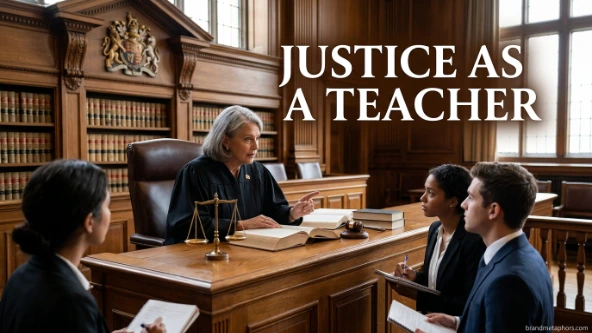
Justice can also be viewed as a teacher, offering lessons through consequences and outcomes. It helps individuals learn from mistakes and grow.
Learning Through Consequences
When actions have fair consequences, people understand responsibility.
Everyday Application
Mistakes, when handled fairly, become opportunities for growth rather than punishment alone.
Conclusion
Metaphors for justice transform an abstract concept into something vivid, relatable, and deeply human. Whether it appears as a balanced scale, a guiding compass, a protective shield, or a growing seed, each image reveals a different dimension of fairness. Together, they remind us that justice is not a single idea but a living process—shaped by actions, intentions, and understanding. In everyday life, these metaphors encourage us to listen carefully, act thoughtfully, and reflect honestly. Justice is not confined to courtrooms; it exists in conversations, decisions, and relationships. By embracing these perspectives, we move closer to creating a world where fairness is not just imagined, but actively practiced.
FAQs
What are metaphors for justice?
Metaphors for justice are symbolic comparisons—like scales, light, or a compass—that help explain the abstract concept of fairness in a more understandable way.
Why are metaphors important in understanding justice?
They make complex ideas easier to grasp by connecting them to familiar images and experiences, helping people relate to justice on a deeper level.
What is the most common metaphor for justice?
The scale is the most common metaphor, representing balance and fairness in decision-making.
Can justice be both fair and harsh?
Yes, justice can involve strict consequences, but it should always aim to remain balanced and reasonable.
How can I apply justice metaphors in daily life?
You can use them as guides—like thinking of justice as a compass when making ethical decisions or as a mirror when reflecting on your actions.
Is justice always achievable?
Justice is often a process rather than a perfect outcome. While it may not always be fully achieved, efforts toward fairness still matter.
What does justice as a journey mean?
It means that fairness develops over time through continuous actions, learning, and improvement rather than being a single final result.