
Introduction
Imagine trying to explain the color blue to someone who has never seen the sky. You reach for comparisons—“it’s like the calm of the ocean,” or “the feeling of cool air on a quiet morning.” Without realizing it, you’ve stepped into the world of metaphor.
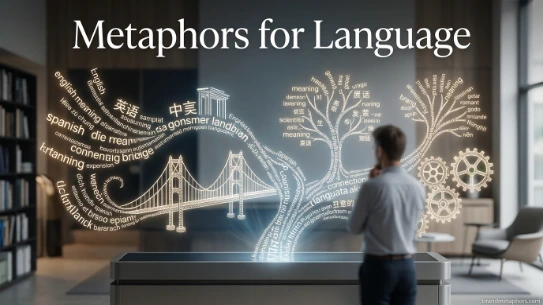
Language, at its core, isn’t just a tool for communication—it’s a bridge between experiences, thoughts, and emotions. And metaphors are the beams that hold that bridge together.
Metaphors for language help us understand not just what words mean, but how they shape our perception of reality.
Whether we describe language as a “tool,” a “living organism,” or even a “map,” each metaphor reveals something deeper about how we think, learn, and connect. These comparisons aren’t just poetic—they influence how we approach communication, learning, and even relationships.
In this article, we’ll explore metaphors for language from multiple angles—practical, emotional, philosophical, and everyday. Along the way, you’ll discover how these metaphors can reshape your understanding of language and help you use it more effectively in your own life.
Language as a Bridge
Language is often described as a bridge connecting one mind to another. Without it, thoughts remain isolated, like islands in a vast ocean.
When you speak, write, or even gesture, you’re building that bridge piece by piece. A well-constructed sentence carries meaning smoothly, while a poorly formed one can collapse under confusion.
Real-Life Insight
Think about a time when you struggled to explain something important. Perhaps your words didn’t quite capture your thoughts, and the other person misunderstood. In that moment, the bridge was incomplete.
Practical Lesson
To strengthen this bridge:
- Use clear and simple language.
- Check for understanding.
- Adapt your words to your audience.
Sppech as a bridge reminds us that communication isn’t just about expression—it’s about connection.
Language as a Living Organism
Language grows, evolves, and adapts like a living organism. New words are born, old ones fade, and meanings shift over time.
Consider how slang changes from generation to generation. Words that once sounded strange become part of everyday speech.
Mini Story
A grandfather might hear his grandchild say, “That’s lit,” and feel confused. Yet decades ago, his own expressions likely puzzled his elders.
Deeper Meaning
This metaphor highlights that language is not fixed. It reflects culture, time, and human creativity.
Practical Takeaway
Stay open to change. Instead of resisting new forms of language, try to understand what they represent. It keeps your communication fresh and relevant.
Language as a Tool
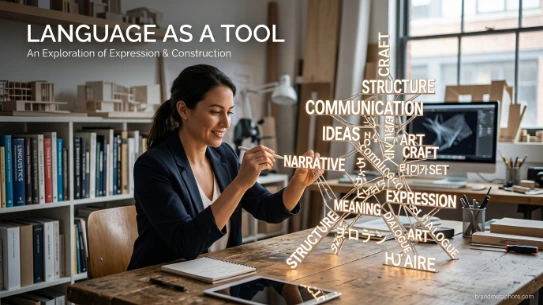
Language is one of the most powerful tools humans possess. Like any tool, its effectiveness depends on how skillfully it is used.
A hammer can build a house—or cause harm. Similarly, words can inspire, inform, or hurt.
Everyday Example
A kind word can lift someone’s mood instantly, while a careless remark can leave a lasting impact.
Practical Lessons
- Choose words intentionally.
- Understand context.
- Practice clarity and precision.
Seeing language as a tool encourages responsibility. It reminds us that words have consequences.
Language as a Map
Language can be seen as a map that helps us navigate reality. It doesn’t represent reality perfectly—it simplifies it.
Just as a map highlights certain features while leaving others out, language selects what to describe and what to ignore.
Insight
Two people can describe the same event differently, focusing on different details. Their “maps” are not identical.
Application
When communicating:
- Recognize that your perspective is only one version.
- Be open to other interpretations.
This metaphor teaches humility. Sppech guides us, but it doesn’t define absolute truth.
Language as a Mirror
Language reflects our thoughts, beliefs, and emotions. The words we choose often reveal more than we intend.
Mini Scenario
Someone who frequently uses negative language may unknowingly reflect a pessimistic mindset, while another who speaks with optimism reveals a different inner world.
Deeper Insight
Language doesn’t just express identity—it shapes it. The way you talk can influence how you think.
Practical Use
- Pay attention to your internal dialogue.
- Use positive, constructive language.
Sppech as a mirror invites self-awareness and growth.
Language as Music
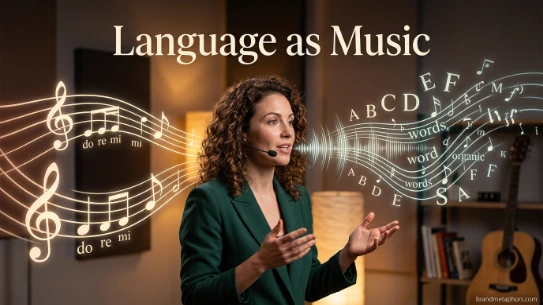
Language has rhythm, tone, and flow—much like music. The way something is said can be just as important as what is said.
Example
A sentence spoken with warmth feels completely different from the same sentence delivered coldly.
Emotional Connection
Poetry and storytelling rely heavily on this musical quality. They move us not just through meaning, but through sound.
Practical Tips
- Vary your tone and pacing.
- Use pauses effectively.
- Pay attention to how your words sound.
This metaphor reminds us that communication is an experience, not just an exchange of information.
Language as a Container
Words act as containers that hold meaning. However, not all containers are the same size or shape.
Some words carry complex emotions, while others hold only simple ideas.
Insight
The word “home” can mean different things to different people—comfort, belonging, or even loss.
Application
Be mindful that:
- Words may carry different meanings for others.
- Misunderstandings often arise from these differences.
Choosing the right “container” can make communication clearer and more meaningful.
Language as a Lens
Language shapes how we see the world, much like a lens shapes what we focus on.
Example
Describing a challenge as a “problem” creates a different mindset than calling it an “opportunity.”
Deeper Understanding
The words we use influence perception, which in turn affects behavior.
Practical Lesson
Shift your language to shift your mindset:
- Replace limiting words with empowering ones.
- Frame situations positively when possible.
Sppech as a lens highlights its power to transform perspective.
Language as a Game

Language can also be viewed as a game with rules, strategies, and creativity.
Grammar provides structure, but within those rules, there’s room for play.
Mini Story
Children often invent words or play with sounds, showing how naturally language invites creativity.
Insight
Even adults engage in this “game” through humor, puns, and storytelling.
Practical Takeaway
- Don’t be afraid to experiment with language.
- Use creativity to make communication engaging.
This metaphor encourages flexibility and enjoyment in how we use words.
Language as a Journey
Communication is not a single moment—it’s a journey from one idea to another.
Scenario
When explaining a complex concept, you guide someone step by step, helping them reach understanding.
Insight
Rushing the journey can lead to confusion, while thoughtful pacing creates clarity.
Practical Advice
- Break ideas into steps.
- Use examples to guide understanding.
Seeing language as a journey emphasizes patience and structure.
Language as a Building
Language constructs meaning like bricks form a building. Each word contributes to the overall structure.
Example
A well-written paragraph feels solid and coherent, while a poorly structured one feels unstable.
Deeper Meaning
Strong communication requires:
- Clear foundations (ideas)
- Solid connections (grammar)
- Thoughtful design (organization)
Practical Lesson
Take time to build your sentences carefully. Strong foundations lead to strong understanding.
Language as Energy

Words carry energy. They can uplift, motivate, or drain.
Real-Life Insight
Think of a motivational speech that inspired you—or a harsh comment that lingered long after it was spoken.
Emotional Impact
Language doesn’t just inform—it affects how people feel.
Practical Use
- Speak with intention.
- Use encouraging language where possible.
This metaphor reminds us that words have emotional power.
Language as a Code
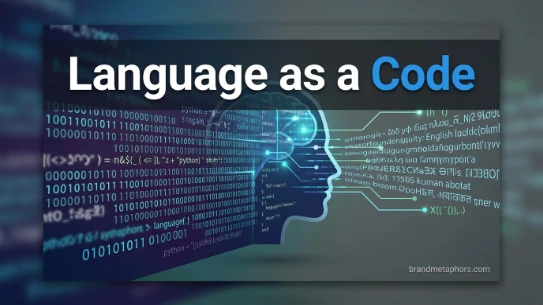
Language functions like a code that must be understood to be effective.
Example
Technical jargon can feel like a secret language to outsiders.
Insight
Miscommunication often happens when people use different “codes.”
Practical Application
- Adjust your language to your audience.
- Avoid unnecessary complexity.
Breaking the code makes communication accessible and inclusive.
Language as a Story
At its heart, language is a tool for storytelling. Every conversation carries a narrative.
Mini Story
When you describe your day, you’re not listing events—you’re telling a story shaped by your perspective.
Deeper Insight
Stories make information memorable and relatable.
Practical Lesson
- Use storytelling to explain ideas.
- Add context and emotion to your words.
Language as a story connects people on a deeper level.
Common Misunderstandings About Language Metaphors
While metaphors enrich understanding, they can also mislead if taken too literally.
Key Misconceptions
- Language is fixed: In reality, it constantly evolves.
- Words have one meaning: Meanings often depend on context.
- Communication is simple: It’s more complex than it appears.
Insight
No single metaphor fully captures language. Each offers a partial view.
Practical Advice
Use metaphors as guides—not absolute truths. Combining perspectives leads to deeper understanding.
Conclusion
Language is far more than a system of words—it’s a dynamic, multifaceted force that shapes how we think, connect, and experience the world. Through metaphors, we gain new ways of seeing its complexity: as a bridge that connects minds, a tool that shapes outcomes, a mirror reflecting identity, and even a journey guiding understanding.
Each metaphor reveals a different truth about language, offering insights that can transform how we communicate in everyday life. By becoming more aware of these perspectives, we can choose our words with greater intention, adapt to different situations, and connect more deeply with others.
Ultimately, metaphors for language remind us that communication is not just about speaking—it’s about understanding, empathy, and shared meaning. And when used thoughtfully, language becomes not just a tool, but an art.