

Picture this: a quiet room suddenly bursts into sound—not just noise, but a ripple of warmth that spreads from one person to another. Someone chuckles, another snorts, and within seconds, laughter takes over like a joyful wave crashing onto the shore.
Have you ever wondered why laughter feels so powerful, so contagious, and sometimes even indescribable? Words often fall short when we try to explain it directly. That’s where metaphors step in.
Metaphors for laughing give shape to something invisible. They turn sound into imagery, emotion into experience, and moments into stories. Whether laughter feels like a bubbling spring, a roaring storm, or a flickering flame, these comparisons help us understand its depth and meaning in everyday life.
In this article, we’ll explore a rich collection of metaphors for laughing—what they reveal, how they connect to emotions, and how you can use them to express joy, humor, and even vulnerability more vividly.
The Power of Metaphors in Expressing Laughter
Laughter is more than a physical reaction—it’s an emotional language. Yet describing it literally often feels flat. Saying “she laughed a lot” doesn’t capture the energy, tone, or impact of the moment. Metaphors transform that plain statement into something alive.
When we say laughter is “a bubbling brook,” we instantly imagine lightness and flow. When we describe it as “a thunderclap,” we feel its intensity. These images allow us to connect emotionally, not just intellectually.
Metaphors also make communication more memorable. They linger in the mind, painting pictures that words alone cannot achieve. In storytelling, conversations, and writing, they elevate simple moments into meaningful experiences.
Ultimately, metaphors for laughing help us translate emotion into imagery, bridging the gap between feeling and expression.
Laughter as a Natural Force
Nature provides some of the most vivid metaphors for laughter because both are unpredictable, powerful, and deeply human.
Laughter as a Flowing River
Imagine laughter as a river—sometimes gentle, sometimes rushing uncontrollably. This metaphor highlights how laughter can build gradually or surge suddenly.
Laughter as a Storm
In moments of uncontrollable hilarity, laughter feels like a storm breaking loose. It crashes, roars, and leaves everything changed in its wake.
Laughter as Sunshine
On the lighter side, laughter can be like sunlight breaking through clouds, bringing warmth and clarity.
These metaphors remind us that laughter, like nature, has moods, rhythms, and an undeniable presence.
Laughter as Music and Sound

Laughter often carries a rhythm, making musical metaphors especially fitting.
A Symphony of Joy
Group laughter can feel like a symphony—different tones blending into a harmonious whole.
A Sudden Drumbeat
Sometimes laughter hits sharply, like a drumbeat punctuating silence.
A Melody That Lingers
Soft, gentle laughter can resemble a melody that stays with you long after the moment ends.
These metaphors highlight the auditory beauty of laughter, showing how it can be both structured and spontaneous.
Laughter as Light and Energy
Light-based metaphors capture the uplifting and illuminating qualities of laughter.
Laughter can be described as “a spark in the darkness,” suggesting hope in difficult times. It can also be “a glowing lantern,” guiding people toward connection and comfort.
In social settings, laughter often energizes a room. It spreads like electricity, charging the atmosphere and lifting spirits. These metaphors emphasize how laughter transforms environments, not just individuals.
Laughter as a Release of Emotion
Laughter is often a release—of tension, stress, or even sadness.
A Pressure Valve
Sometimes laughter feels like steam escaping from a pressure cooker. It’s necessary, relieving, and often unexpected.
A Breaking Wave
In emotional moments, laughter can rise like a wave and crash, leaving behind calmness.
A Breath of Fresh Air
After stress, laughter feels like inhaling deeply after being underwater.
These metaphors reveal that laughter isn’t always about humor—it’s also about emotional balance.
Laughter as Connection Between People
Laughter builds bridges. It creates shared moments that words alone cannot.
When people laugh together, it’s like weaving threads into a fabric of connection. Each laugh strengthens the bond, making relationships more resilient.
In awkward situations, laughter acts like a bridge over silence, helping people cross into comfort. It signals safety, trust, and understanding.
These metaphors highlight laughter as a social glue, bringing people closer in subtle yet powerful ways.
Laughter as Healing and Medicine
There’s a reason people say laughter is the best medicine—it genuinely heals.
A Soothing Balm
Laughter can feel like a balm applied to emotional wounds, easing pain and discomfort.
A Gentle Rain
After difficult times, laughter can fall like rain, washing away heaviness.
A Reset Button
Sometimes, laughter resets the mind, offering clarity and perspective.
These metaphors emphasize the restorative power of laughter, showing how it nurtures both mind and body.
Laughter as Childlike Innocence
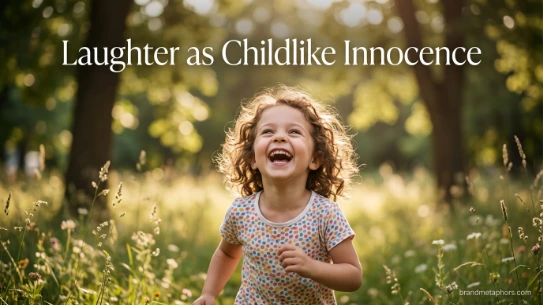
Children’s laughter is often described as pure, unfiltered, and free.
It can be compared to “a bouncing ball,” full of energy and unpredictability. Or “a bird in flight,” carefree and unrestricted.
These metaphors remind us of a time when laughter came easily, without overthinking or restraint. They encourage us to reconnect with that simplicity in our adult lives.
Laughter as Contagion
One of the most fascinating aspects of laughter is how easily it spreads.
A Ripple in Water
A single laugh can ripple outward, touching everyone nearby.
A Spark in Dry Grass
In the right environment, laughter spreads quickly, igniting joy in others.
A Chain Reaction
Laughter often triggers more laughter, creating a cycle that’s hard to stop.
These metaphors show how laughter transcends individuals, becoming a shared experience.
Laughter in Difficult Situations
Laughter doesn’t always come from happiness—it can emerge in tension or discomfort.
In awkward moments, laughter acts like “a shield,” protecting us from vulnerability. In stressful situations, it becomes “a crack in the wall,” letting light in.
These metaphors reveal the complexity of laughter. It can be both genuine and defensive, joyful and uneasy, depending on the context.
Misunderstood Meanings of Laughter
Not all laughter means the same thing, and metaphors help clarify these differences.
A “hollow echo” might describe forced laughter, lacking genuine emotion. A “sharp blade” could represent mocking or hurtful laughter.
Understanding these variations helps us interpret social cues more accurately. It reminds us that laughter, while often positive, can carry different emotional layers.
Using Metaphors for Laughing in Writing
In writing, metaphors for laughing bring scenes to life.
Instead of saying “he laughed loudly,” you might write, “his laughter erupted like fireworks.” This creates a vivid image and emotional impact.
When using metaphors, consider tone and context. A soft moment may call for gentle imagery, while a comedic scene might benefit from bold, exaggerated comparisons.
The key is balance—using metaphors to enhance, not overwhelm, your message.
Using Metaphors in Everyday Speech
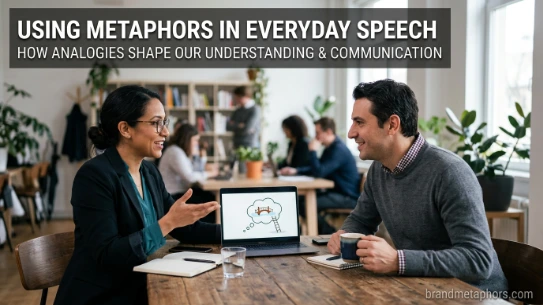
Metaphors aren’t just for writing—they enrich daily conversations too.
Describing someone’s laugh as “infectious” or “like sunshine” adds warmth and personality to communication. It helps others understand not just what happened, but how it felt.
In social interactions, these expressions can make conversations more engaging and memorable.
Practical Lessons from Laughter Metaphors
Metaphors for laughing offer more than creative expression—they teach us about life.
They remind us that laughter is dynamic, like nature. It’s healing, like medicine. It’s connective, like a bridge.
By understanding these layers, we become more aware of our emotions and interactions. We learn when to embrace laughter, when to interpret it carefully, and how to use it to strengthen relationships.
Conclusion
Laughter is one of the most universal human experiences, yet it’s also one of the hardest to define. Through metaphors, we give it shape, color, and meaning. Whether it flows like a river, bursts like a storm, or glows like sunlight, laughter becomes more than sound—it becomes a story.
By exploring metaphors for laughing, we gain a deeper appreciation for its emotional richness and its role in our lives. It connects us, heals us, and reminds us of our shared humanity. The next time you hear laughter, pause for a moment and consider what it feels like. Is it a spark, a wave, or a melody? Whatever the image, it’s a reflection of something beautifully human—and worth understanding.