
Powerful Ways to Describe Death and Loss
The room grows quiet.
A clock keeps ticking, but someone who once laughed in that room will never hear it again. Outside, the wind moves through the trees as if nothing has changed. Inside, everything has.
Death is one of the few experiences that words often struggle to hold. Saying someone “died” is clear and direct, but sometimes a writer needs language that captures the emotion, silence, mystery, or finality surrounding a person’s passing. That is where metaphors for dying can help.
Metaphors allow us to describe death without always naming it directly. They can make a sentence gentler, more literary, more emotional, or more reflective. From “the candle went out” to “he crossed the final bridge,” these expressions give readers an image they can feel.
Whether you are writing a novel, poem, obituary, personal reflection, social media tribute, or everyday message, choosing the right metaphor can make difficult words more thoughtful and meaningful.
What Are Metaphors for Dying? (Definition & Meaning)
A metaphor for dying is a figurative expression that describes death indirectly by comparing it to something else—often something softer, more familiar, or more symbolic.
Instead of saying “she died,” we might say:
- “She passed away.”
- “She drifted into the night.”
- “He closed the final chapter.”
Each of these metaphors reframes death, transforming it from a stark event into a process, a journey, or a transition.
Why does this matter?
Because language shapes how we feel. The metaphors we choose can comfort, distance, beautify, or even confront the reality of death.
Why Metaphors for Death Matter in Writing & Life
Metaphors for dying serve multiple purposes:
- Emotional cushioning: They soften the impact of loss.
- Cultural expression: Different cultures use unique metaphors reflecting beliefs about the afterlife.
- Creative storytelling: Writers use them to add depth and symbolism.
- Personal coping: They help individuals process grief and acceptance.
Think of how often we hear phrases like “at peace” or “gone to a better place.” These are not just words—they are ways of making sense of something overwhelming.
The Language of Letting Go: Death as a Journey
One of the most common metaphorical frameworks for dying is the idea of a journey.
Meaning & Explanation
Death becomes a departure—a movement from one place to another. This suggests continuity rather than finality.
Example Scenario
A grandmother tells her grandchild:
“Grandpa has gone on a long journey.”
The child imagines movement, not disappearance.
Alternative Expressions
- “He crossed over.”
- “She set sail.”
- “They took their final trip.”
Sensory/Emotional Detail
Picture a quiet harbor at dusk, a boat slipping into mist. The metaphor feels gentle, almost hopeful.
Mini Story
In many cultures, rivers symbolize transition. Ancient myths often describe souls crossing a river into the afterlife. This imagery persists because it feels natural—water carries, moves, transforms.
The Final Sleep: Death as Rest

Another deeply rooted metaphor is sleep.
Meaning & Explanation
Death is framed as rest—a peaceful, natural pause after life’s exertions.
Example Sentence
“He fell into an eternal sleep.”
Alternative Ways to Express It
- “She’s resting now.”
- “He went to sleep forever.”
- “At last, she is at rest.”
Emotional Texture
This metaphor brings calmness, especially in contexts of suffering. It suggests relief rather than loss.
Cultural Reference
From lullabies to poetry, sleep has long symbolized both vulnerability and comfort. It makes death feel less like an ending and more like a quiet release.
Closing the Book: Life as a Story
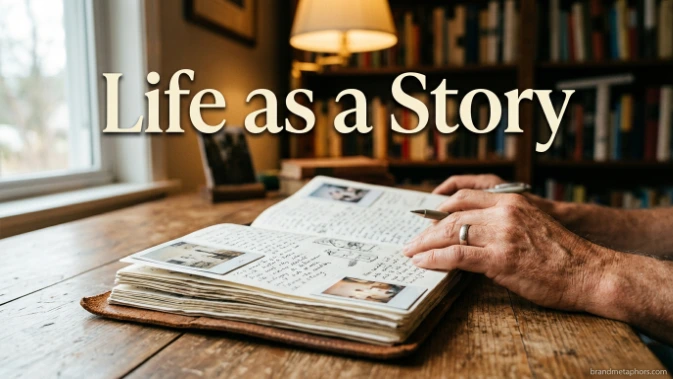
We often understand life as a narrative—so naturally, death becomes its ending.
Meaning & Explanation
This metaphor frames life as a story with a beginning, middle, and end. Death is the final chapter.
Example Scenario
At a funeral, someone says:
“She lived a beautiful story, and now her book is complete.”
Alternative Expressions
- “He reached the last page.”
- “Her story came to a close.”
- “The final chapter has been written.”
Sensory Detail
Imagine the soft sound of a book closing, the weight of it in your hands. There’s sadness—but also completion.
Literary Insight
This metaphor is powerful because it implies meaning. Even tragic stories matter because they exist at all.
Metaphors for Dying in Everyday Language

You might not notice it, but we use metaphors for death constantly:
- “He passed on.”
- “She’s no longer with us.”
- “They departed.”
These phrases are so common they feel literal—but they are not. They are metaphors that have become invisible through repetition.
Why This Matters
Recognizing these patterns helps you:
- Write more intentionally
- Speak more sensitively
- Understand emotional nuance in communication
Creative Writing Tips: Using Death Metaphors Effectively
If you’re a writer, metaphors for dying can elevate your work—but they must be used thoughtfully.
Match Tone to Context
A poetic metaphor may feel inappropriate in a clinical or urgent situation.
Avoid Clichés (Unless You Reinvent Them)
Instead of “passed away,” try something fresh:
“He slipped quietly out of the world’s grasp.”
Use Sensory Language
Add imagery:
- Light fading
- Leaves falling
- Waves receding
This deepens emotional impact.
Cultural & Spiritual Metaphors for Death
Different cultures frame death in unique ways:
- Journey metaphors: Common in many traditions
- Return metaphors: “Returned to the earth”
- Ascension metaphors: “Went to heaven”
These metaphors reflect beliefs about what happens after death.
Why It’s Important
Being aware of cultural metaphors helps you communicate respectfully and meaningfully across contexts.
Interactive Exercises: Practice Metaphors for Dying
Let’s make this creative and personal.
Rewrite the Phrase
Take the sentence:
“He died.”
Rewrite it using three different metaphors:
- A nature-based metaphor
- A journey metaphor
- A story metaphor
Sensory Expansion
Choose a metaphor and add sensory details:
- What does it look like?
- What does it sound like?
- What emotion does it carry?
Personal Reflection
Think of a memory or fictional character. How would you describe their death metaphorically?
Using Metaphors in Social Media & Daily Life
Metaphors aren’t just for literature—they can enrich everyday communication.
In Social Media
Instead of writing:
“RIP”
Try:
“May their journey be peaceful and their memory eternal.”
In Conversations
Use metaphors to show empathy:
- “She’s at peace now.”
- “He’s no longer in pain.”
In Journaling
Metaphors can help process grief:
“It felt like winter arrived too soon.”
Expanding Your Metaphor Toolbox: 3 Powerful Examples

Let’s dive deeper into three rich metaphor styles you can use.
Death as a Sunset
Meaning: Life ends like a day—naturally, beautifully, inevitably.
Example:
“He faded like the last light of sunset.”
Alternatives:
- “Her light dimmed into dusk.”
- “The day of his life came to a gentle close.”
Sensory Detail: Warm colors, quiet skies, the hush of evening.
Mini Story: Think of someone watching the horizon, knowing the sun will set—but still finding beauty in the moment.
Death as Returning Home
Meaning: Death is not loss, but return—to origin, to peace, to belonging.
Example:
“She finally went home.”
Alternatives:
- “He found his way back.”
- “She returned to where she belonged.”
Emotional Tone: Comforting, spiritual, deeply human.
Death as a Flame Going Out
Meaning: Life is energy, and death is its quiet extinguishing.
Example:
“His flame flickered, then went out.”
Alternatives:
- “The light within her dimmed.”
- “His spark faded into darkness.”
Sensory Detail: A candle trembling in still air before darkness.
Common Mistakes to Avoid When Using Death Metaphors
- Overusing clichés (e.g., “passed away” repeatedly)
- Mixing metaphors (“He sailed into eternal sleep under a fading sun”)
- Inappropriate tone (too poetic in serious contexts)
Clarity and respect should always come first.
SEO Insight: Keywords Related to Metaphors for Dying
If you’re writing online, consider using related keywords naturally:
- metaphors for death
- poetic ways to say someone died
- euphemisms for dying
- symbolic language for death
- writing about death creatively
These help your content reach readers who are searching for meaning, comfort, or inspiration.
The Emotional Power of Language at Life’s End
Metaphors for dying remind us that language is not just a tool—it’s a shelter.
When reality feels too sharp, words soften it. When silence feels too heavy, metaphors give us something to hold.
They do not erase grief—but they help us carry it.
FAQs About Metaphors for Dying
Why do people use metaphors instead of saying “died”?
Because metaphors soften the emotional impact and make difficult conversations more compassionate and approachable.
Are metaphors for death culturally different?
Yes, different cultures use unique metaphors based on beliefs, traditions, and spiritual views.
Can metaphors for dying be harmful?
If used insensitively or in the wrong context, they can feel dismissive or confusing. Tone matters.
What are some common metaphors for death?
“Passed away,” “went to sleep,” “crossed over,” and “gone home” are widely used examples.
How can writers create original death metaphors?
By drawing from nature, sensory imagery, personal experiences, and avoiding overused clichés.
Should I use a metaphor instead of saying “died”?
Use a metaphor when you want emotional, poetic, symbolic, or gentle language. Use direct language when clarity is more important than atmosphere.
What is the gentlest metaphor for dying?
Images such as sleep, sunset, a peaceful journey, a candle fading, or reaching a harbor can create a softer tone.
What metaphor shows that someone lived a long life?
A completed journey, finished book, sunset, harvested field, or ship reaching harbor can suggest a full life.
How can I make a death metaphor more emotional?
Add a sensory or personal detail. Instead of simply saying “her candle went out,” write about the light she brought into a particular room, family, or relationship.
Can death metaphors be used in social media posts?
Yes. Short metaphors can work well in memorial posts, tributes, captions, and messages. Keep them sincere and avoid making grief sound overly dramatic.
Conclusion
Death is difficult because it represents an ending we cannot fully explain.
Yet writers have always searched for images that make that ending easier to understand: a candle becoming dark, a river reaching the sea, a ship finding its harbor, a final page turning, a sunset disappearing beyond the horizon.
These metaphors do more than replace the word “death.”
They give shape to feelings.
They help us describe grief, peace, mystery, completion, and remembrance. Most importantly, they remind us that a person’s life is larger than the moment it ends.