
The first frost arrives quietly.
You wake to a world softened—rooftops dusted in silver, breath visible in the morning air, the earth holding its silence like a secret. The trees stand bare, skeletal against a pale sky, and the wind whispers stories through their branches. Winter isn’t just a season; it’s a mood, a pause, a transformation.
And that’s exactly why metaphors for winter matter.
They allow us to translate this quiet, cold beauty into language that feels alive. Whether you’re writing poetry, storytelling, social media captions, or reflective journaling, winter metaphors help capture emotions that plain words often fail to express—loneliness, stillness, resilience, introspection, even hope.
In this guide, we’ll explore creative, vivid metaphors for winter, understand their meanings, and learn how to use them effectively in writing and daily life. You’ll also find exercises, storytelling touches, and practical tips to bring your winter-inspired language to life.
❄️ Why Use Metaphors for Winter in Writing?
Winter is more than snow and cold—it symbolizes cycles. Endings and beginnings. Silence and strength. When you use metaphors, you’re not just describing winter—you’re interpreting it.
Metaphors can:
- Add emotional depth to your writing
- Make descriptions more memorable
- Connect readers to universal human experiences
- Turn ordinary scenes into poetic imagery
Think of winter not as weather—but as a language of its own.
🌨️ 1. Winter as a Sleeping World
Meaning & Explanation
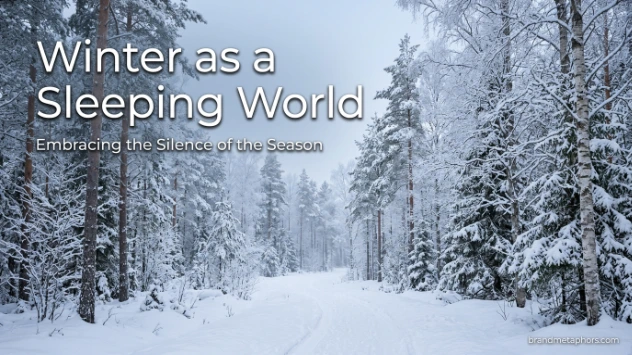
This metaphor portrays winter as a time of rest and dormancy. Nature isn’t dead—it’s simply asleep, gathering strength for renewal.
Example Sentence
“The forest lay beneath a blanket of snow, a sleeping giant dreaming of spring.”
Alternative Expressions
- Winter is nature’s lullaby
- The earth is tucked into a quiet slumber
- A season wrapped in stillness
Sensory & Emotional Details
Imagine the muffled crunch of snow underfoot, the hush that follows snowfall, the way sound itself seems to rest. It evokes calm, peace, and reflection.
Mini Storytelling
A writer sits by the window, watching snow fall steadily. Deadlines loom, but something about the stillness outside reminds them to pause. “Even the earth needs rest,” they think—and for the first time in weeks, they allow themselves to breathe.
🌬️ 2. Winter as a Harsh Teacher
Meaning & Explanation
Winter can be unforgiving—biting winds, icy roads, long nights. This metaphor frames it as a teacher that builds resilience and endurance.
Example Sentence
“Winter is a stern teacher, testing our strength with every freezing gust.”
Alternative Ways to Express It
- A season that sharpens survival
- Nature’s toughest lesson
- A trial of endurance
Emotional Layer
This metaphor carries a tone of struggle but also growth. It speaks to challenges—both physical and emotional—and the strength gained through them.
Cultural Reflection
In many cultures, winter symbolizes hardship followed by reward. Think of folktales where characters endure cold journeys before reaching warmth or enlightenment.
🔥 3. Winter as a Blank Canvas
Meaning & Explanation
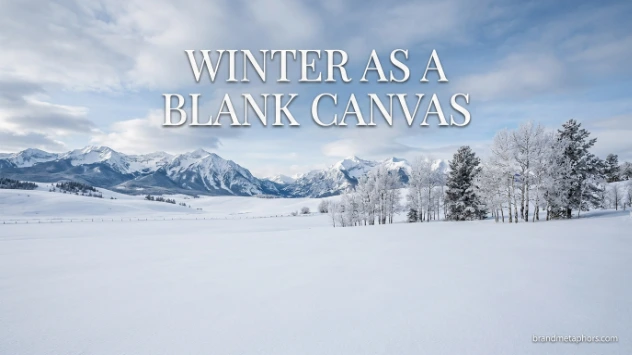
Fresh snow transforms the landscape into something untouched—a clean slate. This metaphor emphasizes new beginnings and creative potential.
Example Sentence
“The snow-covered fields stretched endlessly, a blank canvas waiting for the first stroke of life.”
Alternative Expressions
- A fresh page in nature’s notebook
- A white canvas of possibility
- A quiet beginning
Sensory & Emotional Details
The brightness of snow under sunlight, the crisp air, the sense of purity—it all feels like starting over.
Real-Life Connection
Many people use winter as a time for reflection and planning. Just like the landscape resets, so can we.
✍️ Interactive Exercise: Create Your Own Winter Metaphor
Try this simple exercise:
- Think of a feeling you associate with winter (e.g., loneliness, peace, hope).
- Ask yourself: What does this feeling resemble?
- Turn it into a metaphor.
Example Prompt:
- Winter feels like __________
Try it:
- Winter feels like a paused song waiting to play again
- Winter feels like a letter never sent
Write 3–5 of your own metaphors. Don’t overthink—let imagery guide you.
🌌 Bonus Winter Metaphor Ideas to Spark Creativity
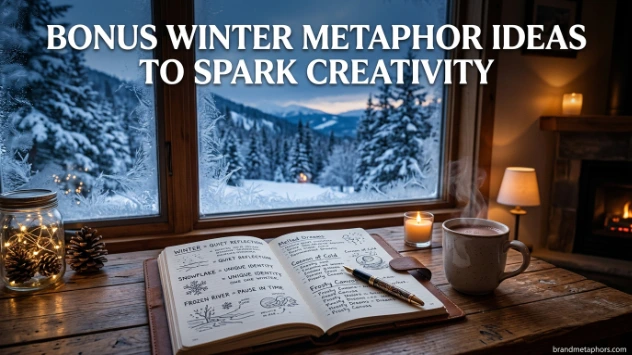
Here are more ideas you can adapt:
- Winter is a silent storyteller
- A frozen mirror reflecting solitude
- The world holding its breath
- A glass palace of ice
- A slow-burning candle in the dark
Each of these can be expanded into poems, captions, or narrative scenes.
📚 Using Winter Metaphors in Different Contexts
✍️ In Creative Writing
Use metaphors to set tone and mood:
- A lonely character might walk through “a world frozen in time”
- A hopeful ending might include “snow melting into whispers of spring”
📱 In Social Media
Short, catchy metaphors work best:
- “Winter: the earth’s quiet reset ❄️”
- “Living in a snow globe of thoughts”
🧠 In Daily Reflection
Metaphors can help express emotions:
- “I feel like winter today—quiet but full of hidden life”
🎯 Bonus Tips for Writing Powerful Winter Metaphors
- Use sensory language: Describe what winter feels, sounds, and looks like
- Avoid clichés: Instead of “cold as ice,” try something unique
- Connect emotion to imagery: Let your feelings shape the metaphor
- Keep it simple: The best metaphors are clear yet evocative
- Experiment: Mix unexpected ideas (e.g., winter as a “locked diary”)
🧩 Creative Practice Prompts
Try these to sharpen your skills:
- Write a paragraph describing winter without using the word “cold”
- Create a metaphor comparing winter to an emotion
- Describe a winter morning using all five senses
- Turn a winter metaphor into a short story opening
- Rewrite a common winter phrase in a unique way
🌟 Why Winter Metaphors Matter More Than You Think
Winter often represents emotional landscapes—loneliness, healing, waiting, or even quiet joy. By using metaphors, you give voice to these complex states.
A simple sentence like “It’s winter” becomes:
- “The world has folded into silence”
- “Time walks slower under a pale sky”
That’s the power of metaphor—it transforms observation into experience.
❓ FAQs About Metaphors for Winter
### What is a metaphor for winter?
A metaphor for winter is a figurative expression that describes the season by comparing it to something else, such as “winter is a sleeping world.”
### Why are winter metaphors popular in writing?
They capture deep emotions like stillness, isolation, and renewal, making writing more vivid and relatable.
### Can winter metaphors be positive?
Absolutely. While winter can symbolize hardship, it also represents peace, reflection, and new beginnings.
### How can I create unique winter metaphors?
Focus on your personal feelings and sensory experiences, and connect them to unexpected ideas or imagery.
### Where can I use winter metaphors?
You can use them in poetry, stories, social media captions, journaling, and even everyday conversations.
Conclusion
Winter may be the coldest season, but it holds some of the warmest inspiration.
Through metaphors, we uncover its hidden layers—the quiet strength beneath stillness, the beauty within silence, the promise tucked inside endings. Whether you see winter as a sleeping world, a harsh teacher, or a blank canvas, each metaphor opens a new way of understanding both the season and yourself.
So the next time frost traces patterns on your window, pause.
Look closer.
And ask yourself—not just what is winter? But what does it feel like?
Because somewhere in that answer, a metaphor is waiting to be born. ❄️