
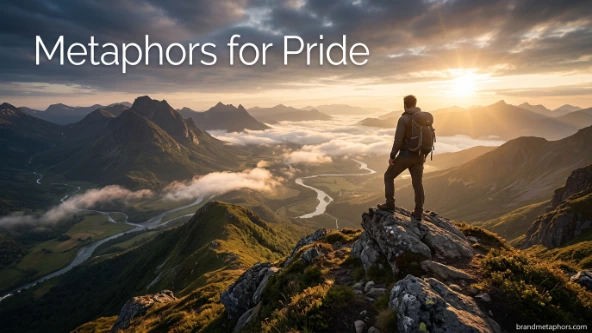
Pride can feel like sunlight warming your face after a long storm. It can rise quietly in the heart after a hard-earned success, or it can stand tall and bright like a mountain touching the sky. We all experience pride. A parent feels it when a child succeeds. An artist feels it after completing a masterpiece. A student feels it after passing a difficult exam.
Yet pride is more than an emotion. It is a powerful force that shapes confidence, identity, and self-worth. Because pride can be difficult to describe directly, writers often turn to metaphors. These imaginative comparisons help transform an invisible feeling into something readers can see, hear, and feel.
Metaphors make writing more vivid. They help speeches become memorable, stories become emotional, and everyday conversations become more expressive. Whether you are a student, writer, teacher, or creative thinker, learning how to use figurative language for pride can strengthen your communication skills.
In this guide, we will explore powerful comparisons, practical examples, creative exercises, and writing tips that will help you understand and use pride-related imagery effectively.
Why Metaphors Matter When Describing Pride
Turning Emotions into Images
Pride is abstract. You cannot touch it or hold it in your hands. Metaphors give it shape and color.
Instead of saying:
“She felt proud.”
You might say:
“She carried a crown of invisible gold.”
The second sentence creates a stronger image and emotional response.
Making Writing More Memorable
Readers remember pictures more than explanations. A strong metaphor stays in the mind long after the words are read.
Creating Emotional Connection
Metaphors help readers connect their own experiences with your writing. They bridge imagination and emotion.
Pride as a Mountain
Meaning and Symbolism
A mountain represents strength, achievement, and elevation. Pride often feels like standing at the summit after a long climb.
This metaphor highlights effort and accomplishment.
Example
“After years of training, her pride stood like a mountain against the horizon.”
Alternative Expressions
- Pride as a towering peak
- Pride as a rocky summit
- Pride as a mountain touching the clouds
Mini Story
Imagine a young runner crossing the finish line after months of practice. As cheers fill the stadium, she feels as though she has climbed the highest mountain in the world.
Emotional Details
This image evokes determination, victory, and endurance.
Pride as a Crown
Meaning and Symbolism
A crown symbolizes honor, dignity, and achievement. Pride can feel like wearing something valuable that reflects personal success.
Example
“His accomplishments became a crown resting proudly upon his head.”
Alternative Expressions
- A crown of achievement
- A golden circle of honor
- A jeweled symbol of success
Cultural Reference
Throughout history, kings and queens wore crowns as symbols of greatness. Pride often carries that same sense of earned recognition.
Emotional Details
The image suggests confidence, respect, and self-worth.
Pride as a Bright Flame

Meaning and Symbolism
A flame represents energy, passion, and inner strength. Pride can burn brightly within a person.
Example
“A flame of pride flickered in her chest as she accepted the award.”
Alternative Expressions
- A glowing fire of accomplishment
- A torch of confidence
- A spark of triumph
Real-Life Example
Athletes often describe feeling a fire inside them after achieving a goal. That inner fire resembles pride.
Emotional Details
This metaphor creates warmth, excitement, and motivation.
Pride as a Lion
Meaning and Symbolism
The lion symbolizes courage, confidence, and leadership. Pride can make people feel bold and powerful.
Example
“He walked into the room with the pride of a lion guarding its territory.”
Alternative Expressions
- A roaring lion
- A fearless king of the jungle
- A powerful guardian
Literary Connection
Lions appear in myths, stories, and legends as symbols of strength and authority.
Emotional Details
This image conveys bravery, confidence, and determination.
Pride as the Sun
Meaning and Symbolism
The sun shines brightly and commands attention. Pride can illuminate a person’s spirit in a similar way.
Example
“Her pride shone like the morning sun after years of hard work.”
Alternative Expressions
- A radiant sunrise
- A golden light
- A glowing sky
Mini Story
A young musician performs on stage for the first time. As applause fills the room, pride rises within him like the sun breaking through the darkness.
Emotional Details
This metaphor suggests joy, warmth, and visibility.
Pride as a Flag Flying High
Meaning and Symbolism
Flags represent identity, belonging, and accomplishment. Pride often involves publicly embracing who you are.
Example
“She carried her achievements like a flag waving proudly in the wind.”
Alternative Expressions
- A banner of success
- A flag of honor
- A standard raised high
Cultural Significance
Throughout history, flags have symbolized unity, achievement, and collective identity.
Emotional Details
This metaphor conveys confidence and celebration.
Pride as a Strong Oak Tree
Meaning and Symbolism
Oak trees symbolize resilience and stability. Pride can grow from deep roots of effort and character.
Example
“His pride stood like an ancient oak tree, strong against every storm.”
Alternative Expressions
- A deeply rooted tree
- A mighty oak
- A towering forest giant
Real-Life Connection
Long-term success often creates a stable sense of pride similar to the steady growth of a tree.
Emotional Details
The image inspires reliability and strength.
Three Powerful Metaphors for Pride You Can Use Today
1. Pride Is a Mountain Peak
Meaning: Achievement after struggle.
Example Sentence: “Graduating felt like standing on a mountain peak above the clouds.”
Other Ways to Say It:
- Reaching the summit
- Climbing to greatness
- Standing above challenges
2. Pride Is a Golden Crown
Meaning: Honor and recognition.
Example Sentence: “Her years of dedication became a golden crown of success.”
Other Ways to Say It:
- A badge of honor
- A symbol of victory
- A royal reward
3. Pride Is a Roaring Lion
Meaning: Confidence and courage.
Example Sentence: “His pride roared like a lion after the championship win.”
Other Ways to Say It:
- Fearless confidence
- Bold determination
- Powerful self-belief
Creative Exercises for Practicing Pride Metaphors
Exercise One: Finish the Comparison
Complete these sentences:
- Pride is a __________.
- Pride shines like __________.
- Pride stands tall like __________.
Try creating at least five unique answers.
Exercise Two: Memory Writing
Think of a moment when you felt proud.
Write:
- What happened?
- How did it feel?
- What object, animal, or natural element best represents that feeling?
Exercise Three: Story Challenge
Write a short paragraph using three pride metaphors without directly using the word “pride.”
This exercise improves creativity and figurative language skills.
Bonus Tips for Using Pride Metaphors in Writing and Daily Life
For Creative Writing
Use metaphors to reveal emotions instead of explaining them directly.
Instead of:
“He was proud.”
Try:
“He carried himself like a king returning from battle.”
For Social Media
Short metaphors create memorable captions.
Examples:
- “Today feels like standing on a mountain peak.”
- “My confidence is shining like the sun.”
- “Wearing my achievements like a crown.”
For Speeches
Metaphors make speeches inspiring and memorable.
Example:
“Every challenge was a mountain, but today we stand proudly at the summit.”
For Everyday Conversation
Simple comparisons make stories more engaging.
Example:
“I felt like a lion after finishing that project.”
Common Mistakes When Using Metaphors for Pride
Mixing Too Many Images
Avoid combining unrelated metaphors.
Poor Example:
“His pride was a lion sailing through a forest of stars.”
This confuses readers.
Using Clichés Excessively
Well-known comparisons are useful, but fresh imagery often has greater impact.
Forgetting Context
Choose metaphors that fit the situation and audience.
Overusing Figurative Language
A few strong metaphors create more impact than many weak ones.
Building Stronger Emotional Writing with Pride Metaphors
Focus on Sensory Details
Ask yourself:
- What color is the feeling?
- What sound does it make?
- What texture does it have?
Connect Metaphors to Character Growth
The best metaphors reflect personal journeys.
Balance Pride with Humility
Interesting characters often experience both confidence and self-awareness.
Practice Daily
Create one new metaphor every day to improve your creativity.
Frequently Asked Questions
What is a metaphor for pride?
A metaphor for pride is a figurative comparison that describes pride as something else, such as a mountain, crown, lion, sun, or flame.
Why are metaphors useful when describing pride?
They make emotions more vivid, memorable, and relatable by transforming abstract feelings into concrete images.
What is the most common metaphor for pride?
A crown is one of the most common metaphors because it symbolizes honor, achievement, and recognition.
Can pride be compared to nature?
Yes. Pride is often compared to mountains, oak trees, sunlight, rivers, and other natural elements that symbolize strength and growth.
How can I create my own pride metaphor?
Think about how pride feels physically and emotionally. Then compare that feeling to an object, animal, place, or natural force that shares similar qualities.
Conclusion
Pride is a rich and powerful emotion that deserves vivid language. Metaphors transform pride from a simple feeling into something readers can picture and experience. Whether it appears as a mountain rising above the clouds, a crown shining with honor, a lion roaring with confidence, or a flame glowing with achievement, each comparison reveals a different side of human accomplishment.
By exploring these imaginative expressions, practicing creative exercises, and applying figurative language in writing, speeches, social media posts, and everyday conversations, you can communicate emotions with greater depth and beauty. The next time you experience a moment of achievement, ask yourself: what image best captures that feeling? The answer may become your most powerful metaphor yet.