
Introduction
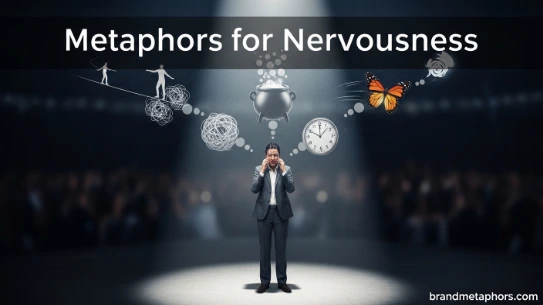
You’re standing just behind the curtain. The room is filled with soft murmurs that suddenly feel louder than they should. Your hands feel slightly damp, your heartbeat seems to echo in your ears, and your thoughts refuse to settle into a straight line. You rehearse your first words again and again—but somehow they keep slipping away like sand through your fingers. This is the quiet, familiar world of nervousness.
We all experience it in different forms: before a job interview, a public speech, a first date, or even in moments when nothing seems to “justify” it at all. Nervousness is not just a feeling—it is a physical and emotional state that can be difficult to describe directly. That is where metaphors come in. They give shape to the invisible, turning internal chaos into images we can understand, relate to, and even manage.
In this article, we will explore powerful metaphors for nervousness that reveal how this emotion behaves, feels, and influences our thoughts. By understanding these comparisons, we can better recognize our experiences, normalize them, and learn healthier ways to respond when anxiety rises.
1. Nervousness as a Storm Inside the Body
Nervousness is often described as a storm brewing within. This metaphor captures the sudden build-up of emotional pressure before it “breaks” into physical symptoms like shaking hands, a racing heart, or a tight chest.
The Gathering Clouds
Before a storm, the air changes—heavy, uncertain, expectant. Similarly, nervousness often begins subtly. You may not immediately notice it, but something feels “off.”
The Downpour of Emotions
When the storm finally hits, thoughts become overwhelming. You might feel flooded with “what if” scenarios, much like rain pouring uncontrollably.
This metaphor helps us understand that nervousness is not random chaos—it builds, peaks, and eventually passes. Like weather, it is temporary and natural.
2. Nervousness as Butterflies in the Stomach
One of the most common metaphors, “butterflies in the stomach,” describes the fluttery, restless sensation we feel when anxious.
Why Butterflies?
Butterflies are light, fast-moving, and unpredictable. This mirrors how nervous energy feels inside the body—fluttering and unsettled.
A Double Meaning
Interestingly, butterflies are not always negative. They also appear in excitement. This shows how closely nervousness and anticipation are linked.
This metaphor reminds us that nervousness is not always fear—it can also be a sign that something meaningful is about to happen.
3. Nervousness as a Tangled Ball of Yarn
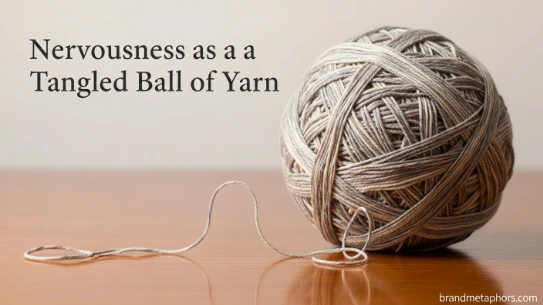
Imagine a ball of yarn dropped onto the floor, rolling into knots that are difficult to undo. Nervousness often feels exactly like that inside the mind.
Confused Thoughts
Each worry becomes a strand that wraps around another, making clarity harder to reach.
The Difficulty of Untangling
The more you try to force clarity, the tighter the knots become. This reflects how overthinking can intensify anxiety.
This metaphor encourages patience—untangling requires calm, not force.
4. Nervousness as a Faulty Alarm System
Sometimes nervousness feels like a fire alarm going off when there is no fire.
Overreaction of the Mind
The brain detects “danger” in situations that are actually safe, such as speaking in public or meeting new people.
Constant False Alerts
This creates exhaustion, as the mind is repeatedly triggered without real threat.
Understanding this metaphor helps normalize nervousness as a misfiring protective system—not a personal weakness.
5. Nervousness as Walking on a Tightrope
Picture yourself walking across a thin rope suspended high above the ground. Every step requires focus and balance.
Fear of Falling
Each decision feels delicate, as if one wrong move could lead to embarrassment or failure.
Heightened Awareness
This metaphor reflects how nervousness sharpens attention but also increases fear of mistakes.
It teaches us that nervousness often appears when stakes feel high, even if the actual risk is low.
6. Nervousness as Static on a Radio Signal
When a radio signal becomes weak, static noise fills the air, making it hard to hear clearly. Nervousness often creates a similar effect in thinking.
Interrupted Thoughts
Ideas become fragmented, and concentration feels disrupted.
Difficulty in Communication
This is why people may stumble over words or forget what they wanted to say.
This metaphor highlights how nervousness interferes with mental “clarity signals.”
7. Nervousness as a Caged Animal
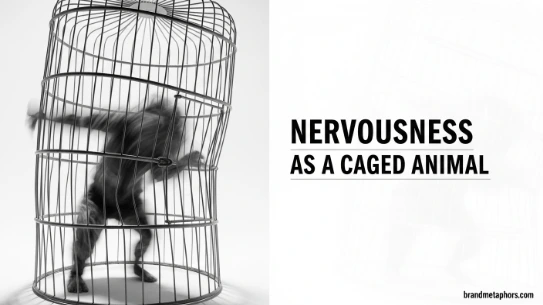
Inside, nervousness can feel like energy pacing back and forth, unable to settle.
Restless Movement
Like an animal trapped in a cage, the body feels tense and ready to react.
Desire for Escape
There is often an urge to leave the situation entirely, even if it is harmless.
This metaphor shows how nervousness is physical as much as mental—it wants release and movement.
8. Nervousness as a Racing Engine
A car engine revving too fast while standing still is a powerful image of nervousness.
Excess Energy
The body prepares for action even when no action is needed.
Lack of Direction
All that energy has nowhere to go, creating discomfort and tension.
This metaphor helps explain physical symptoms like shaking, sweating, or rapid heartbeat.
9. Nervousness as a Foggy Road
Driving through thick fog makes everything uncertain. Nervousness creates a similar mental environment.
Reduced Clarity
It becomes difficult to see outcomes or predict what will happen next.
Slow Movement
You hesitate, move carefully, and question every step.
This metaphor reflects how nervousness affects decision-making and confidence.
10. Nervousness as a Drumbeat in the Chest

The heartbeat becomes more noticeable during nervousness, almost like a loud drum echoing inside.
Rhythmic Pressure
Each beat feels stronger, as if it is announcing your anxiety to the world.
Heightened Awareness of Body
You become hyper-aware of physical sensations that are normally ignored.
This metaphor captures the physical intensity of emotional stress.
11. Nervousness as a Stage with Bright Lights
Stepping onto a brightly lit stage with an audience watching creates a feeling of exposure.
Fear of Judgment
Every action feels magnified under attention.
Loss of Privacy
There is a sense that nothing can be hidden.
This metaphor is especially relevant for public speaking or performance anxiety.
12. Nervousness as Waves in the Ocean
Nervousness does not stay constant—it rises and falls like ocean waves.
Emotional Cycles
Moments of calm are followed by sudden surges of anxiety.
Learning to Float
Instead of fighting the waves, you learn to stay steady until they pass.
This metaphor emphasizes acceptance and emotional resilience.
Conclusion
Nervousness is often misunderstood as something purely negative, but through metaphors, we see it differently. It can be a storm, a signal, a wave, or even butterflies—each image revealing a deeper truth about how this emotion works within us. These comparisons help translate an invisible internal experience into something familiar and manageable.
When we understand nervousness through metaphor, we stop seeing it as an enemy and start recognizing it as a natural response to uncertainty, importance, or change. It is not a sign of weakness, but a signal that we care about outcomes. By observing it rather than resisting it, we gain more control over how we respond. Ultimately, nervousness becomes less of a barrier and more of a reminder that we are stepping into something meaningful.