
Introduction
Imagine standing alone in a quiet field just after rain. The soil is dark and soft beneath your feet. The air smells fresh, like the world has just been washed clean. A gentle wind moves through tall grass, making it ripple like waves in a green sea. Far away, birds call to each other, as if they are sharing secrets across the sky. In moments like this, nature feels like more than a place—it feels like a message.
This is where metaphors for nature begin. We often use nature to explain how we feel, think, and understand life. We say “storm of emotions,” “sunny personality,” or “life is a journey through mountains.” These expressions help us describe deep ideas in simple, visual ways. Nature becomes a language for human experience.
Understanding these metaphors matters because they shape how we see the world. They help us express emotions, explain complex thoughts, and connect with others more clearly. In daily life, they appear in conversations, books, songs, and even our inner thoughts. By learning them, we also learn to understand ourselves better and see life with more clarity and meaning.
What Are Metaphors for Nature?
Metaphors for nature are expressions that use natural elements—like trees, rivers, skies, or animals—to explain human feelings, situations, or ideas. Instead of describing something directly, we compare it to something in nature to make it easier to imagine.
For example, saying “her mind is a garden” suggests that her thoughts are growing, changing, and maybe even need care. It is not a literal garden, but it helps us understand her inner world.
Nature metaphors are powerful because nature is something everyone can see and feel. We may not all understand complex psychology, but we all understand rain, sunshine, or wind. This shared experience makes metaphors easy to connect with.
Why We Use Them
We use these metaphors because they simplify big ideas. Emotions, thoughts, and life situations can be confusing. Nature gives us a familiar image to hold onto. Instead of saying “I feel overwhelmed,” someone might say “I am drowning in a storm.” This paints a stronger picture in the mind.
Nature metaphors also add beauty to language. They make speech and writing more expressive, emotional, and creative.
Nature as a Mirror of Emotions
Nature often reflects human emotions in powerful ways. When people feel calm, they may imagine a peaceful lake. When they feel angry, they may describe themselves as a storm. This connection between nature and emotion helps people understand feelings that are hard to explain.
Emotional Weather
We often connect emotions with weather:
- “Cloudy mood” means sadness or confusion
- “Sunshine in her smile” means happiness
- “Storm inside” means emotional chaos
These images help others quickly understand how someone feels without needing long explanations.
Personal Reflection
Imagine a person walking under a heavy sky before an important decision. The dark clouds above can feel like pressure in their mind. But when the sun breaks through, it feels like hope returning. Nature becomes a reflection of what is happening inside.
This is why nature metaphors are so powerful—they turn invisible emotions into visible images.
Forest Metaphors: Life as a Journey Through Trees
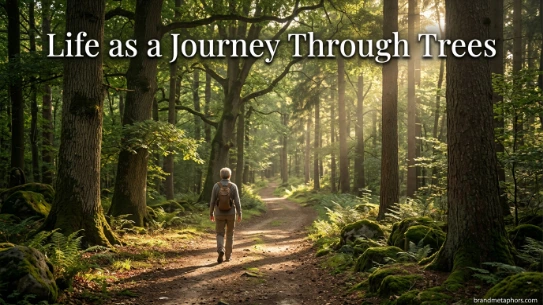
Forests are often used to represent mystery, growth, and life’s complexity. A forest is full of paths, shadows, and hidden places, just like human life.
Getting Lost and Finding Direction
Saying “life is a forest” suggests that people may feel lost at times. There are many directions, and not all are clear. But forests also offer discovery. Every turn may bring something new.
Growth and Silence
Trees in a forest grow slowly but strongly. This becomes a metaphor for personal growth. It teaches patience. Just like trees, people need time to grow roots before they can rise.
Hidden Lessons
Forests also represent silence and reflection. When someone “walks through their inner forest,” it means they are thinking deeply about themselves.
Ocean Metaphors: Depth, Power, and Emotion
The ocean is one of the most common nature metaphors because it is vast, deep, and unpredictable.
Emotional Depth
We often say “deep feelings” or “deep sadness,” comparing emotions to the ocean. Just like the sea, human emotions have layers. Some are visible, and some are hidden below the surface.
Waves of Change
Life is also compared to ocean waves. “Riding the waves” means dealing with ups and downs. Sometimes life is calm, sometimes it is rough.
Strength and Fear
The ocean can be peaceful, but also powerful and dangerous. This reflects how emotions or life situations can feel both beautiful and overwhelming at the same time.
Sky and Weather Metaphors: The Changing Mind
The sky represents openness, possibility, and change. Because it changes often, it is a perfect symbol for shifting emotions and thoughts.
Clear Skies
“Clear sky” often means peace of mind. It suggests clarity, calm thinking, and emotional balance.
Stormy Thoughts
A “stormy mind” represents confusion or stress. Thoughts may feel fast and uncontrollable, like thunder and lightning.
Endless Possibility
The sky also represents freedom. When someone says “limitless sky,” it means there are no boundaries to imagination or dreams.
Seasons Metaphors: The Cycle of Life
Seasons are powerful metaphors for life stages and emotional changes.
Spring: New Beginnings
Spring represents hope, growth, and fresh starts. It is often used to describe new opportunities or recovery after hardship.
Summer: Strength and Joy
Summer symbolizes happiness, energy, and success. Life feels bright and full.
Autumn: Change and Reflection
Autumn represents maturity and letting go. Leaves falling from trees reflect change and acceptance.
Winter: Silence and Struggle
Winter often symbolizes loneliness, challenges, or rest. But it also represents survival and preparation for renewal.
Mountains Metaphors: Challenges and Strength
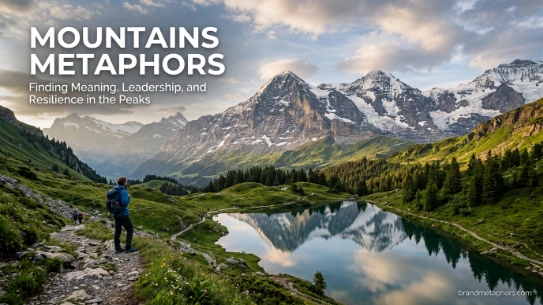
Mountains are often used to represent obstacles in life. Climbing a mountain means facing difficulties step by step.
Life Challenges
Saying “he is climbing a mountain” suggests someone is working hard to overcome a big problem.
Strength and Patience
Mountains stand strong through time and weather. This reflects human resilience and patience during hard times.
Reaching the Peak
The top of the mountain represents success or achievement after effort.
Rivers Metaphors: Flow and Change
Rivers symbolize movement, direction, and time.
Life Flow
“Go with the flow” comes from river imagery. It means accepting change instead of resisting it.
Life Journey
A river moves forward and never goes back. This reflects how time moves in one direction.
Obstacles in the Flow
When a river meets rocks, it changes path but continues moving. This teaches adaptability.
Flowers Metaphors: Beauty and Growth
Flowers are often used to represent beauty, growth, and life’s delicate nature.
Blooming Potential
“Blooming” means reaching full potential. Just like flowers open, people grow into their abilities.
Fragility of Life
Flowers are beautiful but short-lived. This reminds us that life is precious and temporary.
Emotional Beauty
A “flowering friendship” suggests something beautiful growing between people over time.
Animals Metaphors: Human Traits in Nature
Animals are used to represent human behavior and personality.
Strength and Leadership
A lion often represents courage and leadership. Saying someone has “lion-like courage” means they are brave.
Freedom and Spirit
Birds symbolize freedom and dreams. “Flying high” means achieving success or independence.
Hard Work and Patience
Ants represent teamwork and effort. They remind us that small steps create big results.
Nature Metaphors in Daily Communication
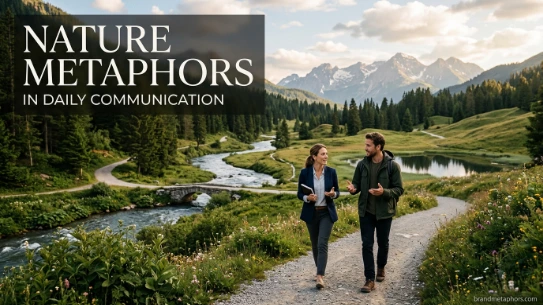
We use nature metaphors in everyday speech more than we realize. They appear in conversations, writing, and media.
Simple Expressions
People say things like:
- “She is a ray of sunshine”
- “He is weathering the storm”
- “Their friendship blossomed”
These expressions make communication more colorful and emotional.
Storytelling and Writing
Writers use nature metaphors to make stories more vivid. Instead of saying “he was sad,” they might write “a cold winter settled in his heart.”
Emotional Connection
These metaphors help people connect quickly because they are based on shared human experience with nature.
Lessons We Learn from Nature Metaphors
Nature metaphors are not just language tools—they also teach life lessons.
Change Is Natural
Just like seasons change, life also changes. Nothing stays the same forever.
Growth Takes Time
Trees and flowers remind us that growth cannot be rushed.
Strength in Struggle
Mountains and storms show that challenges are part of life, not the end of it.
Adaptability Matters
Rivers teach us to adapt and keep moving even when obstacles appear.
Conclusion
Metaphors for nature help us understand life in a deeper and more meaningful way. They turn emotions into weather, thoughts into landscapes, and life into journeys through forests, rivers, and mountains. These images make complex feelings easier to express and share. They also remind us that human life is closely connected to the natural world.
By seeing ourselves in nature, we learn patience, strength, and acceptance. We understand that change is natural, growth takes time, and challenges are part of every journey. Nature metaphors are not just words—they are reflections of how we experience life. When we pay attention to them, we begin to see the world with more clarity, imagination, and emotional depth.