
Introduction
Imagine standing in a dark room where nothing is visible. You take a slow step forward, unsure of what is around you. Then, someone switches on a small lamp.
The room does not just become visible—it feels different. Safer. Calmer. More familiar. This simple shift from darkness to light is something every human understands without explanation. We experience it in nature, in emotions, and in thoughts.
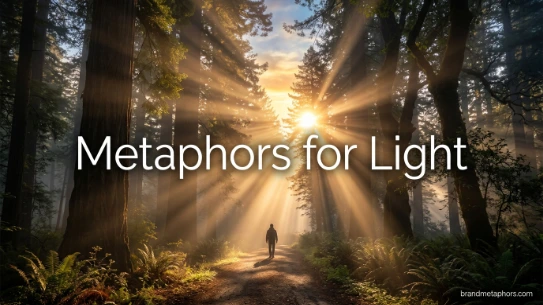
“Light” is more than brightness. It is one of the most powerful symbols in language and storytelling. We use it to describe hope, truth, knowledge, clarity, and even spiritual awakening.
When someone says “she is a light in my life,” they are not speaking about brightness in a physical sense. They are talking about comfort, guidance, and emotional warmth.
Metaphors for light help us explain complex feelings in simple ways. They connect physical experience with inner meaning. In real life, they shape how we talk about learning, healing, discovery, and understanding.
This article explores the many layers of light as a metaphor—how it appears in language, what it represents, and why it continues to be one of the most meaningful symbols in human expression.
Light as a Symbol of Hope
Light is often used to represent hope, especially in difficult times. When life feels heavy or uncertain, people naturally turn to words that suggest brightness returning. Saying “there is light at the end of the tunnel” means that even in struggle, there is a future where things improve.
This metaphor works because darkness feels like confusion or fear, while light feels like safety and direction. A person going through loss, failure, or emotional pain may feel trapped in darkness. Even a small sign of improvement—a kind word, a new opportunity, or emotional support—can feel like a beam of light breaking through.
Real-Life Meaning
In everyday life, hope often comes slowly. A student struggling with exams may feel lost, but one good result becomes their “light.” A patient recovering from illness may see small improvements as signs of healing.
Light as hope does not remove problems instantly. Instead, it gives strength to continue. It is the idea that things are not permanent and change is always possible.
Light as Knowledge and Understanding
One of the most common metaphors is light representing knowledge. When someone says, “a light went on in my mind,” they mean they finally understood something.
How It Works in Thinking
y = \text{understanding}(t)
Just like light reveals hidden objects in a dark room, knowledge reveals hidden meaning in confusion. Before understanding, everything feels unclear. After understanding, patterns appear.
Everyday Example
A student learning a difficult math problem may struggle for hours. Suddenly, the solution makes sense. That moment feels like a switch turning on. Nothing changes in the problem itself, but the mind now “sees” it differently.
This metaphor shows that learning is not just receiving information. It is about transformation—moving from darkness to clarity. That is why education is often described as “enlightenment.”
Light as Truth and Clarity
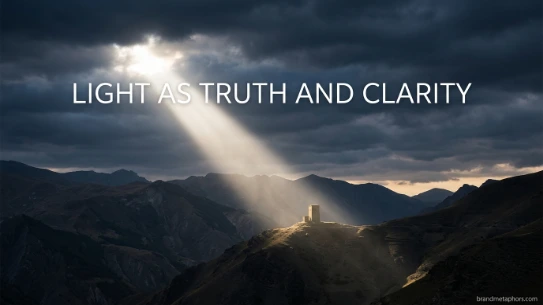
Light is also used to represent truth. People often say, “let’s bring this into the light,” meaning let’s make something honest and clear.
Truth is sometimes hidden by confusion, lies, or misunderstanding. Darkness becomes a symbol of concealment, while light becomes a symbol of openness.
Emotional Impact
When truth comes out, it can feel uncomfortable, but it also brings relief. For example, if a misunderstanding is resolved between friends, it feels like emotional fog has lifted.
Light as truth also represents clarity in decision-making. When someone says, “I finally saw things clearly,” they are describing a mental shift from confusion to understanding.
This metaphor teaches that truth may not always be easy, but it brings freedom and stability in the long run.
Light as Guidance and Direction
Light often represents guidance, especially when someone is lost. In darkness, movement becomes uncertain. Even a small light can help show the way forward.
H3: The Lantern in the Dark Path
Imagine walking on a forest path at night with only a lantern. You cannot see everything, but you can see enough to take the next step. That is how guidance works in life.
People, mentors, or experiences often act as “lights” that guide decisions. A teacher can be a guiding light for a student. A friend can be a light during emotional confusion.
Life Interpretation
We rarely see the full future. Instead, we move step by step. Light as guidance reminds us that we do not need to know everything at once. We only need enough clarity for the next decision.
Light as Life and Energy
Light is also a metaphor for life itself. Without light, most living systems cannot survive. Because of this, it becomes a symbol of energy, vitality, and existence.
A person full of life is often described as “radiant” or “shining.” This does not refer to physical brightness but emotional energy.
Emotional Energy
When someone is happy, motivated, or passionate, they seem to “glow.” Their presence feels warm and alive. On the other hand, sadness or exhaustion is often described as dimness or fading.
This metaphor shows that human emotions are often understood in visual terms. Light becomes a way to express inner energy in a simple and powerful image.
Light as Spiritual Awakening
In many traditions, light represents spiritual awakening or inner growth. It symbolizes a deeper understanding of life beyond physical reality.
H3: Inner Illumination
Spiritual light is not something seen with eyes but felt within. People describe moments of peace, realization, or connection as “light entering the soul.”
This metaphor suggests transformation from confusion about life to a sense of purpose and awareness. It is often used in meditation, philosophy, and personal growth journeys.
Meaning in Daily Life
Even outside religion or spirituality, people experience moments of inner clarity—when priorities become clear or emotional burdens feel lighter. These moments are often described as “finding inner light.”
Light as Emotional Warmth
Light is not only about seeing—it is also about feeling. Warm light, like sunlight or candlelight, creates comfort and safety.
H3: The Feeling of Home
Think of sitting in a softly lit room during a calm evening. That warmth is emotional as much as physical. It makes people feel safe and relaxed.
When someone is described as a “warm light in someone’s life,” it means they bring emotional comfort, kindness, and support.
Human Connection
Relationships often rely on emotional warmth. Light metaphors help express love, care, and belonging. A kind person “lights up” a room not because of brightness, but because of emotional presence.
Light in Moments of Inspiration

Inspiration is often described as a sudden spark or flash of light. This metaphor shows how ideas appear quickly and unexpectedly.
The Spark of Ideas
Creativity often begins with a small moment—a thought, image, or feeling that “lights up” the mind. From there, ideas grow and develop.
Writers, artists, and thinkers often describe inspiration as light breaking through silence or emptiness.
Real-Life Meaning
In daily life, inspiration can come from simple moments: a conversation, a memory, or even nature. These moments act like sparks that help people create, solve problems, or change direction.
Light as Awareness and Mindfulness
Light is also used to describe awareness. To be “aware” means to see things clearly without distraction or confusion.
When someone becomes mindful, they are often described as becoming “awake” or “enlightened.” This means they notice thoughts, emotions, and surroundings more clearly.
Practical Insight
Mindfulness helps people slow down and observe life as it is. Light as awareness suggests that understanding grows when attention becomes clear and focused.
It teaches that clarity is not about having more information but about seeing what is already present.
Light and Darkness as Contrast
Light metaphors often work because they are paired with darkness. Without darkness, light has no meaning.
H3: Emotional Contrast
Happiness feels stronger after sadness. Peace feels deeper after chaos. This contrast helps humans understand emotions more clearly.
Darkness represents confusion, fear, or absence of knowledge. Light represents presence, safety, and understanding. Together, they form a complete picture of human experience.
Life Lesson
This contrast teaches that difficult times are part of understanding joy. Without struggle, clarity would not feel meaningful.
Light in Communication and Expression
We often use light metaphors in everyday speech without noticing it. Phrases like “she shines,” “a bright idea,” or “seeing things in a new light” are common.
Language Power
These expressions help simplify complex emotions. Instead of explaining feelings in detail, we use light as a shortcut for meaning.
Social Understanding
Light metaphors also help people connect emotionally. When someone says, “you are my light,” it expresses gratitude, love, and emotional dependence in a simple way.
Language becomes more expressive when it uses shared human experiences like light and darkness.
Light as Transformation and Growth
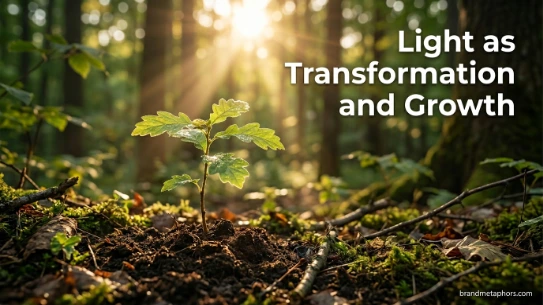
Light often represents change from one state to another. It shows movement from confusion to clarity, from weakness to strength, or from fear to confidence.
Personal Growth Journey
People often go through stages of learning and change. At first, things feel unclear. Over time, understanding grows. This journey is often described as “moving toward light.”
Real-Life Example
Someone overcoming fear or self-doubt may describe their progress as stepping into light. It shows that growth is not instant but gradual and continuous.
Conclusion
Metaphors for light help us understand life in a deeper way. Light represents hope in difficulty, knowledge in confusion, truth in uncertainty, and guidance in lost moments. It also reflects emotional warmth, inspiration, awareness, and personal growth.
Across different experiences, light remains a universal symbol because it connects physical reality with inner meaning. It helps us describe feelings that are otherwise hard to explain. Whether it is a small spark of inspiration or a full moment of understanding, light always brings clarity.
In everyday life, these metaphors remind us that even in dark times, change is possible. A single moment of insight, kindness, or understanding can shift everything. Light, in all its meanings, teaches us that clarity is always within reach—we only need to notice it.