
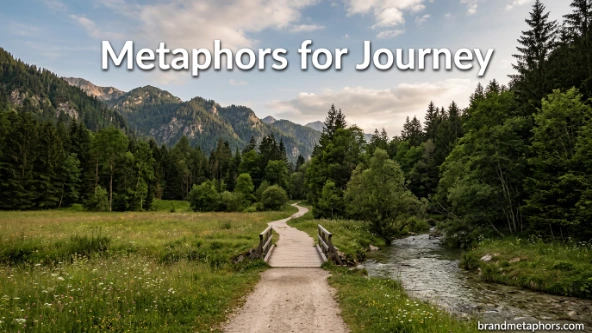
The Road Beneath Our Feet
The train rattles through the night. Outside the window, small towns flicker like fireflies before fading into darkness again. A child presses their forehead to the glass, wondering what waits at the next stop. Beside them, an old traveler folds a map filled with creases, coffee stains, and memories. Every mile carries a story. Every turn hides a lesson.
That is the beauty of a journey.
A journey is more than movement from one place to another. It is growth, change, discovery, and sometimes even loss. Because journeys are deeply emotional and universal, writers and speakers often use metaphors to describe them. These metaphors help us explain life, love, dreams, healing, and ambition in ways that feel vivid and unforgettable.
In this article, you will explore powerful metaphors for journey, their meanings, emotional layers, and creative uses. You will also find examples, storytelling ideas, writing prompts, and practical tips for using these metaphors in daily life, social media captions, poetry, and storytelling. Whether you are a student, writer, teacher, or simply someone searching for the right words, these metaphors can transform ordinary language into something memorable.
Why Journey Metaphors Matter in Writing and Life
Metaphors Turn Movement Into Meaning
A journey is something everyone understands. Even people who have never traveled far know what it feels like to move through seasons of life. That is why journey metaphors are so powerful. They connect emotional experiences with physical movement.
When someone says:
- “Life is a winding road.”
- “Her dreams were a distant horizon.”
- “He reached a crossroads.”
we instantly imagine motion, uncertainty, and direction.
These metaphors make emotions easier to see and feel.
Journey Metaphors Create Emotional Depth
Journey imagery adds texture to writing. Instead of simply saying someone struggled, you can say:
“She climbed a mountain of setbacks.”
That single image creates effort, exhaustion, and determination all at once.
They Appear Everywhere
Journey metaphors are common in:
- Poetry
- Novels
- Motivational speeches
- Films
- Song lyrics
- Social media captions
- Everyday conversations
Even ancient stories often revolve around symbolic journeys. From Homer’s Odyssey to modern adventure films, the journey represents transformation.
Life as a Road
Meaning of the Metaphor
One of the most famous metaphors for journey is life as a road. Roads can be smooth, broken, crowded, lonely, straight, or twisting. Each version reflects a different emotional experience.
Example Sentences
- “My career has been a long and winding road.”
- “She chose the difficult road instead of the easy one.”
- “Their friendship reached a dead end.”
Alternative Expressions
- Path of life
- Endless highway
- Dusty trail
- Open road
- Twisting lane
Emotional and Sensory Details
Imagine walking along a gravel road at sunset. Dust rises beneath your shoes. The air smells warm and dry. You cannot see the final destination, but you keep moving forward. That image mirrors uncertainty in real life.
Mini Storytelling Example
A young musician leaves his village carrying only a guitar and a backpack. Every city changes him. Some roads lead to failure. Others lead to applause. Years later, he realizes the road itself shaped who he became.
Bonus Writing Tip
Use road imagery when describing:
- Personal growth
- Career struggles
- Relationships
- Spiritual development
Road metaphors work especially well in motivational writing.
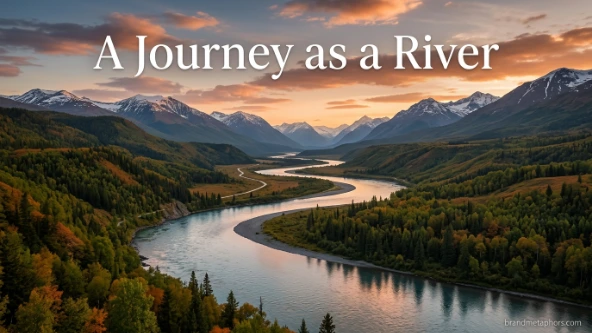
A Journey as a River
Meaning of the Metaphor
A river symbolizes movement, change, and unpredictability. Sometimes life flows calmly. Sometimes it crashes through storms and rocks.
Example Sentences
- “Her life flowed like a restless river.”
- “We drifted apart like branches in a stream.”
- “His ambitions surged like floodwater.”
Alternative Ways to Express It
- Current of life
- Flowing stream
- Ocean tide
- Waterfall of experiences
Emotional Layers
River metaphors often suggest surrender. You cannot fully control a river. You learn to move with it.
This metaphor is excellent for discussing:
- Healing
- Emotional change
- Time passing
- Spiritual journeys
Literary Reference
In many cultures, rivers symbolize transformation, Buddhism, rivers often represent impermanence. In literature, characters crossing rivers frequently enter new phases of life.
Interactive Exercise
Think about your current life situation.
Ask yourself:
- Is your journey calm like a lake?
- Fast like rapids?
- Lost in fog?
- Overflowing after heavy rain?
Write three sentences describing your life as water.
The Mountain Climb Metaphor
Meaning and Symbolism
Mountains symbolize challenges, ambition, and endurance. Climbing a mountain represents hard work and determination.
Example Sentences
- “Building her business was an uphill climb.”
- “He finally reached the summit of success.”
- “Their recovery felt like climbing Everest.”
Alternative Phrases
- Steep ascent
- Rocky climb
- Reaching the peak
- Climbing toward the clouds
Sensory Imagery
Cold wind bites your skin. Your legs ache. Loose stones slide beneath your feet. Yet the view from above makes every painful step worthwhile.
That is why mountain metaphors feel so emotional.
Real-Life Example
Athletes often describe training as climbing a mountain because progress happens slowly and painfully.
Writers also use mountain imagery in stories about resilience.
Bonus Tip for Social Media
Use mountain metaphors in captions like:
- “Still climbing.”
- “Every step counts.”
- “The summit is worth the struggle.”
Short mountain imagery creates strong emotional impact online.
Journey as a Sailing Voyage
Why This Metaphor Feels Powerful
Sailing metaphors combine adventure with uncertainty. The sea can be peaceful or terrifying, just like life.
Example Sentences
- “Their marriage weathered many storms.”
- “She set sail toward her dreams.”
- “He felt lost at sea after graduation.”
Alternative Expressions
- Navigating rough waters
- Drifting without direction
- Chasing distant shores
- Sailing through storms
Emotional Details
The creaking of wood. Salt in the air. Dark clouds gathering on the horizon. A tiny boat surrounded by endless water.
This imagery instantly creates vulnerability and hope.
Cultural References
Ancient explorers crossing oceans symbolize courage and discovery. Stories of sailors often represent personal transformation.
Writing Prompt
Write about a difficult moment in your life as if you were steering a ship during a storm.
Describe:
- The waves
- The sky
- The fear
- The destination
The Journey as a Maze

Meaning Behind the Metaphor
A maze represents confusion, uncertainty, and searching for answers.
Unlike a straight road, a maze contains dead ends and wrong turns.
Example Sentences
- “College felt like a maze of decisions.”
- “He wandered through a maze of emotions.”
- “Finding purpose became a confusing labyrinth.”
Alternative Ways to Say It
- Tangled pathways
- Endless corridors
- Twisting labyrinth
- Puzzle without a map
Emotional Power
Maze metaphors work well when describing:
- Anxiety
- Identity struggles
- Emotional confusion
- Complicated relationships
Mini Storytelling Example
A woman stands inside a hedge maze at dusk. Every path looks familiar. She feels frustrated and lost until she realizes the stars above can guide her home.
The story mirrors how people often discover clarity internally rather than externally.
Creative Exercise
Draw a simple maze on paper.
Label different paths with:
- Fears
- Dreams
- Decisions
- Memories
Then write about the “exit” you hope to find.
A Journey as a Train Ride
Why Train Metaphors Work
Trains symbolize momentum, timing, and shared experiences. Unlike cars, trains follow tracks, suggesting destiny or structure.
Example Sentences
- “Life sped forward like a runaway train.”
- “She missed the opportunity train.”
- “Their friendship traveled the same tracks for years.”
Alternative Expressions
- Riding the rails
- Changing tracks
- Missing the station
- Boarding a new chapter
Emotional Imagery
Rain taps against train windows. Stations blur by. Strangers come and go. Some stay for one stop. Others remain for the entire ride.
This metaphor beautifully captures relationships.
Real-Life Reflection
People often enter and leave our lives like passengers. Some conversations last minutes but change everything forever.
Bonus Writing Tip
Train metaphors work wonderfully in nostalgic or reflective writing.
The Garden Path Journey Metaphor
Meaning of the Metaphor
A garden path symbolizes growth, patience, and quiet transformation.
Unlike dramatic mountains or storms, gardens change slowly.
Example Sentences
- “Her healing unfolded like a garden path.”
- “Success bloomed step by step.”
- “Their love grew like climbing vines.”
Alternative Expressions
- Blooming journey
- Seasons of growth
- Planting dreams
- Harvesting wisdom
Emotional and Sensory Details
Soft soil beneath bare feet. Morning dew on leaves. The scent of roses after rain.
Garden metaphors create peace and intimacy.
Literary Connection
Many poets use gardens to symbolize the soul. Secret gardens often represent hidden emotional worlds.
Interactive Prompt
Think about your goals as seeds.
Write down:
- Which dreams need watering?
- Which fears act like weeds?
- What kind of “sunlight” encourages you?
This exercise builds emotional connection to your growth.
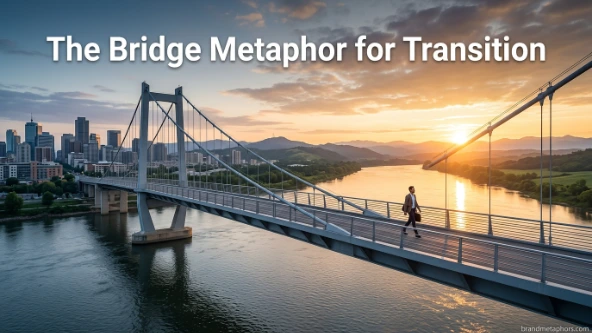
The Bridge Metaphor for Transition
Meaning and Symbolism
Bridges connect two places. Metaphorically, they represent transition, change, and movement between stages of life.
Example Sentences
- “Graduation became a bridge into adulthood.”
- “Forgiveness built a bridge between them.”
- “She stood between the past and future.”
Alternative Expressions
- Crossing over
- Reaching the other side
- Leaving old shores behind
Emotional Weight
Bridges often symbolize fear because crossing them means leaving something familiar.
But they also symbolize hope.
Mini Storytelling Example
An elderly man walks slowly across a wooden bridge near his childhood home. Halfway across, he pauses and realizes he has spent his entire life trying to return to himself.
Simple imagery can carry deep emotional meaning.
Bonus Social Media Idea
Bridge metaphors work beautifully in captions about change:
- “Crossing into a new season.”
- “Some bridges lead home.”
- “The other side is waiting.”
Journey Through the Forest
Symbolism of Forest Imagery
Forests represent mystery, fear, growth, and self-discovery.
In fairy tales, forests are places where characters transform.
Example Sentences
- “She wandered through the forest of grief.”
- “His future felt dark and unfamiliar.”
- “They found light between the trees.”
Alternative Phrases
- Lost in the woods
- Walking among shadows
- Finding a clearing
- Into the wilderness
Sensory Experience
Wet earth. Cracking twigs. Wind whispering through branches. Distant birds calling in the dark.
Forest metaphors create strong atmosphere.
Cultural References
From Little Red Riding Hood to Dante’s Inferno, forests often symbolize emotional or spiritual confusion.
Creative Writing Exercise
Describe your fears as creatures hiding in a forest.
Then describe the light that helps you move forward.
This exercise strengthens emotional storytelling.
The Compass and Map Metaphor
Meaning Behind the Symbol
Maps and compasses symbolize guidance, purpose, and direction.
They remind us that journeys require choices.
Example Sentences
- “Her values became her compass.”
- “He threw away the map and trusted instinct.”
- “Their dreams pointed north.”
Alternative Expressions
- Following inner direction
- Searching for true north
- Charting a course
Emotional Meaning
Sometimes people feel lost because they follow someone else’s map instead of their own.
This metaphor encourages authenticity.
Real-Life Example
Travelers often discover unexpected beauty after taking unplanned routes. The same happens emotionally in life.
Bonus Tip for Writers
Use compass imagery when writing about:
- Identity
- Purpose
- Leadership
- Decision-making
It creates philosophical depth without sounding overly complicated.
How to Use Journey Metaphors in Everyday Writing
Make the Metaphor Match the Emotion
Choose metaphors carefully.
For example:
- Mountains fit struggle.
- Rivers fit emotional flow.
- Forests fit confusion.
- Bridges fit transition.
Matching imagery to emotion strengthens writing.
Avoid Overused Phrases
Some metaphors become clichés when repeated too often.
Instead of:
- “Life is a journey”
Try:
- “Life unfolded like a train disappearing into fog.”
Fresh imagery feels more memorable.
Add Sensory Details
Good metaphors engage senses.
Describe:
- Sounds
- Smells
- Weather
- Texture
- Movement
This creates immersion.
Keep It Natural
Do not overload every sentence with metaphors. One strong image is usually more effective than many weak ones.
Creative Activities to Practice Journey Metaphors
Exercise 1: Describe Your Week as a Journey
Write one paragraph comparing your week to:
- A stormy sea
- A desert road
- A crowded train
- A hidden trail
Exercise 2: Create a Personal Symbol
Choose one object that represents your life right now:
- Compass
- Lantern
- Backpack
- Boat
- Bridge
Explain why.
Exercise 3: Social Media Caption Challenge
Write three short captions using journey metaphors.
Example:
- “Still walking toward sunrise.”
- “Every detour taught me something.”
- “My roots grew during the storm.”
Exercise 4: Build a Character Journey
Create a fictional character.
Describe:
- Their starting point
- Obstacles
- Emotional destination
- Symbolic path
This helps writers develop deeper storytelling.
Conclusion
Journeys shape every human life. Some paths are bright and beautiful. Others feel lonely, confusing, or painfully steep. Yet metaphors help us understand those experiences in ways plain language often cannot.
A road can symbolize purpose. A river can symbolize change. A mountain can symbolize struggle. A forest can symbolize fear. Through these images, ordinary emotions become vivid and unforgettable.
The best journey metaphors do more than decorate writing. Everyone connect people. They make readers feel seen. They transform personal experiences into universal truths.
So the next time you write about growth, heartbreak, dreams, or healing, do not simply explain the feeling. Turn it into a path, a storm, a bridge, or a river. Let readers walk beside your words.
After all, every life is a journey waiting to be told.
FAQs About Metaphors for Journey
What is a metaphor for journey?
A metaphor for journey compares life, growth, or experiences to travel or movement. Examples include roads, rivers, mountains, and sailing voyages.
Why are journey metaphors important in writing?
Journey metaphors create emotional depth, vivid imagery, and stronger connections with readers. They make abstract feelings easier to understand.
What are common journey metaphors?
Common examples include:
- Life is a road
- Climbing a mountain
- Sailing through storms
- Crossing bridges
- Walking through forests
How can I create original journey metaphors?
Focus on sensory details and emotions. Instead of using common phrases, imagine unique paths, weather, landscapes, or travel experiences connected to feelings.
Where can I use journey metaphors?
You can use them in:
- Poetry
- Stories
- Essays
- Speeches
- Social media captions
- Personal journals
- Motivational writing