
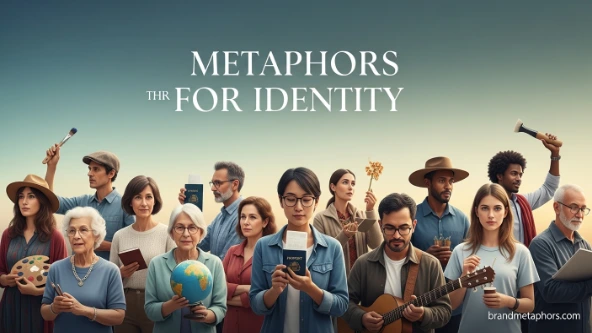
The Mirror in the Rain: Why Identity Feels So Hard to Explain
You stand in front of a mirror after a long day. The glass is fogged at the edges. Rain taps softly against the window. For a moment, you wonder: Who am I beneath all the roles, labels, and expectations?
Identity is one of the deepest parts of human life. It shapes how we speak, dream, love, and move through the world. Yet identity is difficult to describe directly. That is why people often turn to metaphors for identity. Metaphors give shape to feelings that are hard to explain. They turn abstract emotions into vivid images we can see and feel.
A person may call identity a “patchwork quilt,” a “river,” or even a “hidden garden.” Each metaphor reveals something unique about human experience. Some show growth. Others show conflict, memory, culture, or transformation.
In literature, psychology, art, and everyday conversation, metaphors for identity help people express who they are. They also help readers connect emotionally with stories and ideas. Whether you are a writer, student, teacher, poet, or someone exploring personal growth, these metaphors can deepen your understanding of yourself and others.
This article explores powerful identity metaphors, creative exercises, literary inspiration, and practical ways to use these comparisons in writing and daily life.
Why Metaphors for Identity Matter
Identity Is Often Invisible
Identity cannot always be touched or measured. It lives inside memories, values, beliefs, relationships, and experiences. Because identity is invisible, metaphors help make it visible.
When someone says, “I feel like a tree with broken branches,” we instantly understand emotional pain and resilience. The image carries meaning faster than a long explanation.
Metaphors Build Emotional Connection
Writers and speakers use metaphors because they create emotion. A metaphor allows readers to feel identity rather than simply understand it intellectually.
For example:
- “Her identity was a lighthouse in the storm.”
- “He carried his culture like a flame in cold weather.”
These comparisons create mood, imagery, and emotional depth.
Identity Changes Over Time
Many metaphors for identity focus on movement and transformation. This reflects real life. People grow through childhood, loss, migration, love, success, and failure.
Identity is not always fixed. Sometimes it bends like water. Sometimes it blooms like a garden.
Identity as a Mask
Meaning of the Metaphor
One of the oldest metaphors for identity is the mask. A mask represents the difference between a person’s outer appearance and inner self.
People often wear social masks at work, school, or online. These masks protect emotions or help individuals fit into certain groups.
Example Sentence
“Behind his confident smile, he wore a mask stitched together from fear and expectation.”
Alternative Ways to Express It
- Identity as a costume
- Identity as painted makeup
- Identity as armor
- Identity as a stage role
Emotional and Sensory Details
Imagine a heavy velvet mask pressing against the skin during a crowded party. The room is loud, but underneath the mask there is silence and exhaustion.
That sensory image makes the metaphor more powerful.
Mini Storytelling Example
In many cultures, theater masks symbolize hidden emotion. In ancient Greek drama, actors used masks to express character and mood. Today, social media often acts as a modern mask where people show polished versions of themselves.
Identity as a River
Meaning of the Metaphor
A river symbolizes movement, change, and continuity. Even though river water changes every second, the river still keeps its name. Identity works the same way.
People evolve through life, but something essential often remains.
Example Sentence
“Her identity flowed like a river, shaped by every place she passed through.”
Alternative Ways to Express It
- Identity as an ocean current
- Identity as rainfall
- Identity as a waterfall
- Identity as a winding stream
Emotional and Sensory Details
Picture cool water sliding over stones at dawn. The river changes direction after storms, yet it continues forward. This creates a feeling of resilience and motion.
Real-Life Connection
Immigrants and travelers often describe identity this way. Moving between cultures can reshape language, habits, and traditions while preserving deeper roots.
Creative Exercise
Write about your life as a river.
Ask yourself:
- What are the calm waters in your story?
- What are the dangerous rapids?
- Where does your river begin?
- Where is it flowing now?
Identity as a Patchwork Quilt

Meaning of the Metaphor
A quilt is made from many separate pieces stitched together. This metaphor reflects how identity forms from memories, cultures, relationships, and experiences.
No single patch tells the whole story.
Example Sentence
“His identity was a patchwork quilt sewn from family history, heartbreak, and hope.”
Alternative Ways to Express It
- Identity as a mosaic
- Identity as woven fabric
- Identity as stitched cloth
- Identity as layered paper
Emotional and Sensory Details
Imagine rough denim beside soft cotton. Some pieces are bright and joyful. Others are faded with age. Together, they form something warm and meaningful.
Literary Reference
Many memoir writers use textile imagery when discussing ancestry and heritage. The idea of “woven identity” appears in poetry across many cultures.
Bonus Tip for Writers
Use texture words when writing identity metaphors:
- Frayed
- Stitched
- Torn
- Woven
- Velvet
- Threadbare
These details create vivid imagery.
Identity as a Garden
Meaning of the Metaphor
A garden represents growth, care, and transformation. Identity requires attention and nurturing.
Some parts bloom naturally. Others need healing.
Example Sentence
“She treated her identity like a garden, protecting what grew and removing what poisoned the soil.”
Alternative Ways to Express It
- Identity as a forest
- Identity as a blooming flower
- Identity as fertile soil
- Identity as seeds in spring
Emotional and Sensory Details
The smell of wet earth after rain. Sunlight touching green leaves. Roots spreading quietly underground. These sensory details create peace and renewal.
Mini Storytelling Example
A teenager discovering new passions may feel like a seed breaking through soil for the first time. Growth feels awkward before it becomes beautiful.
Interactive Prompt
Draw your identity as a garden.
Include:
- Flowers representing strengths
- Weeds representing fears
- Trees representing important people
- Paths representing life choices
Identity as a Mirror
Meaning of the Metaphor
A mirror reflects self-perception. Sometimes the reflection feels accurate. Sometimes it feels distorted.
This metaphor explores self-awareness and insecurity.
Example Sentence
“He looked into the mirror of identity and struggled to recognize himself.”
Alternative Ways to Express It
- Identity as broken glass
- Identity as reflection in water
- Identity as polished silver
- Identity as a shadowed mirror
Emotional and Sensory Details
Cold glass under fingertips. A blurred reflection at midnight. Cracks splitting the image into pieces.
These details create emotional intensity.
Cultural Connection
Fairy tales and films often use mirrors to symbolize truth or transformation. In stories, mirrors reveal hidden fears and desires.
Social Media and Identity
Modern life adds another layer to the mirror metaphor. Online profiles act like digital reflections. Sometimes they show truth. Sometimes they show performance.
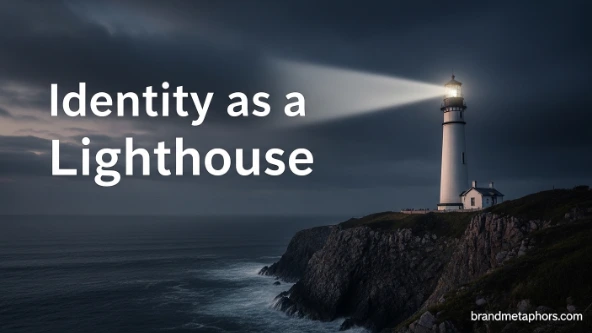
Identity as a Lighthouse
Meaning of the Metaphor
A lighthouse symbolizes guidance and stability. Some people view identity as the inner light that helps them navigate difficult moments.
Example Sentence
“Her values became a lighthouse during seasons of confusion.”
Alternative Ways to Express It
- Identity as a compass
- Identity as a guiding star
- Identity as a lantern
- Identity as a map
Emotional and Sensory Details
Imagine crashing waves, thick fog, and distant light cutting through darkness. The image creates safety and hope.
Real-Life Example
People often rediscover identity after hardship by reconnecting with personal values, culture, or faith. That inner direction becomes their lighthouse.
Practical Writing Tip
Use light imagery when writing hopeful identity metaphors:
- Glowing
- Flickering
- Burning
- Shining
- Radiant
These words add emotional warmth.
Identity as a Book
Meaning of the Metaphor
A book represents personal history and storytelling. Every chapter reflects growth, mistakes, and transformation.
Some chapters are joyful. Others are painful.
Example Sentence
“His identity was an unfinished book filled with crossed-out pages and new beginnings.”
Alternative Ways to Express It
- Identity as a diary
- Identity as poetry
- Identity as a handwritten letter
- Identity as a library
Emotional and Sensory Details
The smell of old paper. Ink stains on fingertips. Torn pages tucked between chapters.
These details make the metaphor feel alive.
Mini Storytelling Example
A person recovering from failure may realize they are not trapped in one chapter. They still have pages left to write.
Interactive Exercise
Write the titles of five “chapters” in your life.
For example:
- The Quiet Childhood
- Learning to Speak Up
- The City That Changed Me
- Losing Myself
- Becoming Whole Again
This exercise helps readers reflect creatively on identity.
Identity as a Tree
Meaning of the Metaphor
A tree symbolizes roots, family, strength, and growth. The roots connect identity to history and ancestry, while branches represent future possibilities.
Example Sentence
“Her identity stood like an old tree, deeply rooted yet always reaching toward the sky.”
Alternative Ways to Express It
- Identity as roots
- Identity as branches
- Identity as a forest
- Identity as rings inside wood
Emotional and Sensory Details
Rough bark under the palm. Wind moving through leaves. Roots gripping dark soil after a storm.
These details create stability and endurance.
Cultural and Literary References
Family trees are used worldwide to explain ancestry and belonging. Many poems describe people as trees shaped by generations before them.
Bonus Tip for Daily Life
Use the tree metaphor during journaling. Ask:
- What are my roots?
- What nourishes me?
- Which branches am I afraid to grow?
Identity as a Puzzle
Meaning of the Metaphor
A puzzle represents complexity and self-discovery. Some pieces fit easily. Others take years to understand.
This metaphor works especially well for adolescence and personal change.
Example Sentence
“For years, she searched for the missing pieces of her identity.”
Alternative Ways to Express It
- Identity as scattered fragments
- Identity as a maze
- Identity as a code
- Identity as a hidden picture
Emotional and Sensory Details
Tiny puzzle pieces spread across a wooden table. Frustration, patience, and sudden joy when pieces connect.
Real-Life Connection
Many people experience identity confusion during major life transitions:
- Moving to a new country
- Changing careers
- Losing relationships
- Discovering passions
The puzzle metaphor reflects that journey.
Interactive Prompt
List five pieces that make up your identity:
- Culture
- Dreams
- Personality
- Relationships
- Memories
Then ask yourself which piece feels strongest today.
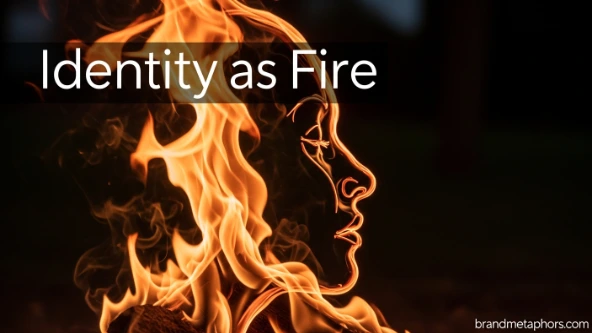
Identity as Fire
Meaning of the Metaphor
Fire symbolizes passion, transformation, and inner power. Identity can burn brightly or flicker during difficult times.
Example Sentence
“Despite years of criticism, the fire of her identity never went out.”
Alternative Ways to Express It
- Identity as a flame
- Identity as embers
- Identity as wildfire
- Identity as a spark
Emotional and Sensory Details
The warmth of flames in darkness. Smoke rising into cold air. Sparks dancing upward like hope.
Literary Reference
Fire often appears in myths and novels as a symbol of rebirth. Characters emerge transformed after emotional “fires.”
Social Media Caption Ideas
These identity metaphors work well in captions:
- “Still finding the fire inside me.”
- “Roots deep, spirit wild.”
- “Growing into who I was meant to be.”
How to Use Metaphors for Identity in Writing
Create Emotional Depth
Metaphors make essays, poetry, and stories feel more personal. Instead of saying someone feels lost, compare them to something vivid.
Weak sentence:
- “She was confused.”
Stronger sentence:
- “She wandered through her identity like a traveler lost in fog.”
Mix Emotion With Sensory Detail
Strong metaphors combine feeling with imagery.
Example: “His identity cracked like ice beneath heavy footsteps.”
Readers can almost hear the sound.
Avoid Overused Comparisons
Try fresh identity metaphors inspired by:
- Nature
- Weather
- Music
- Architecture
- Art
- Space
Unique metaphors stand out more.
Keep the Tone Consistent
If your metaphor is gentle and poetic, avoid sudden harsh language unless it serves a purpose.
Consistency improves readability and emotional flow.
Creative Exercises for Exploring Identity Metaphors
Exercise 1: Finish the Sentence
Complete these prompts:
- My identity feels like…
- My memories are…
- My future self looks like…
- My fears sound like…
Write quickly without overthinking.
Exercise 2: Identity Collage
Create a collage using words or images that represent who you are.
Include:
- Colors
- Places
- Quotes
- Symbols
- Objects
This visual exercise can inspire writers and artists.
Exercise 3: Write a Short Scene
Describe yourself entering a room using only metaphorical language.
Example: “She arrived like sunlight breaking through winter clouds.”
This builds creative writing skills.
Common Mistakes When Using Identity Metaphors
Using Too Many Metaphors at Once
Too many comparisons can confuse readers. Focus on one strong image at a time.
Choosing Generic Imagery
Instead of “life is a journey,” try more original imagery:
- “Identity is a house under renovation.”
- “Identity is ink spreading through water.”
Forgetting Emotional Truth
A metaphor should feel emotionally honest. Readers connect more with authenticity than complexity.
Conclusion
Metaphors for identity help people describe the invisible parts of themselves. They turn emotions into landscapes, memories into rivers, and personal growth into gardens full of possibility.
Identity is rarely simple. It shifts through time, relationships, culture, struggle, and discovery. That complexity is exactly why metaphors matter. They give language to feelings that ordinary words cannot fully hold.
Whether identity feels like a mask, a river, a fire, or a patchwork quilt, each metaphor reveals something meaningful about human experience. These comparisons do more than decorate writing. They help people understand themselves and connect with others on a deeper level.
The next time you struggle to explain who you are, pause for a moment. Listen closely to your memories, emotions, and dreams. Somewhere inside them, a metaphor is already waiting.
FAQs About Metaphors for Identity
What are metaphors for identity?
Metaphors for identity are symbolic comparisons that help describe personality, emotions, culture, and self-understanding in creative ways.
Why are identity metaphors important in writing?
They create emotional depth, improve imagery, and help readers connect more strongly with ideas and characters.
What is the best metaphor for identity?
There is no single best metaphor. Common examples include identity as a river, mask, tree, puzzle, or garden.
How can students use metaphors for identity?
Students can use them in essays, poetry, journaling, storytelling, and self-reflection exercises to express thoughts creatively.
Can metaphors help with self-discovery?
Yes. Metaphors encourage reflection and can reveal hidden emotions, values, and personal experiences in meaningful ways.