
Have you ever watched someone make a completely unexpected decision and thought, “What on earth just happened?” Maybe a friend quit a stable job to travel the world with nothing but a backpack. Maybe a character in a novel charged into danger without a second thought. Or perhaps you have experienced one of those chaotic days when everything felt upside down and reality seemed to dance to a different rhythm.
Language often struggles to capture such moments. The word crazy is commonly used to describe behavior, situations, ideas, or emotions that seem unusual, unpredictable, or wildly energetic. Yet relying on the same word repeatedly can make writing feel dull and repetitive.
This is where metaphors become powerful. Metaphors paint vivid pictures that help readers feel the intensity, surprise, and emotion behind an experience. They transform ordinary descriptions into memorable images.
In this article, you’ll discover creative metaphors for crazy, their meanings, practical examples, alternative expressions, and ways to use them in writing, storytelling, social media, and everyday conversation. Whether you’re a writer, student, teacher, or language enthusiast, these metaphors can add color and imagination to your words.
Why Use Metaphors for Crazy?
How Metaphors Make Descriptions More Vivid
The word crazy can mean many things. It may describe excitement, confusion, unpredictability, or intense passion.
Metaphors allow writers to communicate these different shades of meaning without repeating the same adjective.
Instead of saying:
“The party was crazy.”
You could write:
“The party was a fireworks factory after midnight.”
The second version creates a stronger mental image and emotional response.
The Power of Imagery
Good metaphors help readers:
- Visualize scenes
- Feel emotions
- Remember descriptions
- Connect with stories
- Understand complex experiences
They turn abstract ideas into concrete pictures.
A Tornado in Tennis Shoes
Meaning and Explanation
A tornado is powerful, unpredictable, and impossible to ignore. Comparing someone to a tornado in tennis shoes suggests they bring chaos and energy wherever they go.
This metaphor works well for energetic people who constantly create excitement or confusion.
Example Sentence
“Jake burst into the meeting like a tornado in tennis shoes, changing every plan within minutes.”
Alternative Expressions
- Human hurricane
- Walking whirlwind
- Storm on legs
- Spinning cyclone
Mini Story
Imagine a classroom before a substitute teacher arrives. Everything is calm. Then one student begins telling jokes, moving desks, and organizing spontaneous games. Within minutes, the room transforms completely.
That student is a tornado in tennis shoes.
Sensory Details
You can almost hear papers flying and chairs scraping across the floor as the whirlwind passes through.
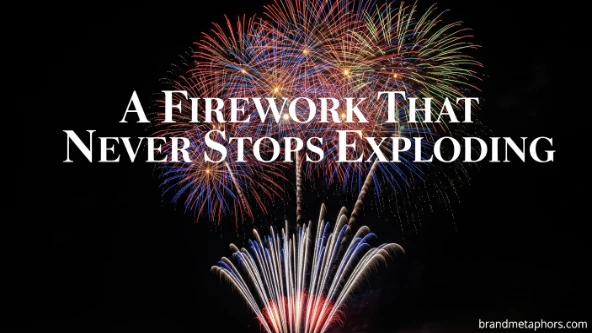
A Firework That Never Stops Exploding
Meaning and Explanation
Fireworks are loud, bright, and unpredictable. Someone who constantly surprises people with bold actions or ideas can be compared to a never-ending firework.
Example Sentence
“Her imagination was a firework that never stopped exploding.”
Alternative Ways to Say It
- Endless sparkler
- Sky full of fireworks
- Fountain of sparks
- Explosion of energy
Real-Life Example
Many artists and inventors seem to fit this metaphor. Their minds jump rapidly from one idea to another, producing bursts of creativity that surprise everyone around them.
Emotional Effect
This metaphor often conveys excitement rather than negativity.
A Compass Spinning in Every Direction
Meaning and Explanation
A compass normally points north. A spinning compass suggests confusion, uncertainty, or unpredictable thinking.
Example Sentence
“His thoughts were a compass spinning in every direction during the stressful interview.”
Alternative Expressions
- Lost ship at sea
- Broken navigation system
- Wandering arrow
- Directionless wind
Literary Connection
Many adventure stories feature characters who lose their way physically and emotionally. A spinning compass captures both experiences beautifully.
Sensory Detail
Picture the compass needle trembling and spinning endlessly, unable to settle.
A Monkey Driving a Race Car
Meaning and Explanation
This humorous metaphor suggests reckless unpredictability.
Something may appear exciting but lacks control.
Example Sentence
“Managing that project felt like watching a monkey drive a race car.”
Alternative Expressions
- Chaos behind the wheel
- Wild driver on a roller coaster
- Captain of confusion
- Runaway engine
Why It Works
The image combines speed with a complete lack of order, making it memorable and funny.
Writing Tip
Humorous metaphors often make descriptions more entertaining and relatable.
A Roller Coaster Without Brakes
Meaning and Explanation
This metaphor represents intense unpredictability and emotional extremes.
Example Sentence
“The week before graduation felt like a roller coaster without brakes.”
Alternative Ways to Express It
- Free-falling elevator
- Runaway train
- Uncontrolled ride
- Endless plunge
Mini Story
Imagine climbing higher and higher on a roller coaster. Suddenly, the brakes disappear. Every turn becomes faster, louder, and more thrilling.
That’s exactly how some chaotic situations feel.
Emotional Impact
This metaphor captures excitement, fear, and uncertainty simultaneously.
A Zoo After Midnight
Meaning and Explanation
Zoos are usually organized spaces. A zoo after midnight suggests complete disorder and unpredictability.
Example Sentence
“The office became a zoo after midnight as everyone rushed to finish the project.”
Alternative Expressions
- Circus without a ringmaster
- Jungle in motion
- Animal parade
- Untamed wilderness
Cultural Appeal
People naturally associate animals with wild behavior, making this metaphor easy to understand.
Sensory Details
Roars, movement, confusion, and unexpected surprises fill the scene.
A Lightning Bolt Trapped in a Bottle
Meaning and Explanation
This metaphor describes someone whose energy is difficult to contain.
Example Sentence
“The young entrepreneur was a lightning bolt trapped in a bottle.”
Alternative Expressions
- Electric storm
- Live wire
- Burst of electricity
- Walking spark
Real-Life Connection
Many ambitious individuals seem constantly energized by ideas and opportunities.
Emotional Tone
This metaphor is often positive and inspiring.
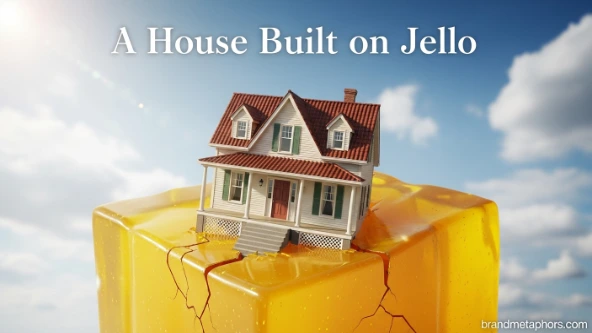
A House Built on Jello
Meaning and Explanation
A house needs a stable foundation. Building one on jello suggests instability and unpredictability.
Example Sentence
“Their plan looked solid, but it was really a house built on jello.”
Alternative Ways to Say It
- Castle on clouds
- Tower on sand
- Floating foundation
- Shaky structure
Why Writers Love It
The image is humorous while clearly communicating weakness and uncertainty.
Sensory Detail
Imagine walls wobbling every time someone takes a step.
A Symphony Played by Thunderstorms
Meaning and Explanation
This metaphor combines beauty with chaos.
It describes situations that seem wild yet strangely impressive.
Example Sentence
“Her creative process was a symphony played by thunderstorms.”
Alternative Expressions
- Musical storm
- Orchestra of chaos
- Melody of madness
- Thunderous harmony
Literary Reference
Many poets use storms as symbols of emotional intensity and creativity.
Emotional Effect
The metaphor suggests both disorder and brilliance.
A Rocket Chasing Butterflies
Meaning and Explanation
Rockets symbolize power and speed. Butterflies symbolize delicate, wandering beauty.
Together, they create an image of intense energy pursuing random goals.
Example Sentence
“His attention span was a rocket chasing butterflies.”
Alternative Expressions
- Jet following feathers
- Speedboat after leaves
- Falcon chasing clouds
- Comet pursuing dreams
Why It Resonates
Many people relate to moments when their minds jump rapidly from one idea to another.
Sensory Details
Picture blazing rocket engines darting after colorful butterflies across the sky.
How to Create Your Own Metaphors for Crazy
Start with Energy
Think of things that move quickly:
- Storms
- Rockets
- Rivers
- Fireworks
- Lightning
Add Unpredictability
Combine them with surprising elements:
- Butterflies
- Balloons
- Mirrors
- Clocks
- Puzzles
Create Unique Images
Examples include:
- A hurricane wearing roller skates
- A volcano juggling snowflakes
- A dragon chasing soap bubbles
The more unexpected the combination, the more memorable the metaphor.
Interactive Exercises to Practice Metaphors for Crazy
Exercise 1: Finish the Metaphor
Complete these:
- Her ideas were like ______.
- The party became a ______.
- My schedule felt like a ______.
Exercise 2: Describe a Chaotic Day
Write five sentences using original metaphors.
Example:
“Monday was a circus balancing on a tightrope above a thunderstorm.”
Exercise 3: Social Media Challenge
Create a metaphor for a busy day using fewer than ten words.
Example:
“Today was a tornado juggling alarm clocks.”
Bonus Writing Prompt
Describe your most unpredictable friend using three metaphors.
Bonus Tips for Using Metaphors in Writing and Daily Life
Use Fresh Imagery
Avoid overused phrases whenever possible.
Match the Tone
Funny situations work well with humorous metaphors.
Serious situations may need more thoughtful imagery.
Engage Multiple Senses
Include:
- Sound
- Sight
- Touch
- Movement
- Emotion
Improve Social Media Posts
Metaphors make captions more memorable.
Instead of:
“Work was crazy today.”
Try:
“Work was a roller coaster without brakes today.”
Strengthen Storytelling
Metaphors help readers visualize scenes and connect emotionally with characters.
FAQs About Metaphors for Crazy
What is a metaphor for crazy?
A metaphor for crazy is a figurative comparison that describes chaotic, unpredictable, energetic, or unusual behavior without using the word crazy directly.
Why should writers use metaphors instead of the word crazy?
Metaphors create stronger imagery, evoke emotions, and make writing more memorable and engaging.
Are metaphors for crazy always negative?
No. Some metaphors suggest creativity, excitement, passion, or innovation rather than negativity.
Can metaphors improve storytelling?
Yes. They help readers visualize scenes and understand emotions more deeply.
How can I create my own metaphors?
Combine an energetic image with an unexpected object, action, or situation to create a unique comparison.
Conclusion
Metaphors for crazy bring color, imagination, and depth to language. Rather than relying on a single overused word, these comparisons help capture the many shades of unpredictability, excitement, confusion, creativity, and energy that people experience every day. Whether you describe someone as a tornado in tennis shoes, a lightning bolt trapped in a bottle, or a rocket chasing butterflies, the right metaphor can transform an ordinary sentence into a vivid picture.
The next time you want to describe a wild situation, challenge yourself to create an original metaphor. You may discover that language becomes more expressive, memorable, and fun. After all, the most unforgettable descriptions often come from seeing the world through imaginative and unexpected comparisons.