

Introduction (150–200 words)
Heartbreak often arrives quietly, like a door that shuts behind you when you thought it would stay open forever. One moment, life feels familiar—messages, laughter, shared plans—and the next, everything echoes with absence. It is not just sadness; it is a strange kind of silence that fills rooms, routines, and even thoughts. People often struggle to explain this feeling because it is both deeply personal and universally understood.
This is where metaphors become powerful. They give shape to emotions that feel too heavy or too complex for direct language. When someone says heartbreak feels like “a cracked mirror” or “a storm that won’t pass,” they are not just being poetic—they are translating pain into something visible and relatable. Metaphors help us understand, process, and sometimes even survive emotional loss.
In real life, heartbreak is not only about romance. It can come from friendships, family, missed opportunities, or broken trust. Exploring metaphors for heartbreak helps us recognize our emotions more clearly and feel less alone in them. This article explores those metaphors deeply, showing how they reflect emotional truth, healing, and human resilience.
1. Heartbreak as a Collapsed House
Heartbreak is often compared to a house that suddenly collapses while you are still inside. Everything that once felt stable—trust, plans, shared memories—comes crashing down at once. You are left standing in the ruins, confused about what still holds and what is lost forever.
This metaphor captures the shock of emotional loss. A relationship, like a home, is built over time. It has foundations of trust, walls of communication, and a roof of shared dreams. When it breaks, the destruction does not feel gradual—it feels sudden, even if cracks existed before.
Emotional Meaning
The collapsed house metaphor shows how unsafe everything feels after heartbreak. Even simple memories can feel like debris you must carefully step around.
Real-Life Reflection
Someone might find it hard to visit places they once shared with a partner. These places feel like broken rooms filled with echoes of what used to be.
This metaphor reminds us that rebuilding takes time. You cannot live comfortably in ruins, but you can slowly clear space for something new.
2. Heartbreak as a Broken Mirror
A broken mirror reflects a distorted version of reality. Heartbreak feels similar—you still see your life, but it does not look whole anymore. Every reflection reminds you of what is missing.
This metaphor highlights identity loss. After emotional pain, people often question who they are without the relationship. The “mirror” they used to see themselves in no longer feels accurate.
H3: Emotional Distortion
Memories become fragmented. Happy moments now feel sharp, like glass edges cutting into thoughts.
H3: Self-Reconstruction
Over time, people begin collecting these broken pieces. They do not return to the old reflection but slowly form a new one.
This metaphor teaches that healing is not about restoring the old mirror—it is about creating a new way to see yourself.
3. Heartbreak as an Empty Room
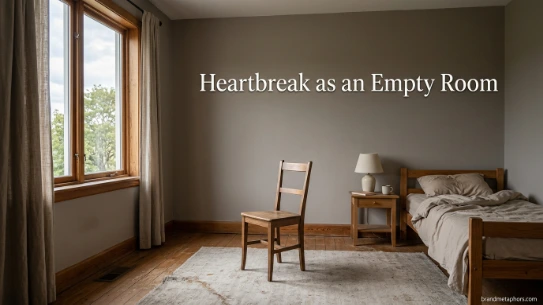
Heartbreak can feel like walking into a room that used to be full of life but is now completely empty. The silence is loud. The absence feels physical.
This metaphor captures loneliness in its purest form. It is not just missing someone—it is missing their presence in everyday spaces.
Emotional Weight
The empty room reflects routines that suddenly lose meaning: good morning messages, shared meals, late-night talks.
Real-Life Experience
People often describe feeling “lost in their own home” after a breakup, as if familiar spaces no longer belong to them.
Over time, empty rooms stop being painful reminders and become spaces for new beginnings.
4. Heartbreak as a Storm Without End
A storm represents emotional chaos—strong, unpredictable, and overwhelming. When heartbreak is described as a storm, it means emotions feel uncontrollable.
Rain, thunder, and wind symbolize sadness, anger, confusion, and longing all happening at once.
H3: Emotional Turbulence
One moment you feel calm, the next you are overwhelmed by memories or regret.
H3: Temporary Nature
Storms always pass, even if they feel endless in the moment. This metaphor offers hope that emotional intensity will eventually settle.
Heartbreak storms teach emotional endurance. You do not stop the storm—you learn how to stand through it.
5. Heartbreak as a Wound That Won’t Close
This metaphor compares heartbreak to a physical injury that keeps reopening. Even small triggers—songs, places, names—can make the pain return.
Unlike visible wounds, emotional wounds are hidden, making them harder to treat.
Emotional Depth
The pain is not constant, but it reappears unexpectedly, reminding you that healing is not linear.
Life Insight
People often think they are “over it,” only to feel the pain again weeks later. This is normal, not failure.
Over time, the wound closes slowly, leaving a scar instead of open pain.
6. Heartbreak as a Tidal Wave
A tidal wave represents emotional overwhelm. It arrives suddenly and knocks everything down without warning.
This metaphor reflects how heartbreak can feel unstoppable in its early stages.
H3: Sudden Impact
You may feel fine one moment and completely overwhelmed the next.
H3: Aftermath
After the wave passes, there is exhaustion, emptiness, and emotional disorientation.
The important lesson is that waves do not last forever. Even the strongest emotional surge eventually retreats.
7. Heartbreak as a Flickering Light
Heartbreak can feel like a light that keeps turning on and off. One moment you feel hope, the next you fall back into sadness.
This metaphor captures emotional instability during healing.
Emotional Meaning
It reflects uncertainty—whether to move on or hold on.
Real-Life Scenario
Someone might feel strong during the day but break down at night when memories return.
The flickering light reminds us that healing is not constant; it moves in phases.
8. Heartbreak as a Lost Language
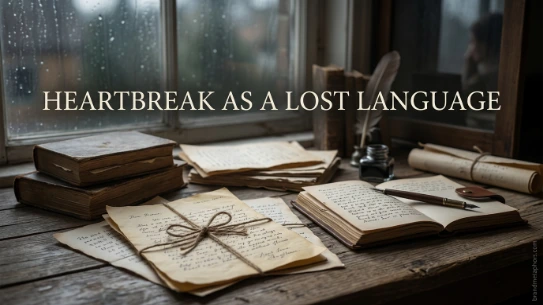
When love ends, communication often feels like a language you once knew but can no longer speak. Words that once meant everything now feel empty or confusing.
This metaphor highlights emotional disconnect.
H3: Misunderstood Expressions
Even simple messages or memories can feel misinterpreted after heartbreak.
H3: Emotional Silence
People may struggle to express feelings because language no longer feels enough.
Over time, a new emotional language forms—one that understands pain, growth, and boundaries.
9. Heartbreak as a Shattered Compass
A compass represents direction and certainty. After heartbreak, it often feels like your emotional compass is broken.
You no longer know which direction leads to healing or closure.
Emotional Confusion
Decisions feel harder. Even small choices can feel overwhelming.
Life Lesson
Eventually, people rebuild their internal compass through experience, self-reflection, and time.
This metaphor shows that losing direction is temporary, not permanent.
10. Heartbreak as a Winter Season
Winter symbolizes emotional coldness, distance, and stillness. Heartbreak often feels like entering a long emotional winter.
H3: Emotional Isolation
People may withdraw socially, feeling detached from warmth and connection.
H3: Slow Healing
Just like winter, this phase feels long but is necessary for renewal.
Spring always follows winter, reminding us that emotional cycles change naturally.
11. Heartbreak as a Book with Torn Pages
This metaphor reflects incomplete stories. A relationship feels like a book that ended too soon or has missing pages.
Emotional Meaning
You remember the story but cannot continue reading it the same way.
Reflection
People often reread emotional “chapters” in their minds, trying to understand what went wrong.
Eventually, they stop trying to rewrite the old book and begin writing a new one.
12. Heartbreak as a Bridge Burned Behind You

A burned bridge symbolizes irreversible endings. Once it is gone, you cannot return to what was before.
H3: Finality
This metaphor reflects acceptance that some relationships cannot be restored.
H3: Moving Forward
Burned bridges force forward movement, even when it feels difficult.
It teaches that closure sometimes comes not from resolution, but from distance and time.
Conclusion
Heartbreak is not a single feeling—it is a collection of emotional experiences that often feel too complex for direct language. Through metaphors like broken mirrors, storms, empty rooms, and shattered compasses, we begin to understand the depth of emotional loss in a more human way. These images do not erase pain, but they make it easier to recognize, express, and eventually process.
What these metaphors share is a quiet truth: heartbreak feels final in the moment, but it is rarely the end of a person’s emotional story. Just as storms pass and winters turn to spring, emotional healing also moves forward, even when it feels slow. Understanding heartbreak through metaphors helps transform confusion into clarity and pain into meaning. It reminds us that even broken things can still reflect, rebuild, and grow.
FAQs
What is a metaphor for heartbreak?
A metaphor for heartbreak is a symbolic comparison that helps describe emotional pain, such as calling it a storm, a broken mirror, or an empty room to express feelings more clearly.
Why are metaphors used to describe heartbreak?
Metaphors help explain complex emotions in simple, relatable images, making it easier for people to understand and express their emotional experiences.
Can metaphors help in healing heartbreak?
Yes, metaphors can help people process emotions by giving shape to their feelings, making pain easier to understand and gradually accept.
What is the most common heartbreak metaphor?
One of the most common metaphors is heartbreak as a storm, symbolizing emotional chaos and intensity that eventually passes.
Are heartbreak metaphors only for romantic loss?
No, they can apply to any emotional loss, including friendships, family relationships, or broken trust.
Why does heartbreak feel like physical pain in metaphors?
Because emotional pain activates similar brain responses as physical pain, making metaphors like “wound” or “injury” feel accurate.
How do metaphors change our understanding of heartbreak?
They shift heartbreak from an abstract feeling into something visual and relatable, helping people process and communicate their emotions more effectively.