
Introduction
Hatred rarely arrives loudly at first. It often begins as a small spark—an unspoken insult, a deep disappointment, or a memory that refuses to fade. Picture a quiet room where everything seems normal, yet inside a person’s mind, something dark is slowly growing. It spreads without permission, shaping thoughts, reactions, and even relationships. Have you ever felt an emotion so strong that it seemed to take control of your inner world? That is how hatred works when it is not understood.
In language and literature, we use metaphors for hatred to make this intense emotion easier to understand. Metaphors help us compare hatred to things we already know—fire, poison, storms, or chains. These images are powerful because they show how hatred feels and how it behaves in real life.
Understanding these metaphors matters. It helps us recognize harmful emotions early, manage them better, and respond more wisely in difficult situations. In this article, we will explore deep and meaningful metaphors for hatred, each revealing how it forms, grows, and affects human life.
Hatred as a Burning Fire
One of the most common metaphors for hatred is fire. Hatred often starts like a small flame—barely visible, easy to ignore. But when it is fed with anger, pain, or repeated thoughts, it grows into something uncontrollable.
Fire spreads quickly, and so does hatred. A single argument can turn into long-term resentment. Just like fire burns anything in its path, hatred damages trust, peace, and relationships.
Real-Life Understanding
Imagine two friends who stop talking after a misunderstanding. At first, it feels small. But every time they remember the event, the “fire” grows stronger. Soon, even simple greetings feel cold.
Fire also gives a lesson: it must be controlled early. If handled with understanding and communication, the flame can be reduced before it becomes destructive. This metaphor teaches that hatred, like fire, is powerful but preventable.
Hatred as Poison in the Mind
Another strong metaphor for hatred is poison. Unlike fire, poison works quietly. It does not always show immediate damage, but it slowly affects thoughts, emotions, and behavior.
Hatred as poison suggests something internal that spreads through the system. It changes how a person sees others and even themselves. Over time, it can make kindness feel difficult and trust feel unsafe.
Emotional Impact
A person carrying hatred may replay painful memories again and again. This repetition is like slowly consuming poison, weakening emotional health.
Simple Example
Think of someone who refuses to forgive a past insult. Even years later, the memory still affects their mood. That is how emotional poison works—it lingers.
The lesson here is important: holding hatred hurts the person carrying it more than the person it is directed at. Letting go is like finding an antidote.
Hatred as a Storm Inside the Heart
Hatred can also be seen as a storm. Storms are loud, chaotic, and unpredictable. They bring heavy rain, strong winds, and confusion—just like intense emotional anger.
When hatred becomes strong, a person may feel emotionally overwhelmed. Thoughts become scattered, and decisions may not be logical. The “storm” inside clouds judgment and creates inner conflict.
Storm in Daily Life
Someone experiencing hatred may react quickly without thinking. They may say things they do not mean or make decisions they later regret. This is similar to acting during a storm without visibility.
After the Storm
After storms pass, there is often silence and reflection. Similarly, after anger fades, people often feel regret or sadness. This metaphor teaches that hatred is temporary but its effects can last long if not controlled.
Hatred as Rust Slowly Destroying Peace
Rust is a slow but powerful metaphor for hatred. It does not break things instantly; instead, it weakens them over time. Similarly, hatred does not always show immediate damage, but it slowly destroys peace, trust, and relationships.
Rust spreads quietly, especially when ignored. In the same way, unspoken resentment can grow inside a person’s heart.
Everyday Example
A family disagreement that is never discussed can slowly create emotional distance. Years later, members may feel like strangers. That is emotional rust.
Lesson from Rust
The key lesson is maintenance. Just like metal needs care to avoid rust, relationships need communication and understanding to avoid emotional damage.
Hatred, if ignored, becomes a silent destroyer. But with attention and effort, it can be cleaned before it spreads.
Hatred as Heavy Chains of the Mind
Hatred can also be seen as chains. Chains represent restriction, weight, and lack of freedom. When a person holds onto hatred, they often feel emotionally stuck.
These chains are not physical, but mental. They prevent people from moving forward in life. Even when the situation has changed, the emotion keeps them tied to the past.
Emotional Effect
A person carrying hatred may find it hard to enjoy new experiences. Their thoughts remain connected to old pain, like chains holding them back.
Breaking the Chains
Forgiveness and understanding are like keys that can unlock these chains. Letting go does not mean forgetting—it means freeing oneself from emotional burden.
This metaphor shows that hatred is not just directed outward; it also limits personal growth.
Hatred as a Distorted Mirror
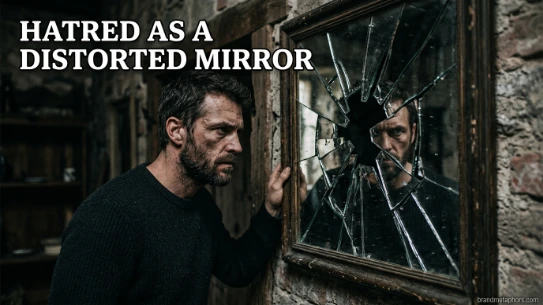
A mirror reflects reality. But when a mirror is cracked or distorted, the reflection becomes unclear. Hatred works in a similar way—it changes how we see others.
When someone feels hatred, they may see others not as they are, but through the lens of anger. This distorted view leads to misunderstanding and unfair judgment.
Example of Distortion
A kind action from someone may be misinterpreted as harmful if hatred already exists. The emotion changes perception.
Inner Reflection
Hatred also affects self-image. People may begin to feel more negative about themselves when they hold resentment for long periods.
This metaphor teaches that hatred does not show truth—it bends it. Clear thinking requires emotional balance.
Hatred as a Deep Emotional Wound
Hatred can be compared to a wound that has not healed properly. A wound causes pain when touched, and emotional hatred reacts the same way when memories are triggered.
If the wound is not treated, it can become infected. Similarly, if emotional pain is not addressed, it can grow into long-term resentment.
Emotional Healing Process
Healing requires care, time, and understanding. Ignoring emotional wounds only makes them worse.
Real-Life Situation
A betrayal in friendship can leave a deep emotional mark. If not processed properly, it may turn into hatred toward similar situations or people.
This metaphor reminds us that emotional health needs attention just like physical health.
Hatred as a Dark Shadow Following Life
A shadow appears when light is blocked. Hatred can be seen as a shadow that follows a person, especially when emotional light like joy and peace is reduced.
Shadows do not act on their own, but they always stay connected. In the same way, hatred often stays attached to memories or situations.
Emotional Interpretation
A person may feel that even in happy moments, part of their mind remains dark due to unresolved hatred.
Moving Toward Light
Increasing positive experiences, understanding, and forgiveness can reduce this shadow. The goal is not to eliminate memory but to reduce its emotional control.
Hatred as an Earthquake of Emotions
An earthquake shakes the ground suddenly and strongly. Hatred can also create emotional earthquakes, especially when triggered by intense events.
These emotional earthquakes can break stability in relationships, work, and personal peace.
Sudden Emotional Reactions
A person may suddenly express anger or resentment after suppressing it for a long time. This is similar to pressure building underground before an earthquake.
Aftershocks
Even after the emotional outburst, effects continue. Relationships may remain damaged unless repaired carefully.
This metaphor shows the importance of addressing emotions early before they become overwhelming.
Hatred as Smoke That Clouds Thinking
Smoke reduces visibility. In the same way, hatred clouds judgment and clear thinking. When emotions are strong, it becomes difficult to see situations clearly.
Mental Confusion
A person may misinterpret actions, assume negative intentions, or make unfair conclusions.
Real-Life Example
In a disagreement, two people may remember the same event differently because emotional “smoke” affects perception.
Clearing this smoke requires calm thinking, communication, and emotional distance from the situation.
Lessons from Metaphors of Hatred
Understanding metaphors for hatred helps us see the emotion in a clearer way. Whether it is fire, poison, storm, or chains, each image teaches something important about human behavior.
Key Insights
- Hatred grows if ignored
- It affects both mind and relationships
- It distorts thinking and memory
- It can be managed with awareness and reflection
These metaphors are not just literary tools. They are real emotional guides that help us understand how deeply hatred can influence life.
By recognizing these patterns, people can respond more wisely instead of reacting blindly.
Transforming Hatred into Understanding
Hatred does not have to stay permanent. Like fire that can be cooled, poison that can be treated, or chains that can be broken, hatred can also be transformed.
Transformation begins with awareness. When a person understands their emotions, they gain control over them instead of being controlled by them.
Practical Steps
- Reflect before reacting
- Talk about feelings honestly
- Practice empathy
- Focus on healing rather than revenge
These actions reduce emotional intensity and create space for peace.
The goal is not to deny emotions but to understand and redirect them in a healthier direction.
Conclusion
Hatred is a powerful emotion, but it is also deeply human. Through metaphors like fire, poison, storms, rust, chains, and shadows, we can better understand how it forms and how it affects our thoughts and relationships. Each metaphor reveals a different side of hatred—its intensity, its silence, its confusion, and its long-lasting effects.
The most important lesson is that hatred is not fixed. It can be recognized, managed, and eventually transformed. When people understand its nature, they gain the ability to respond with clarity instead of being driven by emotion.
In the end, metaphors for hatred are not just descriptions—they are warnings and guides. They remind us that emotional awareness is the key to healthier relationships and a more peaceful mind.