
Introduction (The Quiet Struggle Behind Every Success Story)
Early morning streets are still wrapped in silence. A student sits under a dim light, repeating formulas for the tenth time. A shopkeeper lifts the shutter before sunrise, even when his body begs for rest. A farmer walks through wet fields, checking crops that will decide his year. None of them may call it “success” yet, but each of them is already living inside it.
Hard work is rarely loud. It does not always look impressive while it is happening. More often, it feels repetitive, slow, and even invisible. This is why humans use metaphors—to understand effort that does not immediately show results. We compare hard work to fire, climbing mountains, planting seeds, or building bridges. These images help us feel what discipline actually means when motivation fades.
Metaphors for hard work are more than creative language. They are mental tools that shape how we persist through struggle. When we understand effort through powerful imagery, we stop seeing it as suffering and start seeing it as a process with meaning. In real life, this shift can change how we study, work, and grow.
Hard Work as Fire: The Slow Burn of Discipline
Fire is one of the strongest metaphors for hard work because it represents both energy and endurance. A flame does not appear without friction—wood must be struck, rubbed, or sparked. Similarly, effort begins with resistance. The early stage of hard work often feels uncomfortable, like trying to light something in the wind.
The Meaning Behind the Fire Metaphor
Fire must be maintained. If ignored, it fades. Hard work is the same. Skills, careers, and goals all require constant fuel—practice, focus, and repetition.
Real-Life Example
A student preparing for exams studies daily, even when tired. At first, progress feels small. But like a fire slowly growing stronger, consistency builds intensity over time.
Fire also teaches balance. Too little effort leads to no results. Too much without control leads to burnout. True discipline is steady burning, not explosive bursts.
Hard Work as a Mountain: The Long Climb to Achievement
A mountain represents distance, difficulty, and patience. When people look at a peak, it appears calm from afar, but climbing it is another story entirely. Hard work feels similar—slow steps upward with no shortcuts.
The Emotional Reality of Climbing
Climbing a mountain requires endurance. You cannot rush it. Every step matters, even when progress feels invisible.
Scenario in Daily Life
Imagine building a career. At the start, the goal seems far away. You may question your ability. But each skill learned is like gaining elevation. Slowly, the view begins to change.
The mountain metaphor teaches one key truth: success is not a jump. It is a journey of repeated effort, often in silence, where persistence matters more than speed.
Hard Work as a River: Constant Movement Forward
A river never stops moving. Even when blocked, it finds another path. This makes it a perfect metaphor for hard work.
Flow and Adaptability
Hard work is not always about brute force. It is also about adjusting direction when obstacles appear. Like water, effort must stay flexible.
Example of Persistence
A job seeker facing rejection does not stop learning. Instead, they improve their resume, gain new skills, and try again. The flow continues, even when the path changes.
A river also shapes everything it touches over time. Likewise, consistent effort reshapes personality, habits, and outcomes quietly but powerfully.
Hard Work as a Seed: Growth That Takes Time
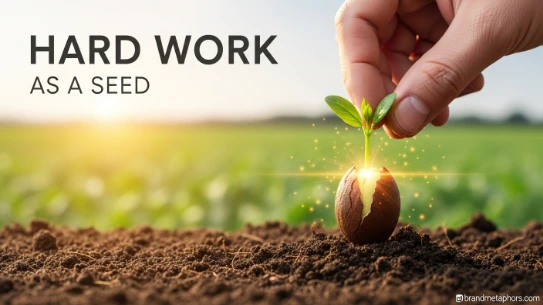
Seeds are small, hidden, and often forgotten after planting. Yet inside them is the potential for an entire tree. Hard work functions in the same way.
The Hidden Phase of Effort
Most of the growth happens underground where it cannot be seen. This stage represents preparation, learning, and practice.
Everyday Example
A beginner learning a skill—like writing or coding—may feel stuck for weeks. But unseen progress is happening. Understanding is forming beneath the surface.
The seed metaphor teaches patience. Just because results are not visible does not mean nothing is growing.
Hard Work as a Machine: Precision Through Repetition
Machines work through repeated, structured actions. Each part has a purpose. If one part stops, the whole system slows down. Hard work also depends on routine and consistency.
Structure and Discipline
A machine does not rely on mood. It operates on design. Similarly, successful people build systems rather than depending on motivation.
Real-Life Insight
A professional athlete trains daily, not because they feel inspired every time, but because their routine is built like a machine.
This metaphor shows that discipline removes unnecessary decision-making. When effort becomes routine, progress becomes stable.
Hard Work as a Bridge: Connecting Present to Future
A bridge connects two separate points. One side represents where you are; the other represents where you want to be. Hard work is the structure that connects them.
Building Step by Step
No bridge is built in one day. It requires planning, materials, and time. Each action adds strength.
Personal Reflection
Learning a new language feels like standing on one side of a river. Daily practice builds small pieces of the bridge until communication becomes possible.
This metaphor reminds us that effort is not just about activity—it is about connection to a better future.
Hard Work as a Garden: Cultivating Results Slowly
A garden is never instantly beautiful. It requires preparation, watering, pruning, and patience. Hard work mirrors this nurturing process.
Care and Attention
Every task is like caring for a plant. Neglect leads to decay, while attention leads to growth.
Example of Growth
A business owner starts small, testing ideas, fixing mistakes, and slowly expanding. Like a garden, success grows in seasons, not seconds.
The garden metaphor teaches responsibility. Results depend not only on effort but also on consistency and care.
Hard Work as a Marathon: Endurance Over Speed

A marathon is not about who starts fastest but who continues longest. Hard work is similar—it rewards endurance, not short bursts of energy.
Managing Energy
Runners pace themselves. If they sprint too early, they collapse before finishing.
Life Example
Students preparing for long-term exams or professionals building careers must learn pacing. Rest and effort must balance each other.
This metaphor highlights sustainability. Success belongs to those who do not quit halfway.
Hard Work as Clay: Shaping Identity Over Time
Clay has no fixed shape until it is molded. Hard work shapes who we become, not just what we achieve.
Transformation Through Pressure
Pressure is necessary to form structure. Without it, clay remains soft and undefined.
Real-Life Understanding
Learning discipline transforms personality. A disorganized person can become structured through repeated effort.
This metaphor shows that hard work is not only external—it changes internal identity.
Hard Work as a Staircase: Step-by-Step Progress
A staircase is built one step at a time. You cannot reach the top without touching every step below.
Importance of Small Actions
Each step may feel small, but skipping them is impossible.
Example
A writer improves not by writing one perfect book but by writing pages daily.
The staircase metaphor reinforces patience. Every small effort matters, even when it feels insignificant.
Hard Work as a Blacksmith: Strength Through Heat and Hammer
A blacksmith shapes metal using heat and force. The process is intense but necessary for transformation.
Pressure Creates Strength
Metal becomes strong only after being tested. Similarly, challenges build resilience.
Emotional Insight
Failures in life often feel painful, but they also refine character. Each difficulty adds strength.
This metaphor teaches that discomfort is often part of becoming stronger, not weaker.
Hard Work as an Engine: Power Through Continuous Input
An engine runs only when fuel is consistently supplied. Hard work also depends on continuous input of energy and focus.
Maintenance and Output
Without maintenance, even strong engines fail. Effort must be supported by rest, learning, and adjustment.
Daily Life Example
A professional who learns continuously remains relevant in changing industries.
The engine metaphor shows that progress is not one-time effort but ongoing fuel.
Hard Work as a Lighthouse: Guiding Through Darkness

A lighthouse does not move, but it provides direction. Hard work functions similarly by offering clarity in uncertain times.
Stability in Chaos
When life feels confusing, discipline acts as a guiding light.
Reflection
Students, workers, and creators often rely on routine to stay focused when motivation disappears.
This metaphor highlights that hard work is not just action—it is direction.
Conclusion
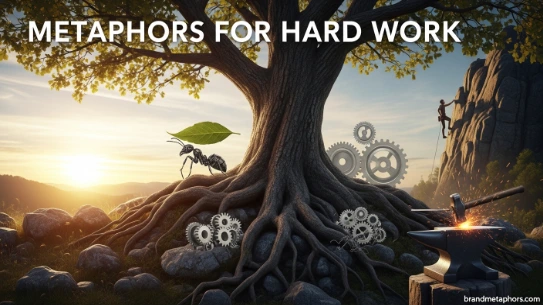
Hard work becomes easier to understand when we see it through metaphors. Fire teaches us consistency, mountains show us patience, rivers remind us of adaptability, and seeds show hidden growth. Each image reveals a different truth about effort, but all point toward the same idea: success is built, not given.
These metaphors are not just poetic expressions. They are mental frameworks that help people stay committed when progress feels slow or invisible. When hard work is understood as a process rather than pressure, it becomes easier to continue even during difficult phases.
In the end, every meaningful achievement is the result of repeated effort shaped by time. The more clearly we understand this, the more patient and focused we become in our own journey.
FAQs
What is a simple definition of hard work metaphors?
Hard work metaphors are comparisons that explain effort using images like fire, mountains, or rivers to make the idea easier to understand.
Why are metaphors useful for understanding hard work?
They help people visualize effort, making it easier to stay motivated during difficult or slow progress.
What is the most common metaphor for hard work?
The most common is a “journey” or “climb,” showing that success takes time and steady progress.
How does the “seed” metaphor explain hard work?
It shows that effort often grows silently before results become visible, just like a seed growing underground.
Can metaphors really improve motivation?
Yes, because they help people reframe struggle as meaningful progress instead of frustration.
What does “hard work as a river” mean?
It means staying consistent and flexible, always moving forward even when obstacles appear.
How can I apply these metaphors in daily life?
Use them to remind yourself that progress is gradual, helping you stay patient and focused during challenges.