
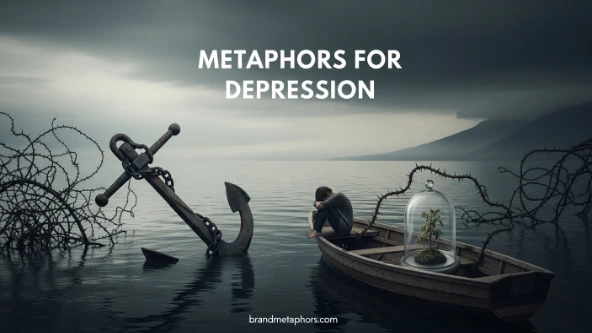
Depression often feels like trying to explain a color that nobody else can see. It is deeply personal, yet millions of people experience it. Imagine waking up on a cold morning. The sky is gray. The room feels heavy. Even simple tasks seem far away, like stars hidden behind thick clouds. You know what you need to do, but every step feels harder than it should.
This is why metaphors for depression matter. They help people describe feelings that are often difficult to put into plain words. Writers use them to create emotional depth. Therapists use them to help people communicate their experiences. Friends and family can better understand loved ones when depression is explained through vivid imagery.
A good metaphor turns an invisible emotion into something readers can see, hear, or feel. It transforms abstract pain into a relatable picture. Whether you are writing poetry, creating social media content, journaling, or simply searching for the right words, these metaphors can help.
In this article, we will explore powerful metaphors for depression, their meanings, examples, creative applications, and ways to use them effectively in everyday life and writing.
Why Metaphors for Depression Matter
Understanding the Power of Figurative Language
Depression is often hard to describe because it affects thoughts, emotions, energy, and motivation all at once. A metaphor creates a bridge between inner experiences and external understanding.
Instead of saying, “I feel depressed,” someone might say, “I feel trapped in a fog.”
The second statement paints a picture. It allows others to imagine the confusion and heaviness involved.
Metaphors can:
- Improve emotional communication
- Add depth to creative writing
- Build empathy and understanding
- Help people process difficult feelings
- Make mental health discussions more accessible
When words fail, metaphors often succeed.
The Black Cloud: A Classic Metaphor for Depression
Meaning and Symbolism
One of the most common metaphors for depression is a black cloud hanging overhead.
The cloud symbolizes persistent sadness, darkness, and emotional weight. No matter where the person goes, the cloud follows.
Example Sentence
“A black cloud seemed to follow him through every moment of the day.”
Alternative Expressions
- A storm overhead
- A sky without sunlight
- Endless gray weather
- A shadow across the horizon
Mini Storytelling Example
Imagine a woman walking through a beautiful garden. Flowers bloom around her. Birds sing from nearby trees. Yet above her hangs a dark cloud that blocks every ray of sunshine.
Others see beauty.
She sees only darkness.
That image captures how depression can affect perception.
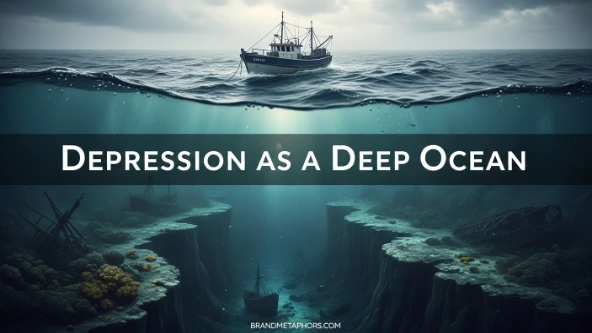
Depression as a Deep Ocean
Meaning and Symbolism
The ocean metaphor emphasizes feeling overwhelmed, submerged, or unable to reach the surface.
People often describe depression as drowning emotionally while appearing fine externally.
Example Sentence
“I felt like I was sinking deeper into an ocean with no shore in sight.”
Alternative Expressions
- Lost at sea
- Pulled under by waves
- Trapped beneath the surface
- Adrift in dark waters
Literary Connection
Many writers have compared emotional struggles to water. The unpredictability of waves mirrors emotional ups and downs.
The deeper the water becomes, the harder it feels to breathe.
The Endless Fog Metaphor
Meaning and Symbolism
Fog represents confusion, uncertainty, and emotional numbness.
Unlike a storm, fog does not attack suddenly. It quietly surrounds everything.
Example Sentence
“Depression settled around her like a thick fog, blurring every path forward.”
Alternative Expressions
- A misty landscape
- A hazy road
- A clouded mind
- Walking through smoke
Emotional Detail
Fog often creates silence. Sounds seem distant. Objects lose their shape.
Similarly, depression can make life feel disconnected and unreal.
Carrying a Heavy Backpack
Meaning and Symbolism
This metaphor highlights exhaustion and emotional burden.
Every task requires extra effort because the individual carries invisible weight.
Example Sentence
“Each day felt like climbing a mountain while carrying a backpack full of stones.”
Alternative Expressions
- Dragging chains
- Carrying a boulder
- Wearing weighted armor
- Pulling a heavy cart
Real-Life Connection
People with depression often hear comments like:
“You just need to try harder.”
The backpack metaphor helps explain why simple tasks may require enormous energy.
Living in a Dark Tunnel
Meaning and Symbolism
The tunnel represents hopelessness and limited vision.
People may struggle to see a positive future when surrounded by darkness.
Example Sentence
“He felt trapped in a tunnel where the light seemed impossibly far away.”
Alternative Expressions
- A cave without an exit
- A corridor of shadows
- A road with no sunrise
- A passage underground
Cultural Reference
Many motivational stories use the phrase “light at the end of the tunnel.”
Depression often feels like searching for that light but not being able to see it.
Depression as a Prison
Meaning and Symbolism
A prison metaphor emphasizes feeling trapped by thoughts, emotions, or circumstances.
The person wants freedom but feels unable to escape.
Example Sentence
“Her depression felt like a prison with walls nobody else could see.”
Alternative Expressions
- Emotional captivity
- Locked behind bars
- Trapped in a cage
- Stuck in a cell
Mini Story Example
Picture someone holding a key while standing inside a cage. The door appears unlocked, yet fear and exhaustion prevent movement.
This reflects how depression can make action feel impossible despite opportunities being available.
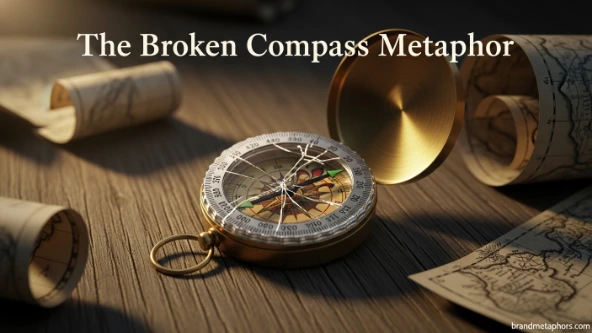
The Broken Compass Metaphor
Meaning and Symbolism
A compass helps people find direction. A broken compass symbolizes loss of purpose or motivation.
Example Sentence
“My compass stopped working, and I no longer knew where I was headed.”
Alternative Expressions
- Lost map
- Missing guidebook
- Directionless traveler
- Wandering without a path
Why It Resonates
Many people with depression report feeling disconnected from goals they once loved.
The broken compass captures this loss of direction beautifully.
Depression as Winter That Never Ends
Meaning and Symbolism
Winter often represents isolation, coldness, and dormancy.
An endless winter symbolizes persistent emotional pain.
Example Sentence
“It felt as though she had been living in the same cold winter for years.”
Alternative Expressions
- Frozen season
- Endless frost
- Permanent snowfall
- Eternal cold
Literary Inspiration
Writers throughout history have associated winter with sorrow and emotional hardship.
The image of waiting for spring mirrors the hope for recovery.
A House with No Lights On
Meaning and Symbolism
This metaphor highlights emotional emptiness and lack of joy.
The structure remains standing, but warmth and brightness are missing.
Example Sentence
“I felt like a house with no lights on, empty even when people visited.”
Alternative Expressions
- An abandoned building
- Empty rooms
- Silent hallways
- Dark windows
Sensory Details
Imagine walking into a house where every room is silent.
music.
laughter.
warmth.
The image closely resembles emotional numbness.
Depression as Quicksand
Meaning and Symbolism
Quicksand symbolizes how struggling can sometimes feel exhausting and ineffective.
The harder a person fights, the more trapped they may feel.
Example Sentence
“Depression felt like quicksand pulling me lower every time I tried to move.”
Alternative Expressions
- A sinking pit
- Sticky mud
- Swallowing earth
- Bottomless ground
Why This Metaphor Works
Many people describe depression as something that slowly pulls them downward rather than striking suddenly.
The gradual nature makes this metaphor especially powerful.
Creative Exercise: Build Your Own Depression Metaphor
Writing Prompt for Self-Reflection
Complete these sentences:
- Depression feels like __________.
- My thoughts are like __________.
- Hope appears as __________.
- Recovery feels like __________.
Write for five minutes without stopping.
Do not worry about grammar.
Focus on imagery and emotions.
You may discover metaphors that feel uniquely personal.
Tips for Using Metaphors for Depression in Writing
Make the Image Specific
Specific imagery creates stronger emotional impact.
Instead of:
“Depression was dark.”
Try:
“Depression was a lantern running out of oil.”
Engage the Senses
Use:
- Sight
- Sound
- Touch
- Smell
- Taste
Sensory details make metaphors memorable.
Avoid Overused Comparisons
Fresh metaphors stand out.
Consider:
- A frozen river
- A silent radio
- An extinguished lighthouse
- A cracked mirror
Unique imagery creates stronger reader engagement.
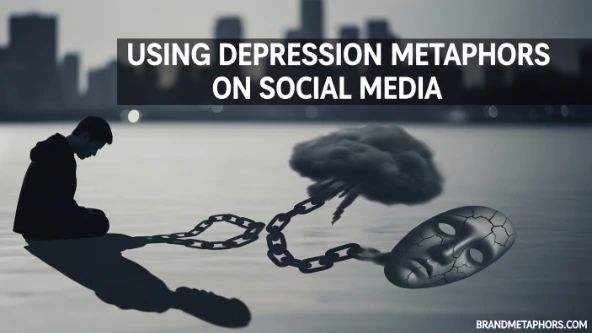
Using Depression Metaphors on Social Media
Creating Meaningful Posts
Metaphors can make short posts more impactful.
Examples:
- “Some days my mind feels like a room filled with static.”
- “Today feels like walking through fog.”
- “Hope is a candle refusing to go out.”
These concise images often resonate more strongly than lengthy explanations.
Bonus Tip
Pair metaphors with personal reflections for authenticity.
Readers connect with emotion more than perfection.
Finding Balance When Writing About Depression
Keep Room for Hope
Powerful writing acknowledges pain while allowing space for healing.
Consider pairing dark metaphors with hopeful imagery.
Examples:
- Storm and rainbow
- Winter and spring
- Tunnel and light
- Night and dawn
This balance creates emotional depth and realism.
Conclusion
Metaphors for depression help transform invisible struggles into understandable images. Whether depression appears as a black cloud, a deep ocean, an endless fog, or a frozen winter, these comparisons give shape to emotions that often feel impossible to explain.
Writers use metaphors to create connection. Readers use them to find understanding. People experiencing depression may use them to express feelings that ordinary language cannot fully capture.
The most powerful metaphor is often the one that feels personally true. Perhaps your depression resembles a storm, a tunnel, or a broken compass. Whatever image speaks to you, remember that metaphors are more than literary tools. They are bridges between experience and understanding.
Words may not solve every struggle, but the right metaphor can help someone feel seen, heard, and understood.
FAQ 1: What is the most common metaphor for depression?
The most common metaphor is a black cloud. It represents sadness, emotional heaviness, and the feeling that darkness follows someone wherever they go.
FAQ 2: Why are metaphors useful when discussing depression?
Metaphors make complex emotions easier to understand. They help people communicate experiences that may be difficult to describe directly.
FAQ 3: Can metaphors help with mental health awareness?
Yes. Metaphors create empathy and understanding by turning invisible emotional experiences into vivid, relatable images.
FAQ 4: What are some hopeful metaphors related to depression recovery?
Common hopeful metaphors include finding light at the end of a tunnel, the arrival of spring after winter, and a sunrise after a long night.
FAQ 5: How can writers create original metaphors for depression?
Writers can focus on personal experiences, sensory details, and unique imagery. Thinking about nature, travel, weather, or objects can inspire fresh and meaningful metaphors.