
Death is one of the few experiences every human shares, yet it remains one of the most difficult topics to discuss. Imagine standing on a quiet shoreline at sunset. The sky glows with fading colors, waves whisper against the sand, and the horizon stretches endlessly ahead. Many writers, poets, and storytellers have used scenes like this to describe death—not as an ending, but as a transition.
Metaphors for death help people express emotions that are often hard to put into plain words. They soften grief, provide comfort, inspire reflection, and create meaningful conversations about mortality. Across cultures and centuries, people have compared death to journeys, sleep, seasons, doors, sunsets, and countless other images.
Whether you are a writer seeking vivid language, a student studying literature, or simply someone curious about symbolic expression, understanding metaphors for death can deepen your appreciation of language and human experience. This article explores powerful death metaphors, their meanings, examples, creative applications, and practical ways to use them in writing and everyday communication.
Why Metaphors for Death Matter
Understanding Difficult Emotions Through Symbolism
Death is emotionally complex. Metaphors make it easier to discuss by transforming abstract fears into relatable images.
Instead of saying someone died, a writer might say they “crossed the final river.” The metaphor creates emotional depth while remaining gentle.
Benefits of death metaphors include:
- Making difficult topics easier to discuss
- Adding emotional richness to writing
- Offering comfort during grief
- Encouraging reflection on life and mortality
- Creating memorable literary imagery
Death as a Journey
The Most Universal Death Metaphor
One of the oldest metaphors for death is the journey. Across cultures, death is often portrayed as traveling from one place to another.
Meaning:
The person’s life is viewed as a completed voyage, and death represents moving onward.
Example:
“After a long and meaningful life, she began her final journey.”
Alternative Expressions:
- Crossing the river
- Reaching the destination
- Taking the last road
- Sailing beyond the horizon
Mini Story:
An elderly sailor spent his life at sea. At his funeral, friends said he had finally sailed into calmer waters. The metaphor reflected both his life and his passing.
Sensory Detail:
Imagine distant waves, cool ocean air, and a ship disappearing into a golden horizon.
Death as Eternal Sleep
A Gentle and Comforting Comparison
Many cultures compare death to sleep because both involve stillness and rest.
Meaning:
Death becomes a peaceful state rather than something frightening.
Example:
“He closed his eyes and entered an eternal sleep.”
Alternative Expressions:
- Resting forever
- The final slumber
- Peaceful sleep
- Endless rest
Literary Reference:
Writers throughout history have used sleep imagery to reduce fear and emphasize tranquility.
Emotional Impact:
This metaphor often comforts grieving families because it suggests peace rather than suffering.
Death as a Sunset
The End of a Beautiful Day
A sunset marks the close of daylight, making it a powerful metaphor for life’s ending.
Meaning:
Life is compared to a day, and death represents evening’s arrival.
Example:
“His life settled into a beautiful sunset.”
Alternative Expressions:
- Day’s end
- Evening light
- Fading horizon
- Dusk of life
Sensory Detail:
Picture orange skies, cooling air, and fading sunlight. The image suggests beauty even in endings.
Death as Crossing a River
Moving Between Worlds
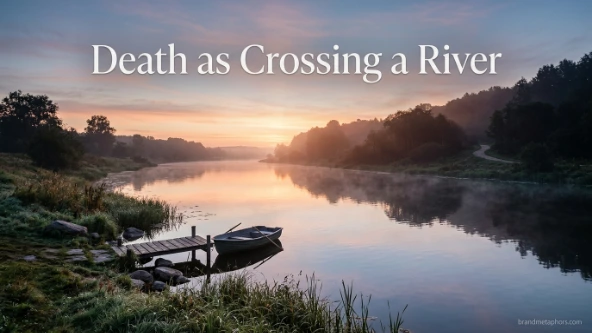
Many myths and traditions describe death as crossing water.
Meaning:
The river symbolizes a boundary between life and whatever lies beyond.
Example:
“She crossed the silent river surrounded by love.”
Alternative Expressions:
- Passing over the water
- Crossing the stream
- Entering the far shore
- Reaching the opposite bank
Cultural Reference:
Ancient stories frequently featured rivers separating the living from the dead, making this metaphor deeply rooted in human history.
Death as a Closed Book
The Completion of a Story
Life often resembles a narrative filled with chapters, adventures, and lessons.
Meaning:
Death represents the final page of a completed story.
Example:
“His book closed after ninety remarkable years.”
Alternative Expressions:
- The final chapter
- Story completed
- Last page turned
- End of the tale
Mini Story:
A beloved teacher left behind generations of students. At her memorial, people described her life as a bestselling book filled with wisdom and kindness.
Death as a Doorway
Entering a New Unknown
A doorway symbolizes transition and possibility.
Meaning:
Death is viewed as moving from one state of existence into another.
Example:
“He stepped through the final doorway.”
Alternative Expressions:
- Opening a new door
- Passing through the gate
- Entering another room
- Crossing the threshold
Emotional Detail:
Unlike walls, doors suggest movement and continuation rather than complete endings.
Death as Winter
Nature’s Season of Rest
Nature provides countless metaphors for life’s cycles.
Meaning:
Winter represents dormancy, stillness, and the completion of a natural cycle.
Example:
“The winter of his life arrived quietly.”
Alternative Expressions:
- Final season
- Cold rest
- Life’s winter
- Quiet snowfall
Literary Connection:
Poets often compare aging and death to winter because both suggest closure while hinting at renewal.
Sensory Detail:
Imagine falling snow, silent fields, and bare trees resting beneath a pale sky.
Death as Extinguished Light
When the Flame Goes Out
Light commonly symbolizes life, consciousness, and energy.
Meaning:
Death is portrayed as a flame gently fading or being extinguished.
Example:
“The candle’s flame flickered and finally went out.”
Alternative Expressions:
- Fading light
- Last spark
- Dimming flame
- Final glow
Emotional Power:
This metaphor highlights life’s fragility and preciousness.
Death as Returning Home
A Place of Peace and Belonging
Many people find comfort in describing death as going home.
Meaning:
The soul returns to its true place of peace.
Example:
“After a long journey, she finally went home.”
Alternative Expressions:
- Returning home
- Going back
- Finding peace
- Reaching home at last
Mini Story:
A grandmother often spoke about heaven as home. After her passing, family members found comfort in imagining her return there.
Death as a Falling Leaf
Nature’s Lesson About Letting Go
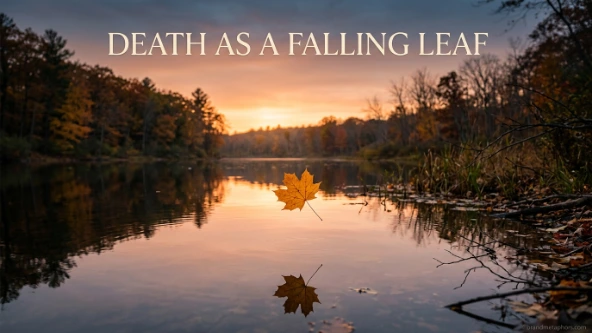
Leaves eventually fall from trees as part of nature’s cycle.
Meaning:
Death is viewed as a natural and inevitable transition.
Example:
“Like a leaf in autumn, he drifted peacefully away.”
Alternative Expressions:
- Autumn leaf
- Gentle falling
- Nature’s release
- Seasonal change
Sensory Detail:
Golden leaves swirl in the wind before settling softly on the earth.
How Writers Use Metaphors for Death Effectively
Creating Emotion Without Being Overwhelming
Strong death metaphors should fit the tone of the story.
Tips for Writers:
- Match the metaphor to the character’s personality
- Avoid mixing unrelated images
- Use sensory details for emotional impact
- Keep symbolism consistent
- Consider cultural context
Example:
A sailor’s death might be described as sailing beyond the horizon rather than a falling leaf.
Creative Exercises for Practicing Death Metaphors
Build Your Own Symbolic Language
Exercise 1: Nature Comparison
Complete the sentence:
“Death is like ______ because ______.”
Exercise 2: Personal Journey
Write three sentences describing death as a road, path, or voyage.
Exercise 3: Seasonal Symbolism
Describe death using spring, summer, autumn, or winter imagery.
Exercise 4: Object Metaphor
Choose an everyday object and explain how it could symbolize death.
Exercise 5: Story Prompt
Write a short paragraph about a character approaching “the final sunset” without directly mentioning death.
Bonus Tips for Using Death Metaphors in Writing and Daily Life
Making Your Language More Meaningful
For Fiction:
Use metaphors to reveal character beliefs and emotions.
For Poetry:
Combine sensory imagery with symbolic language.
For Social Media:
Create thoughtful reflections using gentle metaphors.
Example:
“Every sunset reminds us that endings can be beautiful too.”
For Speeches:
Choose comforting metaphors that respect the audience’s emotions.
For Journaling:
Explore personal feelings about life and mortality through symbolic writing.
Frequently Asked Questions About Metaphors for Death
What is a metaphor for death?
A metaphor for death is a symbolic comparison that describes death using another image, object, journey, or experience rather than direct language.
Why do writers use metaphors for death?
Writers use metaphors to create emotional depth, reduce harshness, and help readers connect with complex feelings surrounding mortality.
What is the most common metaphor for death?
Death as a journey is among the most common metaphors found across cultures, religions, and literary traditions.
Are death metaphors different across cultures?
Yes. Different cultures use unique symbols such as rivers, bridges, gates, stars, gardens, or ancestral homes to represent death.
Can death metaphors be comforting?
Many people find comfort in metaphors such as eternal sleep, returning home, or sailing into peaceful waters because they emphasize peace and transition.
Conclusion
Metaphors for death transform one of humanity’s most challenging realities into meaningful imagery. Whether death is portrayed as a journey, a sunset, a closed book, a doorway, a falling leaf, or a return home, these symbolic expressions help us understand loss, honor life, and communicate emotions with grace. They remind us that language is more than words—it is a bridge between experience and understanding.
By exploring and practicing these metaphors, writers can create richer stories, speakers can express sympathy more thoughtfully, and readers can discover new ways to reflect on life’s inevitable transitions. In the end, metaphors for death do not merely describe an ending; they help illuminate the meaning of the life that came before it.