
A Sweet Beginning: When Candy Becomes Language
Close your eyes for a moment and imagine walking into a small candy shop. Glass jars line wooden shelves, each one glowing with color—ruby-red lollipops, lemon-yellow drops, chocolate squares wrapped in gold foil. The air feels warm with sugar and nostalgia, like childhood folded into scent. You hear the soft rustle of wrappers, the gentle clink of sweets being poured into paper bags. Everything feels a little brighter, a little kinder.
Now imagine trying to describe emotions—joy, love, memory, hope—using that same sweetness.
That is where metaphors for candy come alive.
Candy metaphors transform ordinary language into something sensory and emotional. They let writers describe feelings not just with meaning, but with taste, texture, and color. In storytelling, poetry, branding, or everyday speech, candy imagery adds warmth and vividness that readers don’t just understand—they feel.
This article explores how candy becomes language, how metaphors shape emotion, and how you can use sweet imagery to enrich your writing and communication in powerful, memorable ways.
The Sweet Language of Candy Metaphors
Candy is more than food—it is memory, reward, celebration, and comfort. That’s why it works so beautifully in metaphor.
When we say something is “sweet,” we’re not talking about sugar alone. We might mean kindness, affection, or emotional warmth. Candy becomes a bridge between taste and feeling.
In literature and speech, metaphors for candy often symbolize:
- Joy and pleasure
- Childhood innocence
- Emotional indulgence
- Temporary happiness
- Temptation and desire
Writers use candy because it is universally understood. Almost everyone has a memory tied to it: a childhood treat, a festival sweet, or a small reward after a hard day.
Candy metaphors work because they activate multiple senses at once—taste, sight, smell, and memory—making language richer and more immersive.
Why Candy Metaphors Matter in Writing and Communication
Language without imagery can feel flat, like plain bread without spread. Candy metaphors add flavor.
When used well, they:
- Make writing emotionally engaging
- Help readers visualize abstract ideas
- Create nostalgia and emotional connection
- Strengthen storytelling and branding
- Improve memorability of messages
For example, instead of saying “she was very happy,” a writer might say:
“Her happiness spilled through her like melted caramel.”
This instantly creates texture and emotional depth.
In marketing, social media, poetry, and storytelling, candy metaphors help messages “stick,” just like sugar lingers on the tongue.
But their real power lies in emotional translation—turning invisible feelings into something the reader can almost taste.
Metaphor Example 1: “Life is a Candy Shop”
Meaning & Explanation
This metaphor suggests that life is full of choices, pleasures, and temptations. Just like a candy shop offers endless sweets, life offers endless experiences—some delightful, some overwhelming.
It also hints at indulgence and decision-making: you cannot take everything, so you must choose carefully.
Example Sentence
“Walking into adulthood felt like stepping into a candy shop—bright, overwhelming, and full of things I couldn’t afford to waste.”
Alternative Expressions
- Life is a box of sweets
- Life is a sugar-filled marketplace
- Life is a jar of endless candies
Sensory & Emotional Layer
This metaphor feels bright, colorful, and slightly chaotic. It carries excitement but also pressure—too many options can feel dizzying, like sugar overload.
Mini Storytelling Moment
A child enters a candy shop with only one coin. Every jar sparkles like treasure. The child hesitates, unsure whether to choose chocolate dreams or sour surprises. In that moment, life itself feels like choice—sweet, but serious.
Metaphor Example 2: “Words Like Jellybeans”
Meaning & Explanation
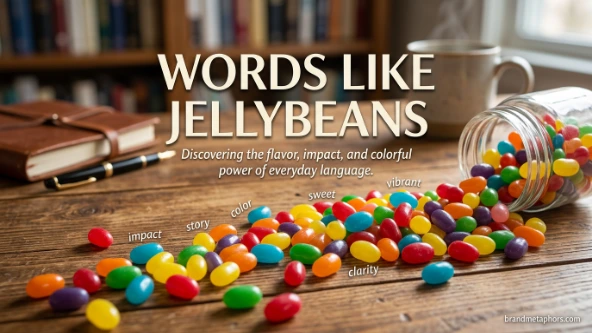
This metaphor compares words to jellybeans to suggest variety, playfulness, and unpredictability. Each word carries a different “flavor”—some soft, some sharp, some surprising.
It is often used to describe creative writing, storytelling, or expressive speech.
Example Sentence
“Her conversation was like a jar of jellybeans—each word bursting with a different color of emotion.”
Alternative Expressions
- Words like scattered candies
- Speech like fruit-flavored drops
- Language like rainbow sweets
Sensory & Emotional Layer
This metaphor feels playful and energetic. It creates a sense of surprise, as if every word might taste different when spoken.
Cultural or Literary Connection
Children’s literature often uses playful imagery like this to make language feel alive. Think of how Roald Dahl describes food, sound, and imagination—always slightly exaggerated, always deliciously vivid.
Interactive Exercise
Try writing five sentences where you describe everyday speech using candy-related imagery:
- Angry speech
- Romantic speech
- Nervous speech
- Excited speech
- Boring speech
Example:
“His nervous speech was like chewing sour candy—sharp at first, but quickly fading.”
Metaphor Example 3: “A Heart Like Melted Chocolate”
Meaning & Explanation
This metaphor describes emotional softness, warmth, and vulnerability. Melted chocolate suggests something rich, comforting, and easily shaped by emotion.
It is often used in romantic or deeply emotional writing.
Example Sentence
“When she smiled at him, his heart turned into melted chocolate—warm, soft, and impossible to hold together.”
Alternative Expressions
- Heart like warm caramel
- Emotions like melting fudge
- Feelings like softened toffee
Sensory & Emotional Layer
This metaphor is deeply sensory. You can almost feel warmth spreading through the chest, like something slowly melting under heat.
It conveys tenderness, affection, and emotional surrender.
Mini Storytelling Moment
A man waits in the rain, holding a small box of chocolates he never planned to give. When she arrives, the words disappear, and only feeling remains—soft, sweet, and melting faster than he can speak.
Candy Metaphors in Literature and Pop Culture
Candy imagery has long appeared in storytelling, often symbolizing innocence or temptation.
In fairy tales, sweets often lead characters into danger or discovery—think of enchanted houses made of candy or magical treats that change fate.
In modern pop culture, candy metaphors appear in:
- Song lyrics describing love as “sweet” or “addictive”
- Movies using candy colors to represent emotion or mood
- Advertising that connects products to pleasure and reward
Writers and creators use candy because it is instantly recognizable. It taps into childhood memory while still carrying emotional complexity.
Candy can represent both joy and danger—something delightful that might also be too much.
How to Create Your Own Candy Metaphors
Creating candy metaphors is about connecting emotion to sensory experience.
Step 1: Choose an Emotion
Pick something abstract:
- Love
- Stress
- Happiness
- Confusion
Step 2: Match It to Candy Qualities
Think of candy characteristics:
- Sweet → love, comfort
- Sour → tension, surprise
- Sticky → attachment
- Hard → resistance
- Melting → emotional softness
Step 3: Build the Metaphor
Combine them:
“Her anxiety was like sour candy dissolving too slowly.”
Creative Exercise
Finish these metaphors:
- My memory feels like…
- His anger tastes like…
- That moment was like…
Try to avoid clichés and aim for unexpected combinations.
Bonus Tip
The more specific the candy (toffee, lollipop, cotton candy), the more vivid your metaphor becomes.
Candy Metaphors in Social Media & Marketing
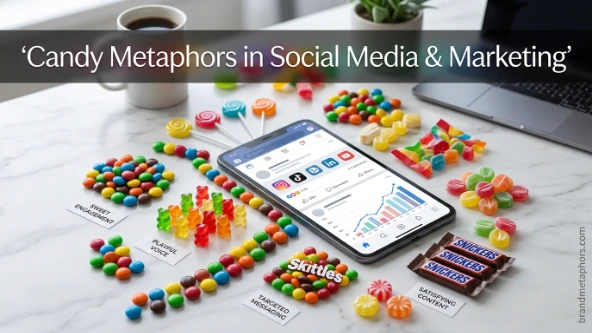
Candy imagery is everywhere in branding because it triggers emotional pleasure.
Marketers use candy metaphors to suggest:
- Reward and satisfaction
- Fun and excitement
- Instant gratification
On social media, captions like:
“Life is sweeter with you” or “A sugar rush of happiness today”
work because they are short, emotional, and sensory.
Candy metaphors make content more shareable because they feel light, relatable, and visually expressive.
Practical Tip
If you’re writing captions:
- Use “sweet,” “sour,” “melting,” or “crunchy” as emotional descriptors
- Pair emotions with textures
- Keep it simple but vivid
Common Mistakes When Using Candy Imagery
Even sweet language can become too sugary if overused.
1. Overloading with sweetness
Too many candy metaphors in one paragraph can feel forced.
2. Using clichés
Phrases like “life is sweet” are common and lose impact.
3. Lack of emotional depth
Candy metaphors should support meaning, not replace it.
4. Mismatched tone
A serious topic may not always fit playful candy imagery.
How to Fix It
Balance sweetness with contrast:
“Her smile was like candy, but her eyes told a different story.”
Advanced Creative Practice: Writing with Sweet Imagination
Now let’s turn candy metaphors into storytelling tools.
Mini Writing Prompt
Write a short scene where:
- A character enters a candy shop
- The shop reflects their emotional state
- Each candy represents a memory or feeling
Example opening:
“The shop bell rang like a memory she couldn’t place, and suddenly every jar on the shelf seemed to recognize her.”
Challenge Exercise
Describe:
- Fear using candy imagery
- Hope using candy imagery
- Loneliness using candy imagery
Push beyond obvious sweetness—think contrast, surprise, and emotional layering.
Creative Insight
Candy metaphors are most powerful when they are not just sweet—but slightly bittersweet.
Conclusion
Candy metaphors work because they connect language to lived experience. Everyone remembers the taste of something sweet, the joy of a treat, or the anticipation of a reward. When writers use candy imagery, they are not just describing—they are inviting readers to remember.
Whether it’s love like melted chocolate, words like jellybeans, or life as a candy shop, these metaphors transform abstract ideas into sensory experiences.
In the end, candy metaphors remind us that language itself can be a form of sweetness—something that lingers, delights, and sometimes even surprises us long after the words are gone.
FAQs: Metaphors for Candy
1. What are candy metaphors used for?
They are used to express emotions, ideas, or experiences through sweet, sensory imagery that makes writing more vivid.
2. Why are candy metaphors effective in writing?
Because they appeal to taste, memory, and emotion, making abstract ideas easier to imagine and feel.
3. Can candy metaphors be used in formal writing?
Yes, but sparingly. They work best in creative writing, marketing, and storytelling.
4. What emotions do candy metaphors usually represent?
Joy, love, nostalgia, temptation, and emotional softness are common themes.
5. How can I create my own candy metaphors?
Match emotions with candy qualities (sweet, sour, sticky, melting) and build sensory comparisons that feel natural and original.