
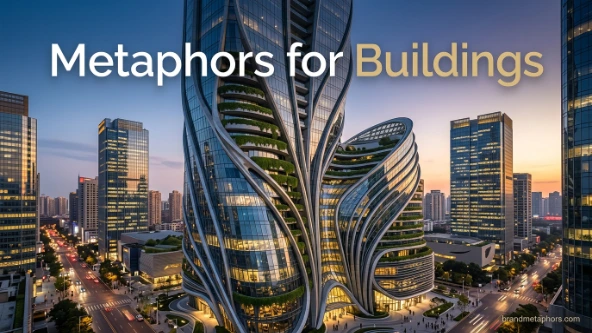
H2: When Buildings Begin to Speak—A Vivid Introduction to Architectural Metaphors
Walk through an old city at dusk. The streets are warm with fading sunlight, and the buildings rise like silent storytellers—each one holding decades, maybe centuries, of memory. A cracked brick wall might feel like a wrinkled face. A glass skyscraper might resemble a shard of frozen sky. Suddenly, architecture is no longer just structure—it becomes language.
This is the magic of metaphors for buildings. We use them to understand, interpret, and emotionally connect with the spaces around us. A building is never just concrete and steel; in language, it becomes a body, a memory, a fortress, or even a dream suspended in air.
Metaphors matter because they shape perception. They turn cold structures into emotional experiences. Writers, poets, architects, and even everyday storytellers rely on them to bring life into descriptions, making readers feel rather than just see. In this article, we’ll explore vivid building metaphors, their meanings, creative uses, and how you can apply them in writing and daily expression.
H2: Buildings as Living Beings—The City That Breathes and Ages
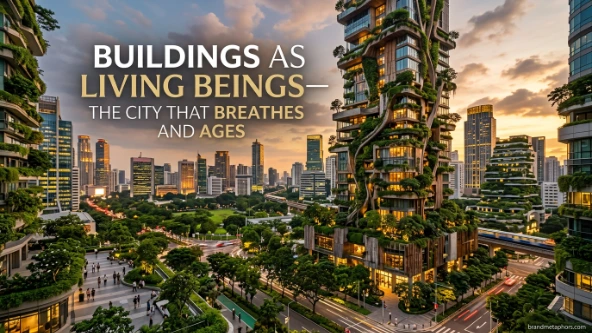
One of the most common and powerful metaphorical frameworks is treating buildings as living organisms. This idea transforms architecture into something organic, emotional, and temporal.
Meaning & Explanation
When we describe buildings as living beings, we assign them human or biological traits—breathing, aging, sleeping, or even remembering. This helps readers emotionally connect with places, especially in literature and storytelling.
Example Metaphor
“The old library breathed softly through its cracked windows, as if remembering every whisper it had ever held.”
Alternative Expressions
- “The building groaned under the weight of time.”
- “The house slept quietly under a blanket of ivy.”
- “The city’s heartbeat pulsed through its crowded towers.”
Sensory & Emotional Detail
Imagine a forgotten mansion. Its doors creak like tired joints. Dust settles like sleep. Wind passes through broken panes like a sigh. Suddenly, it feels less like property and more like a forgotten elder.
Mini Storytelling Moment
In a coastal town, a lighthouse stands alone. Locals say it “watches” the sea. After storms, they swear it looks older—more tired, more thoughtful, as if it has seen too many waves crash against the same sorrowful shore.
Exercise
Think of a building you know well. Write three sentences describing it as a living being:
- What does it “feel”?
- How does it “age”?
- What emotion does it “carry”?
H2: Buildings as Memory Keepers—Stone Archives of Human Life
Buildings often serve as metaphors for memory, acting as physical repositories of the past.
Meaning & Explanation
This metaphor frames buildings as containers of human experience—holding stories, emotions, and historical echoes within their walls.
Example Metaphor
“The abandoned school was a locked diary, its classrooms filled with unread memories.”
Alternative Expressions
- “The house was a museum of forgotten lives.”
- “Every brick held a whisper of the past.”
- “The hallway echoed like a memory refusing to fade.”
Cultural Reference
In many old European cities, buildings are preserved not just for beauty but for memory. Walking through such places feels like flipping through a living history book where every staircase leads to another chapter.
Sensory & Emotional Detail
You might smell old wood, hear distant laughter that isn’t there anymore, or feel a strange nostalgia for events you never experienced.
Interactive Prompt
Write a short paragraph describing your home (or any building) as if it is a memory archive. What “exhibits” would it contain? Whose stories are displayed?
H2: Buildings as Emotional States—Architecture of the Mind
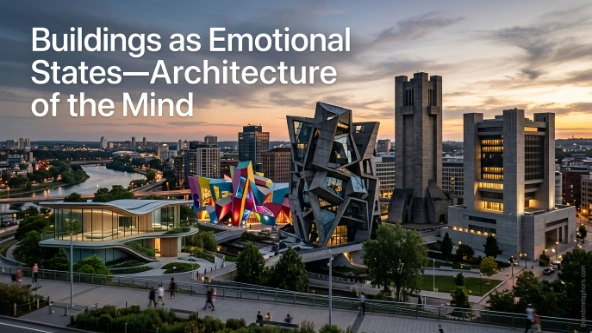
Buildings can also represent emotions—becoming physical expressions of inner psychological landscapes.
Meaning & Explanation
Here, buildings mirror emotional states like anxiety, peace, isolation, or joy. This metaphor is widely used in poetry and psychological storytelling.
Example Metaphor
“Her mind was a collapsing building, corridors twisting into panic.”
Alternative Expressions
- “The house stood calm, like a meditation.”
- “The apartment felt like a cage of worry.”
- “Hope rose like scaffolding in a damaged building.”
Sensory & Emotional Detail
A dark stairwell might represent fear. A sunlit balcony might symbolize clarity. Broken windows might suggest vulnerability or emotional exposure.
Mini Storytelling Moment
A man returns to his childhood home after years. The building feels different—too tight, too quiet, almost anxious. But really, it is his memory that has changed shape, not the house itself.
Exercise
Pick an emotion (joy, sadness, fear). Describe a building as if it physically embodies that emotion.
H2: Skyscrapers as Ambition—Reaching Toward the Impossible
Tall buildings naturally inspire metaphors of aspiration, progress, and human ambition.
Meaning & Explanation
Skyscrapers symbolize growth, power, competition, and the desire to rise beyond limits. They represent both achievement and pressure.
Example Metaphor
“The skyscraper clawed at the clouds, desperate to prove it belonged to the sky.”
Alternative Expressions
- “The tower stitched ambition into the skyline.”
- “Glass giants stood like dreams refusing to fall.”
- “The city reached upward like a question with no answer.”
Cultural Reference
Cities like Dubai, New York, and Shanghai use skyscrapers as symbols of economic ambition. They visually represent humanity’s constant urge to “go higher.”
Sensory & Emotional Detail
Standing at the base of a skyscraper can feel overwhelming—like looking up at a vertical universe that erases human scale.
Interactive Exercise
Write a sentence describing your biggest personal goal using a skyscraper metaphor. What does your ambition “look like”?
H2: Buildings as Bodies—Architecture with Skin, Bones, and Veins
This metaphor compares structural elements of buildings to human anatomy.
Meaning & Explanation
Walls become skin, beams become bones, and pipes become veins. This creates a deeply embodied understanding of architecture.
Example Metaphor
“The hospital’s veins of steel and water pulsed quietly beneath its sterile skin.”
Alternative Expressions
- “The building’s skeleton groaned in the wind.”
- “Glass skin reflected the burning sky.”
- “Elevators moved like nerves carrying signals.”
Sensory & Emotional Detail
This metaphor makes buildings feel vulnerable and alive. A cracked wall becomes an injury. A flickering light becomes a heartbeat irregularity.
Mini Storytelling Moment
An architect once said she could “hear” buildings aging at night. Not literally—but in the way pipes settle and wind presses against structure like breath.
Exercise
Take a building and label its “body parts.” What is its heart? Its spine? Its eyes?
H2: Ruins as Broken Dreams—When Buildings Fall Silent
Ruined buildings carry some of the most emotionally powerful metaphors.
Meaning & Explanation
Ruins symbolize failure, lost time, forgotten dreams, or the natural decay of all human creations.
Example Metaphor
“The ruined palace was a crown dropped by time itself.”
Alternative Expressions
- “The broken temple whispered of forgotten gods.”
- “Walls stood like teeth missing from history’s smile.”
- “The collapsed house was a sentence left unfinished.”
Sensory & Emotional Detail
You may imagine vines crawling through broken stone, wind passing through empty rooms like unanswered questions.
Cultural Reference
Ancient ruins like Pompeii or Machu Picchu are not just historical sites—they are emotional landscapes of disappearance and survival.
Interactive Prompt
Describe a ruined building as if it is telling its own story. What does it regret? What does it remember?
H2: Buildings as Social Worlds—Microcosms of Society
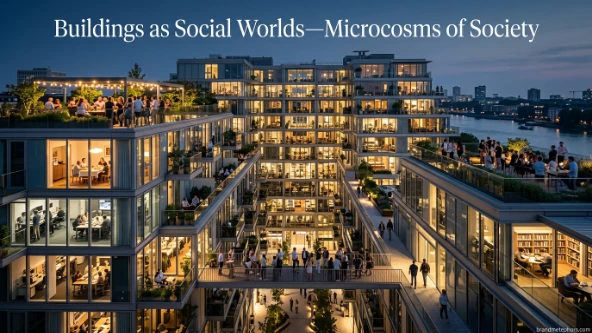
Buildings often represent entire communities or social systems.
Meaning & Explanation
Apartments, schools, malls, and offices can symbolize how people live, interact, and structure society.
Example Metaphor
“The apartment building was a vertical village of whispered lives.”
Alternative Expressions
- “The office was a machine made of human hours.”
- “The school was a factory of dreams and discipline.”
- “The mall was a cathedral of consumption.”
Sensory & Emotional Detail
You hear overlapping lives—music from one room, arguments from another, silence from somewhere else.
Mini Storytelling Moment
In a crowded apartment block, no one truly knows everyone, yet everyone is connected through thin walls and shared ceilings.
Exercise
Describe your workplace or school as a miniature city. What roles do people play in it?
H2: Bonus Tips for Using Building Metaphors in Writing and Daily Life
Metaphors become powerful when used intentionally.
- Use sensory detail: describe texture, sound, and movement.
- Match metaphor with emotion: don’t mix calm imagery with chaotic meaning unless intentional.
- Avoid overloading: one strong metaphor often works better than many weak ones.
- Think in layers: physical structure + emotional meaning = stronger imagery.
- Use contrast: a “crumbling skyscraper of dreams” is stronger than a simple “old building.”
In social media or creative writing, building metaphors can make captions more poetic:
- “Still rebuilding my inner foundation.”
- “Some doors in me are locked for a reason.”
- “I am learning to stand like a city after rain.”
H2: Creative Writing Challenge—Build Your Own Metaphorical City
Imagine a city where every building represents a part of your life:
- One building is your fear
- One is your ambition
- One is your childhood memory
- One is your future dream
Write a short paragraph describing this city. Walk through it. Thay do you see? What collapses? What shines?
This exercise helps you turn abstract emotions into structured imagery.
H2: Why Building Metaphors Matter in Language and Thought
Building metaphors are not just literary tools—they shape how we think. We “rebuild” lives, “construct” identities, and “break down” problems. Architecture becomes a hidden language of human experience.
When we describe life as a building, we also suggest it can be repaired, redesigned, or expanded. That is what makes these metaphors powerful: they offer both realism and hope.
Conclusion
Every building tells a story, but more importantly, every story becomes a building in our imagination. We live in houses made of memory, walk through corridors of emotion, and climb towers of ambition.
Metaphors for buildings remind us that nothing is truly static—not stone, not cities, and not even us. Everything is under construction, constantly reshaped by time, experience, and language.
FAQs: Metaphors for Buildings
1. What are metaphors for buildings?
They are figurative expressions that describe buildings as something else—like living beings, emotions, memories, or social systems.
2. Why are building metaphors important in writing?
They make descriptions more vivid, emotional, and relatable, helping readers visualize and feel spaces more deeply.
3. Can I use building metaphors in everyday speech?
Yes, they are common in everyday language, such as “building a future” or “breaking down ideas.”
4. What is a simple example of a building metaphor?
“The house was a memory box filled with echoes of the past.”
5. How can I improve my use of metaphors?
Practice observing real buildings closely and connect their physical features to emotions or ideas.
If you’d like, I can also turn this into a poetic version, SEO blog post format with keywords optimized, or short Instagram captions pack.