
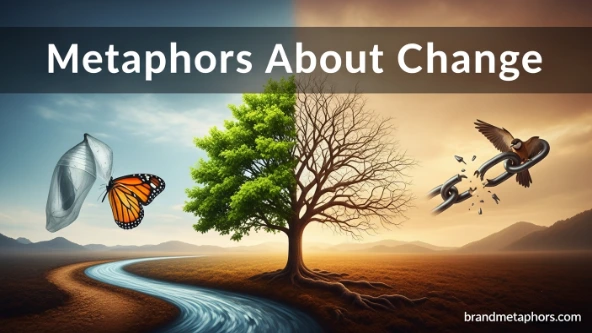
Introduction: When Life Turns Like the Weather
One autumn morning, a woman stood beneath a maple tree watching crimson leaves drift through the air. Only weeks before, the branches had been heavy with green life. Now the tree looked completely different—bare in places, transformed in others, and quietly preparing for winter. She realized something simple yet profound: change rarely arrives all at once. It happens leaf by leaf, breath by breath, season by season.
That is why metaphors about change feel so powerful. Change itself can be difficult to explain. Sometimes it feels exciting, like opening a new door. Other times it feels painful, uncertain, or deeply emotional. Metaphors help translate those feelings into vivid images we can see, hear, and understand. They turn abstract experiences into stories our hearts recognize.
Writers, teachers, speakers, and everyday people use metaphors about change to express growth, healing, transformation, and even fear. Whether you are writing poetry, crafting social media captions, giving a speech, or simply trying to describe your own life journey, these metaphors can make your words more memorable and meaningful.
In this article, you will explore beautiful and creative metaphors for change, learn how to use them effectively, and discover ways to weave them naturally into writing and conversation. Along the way, you will find storytelling examples, literary inspiration, interactive exercises, and practical tips that make the art of metaphor feel alive.
Change as the Turning of Seasons
One of the oldest and most beloved metaphors about change compares life to the changing seasons. Spring symbolizes beginnings, summer represents growth, autumn reflects transition, and winter often suggests endings or rest.
This metaphor works because nature constantly changes without apology. Trees lose leaves, flowers bloom again, rivers freeze and thaw. Nothing stays the same forever.
Meaning and Symbolism
The seasons remind us that change is natural and cyclical. Difficult periods are not permanent, and growth often follows hardship.
Example Sentence
“After years of struggle, her life finally shifted from winter into spring.”
Alternative Expressions
- Turning a new season
- Blossoming after the frost
- Entering autumn years
- Weathering the winter
Sensory Detail
Imagine the scent of rain in spring or the crisp chill of October air. Seasonal metaphors become stronger when tied to sensory experiences.
Mini Storytelling Example
In many novels, seasons mirror emotional states. In classic literature, harsh winters often represent loneliness or despair, while spring signals hope and renewal. Even films use this technique subtly through scenery and lighting.
Bonus Writing Tip
Seasonal metaphors work beautifully in:
- Personal essays
- Inspirational speeches
- Instagram captions
- Poetry and song lyrics
Metaphors About Change Like a River
A river is never still. Water bends, crashes, slows, deepens, and carves new paths over time. Because of this, rivers are one of the most poetic metaphors for transformation.
Meaning and Explanation
This metaphor emphasizes movement and adaptability. Life changes direction constantly, just as rivers do.
Example Sentence
“His career flowed like a river, winding through unexpected opportunities.”
Alternative Ways to Express It
- Going with the current
- Crossing rough waters
- Drifting into new territory
- Finding a new stream
Emotional Tone
River metaphors can feel peaceful or dangerous depending on context. A gentle stream suggests calm transformation, while rapids imply chaos and uncertainty.
Real-Life Reflection
People moving to a new city, changing careers, or healing after heartbreak often describe themselves as “finding their flow again.”
Interactive Exercise
Write three sentences comparing your current life situation to a river. Ask yourself:
- Is the water calm or stormy?
- Are you drifting or steering?
- What lies downstream?
Change as a Butterfly Emerging
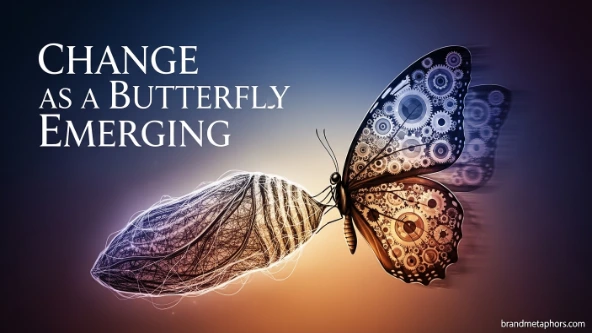
Few symbols capture transformation as beautifully as a butterfly leaving its cocoon.
Why This Metaphor Resonates
The butterfly metaphor suggests inner growth. Transformation often requires discomfort before beauty appears.
Example Sentence
“She emerged from grief like a butterfly breaking free from its cocoon.”
Alternative Expressions
- Spreading new wings
- Breaking out of the cocoon
- Metamorphosis of the soul
- Becoming something new
Literary and Cultural References
Butterflies symbolize rebirth in many cultures. In Japanese traditions, they are linked to the soul and personal transformation. In literature, butterflies frequently represent freedom and identity.
Sensory Imagery
Picture delicate wings unfolding in sunlight after a long silence inside the cocoon. The image carries vulnerability and strength at the same time.
Social Media Caption Idea
“Growth can feel lonely inside the cocoon, but wings take time.”
Life Changes as Storms and Weather
Sometimes change does not arrive softly. It crashes into life like thunder.
Storm metaphors express emotional upheaval, uncertainty, and sudden transformation.
Meaning
Storms symbolize disruption, but they also cleanse and reshape the world afterward.
Example Sentence
“The divorce swept through their family like a violent storm.”
Alternative Expressions
- Riding out the storm
- Lightning strike moment
- Clouds beginning to clear
- Calm after chaos
Emotional Layers
Storm metaphors feel intense and cinematic. They work especially well when writing about emotional breakthroughs or sudden change.
Mini Storytelling
Imagine someone sitting by a window during heavy rain after losing a job. By morning, the sky clears, and sunlight spills across wet streets. The external weather mirrors the internal emotional journey.
Bonus Tip for Writers
Pair storm metaphors with sensory language:
- rumbling thunder
- cold rain
- sharp wind
- humid silence before lightning
These details make the metaphor vivid and immersive.
Metaphors About Change as a Journey
Perhaps the most universal metaphor for change is the journey.
Roads, paths, trains, ships, and maps all symbolize progress and personal transformation.
Meaning and Importance
Journey metaphors emphasize growth over destination. They remind us that change unfolds step by step.
Example Sentence
“Motherhood became a journey she never expected but deeply cherished.”
Alternative Expressions
- Walking a new path
- Reaching a crossroads
- Taking the scenic route
- Starting a new chapter
Why People Connect With It
Everyone understands movement from one place to another. That familiarity makes the metaphor emotionally accessible.
Interactive Prompt
Think about your life right now:
- Are you beginning a journey?
- Lost at a crossroads?
- Nearing a destination?
- Traveling with companions or alone?
Write a short paragraph describing your “road.”
Fire as a Metaphor for Transformation
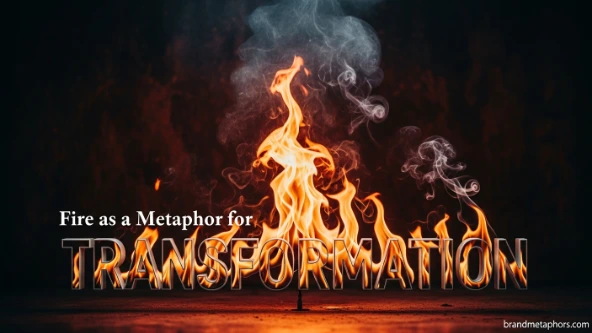
Fire destroys, but it also purifies and creates space for renewal. Forest fires, though devastating, often allow new ecosystems to grow.
Symbolic Meaning
Fire metaphors often describe intense change, personal rebirth, or emotional passion.
Example Sentence
“Failure burned away his fear and forged a stronger version of himself.”
Alternative Ways to Say It
- Baptized by fire
- Rising from ashes
- Rekindling the flame
- Burning away the past
Cultural Reference
The mythical phoenix is one of the strongest transformation symbols in storytelling. It dies in flames and rises reborn from its ashes.
Emotional Texture
Fire metaphors can feel:
- fierce
- empowering
- dangerous
- passionate
Writing Tip
Use fire metaphors carefully. Too many “burning passions” or “flames of change” can sound repetitive. Specific imagery creates originality.
Instead of: “Her passion burned brightly.”
Try: “Her ambition crackled like wildfire racing across dry hills.”
Change as Growing Gardens
Gardens symbolize patient, gradual transformation. Seeds do not bloom overnight, just as personal growth takes time.
Meaning
Garden metaphors emphasize nurturing, care, and long-term development.
Example Sentence
“He treated his confidence like a garden, watering it daily with small acts of courage.”
Alternative Expressions
- Planting seeds of change
- Blooming into someone new
- Pulling weeds from life
- Growing through hardship
Real-Life Application
Teachers, therapists, and motivational speakers often use gardening metaphors because they feel hopeful and grounded.
Interactive Exercise
Describe:
- One “seed” you planted recently
- One “weed” holding you back
- One area of your life beginning to bloom
This exercise can inspire journaling or creative writing.
Metaphors About Change Like Shifting Tides
The ocean tide constantly rises and falls. It never remains fixed.
Why This Metaphor Works
Tides symbolize emotional and life changes that happen naturally over time.
Example Sentence
“The tides of public opinion slowly turned in her favor.”
Alternative Expressions
- Swept out to sea
- Turning tides
- Waves of emotion
- Pulled by the current
Emotional Impact
Ocean metaphors can feel mysterious, calming, or overwhelming depending on the imagery.
Literary Note
Writers often connect tides with memory, grief, and emotional cycles because water itself feels ancient and reflective.
Sensory Details
- salty air
- roaring waves
- wet sand beneath bare feet
- moonlight on water
These details deepen emotional resonance.
Doors, Bridges, and Windows as Symbols of Change
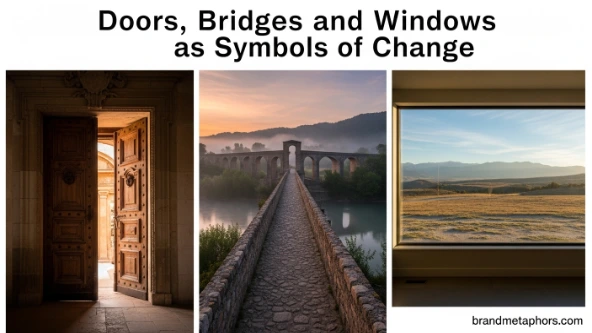
Architecture often becomes symbolic in metaphorical language.
A door can represent opportunity. A bridge may symbolize transition. A window might suggest perspective.
Meaning
These metaphors focus on movement from one phase to another.
Example Sentence
“Graduation opened a doorway into a completely different life.”
Alternative Phrases
- Burning bridges
- Opening new doors
- Looking through a new window
- Crossing into unfamiliar territory
Storytelling Potential
Imagine a character standing on an old wooden bridge between two villages. One side holds the past; the other promises uncertainty and possibility.
The bridge becomes more than structure—it becomes emotion.
Bonus Tip
These metaphors are excellent for:
- speeches
- graduation messages
- motivational writing
- life coaching content
Using Metaphors About Change in Everyday Writing
Understanding metaphors is one thing. Using them naturally is another.
Keep the Metaphor Consistent
Avoid mixing metaphors accidentally.
Incorrect: “Her life was a stormy river blazing through mountains.”
Too many conflicting images confuse readers.
Better: “Her life flowed like a river through rough terrain.”
Match Tone to Emotion
Choose gentle metaphors for reflective writing and intense metaphors for dramatic moments.
Use Sensory Language
Good metaphors engage the senses:
- sound
- texture
- temperature
- smell
- movement
Make It Personal
Specific metaphors feel more authentic than generic ones.
Instead of: “Life changed.”
Try: “Life tilted like a compass losing north.”
Practice Exercise
Complete these prompts:
- Change feels like __________.
- My future resembles __________.
- Growth sounds like __________.
- Starting over tastes like __________.
These unusual sensory combinations create memorable imagery.
Creative Ways to Use Change Metaphors on Social Media
Metaphors thrive online because they are short, emotional, and visually powerful.
Instagram Caption Ideas
- “Even rivers rewrite their paths.”
- “Some seasons are meant for blooming.”
- “The storm changed me, not destroyed me.”
- “Wings grow in hidden places.”
TikTok or Reel Hooks
- “What if your hardest season is actually spring in disguise?”
- “Here’s the metaphor that changed how I see failure…”
Journaling Prompt
Write about a recent life change without naming the event directly. Use only metaphors and imagery.
For example: “The walls I built finally cracked, and sunlight rushed through.”
This technique strengthens emotional storytelling.
FAQs About Metaphors About Change
1. What are metaphors about change?
Metaphors about change are symbolic comparisons used to describe transformation, growth, transition, or emotional shifts in vivid and imaginative ways.
2. Why are metaphors useful in writing?
Metaphors make writing more emotional, memorable, and engaging. They help readers visualize abstract ideas and connect deeply with the message.
3. What is the most common metaphor for change?
The changing seasons are among the most common metaphors because they naturally represent cycles, endings, and new beginnings.
4. How can I create original metaphors about change?
Observe nature, emotions, movement, weather, or everyday objects. Then connect them creatively to personal experiences or transformations.
5. Can metaphors about change be used in daily conversation?
Absolutely. People often say things like “turning a new page” or “weathering the storm” in normal conversation without even realizing they are using metaphors.
Conclusion
Change can arrive softly like falling snow or violently like thunder splitting the sky. It can bloom slowly like a garden or rise fiercely like fire from ashes. Yet no matter how it appears, change remains one of the most universal human experiences.
That is why metaphors about change matter so deeply. They help us understand moments that feel confusing, painful, hopeful, or beautiful. They turn invisible emotions into images we can carry with us.
The next time your life shifts unexpectedly, pause and ask yourself: What metaphor describes this season of my life?
Maybe you are a river finding a new course. Maybe you are a butterfly unfolding wings you did not know you had, you are standing on a bridge between who you were and who you are becoming.
And perhaps that is the true magic of metaphor—it reminds us that transformation is not merely an ending. Sometimes, it is the beginning of a story not yet written.