
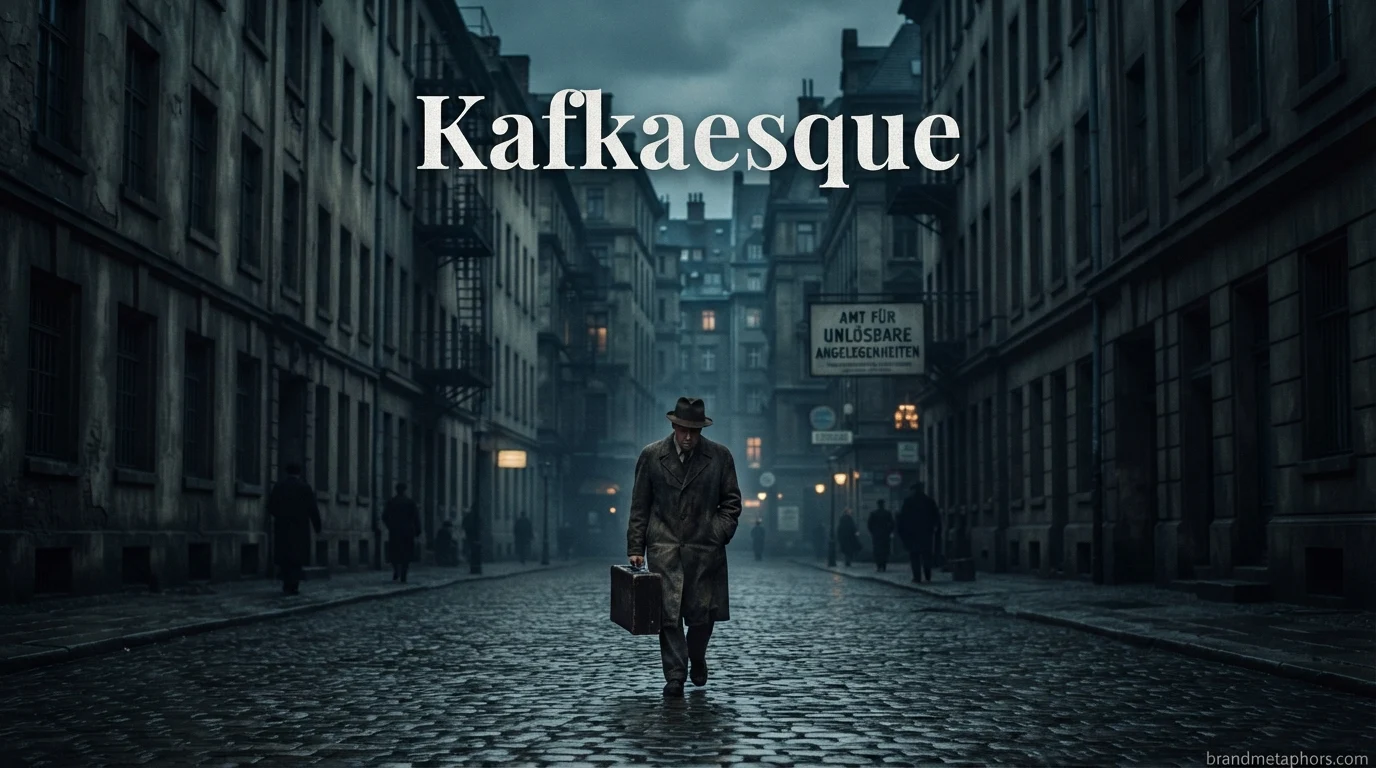
Have you ever filled out endless forms, followed every rule, and still felt trapped in a system that made no sense? Maybe you were sent from one office to another without getting a clear answer. Or perhaps you watched a movie where the main character faced strange rules, confusing authority, and a situation that seemed impossible to escape. Experiences like these describe a feeling that has become famous in literature and everyday language.
This term is often used to describe confusing situations where people feel powerless, lost, or trapped inside complicated systems. Although it comes from literature, it has become a popular way to describe real-life experiences in workplaces, governments, schools, and even modern technology.
In this guide, you’ll learn where the word came from, what it really means, why it is still important today, and how to recognize it in books, movies, and everyday life. By the end, you’ll understand why this idea continues to shape storytelling, culture, and even conversations about society.
What Does This Literary Term Mean?
The expression describes situations that are:
- Confusing without a clear reason
- Controlled by complicated rules
- Filled with endless paperwork or bureaucracy
- Difficult or impossible to escape
- Emotionally stressful and unfair
- Strange yet believable
Instead of simply meaning “weird,” it refers to experiences where people struggle against powerful systems that seem impossible to understand.
Imagine these situations:
- Applying for an important document and visiting five different offices, each sending you somewhere else.
- Receiving a penalty but never learning why.
- Trying to contact customer support only to keep talking to automated systems.
- Following every instruction but still being told something is missing.
These experiences capture the feeling behind the term.
The Origin Behind the Expression
The word comes from Franz Kafka, one of the most influential writers of the twentieth century.
Kafka wrote stories about ordinary people who suddenly faced mysterious laws, strange officials, impossible rules, and frightening uncertainty.
His most famous works include:
- The Trial
- The Castle
- The Metamorphosis
Although these stories were fictional, they reflected real human fears:
- Losing control
- Feeling isolated
- Fighting unfair systems
- Living with uncertainty
- Searching for meaning
Because his writing style was so unique, his name eventually became an adjective used around the world.
Main Characteristics
Most situations described this way share several important features.
CharacteristicDescriptionExampleConfusing RulesRules are unclear or constantly changing.Nobody explains the correct procedure.Endless BureaucracyToo much paperwork and approval.Forms require other forms before approval.PowerlessnessIndividuals cannot control outcomes.Every appeal is rejected without explanation.Fear and AnxietyPeople feel stressed and helpless.Constant worry about making mistakes.Strange RealityEvents seem unreal but remain possible.Officials refuse to explain their decisions.IsolationCharacters often face problems alone.No one offers meaningful help.
These features often appear together, creating an overwhelming experience.
Different Types of Situations
Although the concept usually relates to government systems, it appears in many settings.
Bureaucratic Problems
Large organizations sometimes create complicated procedures.
Examples include:
- Endless paperwork
- Long approval chains
- Missing documents
- Repeated verification
Workplace Experiences
Employees may struggle with:
- Confusing company policies
- Constant reporting
- Unclear responsibilities
- Impossible expectations
Legal Situations
People sometimes feel trapped by:
- Complicated laws
- Slow court systems
- Confusing legal language
- Delayed decisions
Digital Frustrations
Modern technology has created new versions of these experiences.
Examples include:
- Locked online accounts
- Automated customer support
- Endless password verification
- Software errors with no explanation
Why This Idea Is Still Relevant Today

Even though the original stories were written over one hundred years ago, the ideas remain surprisingly modern.
Today’s world includes:
- Government databases
- Online verification systems
- Complex workplace procedures
- Artificial intelligence decisions
- Automated customer service
Many people sometimes feel they are dealing with systems rather than human beings.
This explains why the expression continues to appear in newspapers, social media, movies, and everyday conversations.
Examples from Everyday Life
You don’t have to read classic literature to understand this concept.
Consider these familiar situations.
Example 1: Passport Renewal
A person submits every required document.
Later they receive an email saying another document is missing—but nobody explains which one.
Example 2: Customer Support
A customer calls a company.
The automated system transfers them repeatedly before disconnecting the call.
Example 3: School Administration
A student needs one signature before registering.
The office says another department must approve it first.
The second department sends the student back to the first office.
Example 4: Workplace Approval
A manager requests approval.
Every supervisor says someone else must make the final decision.
Weeks pass without progress.
Common Themes Found in Literature and Films
Many stories inspired by this style include similar ideas.
Loss of Identity
Characters slowly lose confidence in who they are.
Invisible Power
Nobody knows who truly controls the system.
Endless Waiting
Solutions never seem to arrive.
Isolation
The main character often faces problems alone.
Unfair Treatment
Good behavior does not guarantee success.
Search for Meaning
Characters constantly ask why events are happening.
These themes make readers think deeply about society and human life.
Famous Books and Movies with Similar Themes
Many modern stories use these ideas without copying the original works.
Examples include:
- Government conspiracy stories
- Psychological thrillers
- Dystopian fiction
- Dark science fiction
- Bureaucratic dramas
- Mystery films
Popular examples often feature:
- Secret organizations
- Unclear rules
- Endless investigations
- Unexplained accusations
- Powerful institutions
- Ordinary people facing impossible situations
These stories create suspense because audiences feel the same confusion as the main character.
Why Writers and Readers Appreciate This Style
This literary approach remains popular because it reflects real emotions.
Benefits include:
- Makes readers think deeply
- Shows the dangers of excessive bureaucracy
- Encourages critical thinking
- Explores fear and uncertainty
- Creates memorable storytelling
- Reflects modern social problems
Writers often use this style to criticize systems without directly attacking specific organizations.
Readers enjoy solving the mystery while relating to the emotions involved.
How to Recognize This Style in Stories
Look for these signs:
- ✔ Nobody explains the rules.
- ✔ Authority figures remain mysterious.
- ✔ The main character feels powerless.
- ✔ Every solution creates another problem.
- ✔ Strange events seem completely normal.
- ✔ Questions remain unanswered.
- ✔ The ending may not provide complete closure.
If several of these appear together, the story probably belongs to this literary style.
Using the Word Correctly
Many people misuse the expression to describe anything unusual.
A better way is to reserve it for situations involving confusing authority, bureaucracy, or impossible systems.
Correct Examples
- Waiting months for approval without explanation.
- Following every rule but never solving the problem.
- Being trapped inside confusing procedures.
Incorrect Examples
- A funny joke
- A magical fantasy world
- A simple misunderstanding
- An ordinary surprise
The term is much more specific than simply saying something is strange.
Lasting Influence on Modern Culture

The ideas introduced by Franz Kafka continue to influence:
- Modern novels
- Television dramas
- Crime stories
- Science fiction
- Political discussions
- Social commentary
- Psychology
- Philosophy
Many journalists also use the word when describing complicated government systems or confusing legal cases.
Because bureaucracy continues to grow in many parts of the world, these themes remain highly relevant.
Frequently Asked Questions
1. What does this literary expression mean?
It describes confusing, unfair situations where people feel trapped inside powerful systems with unclear rules.
2. Who created the idea?
The concept comes from the works of writer Franz Kafka.
3. Is it always related to government offices?
No. It can describe workplaces, schools, companies, legal systems, technology, and other organizations.
4. Why is it still popular today?
Modern life often includes complicated procedures, automated systems, and bureaucracy, making the concept feel very relevant.
5. Is it the same as being strange?
No. Something can be strange without involving confusing authority or impossible systems.
6. Which books best represent this style?
The Trial, The Castle, and The Metamorphosis are among the best-known examples.
7. Can real life feel like this?
Yes. Many people use the term when dealing with confusing paperwork, unclear rules, or endless administrative processes.
8. Why do authors still use these themes?
They help explore fear, power, justice, identity, and the relationship between individuals and large institutions.
Conclusion
This powerful literary idea has become much more than a description of one author’s writing style. It now represents the frustrating experience of facing confusing rules, endless bureaucracy, hidden authority, and situations that seem impossible to understand. Whether found in classic novels, modern films, workplace challenges, or government procedures, these themes continue to resonate because they reflect real human emotions—uncertainty, anxiety, and the desire for fairness.
Understanding this concept not only helps you appreciate literature but also gives you a better way to describe certain experiences in everyday life. The next time you encounter an endless chain of paperwork, mysterious decisions, or a system that seems to work against common sense, you’ll recognize why people still use this famous literary term more than a century after Franz Kafka first introduced these unforgettable ideas.