
Introduction: Why Learning Word Differences Improves Your Writing
Strong writing is not only about using long or difficult words. It is about choosing the right word in the right place. Many English words look or sound almost the same but have completely different meanings. These confusing word pairs often cause mistakes in school assignments, creative writing, business communication, and everyday conversations.
Learning the difference between commonly confused words helps students become better writers, clearer speakers, and more confident readers. It also improves vocabulary, grammar, descriptive language, and overall writing skills. Whether you enjoy storytelling, poetry, essays, or professional writing, understanding word meanings allows your ideas to become more accurate and powerful.
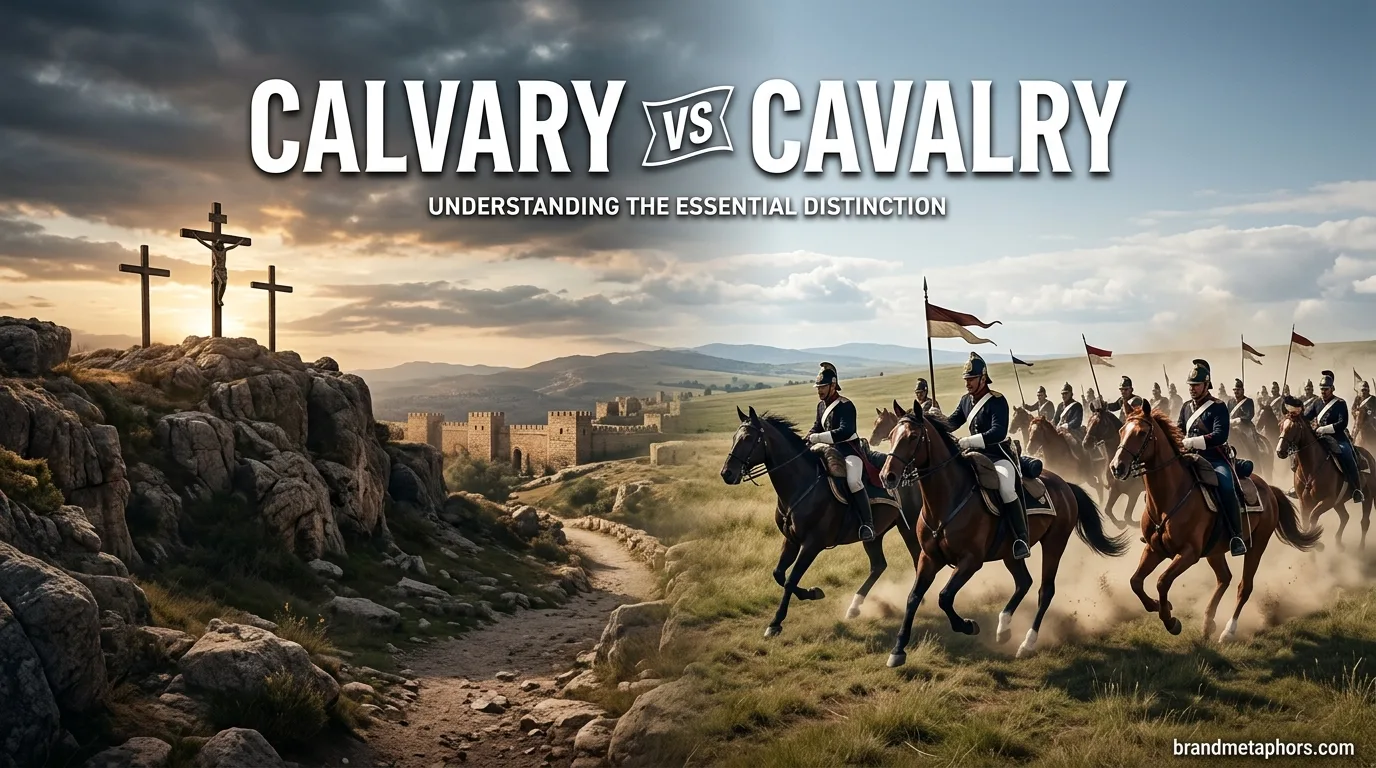
One of the most commonly confused word pairs is calvary vs cavalry. Although they differ by only one letter, they have completely different meanings and are used in very different situations. This guide explains each word in simple language with plenty of examples, comparison tables, practice exercises, and helpful tips for English learners.
What Does Calvary Mean?
Calvary is a noun.
It refers to the hill outside Jerusalem where Jesus Christ was crucified according to the Bible. The word carries deep religious importance in Christianity.
It can also be used figuratively to describe a place or experience involving great suffering, sacrifice, or hardship.
Simple Definition
- The place where Jesus was crucified.
- A symbol of suffering, sacrifice, and redemption.
Easy Examples
- Many Christians visit Calvary in their prayers.
- The painting shows the events at Calvary.
- His long illness became his personal Calvary.
- She described the difficult years as her own Calvary.
Common Topics
- Christianity
- Religion
- History
- Literature
- Symbolism
- Poetry
What Does Cavalry Mean?
Cavalry is also a noun.
It refers to soldiers who fought while riding horses. In modern military language, it may also refer to armored or mobile military units.
The word is also used figuratively to describe people who arrive to help during a difficult situation.
Simple Definition
- Soldiers on horseback.
- A military force.
- People who come to rescue or assist.
Easy Examples
- The cavalry charged across the field.
- The general ordered the cavalry forward.
- Don’t worry—the cavalry is coming.
- My friends became the cavalry when I needed help moving.
Quick Comparison Table
FeatureCalvaryCavalryPart of SpeechNounNounMain MeaningPlace of Jesus’ crucifixionSoldiers on horsebackCategoryReligionMilitaryFigurative MeaningGreat sufferingRescue or helpCommon ContextBible, church, literatureHistory, army, everyday speechEasy Memory TipThink of the crossThink of horses
Why People Confuse These Words

These words are confusing because they:
- Look nearly identical.
- Sound similar when spoken quickly.
- Begin with the same letters.
- End with similar sounds.
- Often appear in historical writing.
However, their meanings have nothing in common.
Incorrect
- The calvary arrived just in time.
Correct
- The cavalry arrived just in time.
Incorrect
- Jesus led the people to cavalry.
Correct
- Jesus was crucified at Calvary.
Memory Tricks That Make the Difference Easy
Simple memory techniques help you remember the correct word.
Remembering Calvary
Think about:
- Cross
- Church
- Christ
- Crucifixion
These religious ideas connect with Calvary.
Remembering Cavalry
Think about:
- Cavalry
- Horse
- Army
- Soldiers
- Rescue
Imagine soldiers riding horses across a battlefield.
Easy Trick
L in Calvary reminds many learners of Lord.
V in Cavalry reminds many learners of Victory in battle.
Figurative Meaning in Writing
Writers often use both words symbolically.
Calvary as Figurative Language
Instead of describing a physical location, writers use it to represent suffering, sacrifice, emotional pain, or personal struggles.
Examples:
- Losing her family became her lifelong Calvary.
- His difficult journey felt like climbing toward Calvary.
- Every challenge became another step on his Calvary.
These examples create emotional depth and powerful imagery.
Cavalry as Figurative Language
This word often represents unexpected help, rescue, or support.
Examples:
- My teacher became the cavalry before the final exam.
- The volunteers arrived like the cavalry.
- Dad came home as the cavalry and fixed everything.
These expressions add energy and vivid description.
Comparison Examples
Religious Context
Correct:
- Pilgrims prayed at Calvary.
Incorrect:
- Pilgrims prayed at cavalry.
Military Context
Correct:
- The cavalry protected the village.
Incorrect:
- The calvary protected the village.
Symbolic Context
Correct:
- Her illness became a personal Calvary.
Correct:
- My teammates became the cavalry during the project.
Everyday Conversation
Correct:
- Thanks for coming—the cavalry has arrived!
Correct:
- The novel compares his suffering to Calvary.
Sentence Examples by Category
School Writing
- The lesson explained the importance of Calvary in Christian history.
- The history teacher described how cavalry units fought during medieval wars.
Creative Writing
- Every painful memory led him toward his own Calvary.
- Suddenly the cavalry appeared through the morning fog.
Historical Writing
- Heavy cavalry often decided the outcome of battles.
- The painting of Calvary remains one of the museum’s treasures.
Conversation
- We were stuck until the cavalry arrived.
- The church service remembered the events at Calvary.
Academic Writing
- Historians study cavalry tactics used throughout history.
- Religious scholars examine the symbolism of Calvary.
Tone and Style Usage
Different words create different emotional effects.
ToneCalvaryCavalrySeriousExcellentSometimesReligiousExcellentRareHistoricalGoodExcellentEmotionalExcellentModerateMilitaryNoExcellentInformalRareCommonCreative WritingExcellentExcellent
Choosing the correct tone makes writing stronger and clearer.
When to Use Each Word
Use Calvary When
- Writing about Christianity.
- Discussing the crucifixion.
- Describing sacrifice.
- Talking about suffering.
- Analyzing literature with religious symbolism.
Use Cavalry When
- Discussing military history.
- Describing horse soldiers.
- Writing about rescue.
- Using the expression “the cavalry has arrived.”
- Talking about modern armored forces.
When to Avoid Each Word
Avoid Calvary when:
- Referring to soldiers.
- Talking about armies.
- Describing military rescue.
Avoid Cavalry when:
- Discussing Jesus’ crucifixion.
- Writing about Christian symbolism.
- Referring to the sacred hill.
Always check the context before choosing the word.
Common Mistakes Students Make

Mistake 1
Using calvary when talking about soldiers.
Wrong:
- The calvary attacked first.
Correct:
- The cavalry attacked first.
Mistake 2
Using cavalry in religious writing.
Wrong:
- Jesus died at Cavalry.
Correct:
- Jesus died at Calvary.
Mistake 3
Depending only on pronunciation.
Some speakers pronounce these words similarly, but spelling changes the meaning completely.
Mistake 4
Ignoring context clues.
Always ask:
- Is this about religion?
- Is this about soldiers?
- Is this describing suffering?
- Is this describing rescue?
The answers usually reveal the correct choice.
Figurative Language and Literary Devices
Although these words are not literary devices themselves, writers often use them to create richer meaning.
Metaphor Examples
- Her career became a Calvary of endless sacrifices.
- The firefighters were the cavalry that saved the neighborhood.
Simile Examples
- He marched like cavalry entering battle.
- She carried her burden like someone climbing toward Calvary.
Symbolism
Calvary symbolizes:
- Hope
- Faith
- Sacrifice
- Redemption
- Endurance
Cavalry symbolizes:
- Strength
- Rescue
- Courage
- Protection
- Teamwork
Imagery
Good writers use these words to help readers imagine scenes more clearly.
Example:
“The cavalry thundered across the dusty valley.”
Readers can almost hear the horses.
Example:
“The lonely hill reminded him of Calvary.”
Readers picture a solemn and meaningful place.
Vocabulary Enhancement
Learning related words expands your English vocabulary.
Words Related to Calvary
- Crucifixion
- Sacrifice
- Faith
- Redemption
- Cross
- Gospel
- Pilgrimage
- Devotion
- Suffering
- Worship
Words Related to Cavalry
- Army
- Soldier
- Battlefield
- Regiment
- Commander
- Horseman
- Troops
- Charge
- Defense
- Victory
Using related vocabulary makes writing more natural and descriptive.
Practice Exercises
Exercise 1
Choose the correct word.
- The ______ charged across the battlefield.
Answer: Cavalry
- Christians remember the events at ______.
Answer: Calvary
- My neighbors became the ______ when my car broke down.
Reply: Cavalry
- The novel compares the hero’s suffering to ______.
Answer: Calvary
- Ancient ______ depended on skilled horse riders.
Answer: Cavalry
Exercise 2
Correct the Mistakes
- The calvary rescued the villagers.
Anthantk: The cavalry rescued the villagers.
- Jesus died at cavalry.
Correct: Jesus died at Calvary.
Exercise 3
Fill in the Blank
- The museum displayed armor worn by the ______.
Answer: cavalry
- The church service honored the sacrifice remembered at ______.
Answer: Calvary
Quick Summary Table
TopicCalvaryCavalryMeaningHill of crucifixionHorse soldiersFieldReligionMilitarySymbolSacrificeRescueFigurative UseSufferingHelp arrivingCommon ExpressionPersonal CalvaryThe cavalry has arrivedEasy ImageCrossHorse
Frequently Asked Questions
1. What is the easiest way to remember the difference?
Remember that Calvary relates to Christianity and the crucifixion, while cavalry refers to soldiers on horseback or people who come to help.
2. Can both words be used figuratively?
Yes. Calvary often represents suffering or sacrifice, while cavalry commonly represents rescue or unexpected assistance.
3. Which word appears more often in everyday conversation?
Cavalry is more common because people often say, “The cavalry has arrived,” when help comes.
4. Are these words pronounced the same?
Many English speakers pronounce them similarly, which is one reason they are often confused.
5. Why is it important to know the difference?
Using the correct word makes your writing accurate, professional, and easier for readers to understand.
Conclusion
Although calvary and cavalry differ by only one letter, they belong to completely different worlds. One is deeply connected to Christian history, sacrifice, and spiritual symbolism, while the other belongs to military history and the idea of brave soldiers riding into battle. Both words also have rich figurative meanings that can strengthen creative writing, descriptive language, and storytelling when used correctly.
By paying attention to context, practicing sentence examples, and remembering simple memory tricks, students and English learners can avoid common mistakes and write with greater confidence. Expanding your vocabulary in this way improves grammar, reading comprehension, academic writing, and everyday communication. The more you practice choosing the right word, the more natural and effective your English will become.