
Introduction
Good writing is more than using correct grammar. It is also about choosing the right words for the right audience. Whether you are writing a school essay, a business email, a creative story, or a blog post, the words you choose shape how readers understand your message.
Figurative language, descriptive language, metaphor examples, simile examples, poetic expression, and other literary devices make writing more colorful and memorable. At the same time, understanding vocabulary differences helps writers avoid confusion and communicate clearly. Even a small spelling difference can matter depending on where your readers live.
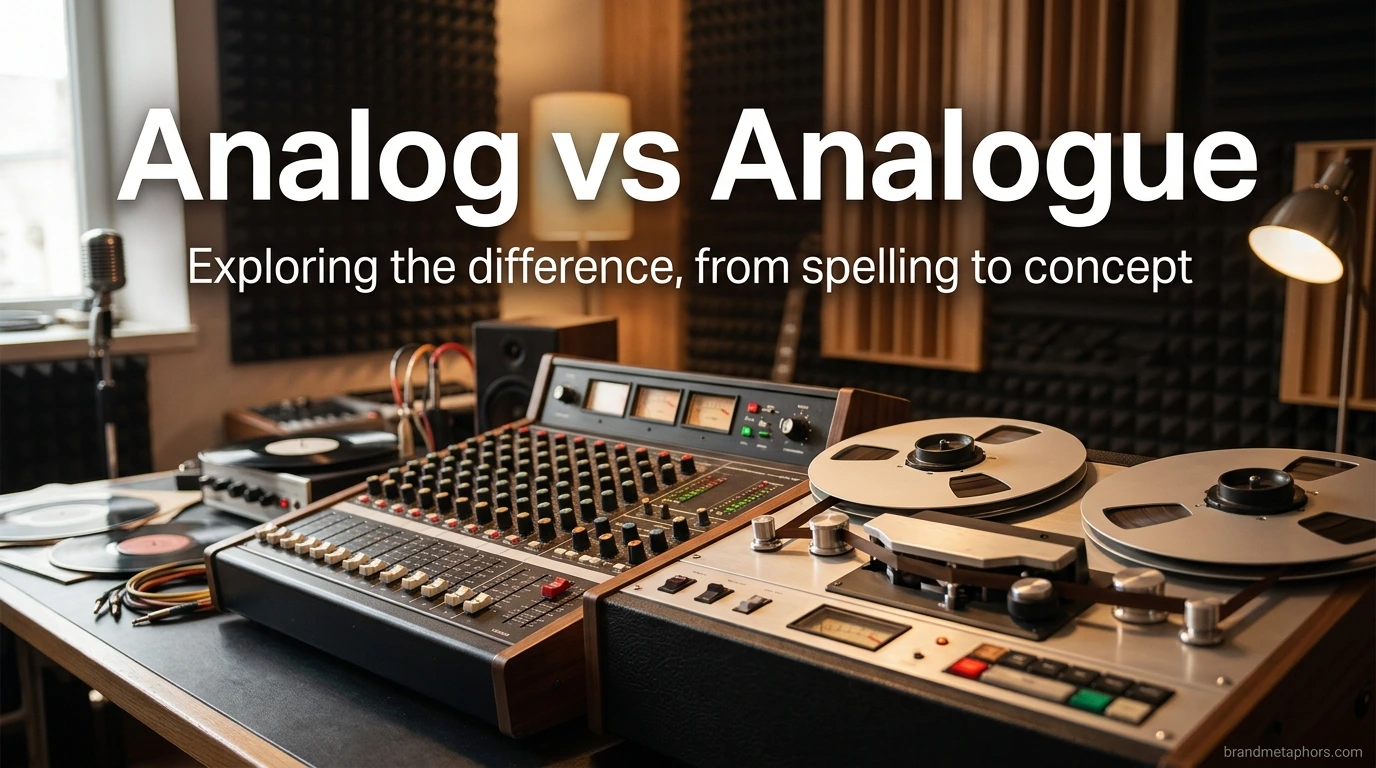
One common example is the difference between analog and analogue. These two words have the same meaning in most situations, but they follow different spelling conventions. Many students, English learners, and writers wonder which one is correct and when each version should be used.
This guide explains everything you need to know in simple language. You will learn their meanings, spelling differences, sentence examples, writing tips, common mistakes, tone, usage, comparison tables, and practical exercises to improve your writing skills and vocabulary.
What Do These Words Mean?
Both words refer to something that is not digital. They describe systems, devices, signals, or technology that work with continuous physical values instead of numbers or computer code.
For example:
- A traditional wall clock with moving hands is an analog device.
- A vinyl record player is an analog music system.
- An old film camera records images in an analog way.
The only real difference is the spelling.
SpellingCommon RegionMeaningAnalogAmerican EnglishStandard US spellingAnalogueBritish EnglishStandard UK spelling
The meanings stay the same.
Why Are There Two Spellings?
English has different spelling standards around the world.
American English often uses shorter spellings.
Examples include:
American EnglishBritish EnglishColorColourFavorFavourCenterCentreAnalogAnalogueCatalogCatalogueDialogDialogue (often)
Neither spelling is wrong.
The best choice depends on your audience.
- Writing for the United States? Use analog.
- Writing for the United Kingdom, Australia, or many Commonwealth countries? Use analogue.
Consistency is more important than choosing one over the other.
Quick Comparison Table
FeatureAnalogAnalogueMeaningSameSameAmerican EnglishYesRareBritish EnglishLess commonYesPronunciationSameSameTechnologyYesYesWritingYesYesDictionariesAcceptedAccepted
Where These Words Are Commonly Used
These words appear in many fields.
Technology
Examples include:
- Analog television
- Analog radio
- Analog clock
- Analog recording
- Analogue equipment
- Analogue signal
Electronics
Engineers often discuss:
- Voltage
- Current
- Continuous signals
- Sensors
- Audio systems
Music
Examples:
- Vinyl records
- Cassette tapes
- Reel-to-reel recordings
- Tube amplifiers
Photography
Film photography is often described as analog or analogue photography.
Everyday Language
People sometimes use the word to describe traditional methods.
Example:
“Our classroom still uses an analog attendance book.”
Understanding Analog and Digital
The easiest way to understand the meaning is to compare it with digital technology.
AnalogDigitalContinuous valuesNumbers and codeTraditional systemsComputer-based systemsFilm cameraDigital cameraVinyl recordMP3 fileMechanical clockDigital clockCassette tapeStreaming music
Example:
An analog thermometer uses expanding liquid.
A digital thermometer shows numbers on a screen.
Sentence Examples
Reading examples makes vocabulary easier to remember.
Technology
- My grandfather still owns an analog radio.
- The museum displays many analogue cameras.
- We repaired the old analog clock.
- The engineer tested the analogue signal.
- The studio uses analog recording equipment.
School Writing
- The science teacher explained analog instruments.
- We compared analog and digital watches.
- The project included an analogue measuring device.
Daily Conversation
- I enjoy listening to analog music.
- She collects analogue cameras.
- The old system still works perfectly.
Creative Writing
- Time moved like an old analog clock.
- His memories played like an analogue tape.
- The village felt like an analog world untouched by technology.
Figurative Language and Creative Writing Connections
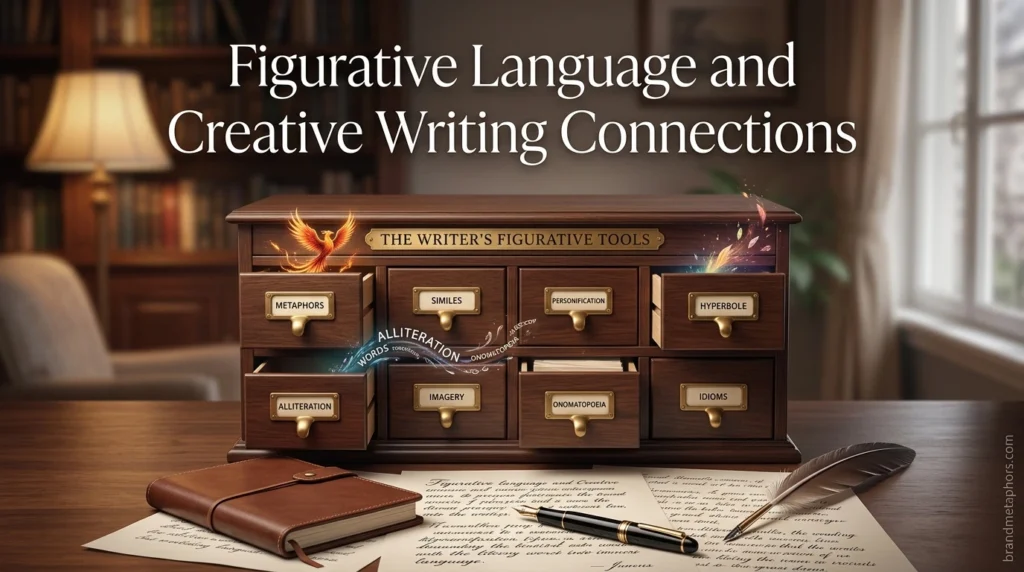
Although these words usually describe technology, writers sometimes use them creatively.
Figurative language helps readers imagine ideas more clearly.
Metaphor Examples
- Her heart was an analog clock that never stopped.
- His memories were an analogue tape replaying old songs.
- The town was an analog island in a digital ocean.
Simile Examples
- The machine worked like an old analog radio.
- Their friendship lasted like an analogue record that never wore out.
- Time moved like an analog clock on a quiet afternoon.
Descriptive Language
Instead of saying:
“The room looked old.”
You can write:
“The room felt like an analog photograph, warm, faded, and full of memories.”
This creates stronger imagery.
When to Use Each Spelling
Choose your spelling based on your readers.
Use Analog When
- Writing for American readers
- Publishing in the United States
- Following American English style guides
- Creating content for American schools
Example:
“The company designs analog audio equipment.”
Use Analogue When
- Writing for British readers
- Publishing in the United Kingdom
- Following British English rules
- Writing for Australia or New Zealand
Example:
“The museum displays analogue recording devices.”
When You Should Avoid These Words
Sometimes another word fits better.
Avoid using these terms when discussing:
- Computers in general
- Modern digital software
- Online communication
- Internet services
Instead use words like:
- Digital
- Electronic
- Computerized
- Online
- Virtual
Incorrect:
“This website is analog.”
Correct:
“This website is digital.”
Common Mistakes Writers Make
Learning from mistakes improves writing skills.
Mistake 1: Mixing Spellings
Incorrect
The report discusses analog equipment and analogue technology.
Correct
Choose one spelling throughout the document.
Mistake 2: Thinking They Have Different Meanings
They do not.
Only the spelling changes.
Mistake 3: Using Them for Digital Devices
Incorrect
My smartphone is analog.
Correct
My smartphone is digital.
Mistake 4: Changing Spelling in Academic Papers
Remain consistent.
If your teacher requests British English, use British spelling throughout.
Vocabulary Enhancement and Related Words
Learning related vocabulary strengthens your English.
WordMeaningDigitalUses computer codeMechanicalUses moving partsElectronicUses electrical circuitsContinuousWithout breaksSignalCarries informationRecordingSaving sound or videoBroadcastSending informationFrequencyNumber of signal cyclesDeviceA machine or toolTechnologyPractical scientific tools
Knowing related words improves reading and writing.
Practice Exercises
Exercise 1
Choose the correct spelling.
- The old radio is ______.
- The museum displays ______ cameras.
- American textbooks usually write ______.
- British newspapers often write ______.
Answers
- analog
- analogue
- analog
- analogue
Exercise 2
Choose Analog or Digital.
- Vinyl record
- Smartphone
- Film camera
- Streaming music
- Mechanical watch
- Smartwatch
Answers
- Vinyl record – Analog
- Smartphone – Digital
- Film camera – Analog
- Streaming music – Digital
- Mechanical watch – Analog
- Smartwatch – Digital
Exercise 3
Rewrite These Sentences
Original:
The old camera is good.
Better:
The old analog camera captures warm and timeless photographs.
Original:
The clock is slow.
Better:
The analog clock ticked slowly across the quiet classroom.
Tips for Better Writing

Good vocabulary helps every writer.
Follow these tips:
- Know your audience.
- Stay consistent with spelling.
- Read books from different English-speaking countries.
- Learn both American and British English.
- Practice writing complete sentences.
- Use descriptive language naturally.
- Include figurative language when appropriate.
- Avoid unnecessary repetition.
- Proofread before submitting your work.
- Keep learning new vocabulary every week.
These habits improve communication and writing confidence.
Frequently Asked Questions
1. Is one spelling more correct than the other?
No. Both are correct. The choice depends on whether you are using American or British English.
2. Do they have different meanings?
No. They refer to the same idea. Only the spelling changes.
3. Which spelling should students use?
Use the spelling required by your school, teacher, or style guide.
4. Can both spellings appear in one document?
It is better to choose one spelling and use it consistently throughout the document.
5. Is a mechanical watch considered analog?
Yes. A watch with moving hands is generally considered an analog timepiece because it displays time continuously rather than with digital numbers.
Conclusion
Choosing between these two spellings is easier once you understand that the meaning stays the same. The main difference is regional spelling. American English prefers the shorter form, while British English usually keeps the longer version. Knowing your audience and staying consistent are the most important rules.
Beyond learning spelling differences, expanding your vocabulary strengthens every part of your communication. Combining correct word choice with descriptive language, figurative language, literary devices, creative writing techniques, metaphor examples, simile examples, and clear sentence structure helps your ideas become more engaging and memorable. As you continue reading, writing, and practicing, these small language details will improve your confidence and make your writing stronger in school, work, and everyday life.