

Introduction
Language is full of interesting expressions that do not always mean exactly what the words suggest. One popular phrase is “same difference.” At first glance, it sounds confusing because the words seem to contradict each other. How can something be the same and different at the same time?
Despite this apparent contradiction, the expression is widely used in everyday conversations. People use it when two options, situations, or outcomes are so similar that the differences between them do not really matter.
Understanding this common expression can help you communicate more naturally, improve your English skills, and better understand native speakers. This guide explains its meaning, origin, usage, examples, benefits, and related concepts in simple and easy-to-read language.
What Does This Expression Mean?
This phrase is an informal way of saying:
“The difference is not important.”
When someone uses it, they mean that two things may have small distinctions, but those distinctions do not affect the final result.
Simple Example
Person A: “Should we take Main Street or Oak Street?”
Person B: “Same difference. Both roads lead to the mall.”
In this example, the roads are different, but the destination is the same. Therefore, the difference is considered unimportant.
Why Is It Considered a Contradiction?
The phrase combines two opposite ideas:
- Same = identical
- Difference = not identical
Because of this, it is often called a paradoxical expression.
However, speakers do not use it literally. Instead, they use it figuratively to suggest that the distinctions between two things are too small to matter.
Think of It This Way
- Different paths, same destination
- Different brands, same quality
- Different methods, same result
When the outcome remains unchanged, people often treat the options as essentially equal.
The Origin and History
The exact origin is unclear, but language experts believe the expression became popular in North American English during the twentieth century.
It likely developed from everyday speech where people wanted a quick way to dismiss minor distinctions.
Over time, it became a common conversational phrase used in:
- Casual discussions
- Workplace conversations
- Family interactions
- Movies and television shows
- Social media posts
Today, it is recognized across many English-speaking countries.
Common Situations Where People Use It
The expression appears in many everyday situations.
1. Comparing Similar Products
Someone may compare two products with nearly identical features.
Example:
- Phone A costs $500
- Phone B costs $510
If both perform almost the same, a person might say the difference is insignificant.
2. Discussing Routes
When two roads lead to the same destination, the phrase is often used.
3. Talking About Decisions
People use it when multiple choices produce similar outcomes.
4. Workplace Discussions
Employees may use it when different processes achieve the same goal.
5. Family Conversations
Parents and children often use it when debating minor details.
Different Ways the Expression Is Used
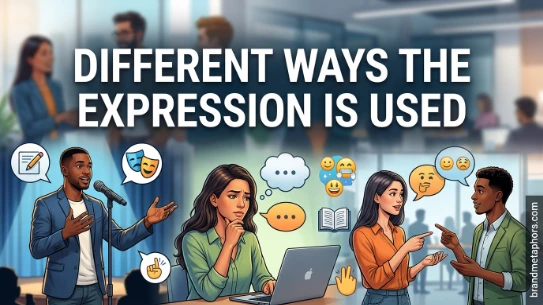
Although the meaning remains similar, the phrase can serve different purposes.
Casual Agreement
Used to show that two things are practically equivalent.
Example:
“Either restaurant is fine. Same difference.”
Dismissing Minor Details
Used when details are considered unimportant.
Example:
“It costs $98 instead of $100. Same difference.”
Light Humor
Sometimes speakers use it jokingly.
Example:
“You slept for six hours, not seven.”
“Same difference!”
Expressing Indifference
Used when the speaker does not strongly prefer one option over another.
Real-Life Examples
Here are some realistic examples that make the meaning easier to understand.
Example 1: Shopping
Friend 1: “Should I buy the blue shirt or the black one?”
Friend 2: “Same difference. They look almost identical.”
Example 2: Travel
Traveler: “The flight arrives at 8:00 PM instead of 8:10 PM.”
Friend: “Same difference.”
Example 3: School
Student: “I scored 89 instead of 90.”
Friend: “Same difference. That’s still an excellent grade.”
Example 4: Work
Employee: “Should we use Spreadsheet A or Spreadsheet B?”
Manager: “Same difference. Both contain the same data.”
Comparison with Similar Expressions
Many English expressions communicate a similar idea.
ExpressionMeaningUsageSame differenceSmall differences do not matterInformalSix of one, half a dozen of the otherTwo choices are essentially equalInformalPotato, potahtoThe distinction is minorInformalDoesn’t matterNo meaningful impactCommonPractically the sameNearly identicalFormal and informalEquivalentEqual in value or effectFormal
These phrases help speakers avoid focusing on unnecessary details.
Benefits of Understanding This Expression
Learning common expressions improves communication skills.
Better Listening Skills
Native speakers use idioms frequently. Understanding them helps you follow conversations more easily.
More Natural Communication
Using everyday expressions makes your English sound more fluent and natural.
Improved Cultural Understanding
Many phrases reveal how people think and communicate.
Stronger Vocabulary
Learning figurative language expands your vocabulary beyond basic words.
Greater Confidence
When you understand informal speech, you can participate more comfortably in conversations.
When You Should Avoid Using It

Although useful, the expression is not appropriate in every situation.
Formal Writing
Avoid it in:
- Academic papers
- Research reports
- Legal documents
- Professional proposals
Important Differences
Do not use it when distinctions are significant.
For example:
- Medical treatments
- Financial decisions
- Safety procedures
- Legal matters
In these situations, small details may have major consequences.
Example
Incorrect:
“Take either medicine. Same difference.”
The medications could have different effects, making the distinction very important.
Related Language Concepts
Understanding this phrase becomes easier when you know a few related concepts.
Idioms
An idiom is a phrase whose meaning differs from the literal meanings of its words.
Figurative Language
This type of language expresses ideas creatively rather than literally.
Paradox
A paradox combines ideas that seem contradictory but reveal a deeper truth.
Colloquial Speech
Informal expressions used in everyday conversation are known as colloquialisms.
These concepts help explain why the phrase makes sense despite sounding contradictory.
How to Use It Correctly
Follow these simple guidelines.
Use It When:
- Differences are minor
- Outcomes are nearly identical
- The distinction has little practical value
- Speaking casually
Avoid It When:
- Accuracy is important
- Details affect results
- Writing formally
- Discussing serious matters
Quick Formula
Small difference + Same outcome = Appropriate use
Important difference + Different outcome = Avoid use
Common Mistakes Learners Make
Taking It Literally
Many learners think the phrase is grammatically incorrect. In reality, it is an accepted informal expression.
Using It in Formal Contexts
It works best in conversation, not academic writing.
Using It for Major Differences
The expression should only describe minor distinctions.
Misunderstanding Tone
Sometimes speakers use it humorously or sarcastically. Pay attention to context and voice tone.
Why This Expression Remains Popular
Several factors explain its popularity.
It Saves Time
People can quickly dismiss unimportant distinctions.
It Is Easy to Understand
The phrase is short and memorable.
It Adds Personality
The expression sounds more conversational than saying “the differences are negligible.”
It Reflects Everyday Thinking
People often focus on outcomes rather than tiny details.
Because of these qualities, the phrase continues to be widely used in modern English.
Frequently Asked Questions (FAQs)
1. What does this expression mean?
It means that any differences between two things are so small that they do not really matter.
2. Is it grammatically correct?
Yes. Although it sounds contradictory, it is a recognized informal English expression.
3. Is it an idiom?
Yes. Its meaning goes beyond the literal meanings of the individual words.
4. Can it be used in formal writing?
Generally, no. Formal alternatives such as “essentially equivalent” are more appropriate.
5. Is it commonly used by native speakers?
Yes. It appears frequently in everyday conversations, movies, and social media.
6. Can it be sarcastic?
Yes. Some speakers use it humorously or sarcastically to downplay distinctions.
7. What is a similar phrase?
“Six of one, half a dozen of the other” expresses a very similar idea.
8. When should I avoid using it?
Avoid it when discussing important topics where small details can significantly affect outcomes.
Conclusion
The phrase same difference is a popular English expression used to suggest that small distinctions between two things are not important. While the words seem contradictory, the meaning is straightforward: the outcome remains essentially the same, so the differences do not matter.
This expression is commonly used in casual conversations, workplace discussions, shopping decisions, travel planning, and everyday life. By understanding when and how to use it, English learners can improve their communication skills, sound more natural, and better understand native speakers.
Remember the key idea: when two options lead to nearly the same result, people often focus on the outcome rather than the minor details. That simple concept is what makes this expression so useful and enduring in everyday English.