
Introduction: When Anxiety Feels Like Thunder in Your Chest
The room is quiet, yet your heartbeat sounds louder than footsteps on an empty stage. Your palms grow damp. Your thoughts scatter like startled birds. Maybe you are about to give a speech, send a risky text, sit in an interview, or confess something important. Nervousness has a strange way of turning ordinary moments into emotional storms.
That is why metaphors about being nervous matter so much. They help us describe feelings that are often difficult to explain. Instead of simply saying, “I’m anxious,” we compare nervousness to earthquakes, tangled wires, racing horses, or butterflies trapped in a jar. These images give emotion texture and color. They make writing more vivid, conversations more relatable, and storytelling more memorable.
Writers, poets, teachers, and even everyday speakers use metaphors to capture the physical and emotional chaos of nerves. A strong metaphor can instantly help readers feel the tension in a scene or understand the vulnerability behind a person’s words. Whether you are crafting fiction, writing social media captions, journaling emotions, or improving descriptive language, nervousness metaphors can transform plain sentences into powerful imagery.
In this article, you will explore rich and creative metaphors about being nervous, learn how to use them naturally, discover literary inspiration, and practice building your own emotional comparisons. By the end, you may even start seeing anxiety itself in a more imaginative and understandable way.
Why Metaphors for Nervousness Matter in Writing and Speech
Emotions are slippery things. They move quickly and rarely stay in one shape. Nervousness especially can feel physical, emotional, and mental all at once. Metaphors help bridge that gap between feeling and language.
Instead of saying:
- “She was nervous.”
You could say:
- “Her thoughts buzzed like trapped bees.”
- “His stomach twisted into sailor knots.”
- “Her voice trembled like a leaf in winter wind.”
Suddenly, the emotion becomes visible.
Metaphors make readers experience emotions rather than merely read about them. They also help people connect with shared human experiences. Almost everyone knows what it feels like to shake before speaking or to feel panic rising like floodwater.
In daily life, metaphors can also soften vulnerability. Saying “I have butterflies in my stomach” feels gentler and more expressive than bluntly declaring fear.
Butterflies in the Stomach: The Most Famous Nervous Metaphor
The phrase “butterflies in the stomach” is perhaps the most recognized metaphor for nervousness. It paints anxiety as fluttering wings inside the body.
Meaning and Emotional Effect
This metaphor suggests restless anticipation. The feeling is light yet uncontrollable, delicate yet distracting.
Example Sentence
- “Before stepping onto the stage, butterflies swarmed wildly in her stomach.”
Alternative Ways to Express It
- Moths beating against the ribs
- Tiny birds fluttering inside the chest
- A cage of restless wings
Sensory Detail
Imagine the strange swirling sensation before a performance or difficult conversation. It feels airy yet unsettling, almost like invisible feathers brushing the inside of your body.
Mini Storytelling Example
A young violinist waits backstage during her first concert. The audience murmurs beyond the curtain. Her fingers tremble around the bow while butterflies churn inside her stomach like a storm of paper wings.
The metaphor instantly creates emotional intimacy.
Feeling Like a Deer in Headlights
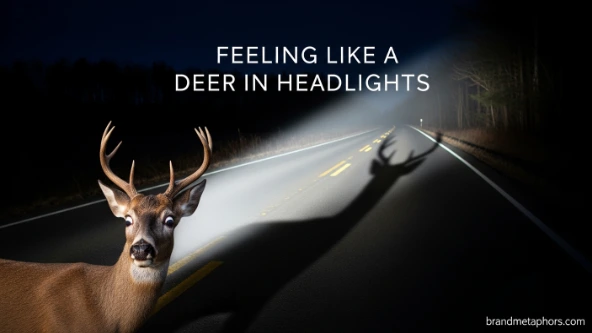
Some nervousness freezes people completely. That is where the metaphor “a deer in headlights” becomes powerful.
What It Means
This comparison describes sudden fear or panic that leaves someone unable to react.
Example Sentence
- “When the teacher called on him unexpectedly, he looked like a deer in headlights.”
Alternative Expressions
- Frozen like ice
- Stuck like a paused clock
- Petrified like stone
Emotional Layer
This metaphor captures vulnerability. The deer is not weak; it is overwhelmed by shock and uncertainty.
Cultural Connection
Movies often use this image during tense scenes. Characters caught in emotional conflict stand still, eyes wide, unable to move forward or backward.
The metaphor works beautifully in fiction and personal storytelling because readers immediately recognize the feeling.
A Mind Like Tangled Wires: Metaphors for Racing Thoughts
Nervousness often scrambles thinking. Thoughts collide, tangle, and spark unpredictably.
Meaning Behind the Metaphor
Comparing the mind to tangled wires suggests confusion and mental overload.
Example Sentence
- “Minutes before the interview, her thoughts became a knot of tangled wires.”
Similar Metaphors
- Brain spinning like a broken compass
- Thoughts crashing like traffic
- Mind buzzing like faulty electricity
Sensory Imagery
This metaphor creates the sound of static, confusion, and overheating pressure.
Real-Life Example
Students before exams often describe their minds this way. Information seems trapped behind mental fog despite hours of preparation.
This metaphor is excellent for modern writing because it connects emotional anxiety with technology and chaos.
Nervousness as a Storm Brewing Inside
Storm metaphors are timeless because emotions often feel like weather patterns.
Why Storms Represent Anxiety So Well
Storms are unpredictable, intense, and difficult to control. Nervousness can arrive gradually like dark clouds or suddenly like thunder.
Example Sentence
- “A storm churned inside him as he waited for the phone call.”
Alternative Comparisons
- Thunder rolling through the chest
- Rainclouds gathering in the mind
- Emotional lightning striking the nerves
Sensory and Emotional Details
This metaphor creates tension through sound, movement, and atmosphere. Readers can almost hear the thunder and feel the pressure in the air.
Literary Reference
Many classic novels use storms to symbolize emotional unrest. In gothic literature especially, weather mirrors inner turmoil.
Walking on Thin Ice: Metaphors for Social Anxiety
Social nervousness often feels fragile and dangerous.
Meaning
Walking on thin ice suggests fear of making mistakes or saying the wrong thing.
Example Sentence
- “At the family dinner, he felt like he was walking on thin ice.”
Alternative Phrases
- Tiptoeing through a minefield
- Balancing on a tightrope
- Standing on crumbling ground
Emotional Texture
This metaphor communicates caution, tension, and uncertainty.
Everyday Relevance
People often experience this at job interviews, awkward reunions, or difficult conversations where one wrong word could create conflict.
A Heart Racing Like Wild Horses
Physical reactions are central to nervousness. Fast heartbeat metaphors create urgency and intensity.
Meaning of the Metaphor
Wild horses symbolize uncontrollable energy and speed.
Example Sentence
- “Her heart galloped like wild horses before the competition.”
Similar Comparisons
- Heart drumming like war beats
- Pulse sprinting like a runaway train
- Chest pounding like heavy footsteps
Sensory Detail
Readers can almost hear the frantic rhythm.
Mini Storytelling Scene
A boxer waits beneath glaring arena lights. The crowd roars overhead. His heart crashes through his chest like untamed horses charging across open land.
This metaphor works especially well in sports writing and dramatic fiction.
Being a Shaken Leaf: Fragile Metaphors for Fear and Anxiety
Nature offers beautiful ways to describe nervousness.
What the Metaphor Suggests
A shaking leaf represents vulnerability and sensitivity.
Example Sentence
- “She stood there trembling like a leaf in autumn wind.”
Alternative Expressions
- Quivering branch
- Fragile flower in rain
- Candle flickering in wind
Emotional Resonance
This metaphor feels softer and more poetic than aggressive comparisons.
Literary Feel
Poets often use leaves to symbolize emotional fragility. The image is simple yet deeply human.
Fireworks Under the Skin: Excited Nervousness Metaphors
Not all nervousness is negative. Sometimes excitement and fear mix together.
Meaning
Fireworks represent emotional energy bursting unpredictably.
Example Sentence
- “Before meeting her favorite author, fireworks exploded beneath her skin.”
Alternative Comparisons
- Sparks jumping through the veins
- Electric currents beneath the skin
- A volcano of excitement
Emotional Layer
This metaphor blends joy and anxiety beautifully.
Pop Culture Connection
Athletes, musicians, and performers often describe pre-performance nerves this way because adrenaline feels explosive rather than frightening.
Metaphors for Nervousness in Creative Writing
Writers use metaphors to deepen emotional scenes and reveal character psychology.
How to Use Nervous Metaphors Effectively
Avoid overloading every sentence with dramatic comparisons. Choose one strong metaphor and develop it naturally.
Weak Example
- “She was nervous.”
Stronger Example
- “Her nerves crackled like loose electric wires before the interview.”
The second sentence creates atmosphere and emotion instantly.
Tips for Better Metaphors
1. Use Physical Sensations
Connect emotions to body reactions.
Examples:
- Tight chest
- Sweaty palms
- Shaking knees
2. Match Tone to Character
A poet may describe nerves as “winter wind in the ribs,” while a mechanic might compare anxiety to “an engine rattling apart.”
3. Avoid Cliché Overuse
Popular metaphors are effective, but fresh imagery stands out more.
Instead of:
- “Butterflies in my stomach”
Try:
- “Tiny storms fluttered beneath my ribs.”
Interactive Exercises: Practice Creating Nervousness Metaphors
Learning metaphors becomes easier through creativity and experimentation.
Exercise 1: Complete the Comparison
Fill in the blank:
- “My thoughts were like ______.”
- “Her nervousness felt like ______.”
- “His heartbeat sounded like ______.”
Try unusual ideas instead of predictable ones.
Exercise 2: Use the Five Senses
Describe nervousness using:
- Sound
- Touch
- Smell
- Taste
- Sight
Example:
- “Fear tasted like cold metal on her tongue.”
This deepens emotional writing dramatically.
Exercise 3: Turn Emotions into Weather
Imagine nervousness as weather.
Questions to explore:
- Is it foggy confusion?
- Sudden lightning panic?
- Slow-building thunder?
Write three sentences using weather imagery.
Bonus Tips for Using Nervousness Metaphors in Daily Life and Social Media
Metaphors are not only for novels and poetry. They can enrich ordinary communication too.
For Social Media Captions
Examples:
- “My nerves were doing gymnastics today.”
- “Walking into Monday like a deer in headlights.”
- “Heart racing faster than Wi-Fi during a storm.”
These captions feel expressive and relatable.
For Journaling
Metaphors help process emotions safely and creatively.
Instead of writing:
- “I felt anxious.”
Try:
- “My thoughts spun like laundry trapped in a storm.”
This often reveals emotional depth more clearly.
For Public Speaking and Storytelling
Speakers use metaphors to connect emotionally with audiences.
Example:
- “Before my first speech, my stomach felt like a cage full of birds.”
Listeners instantly understand the feeling.
Famous Literary and Cultural References to Nervousness
Many beloved writers and artists have explored nervousness through metaphorical imagery.
Shakespeare
Characters in Shakespeare’s plays often compare fear to storms, sickness, or trembling earth.
Modern Cinema
Films frequently show nervousness through visual metaphors:
- Sweaty hands
- Flickering lights
- Thunder outside windows
- Rapid heartbeat sounds
These cinematic techniques mirror literary metaphor.
Poetry and Music
Songs often compare anxiety to drowning, fire, or storms. Poetry especially thrives on emotional comparisons because metaphors create emotional shortcuts between writer and reader.
How Nervousness Metaphors Help Emotional Understanding
Interestingly, metaphors do more than improve writing. They help people understand themselves.
When emotions feel overwhelming, metaphors create distance and clarity.
Instead of saying:
- “I am anxiety.”
You can say:
- “Anxiety is a storm passing through me.”
That subtle shift can make emotions feel temporary rather than permanent.
Teachers, therapists, and writers often encourage metaphor exercises for this reason. Emotional imagery helps people express feelings that otherwise remain trapped inside silence.
Conclusion
Nervousness is one of the most universal human experiences. Whether it arrives before a speech, during a first date, ahead of an exam, or in the silence before life-changing news, it affects both body and mind in unforgettable ways.
Metaphors about being nervous transform those invisible feelings into vivid emotional pictures. Butterflies flutter through stomachs. Storms gather in chests. Hearts gallop like wild horses. Thoughts tangle like broken wires. These comparisons do more than decorate language — they help people connect, understand, and communicate emotions more deeply.
For writers, metaphors create immersive storytelling. For everyday speakers, they add warmth and personality to communication, anyone struggling to explain anxiety, they offer a bridge between emotion and expression.
The next time nervousness wraps around your thoughts, pause for a moment and ask yourself: what does this feeling resemble? You may discover imagery powerful enough to become poetry, storytelling, or even personal healing.
FAQs About Metaphors About Being Nervous
1. What is a metaphor for being nervous?
A metaphor for being nervous compares anxiety or fear to another image or experience, such as “butterflies in the stomach” or “a storm brewing inside.”
2. Why are metaphors useful for describing nervousness?
Metaphors make emotions easier to understand and more vivid. They help readers and listeners feel the emotional intensity instead of simply hearing about it.
3. What are common metaphors for anxiety and nervousness?
Popular examples include:
- Butterflies in the stomach
- Deer in headlights
- Walking on thin ice
- Heart racing like wild horses
- Thoughts tangled like wires
4. How can writers create original nervousness metaphors?
Writers can focus on physical sensations, nature, weather, sound, or personal experiences. Mixing unexpected imagery often creates memorable metaphors.
5. Can metaphors help with emotional expression in real life?
Yes. Metaphors help people explain emotions creatively and clearly, especially in journaling, therapy, storytelling, and daily conversation.