
Introduction
A burnt meal forgotten in the oven. A storm cloud creeping across a bright afternoon. A cracked mirror reflecting a distorted face.
Bad things rarely arrive quietly in life or language. We feel them sharply, and when ordinary words fail, metaphors step in. A metaphor can turn a simple complaint into something vivid, emotional, and unforgettable. Instead of saying something is “bad,” we compare it to poison, quicksand, rust, or a sinking ship. Suddenly, readers do not just understand the feeling—they experience it.
Metaphors for bad situations, bad people, bad moods, or bad decisions appear everywhere. Writers use them in novels. Teachers use them in lessons. Musicians slip them into lyrics. Everyday conversations overflow with them too. Someone may call a toxic friendship “a cage,” or describe a terrible day as “a train wreck.” These images create emotion, tension, and clarity.
Learning metaphors for bad can sharpen your writing, improve storytelling, and make social media captions more memorable. They also help you express frustration, sadness, disappointment, or danger in creative ways. Whether you are a student, blogger, poet, or casual writer, mastering these expressions gives your language more color and force.
In this guide, you will explore vivid metaphors for bad experiences, personalities, habits, emotions, and situations. Along the way, you will discover meanings, example sentences, creative alternatives, and practical exercises to strengthen your own writing voice.
Why Metaphors for Bad Matter in Writing
Bad experiences are universal. Everyone knows heartbreak, disappointment, embarrassment, or failure. Yet simply calling something “bad” feels flat. Metaphors transform plain description into imagery that readers can almost taste or touch.
Imagine these two sentences:
- “The meeting went badly.”
- “The meeting collapsed like a house of wet cards.”
The second sentence paints a picture. It carries movement, emotion, and texture. Readers instantly feel instability and failure.
Metaphors for bad also help:
- Create emotional impact
- Add drama and tension
- Improve storytelling
- Make writing memorable
- Build stronger imagery
- Express complex feelings quickly
Great authors often rely on negative metaphors to deepen atmosphere. Horror stories use darkness and decay. Tragedies use storms and broken objects. Even comedy uses metaphors to exaggerate disaster in funny ways.
A teenager might say:
“My math test was a car crash.”
A novelist may write:
“Regret spread through him like black ink in water.”
Both use metaphor to transform emotion into imagery.
Metaphors for Bad Situations
Some situations feel messy, hopeless, or chaotic. Metaphors help communicate the intensity of those moments.
A Train Wreck
This metaphor describes a disaster unfolding in full view.
Meaning: A situation that becomes increasingly terrible and impossible to ignore.
Example Sentence: “The family dinner turned into a complete train wreck.”
Alternative Expressions:
- A sinking ship
- A collapsing bridge
- A runaway fire
Sensory Detail: Imagine twisted metal, smoke, and confusion. The metaphor carries loudness and destruction.
A Sinking Ship
This metaphor often describes failure that cannot be stopped.
Meaning: A doomed project, relationship, or plan.
Example Sentence: “The company felt like a sinking ship after the scandal.”
Mini Storytelling Example: A small business owner watches customers disappear week by week. Bills pile up. Employees leave. Every effort to save the business feels like tossing buckets of water from a leaking boat.
A House Built on Sand
This metaphor points to weakness underneath apparent stability.
Meaning: Something doomed because its foundation is weak.
Example Sentence: “Their friendship was a house built on sand.”
Cultural Reference: This metaphor appears in religious teachings and literature to symbolize unstable foundations.
Metaphors for Bad People
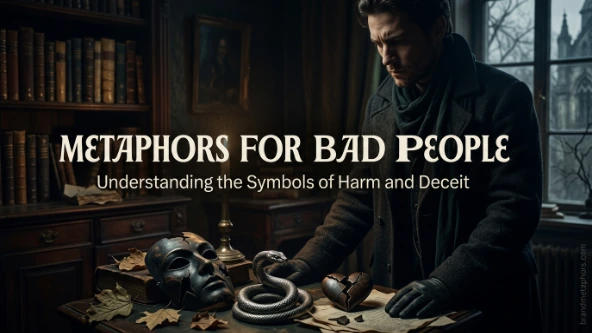
Some people spread negativity like smoke in a closed room. Metaphors capture toxic personalities vividly.
A Snake in the Grass
Meaning: Someone deceitful or secretly harmful.
Example Sentence: “He smiled politely, but everyone knew he was a snake in the grass.”
Alternative Ways to Express It:
- A wolf in sheep’s clothing
- A ticking bomb
- Poison wrapped in silk
Poison
A powerful metaphor for emotional harm.
Meaning: Someone whose presence damages others emotionally or mentally.
Example Sentence: “Her cruel words were poison in the group.”
Emotional Detail: Poison suggests slow destruction rather than instant damage.
A Black Hole
Meaning: A person who drains energy, hope, or happiness.
Example Sentence: “Talking to him felt like speaking into a black hole.”
Literary Feel: This metaphor creates a cosmic sense of emptiness and emotional exhaustion.
Metaphors for Bad Emotions
Negative emotions often feel too overwhelming for literal language alone.
A Storm Inside the Chest
Meaning: Intense emotional turmoil.
Example Sentence: “Anger thundered inside him like a storm trapped in his chest.”
Alternative Expressions:
- A volcano ready to erupt
- Waves crashing in the mind
- A wildfire in the heart
Heavy Chains
Meaning: Emotional burdens or sadness.
Example Sentence: “Grief hung on her shoulders like heavy chains.”
Sensory Touch: This metaphor creates physical weight and exhaustion.
Darkness Crawling Across the Mind
Meaning: Depression, fear, or hopelessness.
Example Sentence: “After the loss, darkness crawled slowly across his thoughts.”
Poetic Quality: The crawling motion creates a chilling emotional effect.
Metaphors for Bad Decisions
Poor decisions often create consequences that ripple outward. Metaphors make those consequences more vivid.
Opening Pandora’s Box
Meaning: Starting a problem that creates endless trouble.
Example Sentence: “Reading those private messages opened Pandora’s box.”
Cultural Reference: From Greek mythology, Pandora released suffering into the world after opening a forbidden container.
Playing With Fire
Meaning: Taking dangerous risks.
Example Sentence: “He was playing with fire by lying to his boss.”
Alternative Phrases:
- Dancing on thin ice
- Walking into a trap
- Holding a lit fuse
Digging Your Own Grave
Meaning: Causing your own downfall.
Example Sentence: “With every insult, he dug his own grave deeper.”
Mini Storytelling: A politician ignores warnings and continues making reckless choices until public trust collapses completely.
Metaphors for Bad Weather and Atmosphere
Writers often use weather metaphors to reflect negativity or tension.
A Sky Bruised Purple
Meaning: An atmosphere filled with threat or sadness.
Example Sentence: “The evening sky looked bruised purple before the storm.”
Fog Thick as Doubt
Meaning: Confusion or uncertainty.
Example Sentence: “Fear settled over the town like fog thick as doubt.”
Thunder Waiting to Break
Meaning: Tension ready to explode.
Example Sentence: “The silence between them felt like thunder waiting to break.”
Why It Works: Weather metaphors mirror human emotions naturally. Storms symbolize chaos, while darkness symbolizes despair.
Metaphors for Bad Habits
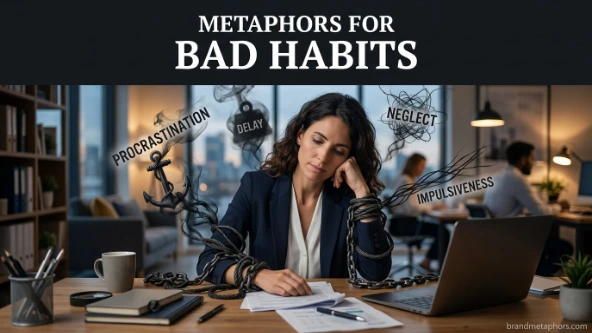
Bad habits slowly shape lives, often without immediate notice.
Rust on Iron
Meaning: Something slowly damaging a person over time.
Example Sentence: “Jealousy worked like rust on iron, weakening their friendship.”
Quicksand
Meaning: A habit that traps someone deeper over time.
Example Sentence: “Debt became quicksand beneath his feet.”
Sensory Detail: Quicksand creates panic, helplessness, and sinking.
A Leaking Bucket
Meaning: Something wasteful or impossible to maintain.
Example Sentence: “Trying to save money while gambling was like pouring water into a leaking bucket.”
Three Powerful Metaphor Examples You Can Use Immediately
Here are three especially versatile metaphors for bad situations and emotions.
1. A Rotten Apple
Meaning: One harmful person affecting a group.
Example Sentence: “One rotten apple ruined the team’s spirit.”
Alternative Versions:
- A poisoned seed
- Mold spreading through bread
- A virus in the system
Real-Life Example: In workplaces, one toxic employee can damage morale for everyone else.
2. A Cracked Mirror
Meaning: Broken identity, damaged trust, or emotional pain.
Example Sentence: “After the betrayal, their relationship became a cracked mirror.”
Emotional Texture: This metaphor suggests damage that can still reflect reality, but imperfectly.
Creative Prompt: Write about a friendship using only broken-object metaphors.
3. A Candle Drowning in Rain
Meaning: Hope struggling against negativity.
Example Sentence: “Her confidence felt like a candle drowning in rain.”
Poetic Feeling: This metaphor mixes fragility and sadness beautifully.
Social Media Caption Idea: “Some days feel like candles drowning in rain.”
How to Create Your Own Metaphors for Bad
You do not need to copy famous metaphors. Creating your own can make writing more original and emotional.
Step 1: Identify the Feeling
Ask yourself:
- Is it painful?
- Chaotic?
- Exhausting?
- Dangerous?
Step 2: Find a Physical Image
Match the feeling with something visual.
Examples:
- Stress → tightening rope
- Regret → stain on fabric
- Failure → collapsing tower
Step 3: Add Sensory Detail
Use:
- Sound
- Texture
- Temperature
- Movement
Instead of:
“Her sadness was bad.”
Try:
“Sadness clung to her like cold rain beneath winter clothes.”
Step 4: Keep It Relatable
The best metaphors connect to familiar experiences.
People understand:
- Fire
- Storms
- Darkness
- Broken glass
- Heavy weight
These images feel universal.
Interactive Exercises to Practice Metaphors for Bad

Practicing metaphors strengthens creativity and emotional expression.
Exercise 1: Finish the Sentence
Complete these creatively:
- “Failure followed him like…”
- “Her anger was a…”
- “The room felt like…”
Exercise 2: Transform Plain Sentences
Turn boring lines into metaphor-rich ones.
Plain:
“The date went badly.”
Improved:
“The date limped forward like a dying engine.”
Plain:
“He was nervous.”
Improved:
“His thoughts fluttered like trapped birds.”
Exercise 3: Create a Mood Scene
Write five lines describing:
- A terrible storm
- A toxic friendship
- A disappointing day
Use at least three metaphors.
Bonus Challenge
Describe a bad day without using the word “bad.”
Using Metaphors for Bad in Social Media and Daily Life
Metaphors are not just for novels and poetry. They thrive online too.
Social Media Captions
Examples:
- “Today felt like walking through wet cement.”
- “My motivation vanished like smoke in the wind.”
- “This week has been a circus on fire.”
These lines stand out because they create imagery instantly.
Daily Conversations
People naturally speak in metaphors:
- “I’m drowning in work.”
- “That idea crashed and burned.”
- “He exploded with anger.”
Using fresh metaphors can make conversations more expressive and memorable.
Blogging and Creative Writing
Negative metaphors add emotional depth to:
- Horror stories
- Romance novels
- Personal essays
- Song lyrics
- Speeches
Even business writing sometimes uses metaphors:
“The project hit an iceberg.”
Bonus Tips for Writing Better Metaphors
Avoid Overused Combinations
Some metaphors lose power through repetition.
Instead of:
- Cold as ice
- Busy as a bee
Try more unique imagery.
Example:
“Silence spread through the room like dust settling after collapse.”
Mix Emotion With Movement
Movement adds life.
Compare:
- “Fear was inside him.”
- “Fear crept through him like icy water.”
The second feels alive.
Use Nature for Emotional Power
Nature creates strong emotional metaphors:
- Storms
- Rivers
- Fire
- Ash
- Winter
- Earthquakes
These images feel timeless and dramatic.
Read Poetry and Fiction
Writers like William Shakespeare and Edgar Allan Poe mastered emotional metaphor. Reading literary works can sharpen your own creativity.
Common Mistakes When Using Metaphors for Bad
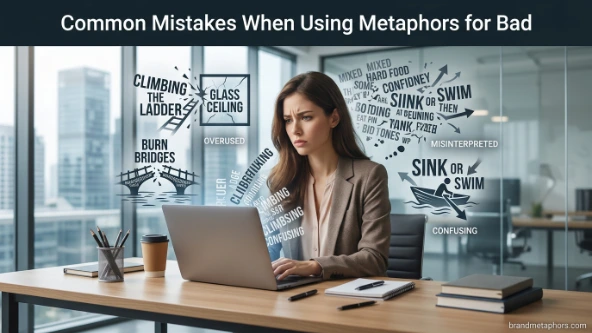
Even powerful metaphors can fail if overused or mixed poorly.
Mixing Metaphors
Example:
“He drowned in a wildfire of emotions.”
Water and fire clash awkwardly.
Being Too Complicated
If readers cannot picture the metaphor quickly, it loses impact.
Overusing Dark Imagery
Too many negative metaphors can exhaust readers emotionally. Balance darkness with clarity and rhythm.
Copying Famous Metaphors Too Often
Fresh metaphors feel more personal and memorable.
Instead of:
“Life is hell.”
Try:
“Life felt like carrying broken glass uphill.”
FAQs About Metaphors for Bad
1. What is a metaphor for bad?
A metaphor for bad compares negativity, failure, or harm to another image or object. Examples include “a sinking ship” or “poison in the air.”
2. Why are metaphors useful in writing?
Metaphors create vivid imagery and emotional depth. They help readers feel experiences rather than simply understand them.
3. Can metaphors improve storytelling?
Yes. Metaphors strengthen atmosphere, character emotions, and dramatic tension, making stories more memorable.
4. What are common themes in negative metaphors?
Common themes include storms, darkness, poison, broken objects, fire, decay, and drowning.
5. How can I create original metaphors?
Focus on emotions first, then connect them to physical images, textures, sounds, or movements that readers recognize easily.
Conclusion
Bad experiences are part of being human, but language gives us ways to shape and understand them. Metaphors transform disappointment into storms, toxic people into poison, and emotional pain into cracked mirrors or drowning candles. These comparisons do more than decorate sentences—they reveal emotion, atmosphere, and truth.
Whether you are writing fiction, poetry, captions, essays, or journal entries, metaphors for bad can make your words more vivid and unforgettable. They invite readers into the emotional landscape instead of leaving them outside it.
The next time you struggle to describe failure, sadness, anger, or chaos, pause and ask yourself: What does this feeling resemble?
Perhaps it is rust spreading quietly across iron. Perhaps it is thunder trapped behind clouds. Or perhaps it is a candle trying bravely to survive the rain.