

Introduction
A dim room, a half-open window, and the quiet rustle of leaves outside—many people have, at some point, imagined death arriving like this: softly, silently, almost politely. Yet, no one truly knows what it is like until they face it. This uncertainty is why humans rely so heavily on language, especially metaphors, to make sense of something so vast and unknowable.
Metaphors for death are not just poetic expressions; they are emotional bridges between fear and understanding. We call death a “final sleep,” a “long journey,” or “returning home” because these images soften the harshness of the unknown. They help us process grief, communicate loss, and find meaning in endings that feel too big for simple words.
In real life, these metaphors shape how we mourn, how we remember, and even how we live. By exploring them deeply, we begin to understand not only death—but also the way we value life itself.
The Role of Metaphors in Understanding Death
Metaphors are mental tools that translate abstract ideas into familiar images. Death, being one of the most abstract and unavoidable experiences, naturally invites metaphorical thinking.
When people say someone has “passed away,” they are not just avoiding direct language—they are framing death as movement rather than an end. This softens emotional impact and makes the concept easier to process.
In different cultures, metaphors for death vary widely. Some see it as a doorway, others as a rest, and some as a return to nature. These expressions reflect cultural beliefs, religious teachings, and emotional needs.
Why We Rely on Metaphors
- They reduce fear by replacing harsh reality with softer imagery
- They help children and adults understand loss
- They allow emotional expression when literal words feel too painful
Ultimately, metaphors act as emotional translators for one of life’s greatest mysteries.
Death as Sleep: The Most Common Metaphor
One of the oldest and most widespread metaphors for death is sleep. Phrases like “eternal rest” or “final sleep” suggest peace and calmness rather than fear.
Emotional Meaning Behind the Sleep Metaphor
Sleep is familiar, safe, and necessary. By comparing death to sleep, humans attempt to remove its terror. It suggests rest after struggle, silence after noise, and peace after pain.
For example, when someone says, “She has fallen into eternal sleep,” it creates an image of softness rather than violence or loss.
Limitations of This Metaphor
However, this metaphor can also create confusion, especially for children, who may fear sleeping itself. It also simplifies the complexity of grief by suggesting passivity.
Still, its emotional comfort makes it one of the most enduring metaphors for death across cultures and literature.
Death as a Journey: Movement Beyond Life
Another powerful metaphor is death as a journey. This image suggests that life does not simply stop—it transitions into another path.
We often hear phrases like “he has gone on his final journey” or “she has traveled beyond.” This metaphor creates a sense of continuation rather than disappearance.
What Makes the Journey Metaphor Powerful
- It reduces finality and introduces movement
- It suggests purpose, as if death is part of a larger path
- It aligns with spiritual beliefs in many cultures
Real-Life Reflection
When people lose someone, they often imagine them “somewhere else,” continuing peacefully. This helps the grieving process by replacing emptiness with imagined direction.
In essence, the journey metaphor transforms fear into motion, making the unknown feel more navigable.
Death as a Return Home
Many traditions describe death as going home. This metaphor suggests comfort, belonging, and completion.
Home is associated with safety, warmth, and origin. So, saying someone has “returned home” implies they have reached their final place of rest.
Emotional Depth of This Metaphor
This is especially powerful for people who believe in spiritual afterlife. It frames life on Earth as temporary and death as a return to a true origin.
Even outside religious contexts, it reflects the human desire for belonging and closure.
In grief, this metaphor often brings peace, as it suggests the loved one is no longer lost, but simply “back where they belong.”
Death as a Passage or Doorway
Death is often described as a passage, doorway, or transition. This metaphor focuses on change rather than ending.
Understanding the Doorway Image
A door separates one space from another. Similarly, death is seen as a threshold between life and whatever comes next. This idea is common in philosophy and spiritual thought.
It suggests:
- Continuity beyond physical life
- Transformation instead of destruction
- Mystery beyond human perception
This metaphor is particularly comforting because doors can be opened and closed. It implies that death is not destruction but movement into another state.
Death as a Return to Nature
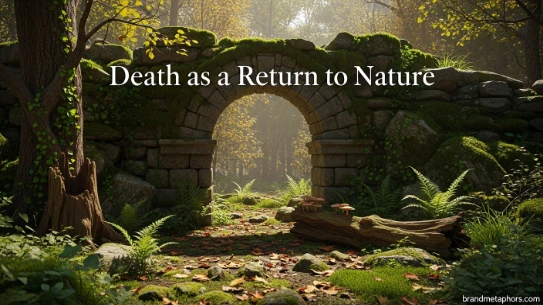
Another deeply rooted metaphor is the idea that death returns us to nature. People say things like “becoming part of the earth” or “returning to dust.”
The Natural Cycle Perspective
This metaphor reflects ecological reality. Every living being eventually decomposes and becomes part of soil, plants, and ecosystems.
It emphasizes:
- The cycle of life and death
- Interconnectedness of all living things
- Continuity through natural transformation
In this view, death is not an interruption but a recycling of life energy. It brings a sense of belonging to something larger than oneself.
Death as a Light or Darkness Transition
Light and darkness metaphors are also common in describing death. People speak of “going into the light” or “entering eternal darkness.”
Dual Symbolism
- Light: peace, clarity, hope, spiritual awakening
- Darkness: fear, unknown, silence, mystery
These metaphors reflect emotional interpretations rather than literal meanings. They help express what cannot be seen or confirmed.
For many, imagining death as light provides comfort, while darkness represents uncertainty. Both serve as emotional frameworks for processing loss.
Death as a Release or Freedom
Sometimes death is described as release—freedom from pain, illness, or suffering.
Emotional Logic Behind This Metaphor
This metaphor is often used when someone has experienced long-term illness. It reframes death as relief rather than tragedy.
For example, saying “he is finally free from pain” changes the emotional tone of loss. It acknowledges suffering while also recognizing peace.
However, this metaphor can be complex because it may conflict with grief. While it offers comfort, it does not remove emotional absence.
Still, it remains one of the most compassionate metaphors for death.
Death as a Shadow or Presence
Some metaphors describe death as a shadow that follows life or as a silent presence.
Symbolic Meaning
A shadow is always attached but constantly shifting. This suggests that death is always near but unseen.
This metaphor highlights:
- Life’s fragility
- The inevitability of death
- Awareness of mortality
It encourages reflection on how time is limited, making life more meaningful. Writers and philosophers often use this imagery to emphasize urgency in living fully.
Cultural Differences in Death Metaphors
Different cultures shape how death is described and understood.
Examples of Cultural Interpretations
- Some cultures see death as reunion with ancestors
- Others view it as reincarnation or rebirth
- Some focus on spiritual judgment or transformation
These variations show that metaphors for death are not universal truths but cultural interpretations of the unknown.
Why Culture Matters
Culture influences grief rituals, language, and emotional expression. A metaphor that brings comfort in one culture may feel unfamiliar in another.
Understanding this diversity helps us respect different ways of coping with loss.
Psychological Purpose of Death Metaphors
From a psychological perspective, metaphors help the mind manage emotional overload.
How the Mind Uses Metaphors
- Reduces anxiety about the unknown
- Creates mental images for abstract ideas
- Helps structure grief and acceptance
When someone hears “he has moved on,” their mind creates a visual narrative that is easier to process than the finality of death.
Metaphors act like emotional cushions, softening the impact of reality while still acknowledging it.
Misunderstandings About Death Metaphors
While metaphors are helpful, they can also create confusion.
Common Misinterpretations
- Thinking death is literally sleep
- Believing death is reversible like a journey
- Assuming metaphors describe physical truth
These misunderstandings can especially affect children or individuals unfamiliar with abstract thinking.
It is important to recognize that metaphors are symbolic, not literal. They describe feelings, not facts.
The Power of Choosing the Right Metaphor
The way we talk about death influences how we experience grief.
Why Word Choice Matters
Different metaphors shape different emotional responses:
- “Passed away” feels gentle
- “Lost” feels painful and incomplete
- “Resting” feels peaceful
Choosing language carefully can help comfort others and make conversations about death more humane.
In everyday life, especially in caregiving or support situations, thoughtful metaphors can reduce emotional harm and increase understanding.
Conclusion
Metaphors for death are more than poetic language—they are emotional frameworks that help humans navigate one of life’s most difficult realities. Whether we see death as sleep, a journey, a doorway, or a return to nature, each metaphor reveals how deeply we seek meaning in the unknown.
These expressions do not eliminate grief, but they give shape to it. They allow us to speak about loss without being overwhelmed by it. Most importantly, they reflect our shared human desire for comfort, continuity, and understanding.
In the end, metaphors remind us that while death is universal, the way we understand it is deeply personal. And in that understanding, we often discover a quieter appreciation for life itself.
FAQs
What are metaphors for death?
Metaphors for death are symbolic expressions like “sleep” or “journey” used to describe death in a softer or more meaningful way.
Why do people use metaphors for death?
People use them to reduce fear, express emotions, and make the idea of death easier to understand.
Is calling death sleep accurate?
No, it is symbolic. It means peace or rest, not actual sleeping.
What is the most common metaphor for death?
“Sleep” and “journey” are among the most common across cultures.
Do all cultures use the same death metaphors?
No, different cultures have unique metaphors based on beliefs and traditions.
Can metaphors help with grief?
Yes, they can make emotional processing easier by creating comforting mental images.
Are death metaphors meant to be literal?
No, they are symbolic and represent feelings, not physical reality.