
Introduction
Imagine standing at the edge of something new—a long-awaited journey, a life-changing opportunity, or even a simple moment like opening a long-anticipated message. Your heart beats a little faster. Your thoughts race ahead of you. There’s a spark in your chest, almost electric, as if something inside you is waking up. What is that feeling, really? How do you describe something so powerful, so alive?
Excitement is one of the most dynamic human emotions, yet it can be surprisingly difficult to put into words. This is where metaphors step in—not just as decorative language, but as bridges between feeling and understanding. They give shape to the invisible, turning emotional energy into images we can see, hear, and almost touch.
In this article, we’ll explore metaphors for excitement in depth—what they mean, how they work, and why they matter. Through vivid examples, relatable scenarios, and thoughtful insights, you’ll discover how to recognize, express, and even deepen your experience of excitement using the power of metaphor.
The Nature of Excitement: Why It Feels So Intense
Excitement is not just happiness—it’s energy in motion. It’s the anticipation of something meaningful, mixed with a rush of possibility. Think of it as happiness with momentum.
Metaphorically, excitement often feels like something rising, building, or bursting. That’s because it has a physical component: your heart rate increases, your breathing shifts, your mind speeds up. It’s an emotional surge that moves through both body and mind.
Consider the metaphor: “Excitement is a rising tide.” Like the ocean swelling before a wave, excitement builds gradually, lifting everything in its path. It creates a sense of movement, of something about to happen.
This intensity is what makes excitement so memorable. It pulls you out of the ordinary and into a heightened state of awareness. Even small moments—like waiting for good news—can feel larger than life.
Understanding this nature helps explain why metaphors are so effective. They don’t just describe excitement—they mirror its movement, its energy, and its unpredictability.
Excitement as Fire: A Spark That Ignites the Soul
One of the most common metaphors for excitement is fire. It captures both the warmth and the intensity of the feeling.
The Spark
Excitement often begins small—a single idea, a possibility, a moment of inspiration. Like a spark, it can appear suddenly and unexpectedly.
- “A spark of excitement lit up her thoughts.”
This metaphor emphasizes how quickly excitement can ignite, transforming an ordinary moment into something meaningful.
The Flame
As excitement grows, it becomes a flame—steady, bright, and consuming attention.
- “His excitement burned steadily as the day approached.”
Here, excitement is not fleeting; it sustains itself, fueling anticipation.
The Wildfire
At its peak, excitement can feel uncontrollable.
- “Excitement spread through the crowd like wildfire.”
This version highlights how excitement can spread socially, moving from person to person and amplifying itself.
Fire metaphors remind us that excitement is powerful—but also something to be managed. Too little, and it fades. Too much, and it can overwhelm.
Excitement as Electricity: A Charge in the Air
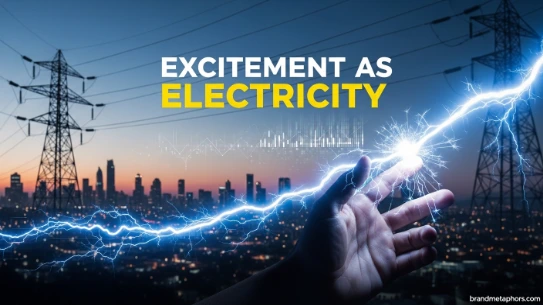
Electricity metaphors capture the suddenness and energy of excitement.
- “There was an electric buzz in the room.”
- “She felt a jolt of excitement run through her.”
These expressions reflect how excitement can feel like a current moving through your body. It’s fast, sharp, and energizing.
The Static Tension
Before something exciting happens, there’s often a sense of buildup—like static before a storm.
- “The air was charged with anticipation.”
This metaphor emphasizes the invisible tension that precedes excitement.
The Lightning Strike
Sometimes excitement arrives instantly.
- “The idea hit him like lightning.”
This shows how excitement can be both surprising and powerful, arriving without warning.
Electricity metaphors are especially useful for describing moments of sudden realization or unexpected opportunity.
Excitement as a Roller Coaster: The Thrill of Ups and Downs
A roller coaster is one of the most vivid metaphors for excitement because it combines anticipation, fear, and thrill.
- “The whole experience was an emotional roller coaster.”
This metaphor highlights that excitement is not always smooth. It includes highs and lows, twists and turns.
The Climb
Before the big moment, there’s a slow buildup.
- “Her excitement climbed steadily as the event approached.”
The Drop
Then comes the peak moment—the release.
- “The announcement sent his excitement plummeting into exhilaration.”
The Ride
The entire journey becomes an experience of movement and unpredictability.
This metaphor is particularly effective for describing events like travel, performances, or major life changes.
Excitement as a Storm: Energy That Breaks Loose
Storm metaphors capture the overwhelming and sometimes chaotic nature of excitement.
- “A storm of excitement swept through the crowd.”
This suggests something powerful and uncontrollable.
The Gathering Clouds
Excitement often builds quietly.
- “You could feel the excitement gathering like storm clouds.”
The Thunderclap
Then comes the moment of release.
- “The news hit like thunder.”
Storm metaphors remind us that excitement is not always calm—it can be intense, loud, and even a little chaotic.
Excitement as a Journey: Moving Toward Something New

Excitement often involves anticipation of the future, making journey metaphors especially fitting.
- “She was on the edge of a new adventure.”
The Starting Line
Excitement begins before the journey even starts.
- “He stood at the starting line, filled with excitement.”
The Road Ahead
The unknown adds to the feeling.
- “The road ahead shimmered with excitement.”
This metaphor highlights the forward-looking nature of excitement—it’s about what’s coming, not just what is.
Excitement as a Balloon: Rising Beyond Limits
Balloon metaphors focus on the uplifting quality of excitement.
- “Her excitement lifted her like a balloon.”
The Inflation
As excitement grows, it expands.
- “His excitement swelled with every passing minute.”
The Floating Sensation
Excitement can make you feel light, almost detached from reality.
- “She felt like she was floating on excitement.”
This metaphor emphasizes the joy and elevation that excitement brings.
Excitement as Music: A Rhythm of Emotion
Music metaphors capture the emotional rhythm of excitement.
- “Excitement played like a fast-paced melody in his mind.”
The Crescendo
Excitement builds over time.
- “The excitement rose to a crescendo.”
The Beat
There’s often a physical rhythm—like a heartbeat.
- “Her heart drummed with excitement.”
This metaphor connects excitement to sensory experience, making it more vivid and immersive.
Excitement in Everyday Life: Small Moments, Big Feelings
Excitement isn’t limited to major events. It shows up in everyday moments.
Waiting for News
- “His excitement flickered like a candle in the dark.”
Meeting Someone Special
- “Her excitement danced in her chest.”
Starting Something New
- “Excitement opened the door to possibility.”
These metaphors show that excitement can be subtle yet meaningful. It doesn’t have to be dramatic to be powerful.
Cultural and Personal Interpretations of Excitement
Different people experience and express excitement in unique ways.
Some see it as energy, others as light, others as movement. Cultural context also shapes metaphors—some cultures may favor nature-based imagery, while others lean toward technology or urban life.
For example:
- Nature-based: “Excitement bloomed like a flower.”
- Urban: “Excitement buzzed like a city at night.”
Understanding these variations helps you choose metaphors that resonate with your audience or personal style.
Common Mistakes When Using Excitement Metaphors
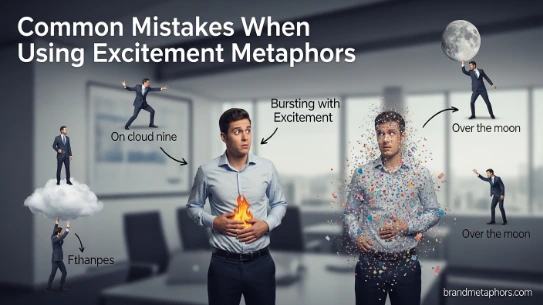
While metaphors are powerful, they can lose impact if overused or mismatched.
Overcomplication
Using too many metaphors at once can confuse the reader.
Mixed Imagery
- “Her excitement burned like a wave of electricity.” This mixes fire, water, and electricity—creating confusion.
Lack of Context
A metaphor needs grounding in a situation to feel real.
The key is clarity. A good metaphor should enhance understanding, not distract from it.
Practical Tips for Creating Your Own Metaphors
Creating effective metaphors is easier than it seems.
Start with the Feeling
Ask yourself: What does excitement feel like physically?
Choose a Familiar Image
Pick something relatable—fire, movement, sound.
Keep It Simple
The best metaphors are clear and direct.
Test It
Does it evoke the feeling you want? If yes, it works.
For example:
- Feeling: Nervous excitement
- Image: A vibrating string
- Metaphor: “His excitement hummed like a taut string.”
The Deeper Meaning Behind Excitement Metaphors
Metaphors don’t just describe excitement—they reveal how we understand it.
Fire suggests passion. Electricity suggests energy. Journeys suggest growth.
Each metaphor carries a hidden perspective. By choosing one, you’re shaping how the emotion is perceived.
This makes metaphors powerful tools—not just for writing, but for thinking. They influence how you experience your own emotions.
Applying Excitement Metaphors in Communication
Whether you’re writing, speaking, or storytelling, metaphors can elevate your expression.
In Writing
They make descriptions vivid and engaging.
In Conversations
They help others understand your feelings.
In Storytelling
They create emotional depth.
For example: Instead of saying, “I’m excited,” you might say: “It feels like a spark is running through me.”
That small shift makes a big difference.
Conclusion
Excitement is one of the most vibrant human emotions—dynamic, powerful, and often difficult to capture in plain words. Metaphors give it shape, turning invisible energy into images we can feel and understand. Whether it’s a spark igniting, a storm building, or a journey unfolding, each metaphor offers a new way to experience and express excitement.
By exploring these metaphors, you not only improve your language but also deepen your emotional awareness. You begin to recognize excitement in its many forms—quiet or explosive, fleeting or sustained.
Ultimately, metaphors remind us that emotions are not just felt—they can be seen, heard, and shared. And when you find the right metaphor, excitement becomes more than a feeling. It becomes a story.
FAQs
What are metaphors for excitement?
Metaphors for excitement are figurative expressions that describe the feeling using vivid imagery, such as fire, electricity, or movement, to make the emotion more relatable.
Why are metaphors important for expressing excitement?
They help translate abstract emotions into concrete images, making communication more engaging and easier to understand.
What is a simple metaphor for excitement?
A simple example is: “Excitement is a spark.” It shows how the feeling begins suddenly and grows.
Can excitement be described in negative ways?
Yes, metaphors like storms or roller coasters can highlight the overwhelming or unpredictable aspects of excitement.
How do I create my own metaphors?
Start by identifying how the emotion feels, then connect it to a familiar image that shares similar qualities.
Are metaphors for excitement universal?
Not entirely. Cultural and personal experiences influence how people describe and interpret excitement.
What is the most powerful type of excitement metaphor?
There’s no single answer, but metaphors that match the context and emotion clearly—like fire for passion or electricity for energy—tend to be most effective.
Can metaphors improve writing skills?
Absolutely. They add depth, creativity, and clarity, making your writing more engaging and memorable.