
Introduction
Have you ever noticed how fall feels like a quiet story unfolding in nature? Leaves turn gold, the air grows cooler, and the world seems to slow down just a little. Streets are covered in colors that once belonged high in the trees, now resting on the ground like memories that have gently let go. Fall is more than just a season; it often feels like a reflection of life itself.
Metaphors for fall help us understand emotions, changes, and life transitions in a deeper way. Writers, poets, and thinkers often use fall to represent endings, maturity, reflection, and preparation for something new. It is a season that teaches without speaking, showing us how beauty can exist in change and even in decline. In real life, these metaphors help people process growth, loss, and transformation in a more meaningful and relatable way. By exploring them, we learn not just about the season—but about ourselves.
The Meaning of Metaphors for Fall
Metaphors for fall are symbolic expressions that connect the season of autumn with human experiences. Fall is often used to represent change, maturity, or the passage of time. Just as trees shed their leaves, people also go through moments of release, where they let go of old habits, relationships, or phases of life.
In literature and daily speech, fall becomes a mirror for emotional and psychological states. It is not just about weather; it becomes a language of transition. When someone says they are “in the fall of their life,” it often means they are in a mature stage, reflecting on past experiences.
Fall metaphors help us understand that endings are not always negative. They can be natural, necessary, and even beautiful. They remind us that life moves in cycles. What looks like loss may actually be preparation for renewal. This simple but powerful meaning makes fall one of the most widely used seasonal metaphors in storytelling.
Fall as a Metaphor for Transition
Fall represents the space between fullness and emptiness, between growth and rest. It is a transition season, and this makes it a strong metaphor for life changes. People often experience “fall moments” when they are shifting from one phase to another—like changing careers, moving cities, or ending relationships.
Emotional in-between states
Fall feels neither like the bright energy of summer nor the quiet stillness of winter. This in-between quality mirrors emotional uncertainty. It reflects times when life is not fully clear, yet not completely over.
Real-life reflection
Imagine a student finishing school. There is excitement for the future but also sadness about leaving familiar friends and routines. That emotional space is very much like fall—colorful, uncertain, and meaningful.
Fall teaches that transitions are not instant. They take time, reflection, and acceptance. Just like trees slowly lose their leaves, people slowly adjust to change. This metaphor helps us see transition as a natural process, not something to fear.
Falling Leaves as a Metaphor for Letting Go
One of the most powerful fall metaphors is falling leaves. Trees release their leaves without resistance, allowing them to return to the earth. This becomes a strong symbol of letting go in human life.
H3: Emotional release
Letting go of anger, regret, or old memories can feel difficult. But fall shows that release is part of survival and renewal.
H3: Life example
A person ending a long friendship may feel sadness, but over time, they understand that not all connections are meant to last forever. Like leaves falling, some relationships complete their cycle naturally.
The beauty of this metaphor lies in its softness. Leaves do not fall violently; they drift gently. This teaches that letting go does not always need to be painful or dramatic. It can be calm, gradual, and healing.
Fall reminds us that holding on to everything is not necessary. Sometimes, peace comes when we allow certain things to leave our lives.
Harvest as a Metaphor for Results and Effort
Fall is also harvest season in many parts of the world. This makes it a strong metaphor for results, rewards, and outcomes of past effort.
When farmers collect crops, they see the results of months of hard work. In life, this connects to education, careers, and personal growth. What we “harvest” today often depends on what we planted earlier.
H3: Effort and patience
Success rarely happens overnight. Fall reminds us that time and patience are required for meaningful results.
H3: Life application
A student preparing for exams experiences their “harvest” after consistent study. The results reflect discipline, not luck alone.
This metaphor also teaches responsibility. If we want a good harvest, we must invest effort early. Fall becomes a reminder that life is cyclical—actions today shape outcomes tomorrow.
Decline and Endings in Fall Metaphors
Fall is often linked to decline, but not in a purely negative sense. It represents the natural slowing down of energy, both in nature and in life.
H3: Natural endings
Just as daylight becomes shorter, some phases of life also reach their natural conclusion. Careers, habits, and even relationships may gently end.
H3: Acceptance of change
Instead of resisting endings, fall teaches acceptance. Trees do not fight seasonal change; they adapt.
In human life, endings can feel painful, but they also create space for something new. Fall shows that decline is not failure—it is part of a larger cycle. It encourages us to see endings as transitions, not losses.
This perspective helps people handle emotional changes with more balance and understanding.
Changing Colors as a Metaphor for Emotional Shifts
The vibrant colors of fall—reds, oranges, yellows—represent emotional transformation. Leaves do not stay green forever; they change before they fall. This reflects how human emotions also evolve over time.
H3: Emotional complexity
People are not always in one emotional state. Feelings shift from joy to sadness, from excitement to reflection.
H3: Personal growth
A person going through life changes may experience mixed emotions. Like fall leaves, these emotions are part of transformation, not confusion.
The changing colors show that beauty exists even in change. Emotional shifts are not signs of weakness; they are signs of depth. Fall helps us accept emotional complexity as natural and meaningful.
Cooling Weather as a Metaphor for Slowing Down
As fall arrives, temperatures drop and life naturally slows. This cooling effect becomes a metaphor for rest, reflection, and reduced pressure.
People often move fast during “summer-like” phases of life—busy schedules, high energy, and constant activity. Fall introduces a slower rhythm.
H3: Need for rest
Just as nature prepares for winter, humans also need periods of rest to recover energy.
H3: Real-life application
Burnout is common in modern life. Fall teaches the importance of slowing down before exhaustion takes over.
This metaphor encourages balance. Life cannot always be fast-paced. Slowing down is not laziness; it is preparation for long-term sustainability.
Fall as Preparation for Winter
Fall is often seen as a preparation stage for winter. This makes it a metaphor for planning, recovery, and internal reflection before difficult times.
Trees store energy during fall to survive winter. Similarly, people prepare mentally and emotionally for future challenges.
This stage is quiet but important. It is not about action, but readiness. In life, this may represent saving money, building emotional strength, or learning new skills.
Fall teaches that preparation is invisible work. Even when nothing seems to be happening on the surface, important changes are taking place underneath.
Rain and Wind in Fall as Emotional Release
Fall often brings strong winds and rain, which can symbolize emotional release and cleansing.
Wind shakes trees, and rain washes the ground. Together, they represent moments when emotions become heavy but necessary.
H3: Emotional cleansing
Crying, talking, or expressing feelings can feel like emotional rain. It clears inner pressure.
H3: Life example
After stress or conflict, people often feel relief once emotions are released.
This metaphor shows that emotional storms are not destructive only—they are also healing. Just like fall weather clears the sky, emotional release can bring clarity and peace.
Nostalgia and Memory in Fall
Fall often brings feelings of nostalgia. The sight of falling leaves and fading light can trigger memories of the past.
This makes fall a metaphor for reflection. People think about childhood, past relationships, or earlier life stages.
H3: Emotional reflection
Nostalgia is not just sadness; it is also appreciation for what once was.
H3: Personal meaning
A simple walk in autumn air can remind someone of old times, creating both warmth and longing.
Fall teaches that memory is part of identity. Looking back is not weakness—it is understanding where we come from.
Growth Cycles as a Metaphor for Life
Fall is part of a larger cycle: spring, summer, fall, and winter. This cycle becomes a powerful metaphor for human growth.
H3: Life stages
Spring represents beginnings, summer represents growth, fall represents maturity, and winter represents rest.
H3: Continuous learning
Life does not move in a straight line. It moves in cycles, where each stage has meaning.
Fall teaches maturity. It is the stage where experiences are understood and wisdom develops. It reminds us that every phase is necessary for the next one.
Fall in Relationships as Emotional Change
In relationships, fall can symbolize change, distance, or transformation. Not all relationships stay the same forever.
Sometimes people grow apart naturally, just like leaves separating from branches. This is not always negative—it can be part of personal growth.
Fall teaches that relationships evolve. Some become stronger, some fade, and some transform into memories.
Understanding this helps people handle emotional distance with less guilt and more acceptance. Change does not always mean failure; sometimes it means growth.
Fall in Creative Writing and Expression
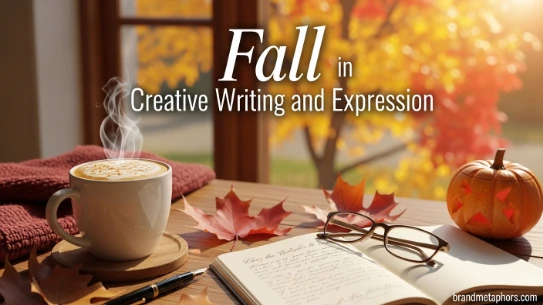
Writers often use fall as a background for emotional storytelling. It sets a mood of reflection, change, and depth.
Fall scenes can represent endings of journeys, emotional turning points, or quiet realization moments.
This makes fall a powerful creative tool. It adds emotional weight without needing explanation.
Writers use fall metaphors to connect readers with universal feelings—loss, change, and hope. It helps stories feel more human and relatable.
Conclusion
Metaphors for fall reveal much more than a seasonal change. They reflect how life moves through cycles of growth, release, reflection, and renewal. From falling leaves to changing colors, from harvest to quiet winds, each image carries meaning that connects deeply with human experience.
Fall teaches us that letting go is natural, endings are part of growth, and slowing down is necessary for balance. It reminds us that beauty exists even in decline and that every stage of life has purpose. When we understand fall as a metaphor, we begin to see our own lives with more patience and clarity. Change becomes less frightening and more meaningful. In the end, fall is not just a season—it is a gentle teacher of acceptance, transition, and quiet wisdom that stays with us long after the leaves have fallen.
FAQs
What does fall symbolize in metaphors?
Fall often symbolizes change, maturity, letting go, and life transitions. It represents a shift from growth to reflection and preparation.
Why is fall used in literature as a metaphor?
Writers use fall because it naturally reflects emotional depth, endings, and transformation, making stories more relatable and symbolic.
What do falling leaves represent?
Falling leaves usually represent letting go, release of the past, and acceptance of natural change in life.
How does fall relate to human emotions?
Fall reflects emotional shifts such as nostalgia, reflection, sadness, and calm acceptance during life changes.
What is the positive meaning of fall metaphors?
Fall can represent maturity, wisdom, harvest of efforts, and preparation for future growth and renewal.
How is fall connected to life cycles?
Fall is part of seasonal cycles that mirror human life stages like growth, maturity, reflection, and rest.
Can fall represent new beginnings?
Yes, fall often prepares the ground for new beginnings by clearing the old and creating space for future growth.