
Introduction
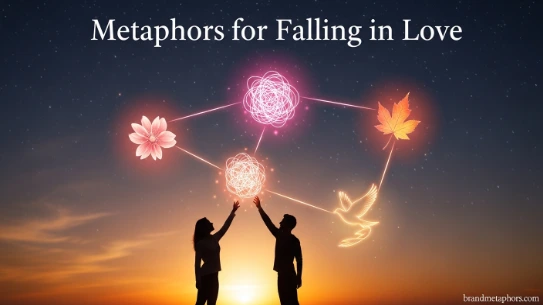
It often begins in the most ordinary moment. A quiet conversation that stretches a little longer than expected. A glance that lingers just a second too much. A familiar place suddenly feeling unfamiliar because someone new has entered it. Falling in love rarely announces itself with certainty—it arrives like a soft shift in atmosphere, something you feel before you fully understand.
This is where metaphors become powerful. When we talk about falling in love, literal language often fails us. Love is not a single thing we can point to; it is an experience made of emotion, change, memory, and imagination. So we borrow images—fire, oceans, gardens, storms—to describe what the heart is doing when words are not enough.
Understanding metaphors for falling in love matters because they help us interpret our emotional world. They give shape to confusion, clarity to intensity, and meaning to vulnerability. Through them, we begin to understand not only what love feels like, but also how it transforms us from within.
The Meaning of Metaphors in Falling in Love
Metaphors are more than poetic decoration; they are tools of understanding. When we say we are “falling” in love, we are already using a metaphor. Love is not a physical fall, yet the sensation of losing control, being drawn downward into something deeper, feels accurate to the experience.
In real life, metaphors help people explain emotions that are otherwise difficult to describe. For example, someone might say love feels like “coming home” after a long journey. Another might say it feels like “standing in sunlight after years of rain.” Each expression reveals a personal emotional truth.
Metaphors also shape how we behave in relationships. If love is seen as a fire, we may expect passion and intensity. If it is seen as a garden, we may expect patience and care. These mental images influence expectations, decisions, and even how we handle heartbreak.
Understanding metaphors is not just about language—it is about awareness. When we recognize the metaphor we are living by, we gain insight into our emotional patterns and how we relate to others.
Love as Fire: The Burning Metaphor
Fire is one of the most common metaphors for falling in love because it captures intensity, warmth, and transformation. Love often begins like a spark—small, sudden, and almost invisible—yet capable of growing into something consuming.
The Spark of Attraction
The spark represents the beginning: a moment of recognition, curiosity, or emotional ignition. It might happen through eye contact, shared laughter, or unexpected connection. Like a match struck in the dark, it is brief but powerful enough to change everything.
The Wildfire of Emotion
As love grows, it can feel like a wildfire—spreading quickly, difficult to control, and reshaping the landscape of life. People often describe early love as overwhelming because it touches thoughts, sleep, and daily routines.
However, fire is also warmth and comfort. In a stable relationship, it becomes a steady flame rather than a destructive blaze. This shift teaches an important lesson: love is not only about intensity, but also about balance and sustainability.
Love as a Journey or Road
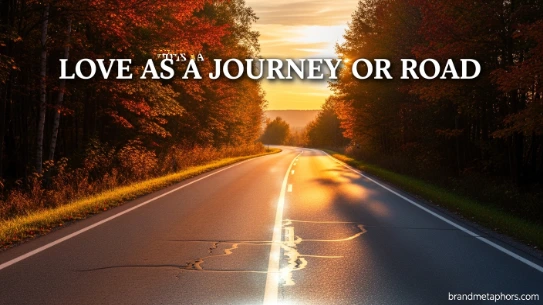
Another powerful metaphor is love as a journey. In this image, two people are travelers moving through life together, experiencing both smooth roads and difficult terrain.
At the beginning of love, the road feels new and exciting. Every shared experience becomes a milestone. Over time, the journey includes detours, obstacles, and unexpected turns, representing real-life challenges such as misunderstandings, distance, or personal growth.
This metaphor highlights companionship. Love is not just about arrival but about traveling together. Even difficult moments become part of the shared map of experience.
It also teaches patience. No journey is completed instantly, and similarly, love develops over time. When people see love as a journey, they become more open to growth and less focused on perfection. The destination matters less than the connection formed along the way.
Love as Ocean and Tides
Love is often compared to the ocean because it is vast, deep, and constantly moving. At times, it is calm and reflective; at other times, it is unpredictable and powerful.
Emotional Depth and Mystery
Like the ocean, love contains depths that are not immediately visible. Feelings can run deeper than what is expressed on the surface. This metaphor reminds us that understanding another person fully takes time and emotional exploration.
The Rise and Fall of Tides
Tides represent the natural rhythm of relationships. There are moments of closeness and distance, joy and uncertainty. Just as the ocean is influenced by unseen forces like the moon, love is shaped by internal emotions and external circumstances.
This metaphor encourages acceptance. Instead of resisting emotional change, it suggests flowing with it, trusting that movement is natural in all relationships.
Love as a Garden That Grows
When love is seen as a garden, it becomes something that requires care, attention, and time. It does not remain beautiful on its own—it must be nurtured.
In the early stage, love is like planting a seed. There is hope, curiosity, and uncertainty about what will grow. As time passes, communication, trust, and shared effort become the water and sunlight that help the relationship flourish.
Growth Through Care
A healthy garden does not grow overnight. Similarly, strong relationships develop through consistent effort—listening, understanding, and compromise.
Weeds and Challenges
Every garden has weeds, just as every relationship has challenges. Misunderstandings and conflicts must be addressed, not ignored. If cared for properly, the garden becomes stronger and more beautiful over time.
This metaphor emphasizes responsibility. Love is not passive; it is something actively cultivated.
Love as Music and Harmony
Love can also be understood as music. Two people in love are like instruments creating harmony together. At times, the melody is smooth and synchronized; at other times, it requires adjustment and tuning.
Each relationship has its own rhythm. Some are fast and energetic, others slow and calming. What matters is not perfection, but harmony—the ability to create something meaningful together.
Emotional Rhythm
Love includes emotional highs and lows, like musical notes rising and falling. These variations give relationships depth and texture.
Silence and Space
Even silence in music is important. In love, moments of quiet understanding can be just as powerful as conversation. This metaphor teaches that connection is not always about constant interaction, but about balance.
Love as Illness and Healing
Sometimes love is described as an illness—not in a negative sense, but as something that takes over thoughts and emotions. In early stages, it can feel consuming, affecting focus, appetite, and sleep.
However, this metaphor also includes healing. Love can soothe emotional wounds, provide comfort, and restore emotional balance.
The danger of this metaphor is dependence. If misunderstood, it can suggest losing control completely. But in a healthy sense, it highlights vulnerability—the openness that allows deep emotional connection.
Ultimately, love as healing reminds us that relationships can support emotional recovery and personal growth when they are healthy and mutual.
Love as Light and Shadow
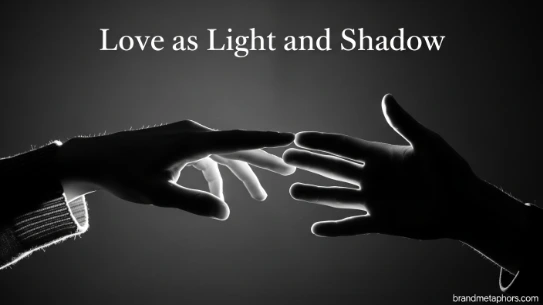
Light represents clarity, joy, and understanding in love. Shadow represents doubt, fear, and insecurity. Together, they create a complete emotional picture.
No relationship exists only in light. Even strong love includes moments of uncertainty. The contrast between light and shadow is what gives emotional depth.
This metaphor helps people accept imperfections. Instead of expecting constant happiness, it encourages understanding that emotional variation is natural.
Love becomes more realistic when both light and shadow are acknowledged.
Love as Weather and Seasons
Love is often compared to weather because it changes constantly. Some days feel like sunshine—warm, bright, and full of energy. Other days bring storms—conflict, sadness, or emotional distance.
Seasons of Love
Love also moves through seasons. Spring represents new beginnings, summer represents passion, autumn represents reflection, and winter represents emotional quiet or difficulty.
This metaphor teaches patience and resilience. Just as seasons change naturally, emotional phases in relationships also shift over time.
Understanding this helps people avoid panic during difficult moments, recognizing that emotional weather always changes.
Love as Gravity and Pull
Love can feel like gravity—a force that pulls people toward each other. This attraction is often invisible but powerful.
Even when two people are apart, emotional gravity keeps them connected through memory, thought, or longing.
However, gravity also requires balance. Too strong a pull can feel overwhelming, while too weak a connection can lead to distance. Healthy love finds equilibrium between closeness and independence.
This metaphor explains why some connections feel natural and effortless, as if they were always meant to exist.
Love as Architecture and Building
Love can be seen as constructing a building. At first, there is planning—understanding values, expectations, and compatibility. Then comes the foundation: trust, respect, and communication.
Foundation of Trust
Without a strong foundation, relationships become unstable. Trust is what supports everything built on top.
Layers of Experience
Over time, experiences become the structure—memories, shared struggles, and achievements. Each layer adds strength and meaning.
This metaphor emphasizes intentionality. Love is not random; it is built through consistent effort and shared vision.
Practical Lessons from Love Metaphors
Metaphors are not just poetic ideas; they offer practical insights into relationships. If love is fire, it must be managed. If it is a garden, it must be nurtured. If it is a journey, it requires patience.
Understanding these images helps people adjust expectations. Instead of expecting constant intensity, they learn to value stability. Instead of fearing change, they recognize it as natural.
Metaphors also help with emotional communication. They allow people to express feelings that might otherwise be difficult to say directly. Saying “I feel lost in this ocean of emotions” communicates depth more clearly than simple description.
Ultimately, metaphors guide emotional awareness and healthier relationship choices.
Conclusion
Falling in love is one of the most complex human experiences, and language alone often struggles to capture it. That is why metaphors—fire, oceans, journeys, gardens, and more—become essential tools for understanding it. Each metaphor reveals a different layer of emotional truth, showing how love can be intense, calm, challenging, or healing.
By exploring these images, we begin to see that love is not a single fixed experience but a shifting landscape of emotions and meanings. It changes us, teaches us, and reflects who we are at different stages of life. When we understand the metaphors we use, we also understand ourselves more deeply and approach relationships with greater awareness and care.
FAQs
What are metaphors for falling in love?
Metaphors for falling in love are symbolic expressions that compare love to things like fire, oceans, or journeys to explain emotions.
Why do people use metaphors for love?
People use metaphors because love is complex and emotional, making it easier to understand through images and comparisons.
What is the most common metaphor for love?
Fire is one of the most common metaphors, representing passion, intensity, and emotional warmth.
Can love be described as a journey?
Yes, love is often seen as a journey where two people grow, face challenges, and move forward together over time.
Why is love compared to the ocean?
Love is compared to the ocean because it is deep, emotional, and constantly changing like tides and waves.
What does it mean when love is called a garden?
It means love needs care, attention, and patience to grow and remain healthy.
Are metaphors important in relationships?
Yes, they help people understand emotions, communicate feelings better, and reflect on their experiences in relationships.