
Introduction (150–200 words)
Imagine walking into a room where the air feels heavy before a single word is spoken. No shouting, no clear conflict—just silence that feels sharp, like broken glass underfoot. Two people sit across from each other, not looking at one another, yet the distance between them feels larger than the room itself. Something unseen is present, but deeply felt. That something is often what people describe as hate.
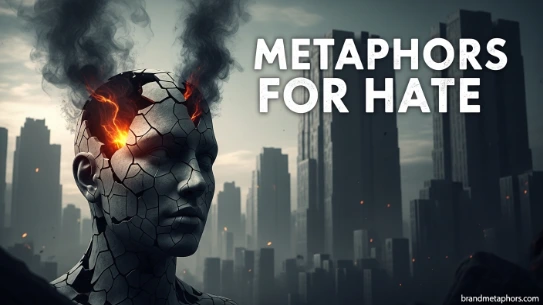
Hate is not always loud. Sometimes it hides in cold glances, unfinished sentences, or memories that refuse to fade. Because it is complex and emotional, humans often rely on metaphors to express it—fire, poison, storms, chains, shadows, and wounds. These metaphors help us understand something that is otherwise difficult to explain.
In this article, we will explore powerful metaphors for hate and what they reveal about human emotions, behavior, and relationships. By breaking down these images, we can better understand how hate forms, how it affects people, and how it might be recognized or even transformed in everyday life.
The Meaning Behind Metaphors for Hate
Metaphors for hate are not just poetic expressions—they are mental tools humans use to understand intense emotions. Hate is abstract, but metaphors turn it into something visible, physical, and relatable. When someone says “hate burned inside him,” they are turning emotion into imagery that the mind can grasp.
These metaphors help explain emotional intensity. For example, hate described as a “storm” suggests chaos and loss of control, while hate as a “chain” suggests restriction and long-term emotional imprisonment. Each metaphor adds a different layer of meaning.
In daily life, people use these comparisons without even realizing it. A person may say they feel “poisoned by resentment” or “consumed by anger,” reflecting how deeply hate can affect mental and emotional health.
Understanding these metaphors is important because they shape how we interpret both our feelings and the emotions of others. They give structure to something that otherwise feels overwhelming. By studying them, we begin to see hate not just as an emotion, but as a force that can be examined, understood, and sometimes softened.
Hate as Fire: Burning Emotion Within
Fire is one of the most common metaphors for hate because it reflects heat, destruction, and uncontrolled spread. When someone says “his hatred burned,” it suggests an emotion that grows stronger the longer it exists.
Burning Anger and Escalation
Hate as fire often starts with a spark—an insult, betrayal, or painful memory. Over time, it grows into something larger, consuming thoughts and influencing actions. Just like fire, if it is not controlled, it can spread and damage everything around it.
Destructive but Visible
Unlike hidden emotions, fire is visible and powerful. In relationships, hate expressed through fiery metaphors often shows itself in arguments, harsh words, or emotional outbursts. It can destroy trust quickly.
Fire metaphors also suggest urgency. A burning emotion cannot wait; it demands attention. This is why people often feel “heated” during conflict. The metaphor helps us understand how hate can transform a small issue into something overwhelming if left unchecked.
Hate as Poison: Slow Emotional Damage
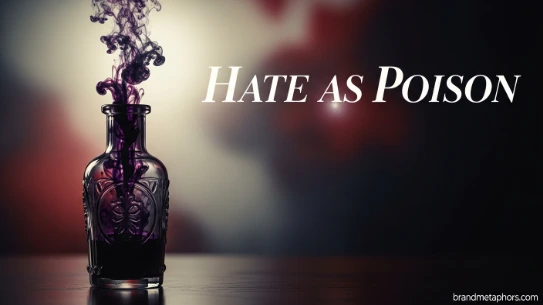
Poison is another strong metaphor for hate, representing something that works silently over time. Unlike fire, which is immediate, poison spreads gradually.
When people say “hatred poisoned his mind,” they refer to emotional contamination. It suggests that hate does not just affect behavior but also thinking patterns and perceptions.
Emotional Contamination
Poison metaphors show how hate can distort judgment. A person may begin to see everything through a negative lens, even neutral situations. This emotional “toxicity” affects relationships and self-image.
Internal Harm
Poison also implies internal damage. Hate held too long can lead to stress, anxiety, and emotional exhaustion. It doesn’t need external expression to be harmful.
This metaphor teaches an important lesson: hate does not only affect others—it harms the person carrying it. Like poison, its effects may not be visible immediately, but they accumulate over time and weaken emotional well-being.
Hate as Storm: Emotional Chaos and Turbulence
Storm metaphors describe hate as unpredictable, loud, and overwhelming. A storm cannot be easily controlled, and neither can intense emotions.
Sudden Emotional Outbursts
Hate as a storm often appears in moments of conflict where emotions erupt unexpectedly. Words become sharp like thunder, and reactions become fast like lightning.
Aftermath and Calm
Just like storms leave destruction behind, emotional outbursts of hate can damage relationships. However, storms also pass. This suggests that hate, though intense, is not always permanent.
People often say “a storm of anger” or “emotional hurricane,” showing how deeply unsettling such feelings can be. These metaphors remind us that emotional turbulence is temporary, even when it feels overwhelming in the moment.
Hate as Chains: Emotional Restriction and Bondage
Chains represent restriction, and when used as a metaphor for hate, they suggest emotional imprisonment.
Being Stuck in Emotion
Hate can bind a person to past experiences. Instead of moving forward, they remain mentally tied to hurt or betrayal. This creates emotional stagnation.
Breaking Free
Chains also imply that release is possible. Recognizing hate as something that binds us helps us understand that letting go is an act of freedom.
People often describe long-term resentment as “being chained to the past.” This metaphor shows how hate does not just exist in the present—it can control future thoughts and actions if not addressed.
Hate as Shadow: Hidden and Persistent Emotion
Shadows represent something always present but not always visible. Hate as a shadow suggests an emotion that follows a person quietly.
Always Present but Subtle
Even when not expressed, hate can influence thoughts and decisions. Like a shadow, it moves with the person, shaped by circumstances and emotions.
Emotional Darkness
Shadows also suggest lack of clarity. Hate often clouds judgment, making it difficult to see situations objectively. People influenced by this emotion may misinterpret actions or intentions.
This metaphor highlights how hate can exist beneath the surface, shaping behavior without being openly acknowledged.
Hate as War: Conflict and Emotional Battles
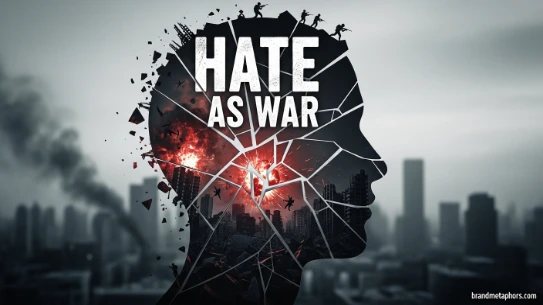
War metaphors show hate as a conflict between individuals, groups, or even within the self.
External Conflict
In relationships, hate often leads to arguments and emotional battles. Words become weapons, and communication turns into defense or attack.
Internal Struggle
War can also happen inside a person. They may feel torn between forgiveness and resentment. This internal conflict can be exhausting and confusing.
War metaphors help explain why hate feels draining. It is not a simple emotion but a continuous struggle that requires energy and attention.
Hate as Wound: Emotional Injury and Pain
Wound metaphors describe hate as something caused by hurt and injury.
Emotional Scars
Just like physical wounds leave scars, emotional hate often comes from unresolved pain. Betrayal or rejection can create lasting emotional marks.
Healing and Recovery
Wounds also suggest the possibility of healing. With time, understanding, and reflection, emotional pain can lessen.
This metaphor emphasizes that hate often begins with suffering. Understanding this helps shift focus from blame to healing.
Hate in Communication Breakdown
Hate often grows where communication fails. Metaphorically, it is described as “walls between people” or “broken bridges.”
Loss of Understanding
When people stop communicating effectively, misunderstandings grow. Silence or harsh words replace dialogue.
Emotional Distance
These metaphors show how hate creates separation. Even physically close individuals can feel emotionally distant.
This perspective highlights that hate is not only an emotion but also a breakdown in connection.
Psychological Insights Behind Hate Metaphors
Metaphors for hate reflect how the human mind processes strong emotions.
Simplifying Complexity
Hate is difficult to define, so metaphors simplify it into familiar images like fire or storms.
Emotional Processing
These comparisons help people express feelings they cannot easily verbalize. They also influence how people cope with emotions.
Understanding these metaphors improves emotional awareness. It helps individuals recognize patterns in their thinking and reactions, making emotional regulation easier.
Real-Life Situations Where Hate Metaphors Appear
In everyday life, these metaphors are commonly used without notice.
In Relationships
People say “burning resentment” after betrayal or “cold hatred” after long-term conflict.
In Society
Groups may describe “waves of hate” or “storms of anger” during social tension.
These expressions help people communicate shared emotional experiences. They turn abstract feelings into relatable images that others can understand quickly.
Transforming Hate Through Understanding
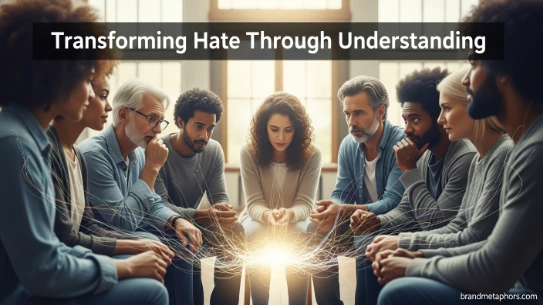
Metaphors not only describe hate—they also offer ways to transform it.
From Fire to Light
Fire can destroy, but it can also illuminate. Understanding emotions can turn destructive hate into awareness.
From Chains to Freedom
Recognizing emotional attachment helps people release resentment and move forward.
By reframing metaphors, individuals can shift their perspective from harm to healing. This does not erase emotion but changes how it is experienced.
Conclusion
Hate is one of the most intense human emotions, but it is also one of the most misunderstood. Through metaphors like fire, poison, storms, chains, shadows, wounds, and war, we gain a clearer picture of what hate feels like and how it behaves within human experience.
These metaphors help us see that hate is not just anger—it can be slow, hidden, explosive, or deeply rooted in pain. More importantly, they show that emotions are not fixed states but processes that can change over time.
By understanding these images, we become better at recognizing hate in ourselves and others. This awareness does not eliminate emotion but gives it context. And with context comes the possibility of reflection, healing, and change.
FAQs
What are metaphors for hate?
Metaphors for hate are symbolic expressions like fire, poison, or storms used to describe intense emotional dislike in a more understandable way.
Why do people use metaphors for hate?
People use metaphors to express complex emotions in simpler, visual forms that others can easily relate to and understand.
Is hate always described as something negative?
Yes, most metaphors for hate show it as destructive, harmful, or painful, though some also suggest transformation or awareness.
What does hate as fire mean?
It represents intense, fast-growing, and destructive emotion that can spread quickly if not controlled.
What does hate as poison represent?
It shows slow emotional damage that affects thoughts, behavior, and mental well-being over time.
Can hate be changed or reduced?
Yes, understanding emotions and reflecting on their causes can help reduce hate and transform it into acceptance or healing.
Why are metaphors important in emotional understanding?
Metaphors help people visualize and process emotions, making complex feelings easier to understand and communicate.