
Introduction
Imagine standing in a quiet room after a long day, your thoughts slowing down while your chest still feels heavy with everything you could not say. You might not see it, but you feel it—the heart carrying joy, pain, hope, and memories all at once. Across cultures and languages, people have always tried to explain this invisible emotional center using metaphors. The heart becomes a symbol, not just an organ, but a living story of human experience.
We say “my heart is full,” “my heart is broken,” or “follow your heart” without thinking twice. These expressions are more than poetic phrases—they reflect how deeply emotions shape our understanding of life. Metaphors for the heart help us describe feelings that are otherwise hard to explain. They give shape to love, grief, courage, and longing. In this article, we will explore powerful metaphors for the heart and uncover what they reveal about human emotions, relationships, and personal growth.
The Heart as the Center of Human Emotion
The heart is often seen as the emotional center of a person. Even though science places emotions in the brain, human language places them in the heart. This metaphor shows how deeply feelings are tied to identity.
When someone says, “I feel it in my heart,” they are expressing truth that feels personal and undeniable. The heart becomes a place where emotions gather and grow. Happiness feels like lightness in the heart, while sadness feels like pressure or weight.
Emotional meaning in daily life
In everyday experiences, people connect decisions to the heart. Choosing between logic and emotion often becomes a “head vs heart” struggle. This metaphor reflects internal conflict, showing how emotions guide human behavior even when logic disagrees.
The heart as emotion helps us communicate feelings that are too deep for simple words. It becomes a universal symbol of being human.
The Heart as a Container of Love
One of the most common metaphors is the heart as a container that holds love. People say “my heart is full of love,” as if love is a substance that fills space inside us.
This metaphor suggests that love can grow, expand, and even overflow. It also implies that the heart has limits—when it is filled with sadness or loss, it can feel “empty” or “broken.”
Examples in relationships
In relationships, this idea appears often. A parent may say their heart is full when seeing their child succeed. A friend may feel their heart “warm up” when receiving kindness. These expressions show emotional connection as something physical and real.
The heart-container metaphor helps us understand that love is not abstract—it is something we experience deeply and continuously.
The Heart as a Broken Object
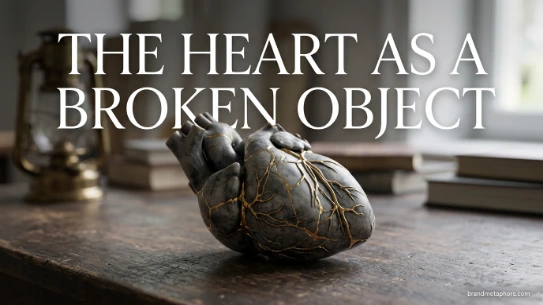
When people experience heartbreak, they often describe it as a broken heart. This metaphor makes emotional pain feel physical and visible.
A broken heart suggests something once whole has been damaged. It reflects loss, rejection, or disappointment in relationships. Even though the heart is not physically broken, the feeling is powerful enough to describe emotional collapse.
Healing perspective
A broken heart metaphor also implies healing. Broken things can sometimes be repaired or become stronger in new forms. People talk about “mending a broken heart,” showing emotional recovery over time.
This metaphor helps express grief in a way others can understand, making emotional pain feel shared and less isolating.
The Heart as an Engine of Life
Another powerful metaphor is the heart as an engine. Just like an engine powers a machine, the heart is seen as the force that keeps life moving.
This metaphor connects both physical and emotional meanings. Without the heart, life stops. Without emotional drive, people feel empty or unmotivated.
Emotional energy in action
When someone is passionate, we say their heart “drives” them forward. Athletes, artists, and leaders often describe their success as coming “from the heart,” meaning passion fuels their actions.
The engine metaphor shows that emotions are not passive—they are active forces that push people toward goals and dreams.
The Heart as a Home
The heart is often described as a home where feelings live. This metaphor creates a sense of comfort, safety, and belonging.
When someone says, “you have a place in my heart,” they are offering emotional space. It suggests acceptance and lasting connection.
Emotional belonging
In friendships and families, the heart-home metaphor shows deep attachment. Even when people are far apart, they remain “in each other’s hearts,” meaning emotional bonds remain strong.
This metaphor reminds us that relationships are not physical—they are emotional spaces we carry within us.
The Heart as a Garden
The heart is also seen as a garden where emotions grow like plants. Love, kindness, anger, and sadness are seeds that develop based on care and experience.
Growth and nurturing
A well-tended heart garden grows peace and love. A neglected one may grow weeds like anger or resentment. This metaphor suggests emotional responsibility.
It teaches that emotions are not random—they grow based on what we feed them. Positive thoughts, care, and connection help the heart “bloom.”
This idea encourages emotional awareness and self-care in daily life.
The Heart as a Compass
The heart is often called a compass that guides decisions and direction in life. This metaphor shows intuition and inner wisdom.
When people say “follow your heart,” they mean trust your feelings to guide choices, even when logic is uncertain.
Life decisions and intuition
In difficult decisions—career, relationships, or personal growth—people often rely on emotional instinct. The heart-compass metaphor suggests that inner feelings can point toward truth.
It highlights the importance of balancing logic and emotion for meaningful choices.
The Heart as a Flame
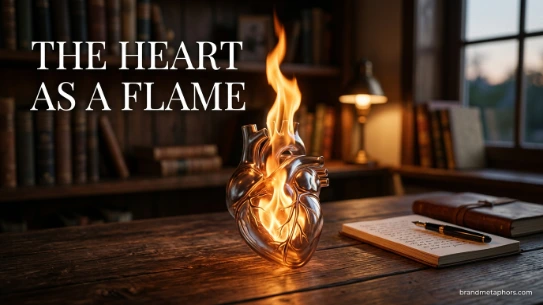
The heart is also described as a flame that represents passion and energy. A “burning heart” symbolizes strong desire or motivation.
Emotional intensity
When someone is deeply in love or inspired, their heart is said to “burn with passion.” This metaphor shows intensity and movement.
However, flames can also burn out. Emotional exhaustion or heartbreak may feel like a fading flame. This reflects the fragile balance of emotional energy.
The heart-flame metaphor teaches that passion must be cared for to remain strong.
The Heart as an Ocean
The heart is often compared to an ocean—deep, vast, and full of unknown emotions.
Depth of feelings
Like the ocean, the heart has calm surfaces and hidden depths. Some emotions are visible, while others remain buried.
Love can feel like gentle waves, while grief may feel like a storm. This metaphor captures emotional complexity and unpredictability.
It reminds us that human emotions are deep and sometimes difficult to fully understand.
The Heart as a Battlefield
Sometimes the heart is seen as a battlefield where emotions fight for control. Love may battle fear, or hope may fight doubt.
Inner conflict
People often struggle with decisions that involve emotional conflict. This metaphor reflects internal tension and emotional stress.
It shows that the heart is not always peaceful—it can be a place of struggle before clarity is found.
The Heart as a Mirror
The heart can also be viewed as a mirror reflecting truth, feelings, and intentions.
Emotional honesty
When someone has a “pure heart,” it suggests honesty and sincerity. The mirror metaphor shows that emotions reflect who we truly are.
It also suggests that how we treat others reflects back into our emotional life.
Lessons from Heart Metaphors
Heart metaphors teach us that emotions are complex, layered, and deeply human. They help us understand feelings that cannot be measured or seen directly.
Key insights
- Emotions need expression, not suppression
- Healing takes time but is possible
- Love grows when nurtured
- Inner guidance matters in decisions
These metaphors encourage emotional awareness and self-understanding.
Common Misunderstandings About Heart Metaphors
Many people take heart metaphors too literally. For example, a “broken heart” does not mean physical damage. It represents emotional pain.
Another misunderstanding is believing emotions always come from the heart alone. In reality, emotions involve both mind and body.
Heart metaphors are symbolic tools, not scientific explanations. They help us communicate feelings, not define biology.
Conclusion
The heart is more than a biological organ—it is a powerful symbol of human emotion. Through metaphors like the heart as a container, garden, flame, or compass, we better understand love, pain, passion, and personal growth. These images give shape to feelings that are otherwise difficult to describe.
By exploring heart metaphors, we learn how deeply emotions influence our lives and relationships. They remind us that feelings are not weaknesses but essential parts of being human. Whether the heart is broken, burning, or blooming, it continues to guide us through every experience with meaning and depth.
FAQs
What are metaphors for the heart?
Metaphors for the heart are symbolic expressions used to describe emotions, such as love, sadness, or courage, in imaginative ways.
Why is the heart used as a metaphor for emotions?
Because people associate the heart with feelings, love, and emotional reactions, even though emotions originate in the brain.
What does a “broken heart” really mean?
It means emotional pain or sadness caused by loss, rejection, or disappointment, not physical damage.
What does “follow your heart” mean?
It means trusting your feelings or intuition when making decisions instead of relying only on logic.
Is the heart really the center of emotions?
Scientifically, no. Emotions come from the brain, but culturally the heart symbolizes emotional experience.
Why do heart metaphors matter in communication?
They help people express deep feelings in simple, relatable, and meaningful ways.
Can heart metaphors help in understanding emotions?
Yes, they make complex emotions easier to understand and communicate in everyday life.