

Introduction (150–200 words)
Close your eyes for a moment and imagine the word home. Maybe you see a small kitchen filled with the smell of tea. Maybe it’s a noisy hallway where voices echo after a long day. Or maybe it’s not a place at all—but a feeling, like safety wrapping around you after a storm. For some people, home is a physical space. For others, it is a memory, a person, or even a sense of belonging they carry inside themselves.
This is where metaphors for home become powerful. They help us describe something that is both ordinary and deeply emotional. A home can be a “harbor,” a “heart,” a “castle,” or even a “mirror,” depending on how we experience it. Each metaphor reveals a different layer of meaning—comfort, identity, protection, growth, or sometimes loss.
Understanding these metaphors matters because home shapes how we see the world and ourselves. It influences how we feel safe, how we connect with others, and how we define who we are. In this article, we will explore different metaphors for home and uncover the deeper emotional and human truths behind them.
Home as a Shelter of Safety
One of the most common metaphors for home is that it is a shelter. This idea goes beyond walls and roofs. It represents protection from emotional storms, not just physical weather.
A shelter is where we step in after facing the outside world. It is where pressure softens. For a child, home might be the place where loud school days fade into quiet evenings. For an adult, it might be where work stress finally loosens its grip.
In this metaphor, home becomes a boundary between chaos and calm. It holds us when life feels uncertain. Even a small room can feel like a safe shelter if it brings peace.
Emotional meaning
- Protection from stress
- A place to rest and recover
- A boundary from outside pressure
This metaphor teaches that home is not about size or design. It is about emotional safety. When people say, “I feel at home,” they often mean they feel protected from judgment and fear.
Home as the Heart of Life
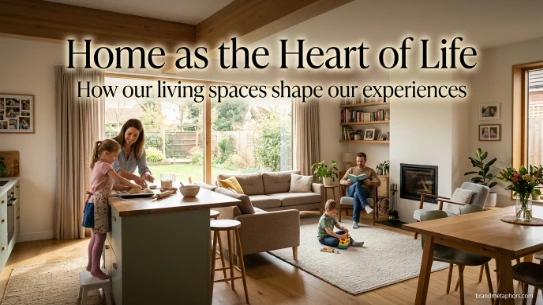
Another strong metaphor is home as the heart. Just like the heart pumps life into the body, home gives emotional energy to a person’s life.
When home is healthy, life feels balanced. When home is broken or tense, everything outside feels harder. This metaphor shows how deeply home influences mood, confidence, and identity.
A warm home can feel like a heartbeat—steady, familiar, and alive. Conversations at the dinner table, shared laughter, or even silence can create that rhythm.
What this metaphor suggests
- Home is emotionally central
- It affects all areas of life
- It creates emotional rhythm and stability
In this sense, people often carry their “home heart” with them. Even far away, memories of home can guide decisions and comfort during loneliness.
Home as a Memory Keeper
Home is also a storage space for memories. Every corner can hold fragments of the past. A scratch on the wall, an old chair, or a faded curtain can carry stories.
This metaphor turns home into a living archive. It does not forget easily. Instead, it keeps moments alive.
Layers of memory in home
- Childhood laughter in hallways
- Family traditions in kitchens
- Quiet personal moments in bedrooms
Even when people leave, they often say they “carry home in their memory.” This shows that home is not only physical but deeply emotional.
Sometimes, returning to an old home feels like opening a book you once wrote. Every room speaks, even if no one else hears it.
Home as Identity and Self-Reflection
Home often reflects who we are. It can be seen as a mirror of identity. The way a home is arranged, decorated, or maintained often shows personality, culture, and values.
A simple home might reflect simplicity in life. A colorful home may reflect creativity. Even silence inside a home can reflect personality traits like calmness or privacy.
How home shapes identity
- Shows cultural background
- Reflects personal habits
- Expresses emotional needs
In this metaphor, home is not separate from the self—it is part of it. People often “become” their homes over time, shaping spaces just as spaces shape them.
This is why changing a home can sometimes feel like changing a part of oneself.
Home as a Journey Anchor
Life is often described as a journey, and home becomes the anchor point in that journey. No matter how far someone travels, home is where they return—physically or emotionally.
This metaphor highlights stability in a moving world. Even when life changes, home remains the reference point.
The anchor effect
- Provides direction in life
- Offers emotional grounding
- Helps maintain balance during change
For many people, thinking of home helps them make decisions. It becomes a mental compass, guiding choices about work, relationships, and personal growth.
Even when people build new homes, they often compare them to the “original anchor” they grew up with.
Home as Warmth and Fire

Another powerful metaphor is home as warmth or fire. This represents emotional comfort, connection, and love.
A warm home is not just about temperature. It is about feeling welcomed. Like sitting near a fire on a cold night, home can create emotional heat that melts loneliness.
Emotional warmth includes
- Love between family members
- Shared meals and conversations
- Small acts of care and kindness
When people describe a “cold home,” they are often speaking about emotional distance. In contrast, a warm home feels alive, active, and caring.
This metaphor reminds us that emotional energy is what truly creates a home—not just furniture or design.
Home as a Garden of Growth
Home can also be seen as a garden where people grow. Just like plants need soil, sunlight, and care, humans need support, patience, and love to develop.
In this metaphor, home becomes a space of personal development. Children grow in it, relationships grow in it, and even personal dreams begin there.
Elements of growth at home
- Learning values and habits
- Building confidence
- Developing emotional strength
Sometimes growth is slow, like a plant stretching toward light. Other times it is fast, like sudden change during life transitions.
A healthy home garden allows mistakes, learning, and renewal.
Home as a Fortress of Protection
Home is often described as a fortress. This metaphor focuses on security and defense from external threats.
A fortress home provides a sense of control over one’s environment. It creates boundaries that protect privacy and emotional well-being.
What a fortress represents
- Safety from external stress
- Control over personal space
- Emotional defense mechanisms
However, this metaphor also has a warning. A fortress can protect, but it can also isolate. If walls become too strong, connection with others may weaken.
So, while protection is important, balance is necessary.
Home as a Classroom of Life Lessons
Home is also where many life lessons begin. It can be seen as a classroom where values, behavior, and emotional understanding are taught.
Unlike formal schools, home teaches through daily life—how people treat each other, how problems are solved, and how love is expressed.
Lessons learned at home
- Respect and communication
- Responsibility and care
- Emotional awareness
These lessons are often not spoken directly. Instead, they are observed. Children learn by watching, listening, and experiencing.
In this way, home becomes the first and most powerful teacher.
Home as Change and Impermanence

Not all metaphors for home are stable. Sometimes home is seen as something changing or temporary. People move, relationships shift, and environments evolve.
In this metaphor, home is not fixed. It grows, disappears, or transforms over time.
Understanding change in home
- Homes can be physical places that change
- Emotional homes can shift between people
- Memories of home evolve with time
This perspective can be difficult, especially when people lose a place they called home. But it also teaches flexibility. House is not always a single point—it can be multiple places across life.
Home as Emotional Healing Space
Home is often where emotional healing begins. After pain, loss, or stress, home becomes a space to recover.
This metaphor sees home as a quiet healer. It does not fix everything instantly, but it allows time, rest, and reflection.
Healing aspects of home
- Rest after emotional stress
- Space for reflection and silence
- Support from familiar surroundings
Sometimes healing comes from simple things: sleeping in one’s own bed, sitting in a familiar chair, or hearing familiar voices.
Home does not erase pain, but it makes healing possible.
Home in Language and Literature
Across languages and stories, home is one of the most used symbols. Writers often use it to represent belonging, loss, identity, or hope.
In literature, home can be:
- A destination
- A memory
- A dream
- A loss
This shows how flexible the concept is. A single word can carry many meanings depending on context.
Writers use home to connect readers to universal emotions because almost everyone understands it differently but deeply.
Conclusion
Home is not just a place with walls and a roof. It is a collection of meanings shaped by emotion, memory, and experience. Through metaphors like shelter, heart, garden, fortress, and memory, we see that home can be many things at once—safe, warm, changing, protective, and deeply personal.
These metaphors help us understand that home is not the same for everyone. For some, it is a physical location. For others, it is a feeling carried within. It can grow, fade, or transform, but it never loses its emotional importance.
Ultimately, home reflects who we are and how we connect with the world. When we understand its deeper meanings, we also understand ourselves more clearly.
FAQs
What is a metaphor for home?
A metaphor for home is a way of describing home using symbolic meanings like shelter, heart, or garden to explain emotions and experiences beyond physical space.
Why are metaphors for home important?
They help us understand emotional connections, identity, and safety linked to home in a deeper and more meaningful way.
Can home be more than a physical place?
Yes, home can also be a feeling, memory, or relationship that gives comfort and belonging.
What does “home as a heart” mean?
It means home is the emotional center of life, giving energy, stability, and emotional rhythm.
Why is home called a shelter?
Because it protects people from physical and emotional stress, offering safety and rest.
Can home change over time?
Yes, home can change physically and emotionally as people move, grow, or experience life changes.
What does home symbolize in literature?
In literature, home often symbolizes belonging, identity, memory, or emotional journey.