
Introduction
Imagine walking through a quiet street late at night. The world feels still, but inside your body, something is louder than everything else—a hollow ache that refuses to fade. It is not just an empty stomach; it is a reminder, a signal, almost like a voice speaking in symbols rather than words. Hunger has always been more than a physical feeling. Across stories, conversations, and everyday expressions, people describe it in powerful metaphors that turn a simple biological need into something deeply human and emotional.
Metaphors for hunger help us understand not just the lack of food, but also desire, longing, survival, and even emotional emptiness. They make the invisible feeling visible and relatable. When someone says they are “starving like a desert” or “running on empty,” they are painting a picture that others can instantly feel.
This article explores the most meaningful metaphors for hunger, what they represent, and how they connect to real human experiences. By the end, you will see hunger not just as a physical state, but as a language of emotion and imagination.
1. Hunger as a Language of Symbols
Hunger is often described through symbols because it is a universal experience that words alone cannot fully capture. When people say they are “empty inside” or “running on fumes,” they are translating physical discomfort into emotional understanding. These metaphors help others relate, even if they are not hungry themselves.
At its core, hunger becomes a language that speaks through comparison. A growling stomach becomes a “drumming cave,” and weakness becomes “light fading from a lamp.” These expressions are not just creative—they are necessary for communication.
Everyday Understanding
In daily life, we often use such metaphors without realizing it. A student might say they are “starving for success,” meaning they deeply desire achievement. A worker might feel “drained like an empty cup,” showing exhaustion beyond food hunger.
These symbolic expressions allow hunger to stretch beyond the body into thoughts, emotions, and life goals.
2. Hunger as Fire Inside the Body
One of the most powerful metaphors for hunger is fire. Hunger is often described as a burning sensation that grows stronger the longer it is ignored. This comparison makes the feeling intense and almost uncontrollable.
When hunger is “a fire in the stomach,” it suggests urgency and discomfort. The body feels like it is consuming itself from within, demanding fuel.
Why Fire Fits Hunger
Fire spreads and grows, just like hunger intensifies over time. A small craving can quickly become overwhelming. This metaphor helps explain why people lose focus or become irritable when they are hungry.
In storytelling, this imagery is often used to show survival situations, where hunger becomes a force that must be controlled before it takes over the mind.
3. Hunger as an Empty Drum
Hunger is also described as an empty drum echoing inside the body. This metaphor captures both sound and sensation. The stomach “rumbling” is imagined as a hollow instrument producing noise.
H3: The Sound of Absence
The drum metaphor shows that hunger is not silent. Instead, it is loud in its emptiness. The echoing sound represents lack—no food, no fullness, only space.
H3: Emotional Connection
People often relate this to loneliness or emotional emptiness. Just like a drum without rhythm feels incomplete, a hungry body feels unfinished. This makes the metaphor both physical and emotional.
4. Hunger as a Storm Within
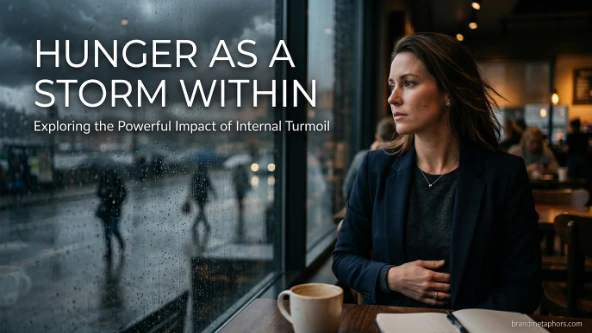
Another powerful image is hunger as a storm. In this metaphor, the body becomes a sky filled with unrest. Waves of discomfort rise and fall, just like wind and rain.
This storm does not stay still. It grows stronger the longer it is ignored, creating a sense of chaos inside the body.
Inner Disruption
The storm metaphor shows how hunger disrupts calmness. Focus becomes difficult, emotions become unstable, and patience weakens. Just like storms affect nature, hunger affects behavior.
This comparison is often used in literature to describe characters struggling for survival or waiting for food in difficult conditions.
5. Hunger as a Teacher of Patience
Not all hunger metaphors are negative. Hunger is also seen as a teacher that builds patience and discipline. It becomes a lesson in waiting and endurance.
When someone says hunger “teaches silence,” it means the body learns to tolerate discomfort.
Growth Through Discomfort
In many cultures, controlled hunger is part of fasting or discipline practices. It is not just about lack of food but about strengthening willpower.
H3: Emotional Strength
This metaphor shows that hunger can build resilience. It teaches individuals to manage desire and appreciate satisfaction more deeply.
6. Emotional Hunger vs Physical Hunger
Hunger is not always about food. People often use hunger metaphors to describe emotional or psychological needs.
H3: Hunger for Love
Someone might say they are “hungry for affection,” meaning they feel emotionally neglected.
H3: Hunger for Success
Others describe ambition as “a hunger for achievement,” where desire replaces physical need.
These metaphors expand hunger into human motivation. They show that the feeling of emptiness can exist in the heart and mind, not just the stomach.
7. Hunger in Survival Stories

In survival situations, hunger becomes a central force. It is often described as a “constant companion” or “relentless shadow.”
This metaphor shows how hunger stays present all the time, shaping decisions and behavior.
Real-Life Struggle
In survival narratives, hunger is not temporary. It becomes part of identity. Characters may describe food as “a distant dream” or “a fading memory.”
These expressions highlight how hunger can change perception of reality, making it feel like time slows down and thoughts revolve only around food.
8. Hunger as a Shadow Companion
Hunger is sometimes described as a shadow that follows a person everywhere. It does not leave, even when ignored.
This metaphor suggests persistence. Just like a shadow changes shape but remains present, hunger shifts intensity but never fully disappears.
Psychological Meaning
This image also reflects emotional burdens. People who experience stress or poverty may feel hunger as a constant reminder of lack.
It becomes more than physical—it becomes psychological weight carried throughout the day.
9. Cultural Expressions of Hunger
Different cultures use unique metaphors to describe hunger, often shaped by environment and lifestyle.
In agricultural societies, hunger may be compared to “dry soil waiting for rain.” In coastal regions, it might be “an empty net waiting for fish.”
These expressions connect hunger to familiar surroundings.
Shared Human Experience
Despite cultural differences, all metaphors point to one truth: hunger is universal. Whether described as dryness, emptiness, or silence, the feeling remains understood across languages.
10. Hunger in Literature and Storytelling
Writers often use hunger as a symbolic device. It represents more than physical need—it reflects desire, struggle, and transformation.
Hunger is described as “a whisper in the bones” or “a pulling force inside the chest.”
Narrative Power
These metaphors allow readers to feel the character’s struggle deeply. Hunger becomes a tool for storytelling, showing how humans endure hardship and change through necessity.
It is often used to highlight growth, sacrifice, or survival.
11. Hunger as a Measure of Desire

Hunger is frequently used as a metaphor for ambition and desire. Saying someone is “hungry for success” means they are driven, focused, and determined.
H3: Motivation and Drive
This metaphor transforms hunger into energy. Instead of weakness, it becomes power. The stronger the hunger, the greater the motivation.
H3: Emotional Intensity
It also reflects intensity of emotion. Hunger becomes a scale for how much someone wants something in life, whether it is success, love, or change.
Conclusion
Hunger is more than a physical sensation—it is a language of metaphor that helps us understand human experience in deeper ways. From fire burning inside the body to storms of discomfort, from empty drums to shadow companions, each metaphor gives shape to something invisible yet powerful. These comparisons allow people to express not only physical need but also emotional longing, ambition, and survival.
By exploring these metaphors, we see that hunger connects body and mind, reality and imagination. It becomes a symbol of both struggle and strength. Whether it teaches patience, represents desire, or reflects emptiness, hunger speaks in many voices. Understanding these metaphors helps us better understand ourselves and others, especially in moments of need, growth, and change.
FAQs
What are metaphors for hunger?
Metaphors for hunger are figurative expressions that describe the feeling of hunger using imagery like fire, emptiness, storms, or shadows to make it more vivid and relatable.
Why do people use metaphors for hunger?
People use them to express physical and emotional experiences in a more creative and understandable way.
Is hunger only a physical feeling in metaphors?
No, hunger metaphors often represent emotional needs, desires, ambition, or loneliness.
What does “hunger as fire” mean?
It means hunger feels intense, growing, and painful, similar to a burning sensation inside the body.
How is hunger used in literature?
Writers use hunger as a symbol of struggle, survival, ambition, or emotional emptiness.
Can hunger represent emotions?
Yes, expressions like “hungry for love” or “hungry for success” show emotional or psychological desire.
Why is hunger described as a shadow?
Because it stays present and follows a person persistently, even when ignored.
Are hunger metaphors the same in all cultures?
Not exactly, but most cultures use similar ideas like emptiness, dryness, or burning to describe hunger.