

You’re scrolling through your phone late at night. A friend posts a photo—smiling, successful, seemingly living the life you imagined for yourself. Your chest tightens just a little. It’s not anger, not sadness exactly, but something sharper, more restless. It lingers.Them whispers. It compares.
That feeling is jealousy—one of the most complex and misunderstood human emotions.
We often try to push jealousy away or label it as something negative, even shameful. But beneath its uncomfortable surface lies something deeply human: a signal about our desires, fears, insecurities, and unmet needs. And one of the most powerful ways to understand jealousy is through metaphor. Metaphors give shape to what feels intangible. They help us see, feel, and interpret emotions more clearly.
In this article, we’ll explore metaphors for jealousy from multiple angles—emotional, psychological, relational, and practical. Through vivid imagery, real-life scenarios, and reflective insights, you’ll not only understand jealousy better but also learn how to work with it instead of against it.
Jealousy as a Slow-Burning Fire
Jealousy often behaves like a fire that starts small—almost invisible—but grows if left unattended.
At first, it might feel like a spark: a passing thought, a subtle comparison. But when we revisit that thought, feed it with assumptions, or let it linger, the fire grows. It begins to consume our attention, distorting how we see others and ourselves.
How the Fire Spreads
- A compliment to someone else feels like a loss to you
- A small success by another becomes a threat
- Neutral actions start to seem intentional or personal
Like fire, jealousy thrives on fuel—comparison, insecurity, and imagination.
The Lesson Behind the Fire
Fire isn’t inherently bad. It can warm, protect, and illuminate. But without control, it destroys. Similarly, jealousy can highlight what matters to us—our desires, our values—but unchecked, it burns relationships and peace of mind.
Learning to “contain the fire” means acknowledging jealousy without letting it take over. Instead of suppressing it, we can ask: What is this feeling trying to show me?
Jealousy as a Mirror

Another powerful metaphor: jealousy as a mirror reflecting parts of ourselves we don’t fully understand.
When you feel jealous of someone, it’s rarely just about them. It’s about what they represent—something you want, fear losing, or feel you lack.
What the Mirror Reflects
- Unmet ambitions
- Insecurities about self-worth
- Fear of being replaced or overlooked
For example, feeling jealous of a colleague’s promotion may reflect your own desire for growth or recognition.
Facing the Reflection
Mirrors can be uncomfortable. They show us truths we might prefer to avoid. But they also offer clarity.
Instead of asking, “Why do they have this?” the mirror invites a deeper question: Why does this matter to me so much?
This shift turns jealousy into a tool for self-awareness rather than self-judgment.
Jealousy as a Shadow
Jealousy often lurks quietly, like a shadow following us without always being noticed.
It doesn’t always announce itself directly. Instead, it appears as irritation, criticism, or passive withdrawal. You might think you’re just “annoyed” at someone, when in reality, jealousy is standing just behind that feeling.
The Nature of Shadows
Shadows grow larger when light is behind them—meaning the more we avoid acknowledging jealousy, the more it distorts our behavior.
Ignoring jealousy doesn’t eliminate it. It simply pushes it into darker corners where it influences us unconsciously.
Bringing the Shadow to Light
When we name jealousy openly—even just to ourselves—it loses some of its power.
Saying, “I feel jealous right now,” can be surprisingly grounding. It transforms a vague discomfort into something specific and manageable.
Jealousy as a Green-Eyed Monster

This classic metaphor captures jealousy as something that takes on a life of its own.
It exaggerates, distorts, and sometimes even sabotages. The “monster” whispers stories:
- “They’re better than you.”
- “You’re being replaced.”
- “You’ll never catch up.”
When the Monster Takes Control
In relationships, this metaphor becomes especially vivid. A partner’s innocent interaction might be misinterpreted. A friend’s success may feel like competition.
The monster thrives on assumptions, not facts.
Taming the Monster
The key isn’t to destroy the monster—it’s to recognize when it’s speaking.
Ask:
- Is this thought based on evidence?
- Am I reacting to reality or fear?
Naming the “monster” helps create distance between you and the emotion, allowing for more rational responses.
Jealousy as a Storm
Jealousy can feel overwhelming, like a sudden storm that disrupts everything.
It arrives quickly, bringing waves of emotion—doubt, anger, insecurity. In those moments, it’s easy to feel like the storm will never pass.
The Intensity of Emotional Weather
Storms distort perception. Just as heavy rain blurs vision, jealousy clouds judgment.
During these emotional storms:
- Small issues feel enormous
- Thoughts become extreme
- Reactions become impulsive
Waiting Out the Storm
Storms are temporary. This metaphor reminds us that intense jealousy is not permanent.
Instead of acting immediately, it’s often wiser to pause. Give yourself time to let the emotional intensity settle before making decisions or confronting others.
Jealousy as a Thief
Jealousy steals quietly.
It takes away joy, peace, and presence. You might be surrounded by good things—friendships, achievements, opportunities—but jealousy shifts your focus to what you don’t have.
What It Steals
- Appreciation for your own progress
- Trust in relationships
- Mental clarity
You may spend hours replaying comparisons instead of enjoying your own life.
Reclaiming What’s Yours
Recognizing jealousy as a thief encourages you to guard your attention.
Gratitude becomes a powerful antidote. When you intentionally notice what is working in your life, you reduce the space jealousy has to operate.
Jealousy as a Warning Signal

Not all jealousy is harmful. Sometimes, it’s a signal—an internal alert pointing to something important.
What It Might Be Warning You About
- A boundary being crossed
- A need not being met
- A value that matters deeply to you
For example, feeling jealous in a relationship might highlight a need for reassurance or communication.
Listening Without Overreacting
The challenge is to interpret the signal correctly.
Instead of reacting impulsively, ask:
- What is this feeling pointing toward?
- What do I need right now?
This turns jealousy into guidance rather than conflict.
Jealousy as a Cage
Jealousy can trap you in cycles of comparison and self-doubt, like being locked inside a cage.
You see others moving forward, growing, achieving—but you feel stuck, watching from behind invisible bars.
How the Cage Forms
- Constant comparison
- Fear of inadequacy
- Negative self-talk
The more you focus on others, the smaller your own world becomes.
Breaking Free
The cage isn’t locked from the outside—it’s built from perspective.
Shifting your focus inward—on your growth, your path, your values—loosens those bars. Freedom comes from redefining success on your own terms.
Jealousy as a Poison
Unchecked jealousy can become toxic.
Like poison, it spreads slowly through thoughts and relationships, affecting how you speak, act, and interpret situations.
Signs of Emotional Toxicity
- Persistent resentment
- Passive-aggressive behavior
- Difficulty trusting others
Over time, this can damage connections and self-esteem.
Neutralizing the Poison
Awareness is the antidote. So is honest communication.
Expressing your feelings calmly—without accusation—can prevent jealousy from turning into bitterness.
Jealousy as Fuel
Surprisingly, jealousy can also be a source of motivation.
When channeled properly, it becomes fuel for growth rather than destruction.
Turning Comparison into Inspiration
Instead of thinking, “Why them?” shift to:
- What can I learn from them?
- What steps can I take toward my own goals?
Productive Use of Jealousy
Many people discover their ambitions through moments of jealousy. It reveals what they truly want.
Used wisely, jealousy can push you to improve skills, pursue opportunities, and redefine your path.
Jealousy in Relationships: A Double-Edged Sword
In relationships, jealousy can both protect and damage.
When It Protects
A small amount of jealousy can signal care and emotional investment. It can prompt conversations about boundaries and needs.
When It Harms
Excessive jealousy leads to control, suspicion, and conflict.
Finding Balance
Healthy communication is key. Instead of accusing, express feelings:
- “I felt insecure when…”
- “I need reassurance about…”
This transforms jealousy into connection rather than conflict.
Jealousy as an Illusion
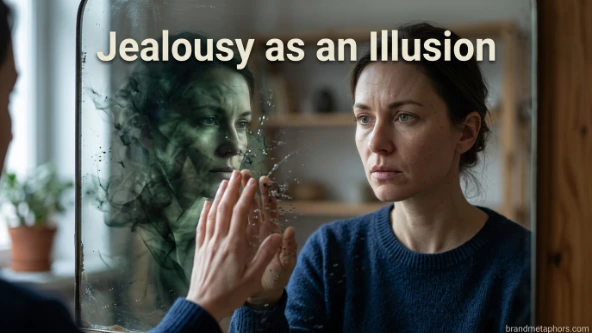
Jealousy often thrives on incomplete information.
You see someone’s highlight reel and compare it to your behind-the-scenes reality.
The Illusion of Perfection
Social media, appearances, and assumptions create distorted comparisons.
You might envy:
- Someone’s success without seeing their struggles
- A relationship without knowing its challenges
Seeing Clearly
Recognizing the illusion reduces jealousy’s power.
Remind yourself: what you see is rarely the full story.
Jealousy Across Different Life Situations
Jealousy appears in many forms depending on context.
Career Jealousy
Seeing others succeed can trigger self-doubt—but also inspiration.
Social Jealousy
Friendships and social circles can create comparison loops.
Romantic Jealousy
Often tied to fear of loss or insecurity.
Personal Growth Insight
Each situation reveals something different about your priorities and fears.
Understanding the context helps you respond more thoughtfully.
Practical Ways to Work Through Jealousy
Understanding metaphors is helpful—but applying them matters even more.
Ground Yourself in Reality
Separate facts from assumptions.
Practice Self-Reflection
Ask what the feeling reveals about your needs.
Limit Comparison Triggers
Be mindful of environments that amplify jealousy.
Communicate Honestly
Share feelings without blame.
Focus on Personal Growth
Redirect energy into your own progress.
Small, consistent steps reduce jealousy’s intensity over time.
Conclusion
Jealousy is not something to eliminate—it’s something to understand.
Like fire, it can warm or destroy. Like a mirror, it can reveal hidden truths.Care a storm, it can pass if you don’t fight it blindly.
The key is not to fear jealousy but to listen to it carefully. Within that uncomfortable feeling lies valuable information about your desires, insecurities, and aspirations.
When approached with awareness, jealousy becomes less of an enemy and more of a guide—one that points you toward growth, clarity, and deeper self-understanding.
FAQs
What is the best metaphor for jealousy?
There isn’t a single “best” metaphor. Common ones like fire, shadow, and mirror each highlight different aspects of jealousy, such as intensity, hidden nature, and self-reflection.
Why is jealousy often compared to fire?
Because it starts small and grows if fueled. Like fire, it can either be controlled and useful or destructive if left unchecked.
Is jealousy always a negative emotion?
No. While it can be harmful, jealousy can also reveal important desires, unmet needs, or areas for personal growth.
How can metaphors help in understanding jealousy?
Metaphors make abstract emotions easier to visualize and interpret, helping people recognize patterns and respond more thoughtfully.
Can jealousy ever be healthy in relationships?
Yes, in small amounts. It can signal care and prompt communication, but excessive jealousy can harm trust and stability.
How do I stop jealousy from controlling my thoughts?
Start by acknowledging it, identifying its cause, and focusing on your own growth rather than comparison.
Why does jealousy feel so intense?
Because it often connects to deep fears—like loss, rejection, or inadequacy—which makes the emotional response stronger.
Can jealousy be turned into motivation?
Absolutely. When redirected, it can inspire self-improvement, goal-setting, and personal development.