
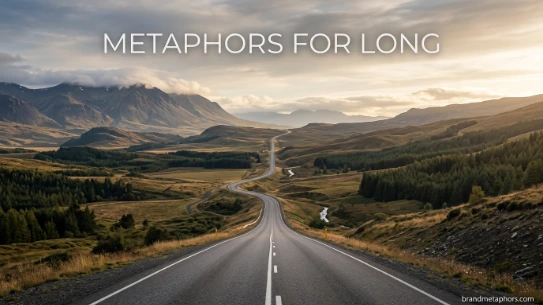
Introduction (The Feeling of “Long”)
Have you ever sat in a quiet room, watching the clock tick so slowly that each second felt heavy? Or walked a road that seemed to stretch farther the more you moved forward? “Long” is not just a measurement of time or distance—it is a feeling. It stretches inside the mind before it stretches in reality.
We often use metaphors to explain what “long” feels like because numbers alone cannot capture it. A long day, a long wait, a long journey—each carries emotion, patience, struggle, or hope. Metaphors help us translate these invisible experiences into something we can see and understand. They turn time into space, feelings into images, and patience into stories.
In real life, these metaphors matter more than we notice. They shape how we describe pain, growth, love, boredom, and achievement. When we say something is “long,” we are not just talking about length—we are describing how deeply we experience it. This article explores powerful metaphors for “long” and how they help us understand life in richer, more human ways.
1. Long as a Road: The Journey of Experience
A common metaphor for “long” is a road that stretches endlessly into the distance. A long road is not just about kilometers—it represents life’s ongoing journey.
When someone says, “It has been a long road,” they often mean they have faced struggles, delays, and learning moments. The road becomes a symbol of endurance. You do not just arrive; you travel, stumble, rest, and continue.
H3: Real-life meaning
A student studying for years may feel like they are walking a long road toward success. A person healing from loss may also feel this stretch of emotional distance.
H3: Emotional insight
The long road teaches patience. It reminds us that progress is often slow but meaningful. Every step forward matters, even when the destination feels far away.
This metaphor helps us accept that important things in life rarely happen quickly—they unfold step by step, like a road without shortcuts.
2. Long as a River: Time That Never Stops Flowing
A river is another strong image for “long.” It flows continuously, sometimes calm, sometimes strong, but never truly stopping. When we think of time as a river, “long” becomes something fluid and unstoppable.
Life events can feel like they are carried along a river that stretches far beyond what we can see. A long time is not static—it moves, shifts, and changes shape.
H3: Understanding flow
Just like a river bends and curves, long periods of life include changes. Childhood flows into adulthood, joy into struggle, and struggle back into hope.
H3: Emotional reflection
This metaphor helps us accept change. Even long difficulties do not stay the same forever. The river keeps moving, and so do we.
It teaches us that “long” is not just about waiting—it is about moving through time, even when we do not feel it.
3. Long as a Shadow: Waiting in Uncertainty
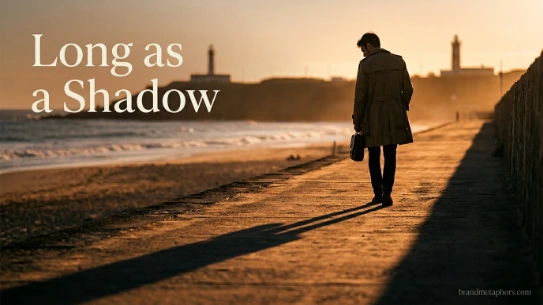
A long shadow appears when light is low, stretching far behind or ahead of us. This metaphor often represents waiting, uncertainty, or emotional distance.
When we say a situation feels “long like a shadow,” we often mean it feels unclear or stretched in a way that makes us uneasy.
H3: Life situations
Waiting for results, answers, or decisions often feels like standing under a long shadow. Time slows down, and thoughts grow heavier.
H3: Emotional insight
Shadows remind us that “long” is not always active—it can feel still and silent. But just like shadows change with light, long periods of uncertainty eventually shift.
This metaphor shows how perception shapes time more than time itself.
4. Long as a Thread: Connection Across Time
A thread is thin, delicate, but it can stretch far and connect different points together. A long thread represents continuity and connection.
Relationships, memories, and traditions are often described this way. They may span years, even generations.
H3: Human connection
A friendship that lasts decades can be seen as a long thread tying two lives together. Even distance does not break it easily.
H3: Meaning in life
This metaphor shows that “long” is not always heavy—it can be gentle and meaningful. It connects moments into a larger story.
A long thread reminds us that even small moments matter because they are part of something continuous.
5. Long as a Tunnel: Endurance Through Darkness
A tunnel is long, enclosed, and often dark, but it always has an exit. This metaphor is powerful for difficult times.
When people say they are “in a long tunnel,” they often mean they are going through hardship with hope of reaching light.
H3: Emotional struggle
Depression, grief, or financial hardship can feel like moving through a tunnel where progress is slow and visibility is low.
H3: Hope factor
The key idea is that a tunnel is not endless. It is long, but it has direction. You move forward even when you cannot see the end.
This metaphor teaches resilience—the belief that difficult periods are temporary, even when they feel endless.
6. Long as a Book: Life Written in Chapters
A book takes time to read, and a long book takes even longer. This metaphor helps us see life as a collection of chapters.
Each phase of life becomes a page, and together they form a long story.
H3: Personal growth
Childhood, youth, and adulthood are different chapters with different tones and lessons.
H3: Reflection
A long book is not boring if the story is meaningful. Similarly, a long life gains value through experiences, not speed.
This metaphor encourages us to see life as narrative rather than pressure—something to be lived and understood, not rushed.
7. Long as a Desert: Stretch of Emptiness and Silence
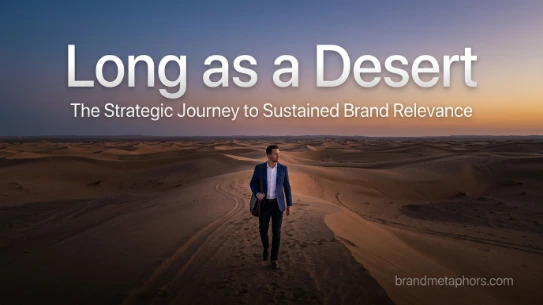
A desert is vast, quiet, and seemingly endless. When “long” is compared to a desert, it often reflects emotional emptiness or monotony.
Time can feel slow and empty during waiting, loneliness, or routine.
H3: Emotional experience
Days may feel identical, like walking across endless sand without clear direction.
H3: Inner lesson
Even deserts have hidden life beneath the surface. This metaphor suggests that long, empty periods can still hold unseen growth.
It reminds us that silence and emptiness are also part of life’s rhythm.
8. Long as a Staircase: Step-by-Step Progress
A staircase is long not because of distance in a straight line, but because of repeated steps. Each step leads upward or forward.
H3: Life progress
Goals that take years—education, career, personal development—are like climbing a long staircase.
H3: Understanding patience
You cannot jump to the top. Each step matters, even if it feels small.
This metaphor highlights structured progress. Longness becomes manageable when broken into steps.
9. Long as a Heartbeat: Emotional Duration
A heartbeat is quick, but when repeated over time, it becomes a rhythm that defines life. A “long heartbeat” metaphor refers to emotional experiences that feel stretched in memory.
H3: Emotional intensity
Moments like fear, love, or joy can feel longer than they actually are.
H3: Memory effect
We remember emotional events as longer because they carry meaning. A few seconds of fear can feel like minutes.
This metaphor shows that emotional time is different from clock time. Feelings stretch moments.
10. Long as the Horizon: Future That Moves With You
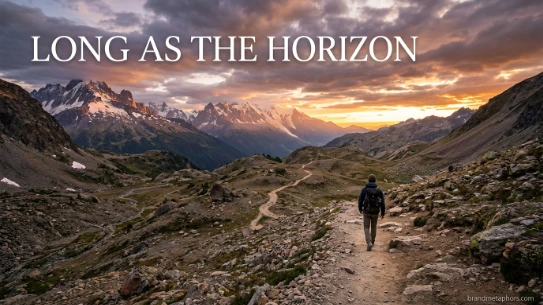
The horizon always appears far away, no matter how far you walk toward it. It is a perfect metaphor for long-term goals or dreams.
H3: Life ambition
Success, happiness, or stability can feel like a horizon—visible but always ahead.
H3: Psychological insight
The horizon teaches us that some goals are meant to guide us, not just to be reached quickly.
“Long” here becomes motivation rather than frustration.
11. How Metaphors for “Long” Shape Our Thinking
Metaphors are not just language tools—they shape how we think and feel about time, struggle, and growth. When we describe something as “long,” we choose a frame that influences our emotional response.
A long road feels challenging but meaningful. A long shadow feels uncertain. A long staircase feels structured and hopeful. Each metaphor changes our reaction to time.
These images help us process experiences that are too complex for simple explanations. They also allow us to communicate emotions that others can understand quickly.
In daily life, using metaphors helps us cope. Saying “this is a long tunnel” reminds us there is an end. Saying “this is a long road” reminds us to keep walking. Language becomes a tool for emotional balance and clarity.
12. Living with the Idea of “Long”
Understanding metaphors for “long” helps us accept that life is not always fast or simple. Some experiences take time to unfold, and that is normal.
Long periods are not empty—they are full of quiet growth, learning, and change. Whether it is a long journey, long wait, or long dream, each carries meaning beyond its duration.
When we stop seeing “long” as something negative, we begin to see it as something natural. Life stretches, bends, pauses, and continues. And in that movement, we grow.
Conclusion
“Long” is more than a measure—it is a feeling shaped by experience, emotion, and perspective. Through metaphors like roads, rivers, tunnels, books, and horizons, we understand that long moments are not just about time passing but about what happens within that time.
Some long experiences test patience, while others build strength or hope. They remind us that life is not meant to be rushed but lived in layers. Metaphors help us see these layers clearly, turning abstract time into meaningful images.
In the end, every “long” experience becomes part of our personal story. And like any story worth telling, its value lies not in how fast it ends, but in how deeply it is lived.