
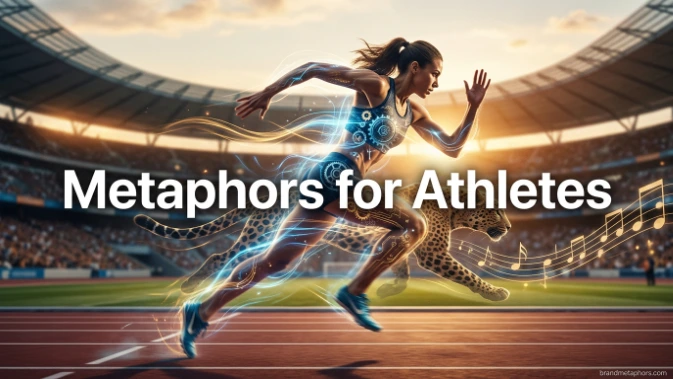
The stadium lights hum overhead, casting a silver glow across the track. A runner crouches at the starting line, fingertips brushing the ground like roots searching for soil. In that suspended second before the gun fires, everything is quiet—but beneath the stillness is a storm. Muscles coil like springs, breath tightens like a drawn bow, and the heart beats like a drum calling warriors to battle. Then—crack!—and the runner becomes something else entirely: a flash of lightning tearing through the sky.
This is the power of metaphor.
Metaphors don’t just describe athletes—they transform them. They give language to speed, endurance, grit, and grace in ways that statistics never could. Whether you’re a writer, coach, commentator, or athlete yourself, learning to craft vivid metaphors can elevate how you communicate performance, emotion, and identity.
In this long-form guide, we’ll explore metaphors for athletes in depth—what they are, why they matter, and how to use them creatively. You’ll also find examples, storytelling, exercises, and practical tips to help you bring athletic imagery to life.
What Are Metaphors for Athletes? (And Why They Matter)
A metaphor is a figure of speech that describes one thing as another to highlight shared qualities. When we say “he is a machine” or “she is a lion,” we’re not being literal—we’re drawing connections that deepen meaning.
For athletes, metaphors:
- Capture intensity and emotion
- Make performance memorable
- Help audiences visualize movement
- Build identity and storytelling
Instead of saying “he ran fast,” you say “he ran like wildfire”—and suddenly, speed has texture, heat, and danger.
Metaphors matter because sports are not just physical—they are emotional, psychological, and even poetic experiences. The right metaphor turns a moment into a memory.
The Language of Motion: Why Athletes Inspire Metaphors
Athletes are constantly in motion, and motion is inherently expressive. From the arc of a basketball shot to the rhythm of a swimmer’s stroke, sports mirror natural forces—wind, water, fire, gravity.
That’s why so many athletic metaphors come from:
- Nature (storms, rivers, animals)
- Machines (engines, rockets, gears)
- Warfare (battles, warriors, weapons)
- Art (dance, music, sculpture)
Each category highlights a different dimension of athleticism—power, precision, beauty, or resilience.
Metaphor #1: The Athlete as a Force of Nature

Meaning & Explanation
This metaphor compares athletes to natural elements—storms, rivers, fire, wind—to emphasize power, unpredictability, and raw energy.
Nature is unstoppable. When you liken an athlete to it, you suggest dominance and inevitability.
Example Sentence
- “She surged down the field like a tidal wave, swallowing defenders in her wake.”
Scenario
A soccer player dribbles past three defenders, accelerating with unstoppable momentum. The crowd rises—not just because she’s skilled, but because she feels elemental.
Alternative Expressions
- “He moved like lightning across the court.”
- “She burned through the competition like wildfire.”
- “He flowed through defenders like water finding its path.”
Sensory & Emotional Details
- The roar of wind
- The heat of flames
- The crash of waves
- The unpredictability of storms
Mini Storytelling
Imagine a marathon runner in the final stretch. Rain begins to fall. The road glistens. While others slow, she seems to merge with the storm—her stride syncing with the rhythm of rain. She is no longer resisting nature; she is nature.
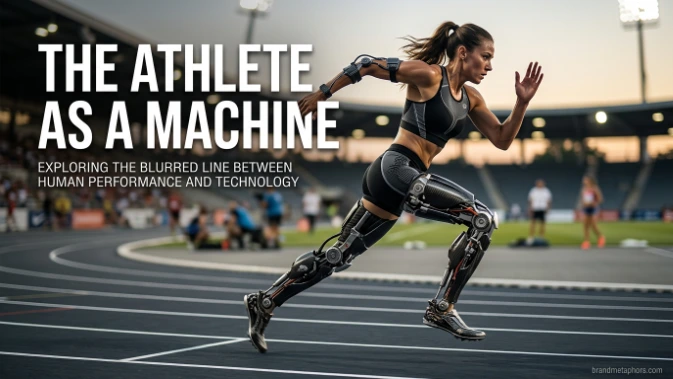
Metaphor #2: The Athlete as a Machine
Meaning & Explanation
This metaphor emphasizes precision, consistency, and efficiency. Machines don’t tire, hesitate, or doubt—they perform.
Example Sentence
- “He was a machine on the court, executing every play with flawless precision.”
Scenario
A tennis player returns serve after serve without error, each movement calculated and controlled.
Alternative Expressions
- “She ran like a perfectly tuned engine.”
- “He operated with clockwork accuracy.”
- “Her movements were robotic in their precision.”
Sensory & Emotional Details
- The hum of engines
- The click of gears
- The rhythm of repetition
- A sense of relentless focus
Mini Storytelling
Think of a weightlifter in a quiet gym at dawn. Repetition after repetition, day after day. No applause, no spotlight—just discipline. Over time, the body becomes something engineered: precise, powerful, dependable.
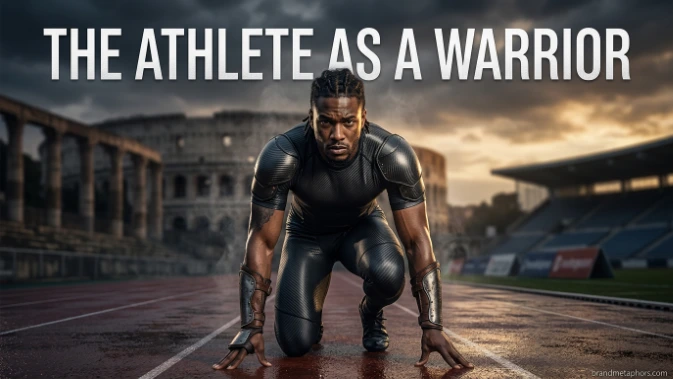
Metaphor #3: The Athlete as a Warrior
Meaning & Explanation
This metaphor highlights courage, resilience, and competitive spirit. Athletes become fighters in a symbolic battlefield.
Example Sentence
- “He stepped onto the field like a warrior entering battle, fearless and unyielding.”
Scenario
A boxer enters the ring, eyes locked, body tense—not just competing, but confronting.
Alternative Expressions
- “She fought for every inch of ground.”
- “He battled through pain like a seasoned soldier.”
- “They clashed like titans in the arena.”
Sensory & Emotional Details
- The clash of bodies
- The tension of anticipation
- The grit of determination
- The pulse of adrenaline
Mini Storytelling
In overtime, a basketball player plays through injury. Every step hurts. Every jump strains. Yet he continues—not because it’s easy, but because surrender is not an option. This is not just a game—it’s a test of spirit.
Creative Ways to Use Athletic Metaphors in Writing
Metaphors can enhance:
- Sports journalism
- Fiction and storytelling
- Social media captions
- Motivational speeches
- Personal reflection
Try layering metaphors:
“He was a storm in motion, a machine in execution, and a warrior in spirit.”
This creates depth and variety.
SEO Guide: Best Keywords for “Metaphors for Athletes”
To optimize your content, include variations like:
- athletic metaphors
- sports metaphors examples
- metaphors for runners
- metaphors for teamwork
- motivational sports metaphors
Use them naturally in headings and text to improve visibility.
Interactive Exercise: Build Your Own Metaphor
Try this simple formula:
Athlete + is + [unexpected comparison]
Examples:
- “The runner is a…”
- “The team is like…”
Prompt 1
Think of an athlete you admire. What natural force do they resemble?
Prompt 2
Describe a recent sports moment using a metaphor from music or art.
Prompt 3
Rewrite this sentence:
“She played very well.”
Make it vivid using a metaphor.
Bonus Tips for Using Metaphors in Daily Life
- On social media: “Monday workout: felt like a rusty engine turning into a roaring machine.”
- In motivation: “Be the storm, not the shelter.”
- In journaling: Reflect on your performance using imagery.
Common Mistakes to Avoid
- Overusing clichés (“fast as lightning” without variation)
- Mixing metaphors (“a roaring river of fire engines”)
- Being too vague
Aim for clarity and creativity.
Expanding Your Metaphor Toolbox
Explore different domains:
- Animals: “a cheetah,” “a hawk,” “a bull”
- Music: “a symphony of motion”
- Space: “a rocket launching”
- Mythology: “a titan,” “a phoenix”
Each adds a unique flavor.
FAQs About Metaphors for Athletes
1. Why are metaphors important in sports writing?
They make descriptions vivid, emotional, and memorable, helping readers connect with the action.
2. Can metaphors improve motivation?
Yes—powerful imagery can inspire athletes and reinforce mindset.
3. How do I avoid clichés?
Combine familiar ideas in new ways or draw from less common sources like art or science.
4. Are metaphors useful for social media?
Absolutely—they make captions more engaging and shareable.
5. Can beginners use metaphors effectively?
Yes—start simple, then experiment with more creative comparisons.
Conclusion
Athletes are more than bodies in motion—they are stories unfolding in real time. Metaphors give us the language to capture those stories, to turn speed into lightning, effort into battle, and discipline into machinery.
When you use metaphors thoughtfully, you don’t just describe performance—you elevate it. You invite readers to feel the sweat, hear the heartbeat, and see the invisible forces driving every movement.
So the next time you watch a game, don’t just observe. Imagine.
do that runner a storm? Is that player a warrior? Is that moment a spark about to become fire?
Find the metaphor—and you’ll find the magic.