Is It Correct to Say Well Wishes

Is It Correct to Say Well Wishes

Introduction: Why Figurative Language and Word Choice Matter in Writing Good writing is more than correct grammar. It is about choosing the right words to express ideas clearly and effectively. Whether you are writing an essay, story, poem, email, or social media message, your vocabulary plays a major role in communication. Figurative language, descriptive language, … Read more

Any Problem or Any Problems

Any Problem or Any Problems

Introduction: Why Figurative Language Improves Writing and Communication Good writing is more than putting words on a page. It is about expressing ideas clearly, creatively, and effectively. Whether you are a student, writer, or English learner, understanding how to use language properly can improve your communication skills. One common area that creates confusion is the … Read more

An Hilarious or A Hilarious

An Hilarious or A Hilarious

Introduction Good writing is more than correct grammar. It is also about making ideas clear, interesting, and memorable. Writers use descriptive language, figurative language, literary devices, similes, metaphors, and creative expressions to engage readers. However, even the most creative writing can lose its impact if basic grammar mistakes appear in the text. One common question … Read more

Soft Guy Era Drizzle Drizzle Meaning

Soft Guy Era Drizzle Drizzle Meaning

Introduction Figurative language makes writing more colorful, expressive, and memorable. Instead of saying something in a plain way, writers often use creative expressions to add emotion, humor, and deeper meaning. Understanding modern slang, idioms, metaphors, and internet phrases can improve communication skills and help readers understand contemporary language trends. One phrase that has recently gained … Read more

Understanding Team That, Team Who, or Team Which

Understanding Team That, Team Who, or Team Which

Introduction: Why Correct Word Choice Improves Writing Good writing is not only about vocabulary. It is also about choosing the right words and sentence structure. When writers use correct grammar, readers understand the message more easily. Relative pronouns such as that, who, and which play an important role in sentence construction. Many learners struggle when … Read more

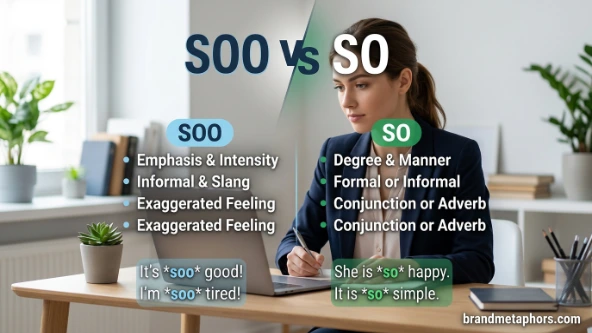
soo vs so

soo vs so

Imagine reading a book where the author only describes things exactly as they are. “The sun was hot. The flowers were red. The wind was blowing.” It feels a bit flat, doesn’t it? It reads more like a police report than a captivating story. Now, imagine transforming those sentences: “The sun was a golden coin … Read more

Envision vs. Invision

Envision vs. Invision

Have you ever read a piece of text that made you feel like you were watching a movie inside your head? One moment you are staring at black ink on a white page, and the next, you are walking through a foggy forest or feeling the crisp autumn wind on your face. This magic happens … Read more

Its Self or Itself

Its Self or Itself

Good writing does more than share information. It creates clear images, emotions, and connections. Figurative language, descriptive language, literary devices, simile examples, and metaphor examples help writers make their ideas stronger and more memorable. Whether you are writing a school essay, a story, a poem, or a business email, choosing the correct words improves communication. … Read more

When I Can or When Can I

When I Can or When Can I

English can be tricky. A small change in word order can change how a sentence sounds. One common example is the difference between when I can and when can I. Many students, writers, and English learners mix them up because both phrases contain the same words. Learning the correct use of these expressions helps improve … Read more