
Good writing does more than share information. It creates clear images, emotions, and connections. Figurative language, descriptive language, literary devices, simile examples, and metaphor examples help writers make their ideas stronger and more memorable. Whether you are writing a school essay, a story, a poem, or a business email, choosing the correct words improves communication.
One grammar question that often confuses learners is whether to write its self or itself. The difference seems small, but it matters. Using the correct form makes your writing look professional and helps readers understand your meaning.
This guide explains the difference in simple terms. You will learn meanings, grammar rules, sentence examples, common mistakes, writing tips, exercises, and much more.
Understanding the Difference
The correct word in standard English is itself.
“Itself” is a reflexive pronoun. It refers back to a thing, animal, idea, or object already mentioned in the sentence.
Examples:
- The cat cleaned itself.
- The machine shut itself down.
- The company rebuilt itself after the crisis.
- The flower opened itself to the sunlight.
The form “its self” is usually considered incorrect in modern English. In very rare historical or literary contexts, writers may separate the words for special emphasis, but this is uncommon.
Quick Rule
FormCorrect?UsageItselfYesStandard EnglishIts selfUsually NoRare and outdated
What Is a Reflexive Pronoun?
A reflexive pronoun refers back to the subject of a sentence.
Common reflexive pronouns include:
Subject PronounReflexive PronounIMyselfYouYourselfHeHimselfSheHerselfItItselfWeOurselvesTheyThemselves
Examples:
- I taught myself French.
- She prepared herself.
- The dog scratched itself.
- The computer restarted itself.
The action returns to the subject. That is why these pronouns are called reflexive pronouns.
Meaning and Function of Itself
“Itself” can perform several functions in a sentence.
1. Reflexive Use
The action affects the subject.
Examples:
- The bird hurt itself.
- The robot repaired itself.
- The door locked itself.
2. Emphatic Use
“Itself” can add emphasis.
Examples:
- The building itself is beautiful.
- The idea itself is powerful.
- The book itself is easy to read.
3. Identification
Sometimes it helps identify the main thing being discussed.
Examples:
- The problem itself is not difficult.
- The solution itself is simple.
- The process itself takes only a few minutes.
Why Writers Confuse Its Self and Itself
Many learners see words like:
- my self
- your self
- our self
and assume they should be written separately.
However, standard English combines these forms:
- myself
- yourself
- herself
- himself
- itself
- ourselves
- themselves
The confusion also comes from the possessive word “its.”
Compare:
WordMeaningItsBelonging to itIt’sIt isItselfReflexive pronoun
Examples:
- The dog wagged its tail.
- It’s raining outside.
- The dog cleaned itself.
Sentence Examples in Different Contexts
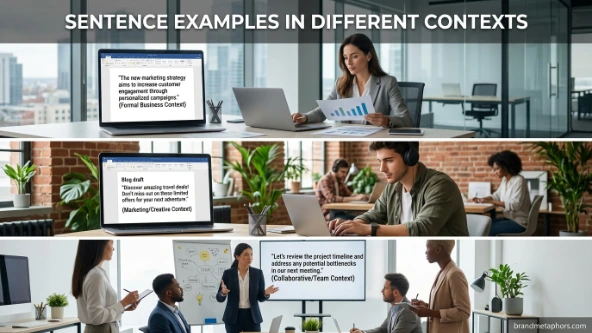
Learning through examples is often the easiest method.
Everyday Conversation
- The phone turned itself off.
- The toy fixed itself.
- The door opened itself.
Academic Writing
- The system adjusts itself automatically.
- The theory explains itself clearly.
- The process repeats itself.
Business Writing
- The company positioned itself as a market leader.
- The brand established itself quickly.
- The organization transformed itself.
Creative Writing
- The forest wrapped itself in mist.
- The river introduced itself through a gentle song.
- The night dressed itself in silver moonlight.
These examples show how the word works in many writing styles.
Using Itself in Creative Writing
Creative writing often uses descriptive language and figurative language to make sentences vivid.
Personification
Personification gives human qualities to non-human things.
Examples:
- The wind taught itself a new song.
- The ocean reminded itself of ancient storms.
- The city awakened itself at dawn.
Metaphor Examples
A metaphor directly compares two things.
Examples:
- The internet became a giant web that fed itself.
- The machine was a living creature rebuilding itself.
Simile Examples
A simile uses “like” or “as.”
Examples:
- The flower unfolded itself like a silk ribbon.
- The cloud stretched itself like a blanket across the sky.
These techniques improve writing skills and make stories more engaging.
Itself in Literature and Poetic Expression
Writers often use “itself” to create rhythm and emphasis.
Literary Devices
Common literary devices include:
- Personification
- Metaphor
- Simile
- Imagery
- Symbolism
Examples:
- The mountain stood by itself against the storm.
- The earth healed itself after the fire.
- The river found itself beneath the stars.
Poetic Expression
Poets use reflexive pronouns to create emotional effects.
Examples:
- Winter wrapped itself around the village.
- Hope rebuilt itself after every disappointment.
- Silence introduced itself to the room.
Such sentences create strong imagery and emotional depth.
When to Use Itself
Use “itself” when referring back to a thing, animal, concept, or object.
Correct Situations
- The cat cleaned itself.
- The engine cooled itself.
- The software updated itself.
- The business reinvented itself.
- The plant protected itself.
Emphasis
- The product itself is excellent.
- The lesson itself is valuable.
- The story itself is fascinating.
Whenever the subject and object are the same thing, “itself” is often needed.
When to Avoid Itself
Do not use “itself” if another pronoun is required.
Incorrect:
- The dog chased itself owner.
Correct:
- The dog chased its owner.
Incorrect:
- The machine lost itself power.
Correct:
- The machine lost its power.
Remember
Use:
- its = possession
- itself = reflexive action
This simple rule prevents many grammar mistakes.
Common Mistakes and How to Fix Them

Mistake 1: Writing “Its Self”
Incorrect:
- The cat cleaned its self.
Correct:
- The cat cleaned itself.
Mistake 2: Confusing Its and It’s
Incorrect:
- It’s tail is long.
Correct:
- Its tail is long.
Mistake 3: Using Itself Unnecessarily
Incorrect:
- The company itself announced itself the new policy.
Correct:
- The company announced the new policy.
Mistake 4: Double Reflexive Usage
Incorrect:
- The machine repaired itself by itself itself.
Correct:
- The machine repaired itself.
Avoid unnecessary repetition.
Quick Comparison Table
Its vs It’s vs Itself
WordMeaningExampleItsPossessionThe bird spread its wings.It‘sIt isIt’s a beautiful day.ItselfReflexive pronounThe bird cleaned itself.
Correct vs Incorrect
IncorrectCorrectIts selfItselfThe dog hurt its self.The dog hurt itself.The machine repaired its self.The machine repaired itself.
Vocabulary Enhancement Through Grammar Awareness
Learning correct pronouns improves vocabulary enhancement and overall language skills.
Benefits include:
- Better sentence structure
- Improved grammar accuracy
- Stronger communication
- More professional writing
- Better reading comprehension
Students who understand pronoun usage often become more confident writers.
Related Vocabulary
- Pronoun
- Reflexive pronoun
- Subject
- Object
- Possessive adjective
- Emphasis
- Reference
- Antecedent
Knowing these terms helps learners understand grammar more deeply.
Practice Exercises
Try these exercises.
Exercise 1: Choose the Correct Word
- The dog cleaned (its / itself).
- The company reinvented (its / itself).
- The tree lost (its / itself) leaves.
- The software updated (its / itself).
- The cat hurt (its / itself).
Answers
- itself
- itself
- its
- itself
- itself
Exercise 2: Correct the Mistakes
- The machine repaired its self.
- It’s tail is fluffy.
- The robot programmed its self.
- The company changed its self.
- The bird cleaned its self.
Correct Answers
- The machine repaired itself.
- Its tail is fluffy.
- The robot programmed itself.
- The company changed itself.
- The bird cleaned itself.
Exercise 3: Create Your Own Sentences
Write sentences using:
- itself
- its
- it’s
Example:
- The computer restarted itself.
- The computer lost its connection.
- It’s working again.
Tips for Better Writing

Follow these tips to improve writing skills.
Read Carefully
Check whether the action returns to the subject.
Proofread
Look for pronoun mistakes before submitting your work.
Practice Daily
Write five sentences using reflexive pronouns.
Learn Through Reading
Books, articles, and stories provide useful sentence examples.
Use Creative Techniques
Try descriptive language, metaphors, and similes to strengthen your writing.
Example:
- The city rebuilt itself like a phoenix rising from ashes.
This combines grammar accuracy with powerful imagery.
Frequently Asked Questions
1. Is “its self” ever correct?
In modern English, no. Standard writing uses “itself” as one word.
2. What type of word is “itself”?
“Itself” is a reflexive pronoun.
3. Can “itself” be used for animals?
Yes.
Example:
- The dog cleaned itself.
4. What is the difference between “its” and “itself”?
“Its” shows possession, while “itself” refers back to the subject.
Example:
- The cat licked its paw.
- The cat cleaned itself.
5. Can “itself” be used for emphasis?
Yes.
Example:
- The book itself is very interesting.
Conclusion
Understanding the difference between itself and the incorrect form its self is an important grammar skill. “Itself” is a reflexive pronoun that refers back to a thing, animal, object, or idea already mentioned in a sentence. It can also add emphasis and clarity.
By learning correct usage, studying sentence examples, and practicing regularly, students, writers, and English learners can improve their writing skills and communicate more effectively. Combining strong grammar with figurative language, literary devices, poetic expression, similes, metaphors, and descriptive language creates writing that is clear, engaging, and memorable. Mastering small details like “itself” helps build confidence and leads to stronger communication in every form of writing.