
Introduction
Strong writing is more than correct grammar. It also depends on choosing the right words for the right situation. Whether you are writing a school essay, a business email, a story, or a social media post, using precise vocabulary makes your ideas easier to understand. Figurative language, descriptive language, similes, metaphors, and other literary devices also make communication more engaging by helping readers picture ideas more clearly.
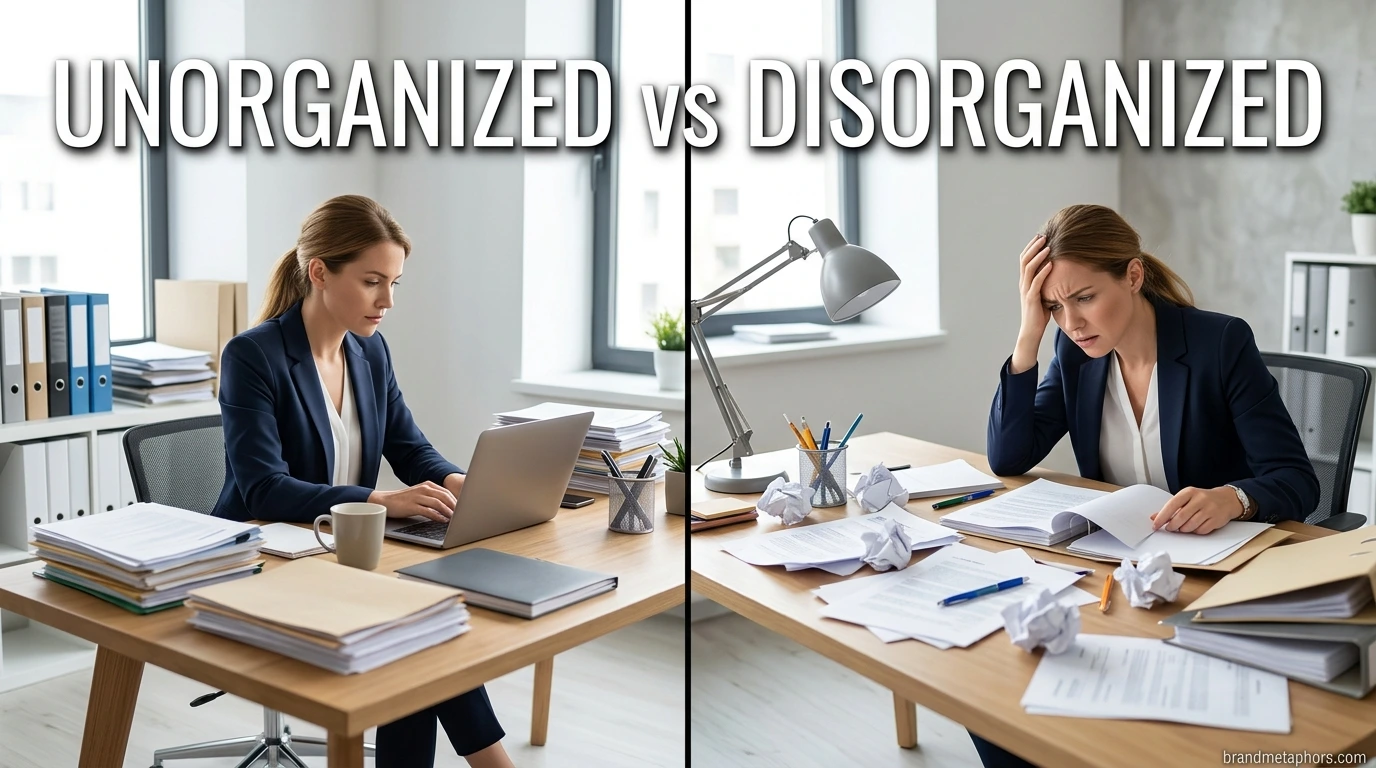
Many English learners struggle with similar-looking words that seem interchangeable. One common example is unorganized vs disorganized. While both words describe a lack of order, they are not always used in exactly the same way. Understanding their subtle differences can improve your writing skills, vocabulary enhancement, and overall confidence in English.
This guide explains the meaning of each word, highlights their differences, provides comparison examples, explores common mistakes, includes sentence examples, discusses tone and usage, and offers practical exercises to help you master both terms.
What Do These Words Mean?
Although both adjectives describe something lacking order or structure, they focus on different situations.
Unorganized
Unorganized describes something that has not yet been arranged, planned, or structured. It often suggests that organization simply hasn’t happened yet rather than implying confusion or disorder.
Simple definition:
Not arranged or planned.
Disorganized
Disorganized describes something that is messy, chaotic, or poorly arranged. It often suggests confusion, inefficiency, or a failure to maintain order.
Simple definition:
Poorly arranged or lacking proper order.
Key Difference
- Unorganized = not organized yet.
- Disorganized = organized badly or in a confused way.
Quick Comparison Table
FeatureUnorganizedDisorganizedMeaningNot arranged yetPoorly arranged or chaoticToneNeutralOften negativeSuggests confusionUsually noUsually yesPlanningNot completedPoor planning or managementCommon withProjects, files, notesPeople, offices, events, thoughtsFormal writingYesYesEveryday conversationYesVery common
Understanding the Difference in Everyday English
The easiest way to remember the difference is to think about time and quality.
An unorganized room may simply need cleaning because nobody has arranged it yet.
A disorganized room looks messy because items are scattered everywhere.
Similarly:
- An unorganized project has not been planned.
- A disorganized project has poor planning and confusing execution.
Think of it this way:
Unorganized means “not started.”
Disorganized means “poorly managed.”
When to Use Unorganized

Use unorganized when something simply lacks structure or planning without emphasizing chaos.
Common situations include:
- Drafts
- Research notes
- Ideas
- Information
- Files
- Collections
- Plans
Sentence Examples
- My research notes are still unorganized.
- The documents remain unorganized after the meeting.
- The students submitted unorganized outlines.
- His photo collection is unorganized.
- The classroom materials are still unorganized.
Tone
Usually neutral.
It often describes a temporary situation that can easily be improved.
When to Use Disorganized
Use disorganized when emphasizing disorder, confusion, or poor management.
Common situations include:
- Offices
- Workspaces
- Events
- Meetings
- Teams
- Thoughts
- People
Sentence Examples
- Her desk looks completely disorganized.
- The meeting became disorganized after lunch.
- The office files are disorganized.
- His speech sounded disorganized.
- The event was disorganized from beginning to end.
Tone
Usually negative.
It often suggests inefficiency or lack of preparation.
Side-by-Side Comparison Examples
These examples make the difference easier to understand.
SituationBetter ChoiceWhyNotes not sorted yetUnorganizedSorting hasn’t happenedDesk covered with papersDisorganizedPapers are messyProject waiting for planningUnorganizedPlanning hasn’t startedTeam working without coordinationDisorganizedPoor managementFolder needing labelsUnorganizedStructure missingOffice in complete chaosDisorganizedDisorder emphasized
More Comparison Sentences
Unorganized
- The files are unorganized because nobody sorted them.
- Her lesson plans remain unorganized.
Disorganized
- The files are disorganized because they were mixed together.
- Her lesson became disorganized after several interruptions.
Using These Words in Creative Writing
Word choice shapes the reader’s imagination.
Instead of simply saying:
“The room was messy.”
You could write:
“The room looked disorganized, with books, clothes, and papers scattered across every surface.”
Instead of saying:
“The ideas were incomplete.”
You could write:
“His notebook remained unorganized, filled with unfinished outlines and scattered thoughts.”
These stronger descriptions improve creative writing while making scenes more vivid.
Descriptive Language
Good descriptive language paints clear pictures.
Examples:
- A disorganized backpack spilled notebooks onto the floor.
- The unorganized manuscript waited for careful editing.
Figurative Language Connections
Although these words are literal, they frequently appear alongside figurative language.
Metaphor Examples
- Her thoughts were a tangled forest.
- The meeting became a sinking ship.
- His office was a battlefield of papers.
Simile Examples
- The desk looked like a tornado had passed through.
- Her notes were as scattered as autumn leaves.
- The classroom became as confusing as a maze.
These literary devices strengthen writing by making descriptions memorable.
Poetic Expression
Writers often combine precise vocabulary with imagery.
Example:
“The disorganized shelves whispered stories of forgotten dreams.”
Example:
“His unorganized notebook held seeds of future success.”
Common Idioms Related to Organization

Learning idioms expands vocabulary and improves natural English.
IdiomMeaningGet your ducks in a rowBecome organizedPut things in orderArrange properlyA hot messExtremely disorganizedAll over the placeLacking focus or organizationKeep everything straightStay organized
Example Sentences
- Before the presentation, get your ducks in a row.
- The office has been a hot mess all week.
- Her explanation was all over the place.
These expressions are common in spoken English.
Common Mistakes Students Make
Mistake 1
Using both words as perfect synonyms.
Incorrect:
The conference was unorganized because nobody knew where to go.
Better:
The conference was disorganized because people were confused.
Mistake 2
Using “disorganized” for unfinished planning.
Incorrect:
My notes are disorganized because I haven’t sorted them.
Possible improvement:
My notes are unorganized because I haven’t sorted them yet.
Mistake 3
Ignoring context.
Always ask:
Is it simply not arranged?
Or is it messy and confusing?
The answer helps you choose the correct word.
Writing Tips for Students and English Learners
Improve your vocabulary by considering the feeling each word creates.
Choose Unorganized When
- Work is unfinished.
- Sorting hasn’t happened.
- Planning is incomplete.
- The tone is neutral.
Choose Disorganized When
- Things are chaotic.
- Confusion exists.
- Management is poor.
- The tone is more critical.
Editing Tip
During proofreading, replace vague words like:
- messy
- confusing
- unordered
with the most accurate choice.
Precise vocabulary improves clarity.
Practice Exercises
Exercise 1
Choose the correct word.
- The files haven’t been sorted yet.
Answer:
Unorganized
- The meeting confused everyone.
Answer:
Disorganized
- My ideas still need arranging.
Answer:
Unorganized
- His office is full of scattered papers.
Answer:
Disorganized
- The project lacks planning.
Answer:
Unorganized
Exercise 2
Rewrite the sentences.
Original:
The room was messy.
Possible answer:
The room looked disorganized.
Original:
My notes need arranging.
Possible answer:
My notes are unorganized.
Exercise 3
Fill in the Blank
- The manager apologized for the ______ event.
Answer:
disorganized
- The folders remain ______ because we haven’t sorted them.
Answer:
unorganized
When to Use and When to Avoid
Use Unorganized
Early project stages
Draft documents
Notes
Collections
Planning
Avoid it when describing obvious chaos.
Use Disorganized
Messy rooms
Confusing meetings
Poor management
Chaotic events
Scattered thoughts
Avoid it if something simply hasn’t been arranged yet.
Vocabulary Enhancement
Learning related words strengthens your English.
Synonyms of Unorganized
- Unarranged
- Unsorted
- Unplanned
- Unstructured
- Incomplete
Synonyms of Disorganized
- Chaotic
- Messy
- Confused
- Disorderly
- Cluttered
- Jumbled
- Haphazard
Related Vocabulary
- Organization
- Structure
- Planning
- Coordination
- Arrangement
- Efficiency
- Productivity
- Management
- Classification
- Orderliness
Using a wider vocabulary makes writing more natural and expressive.
Frequently Asked Questions
1. Are unorganized and disorganized synonyms?
They are similar but not identical. Unorganized usually means not arranged yet, while disorganized emphasizes confusion or disorder.
2. Which word sounds more negative?
Disorganized generally carries a more negative meaning because it often suggests poor management or chaos.
3. Can both words describe people?
Yes. However, disorganized is much more common when describing someone’s habits, work style, or thinking.
Example:
She is very disorganized at work.
4. Which word is better for academic writing?
Both are acceptable, but choose the one that accurately fits the context. Precision is more important than using a more advanced word.
5. How can I remember the difference?
Think of this simple rule:
- Unorganized = not organized yet.
- Disorganized = organized badly or chaotically.
This memory trick works in most situations.
Conclusion
Choosing between unorganized and disorganized may seem difficult at first, but the distinction becomes clear once you understand their focus. Unorganized usually refers to something that has not yet been arranged or planned, while disorganized describes something that is already in a state of confusion, disorder, or poor management.
Mastering this subtle vocabulary difference improves writing skills, strengthens communication, and helps English learners express ideas with greater precision. Whether you are writing essays, reports, stories, emails, or creative pieces, selecting the right word creates clearer and more professional sentences.
Continue practicing with comparison examples, descriptive language, figurative language, metaphors, similes, idioms, and literary devices to expand your vocabulary. Over time, these small improvements will make your writing more engaging, accurate, and confident.