
Have you ever seen someone criticize another person for doing something they do themselves? Maybe a friend complains that someone is always late, even though they arrive late every day. Or perhaps a coworker says another person is lazy while avoiding work themselves. Moments like these happen often in daily life.
English has a perfect expression for this kind of situation. It describes the irony of pointing out another person’s fault while having the very same flaw yourself. This popular saying has been part of the English language for centuries and continues to appear in conversations, books, movies, politics, workplaces, and social media.
Understanding this expression can improve your vocabulary, strengthen your writing skills, and help you recognize hypocrisy in everyday situations. Whether you’re an English learner, student, writer, or simply curious about common idioms, this guide explains everything in simple language with plenty of examples.
What Does This Famous Idiom Mean?
This expression is used when someone criticizes another person for a fault that they also have.
In simple words, it means:
A person should not blame others for mistakes they also make.
The focus is on hypocrisy, double standards, and lack of self-awareness.
Simple Definition
Someone points out another person’s weakness while having the same weakness themselves.
Easy Example
- Emma says Jake talks too much.
- Everyone knows Emma talks even more.
This situation perfectly fits the expression because Emma is criticizing someone for the same behavior she shows.
The Origin and History
This saying dates back hundreds of years.
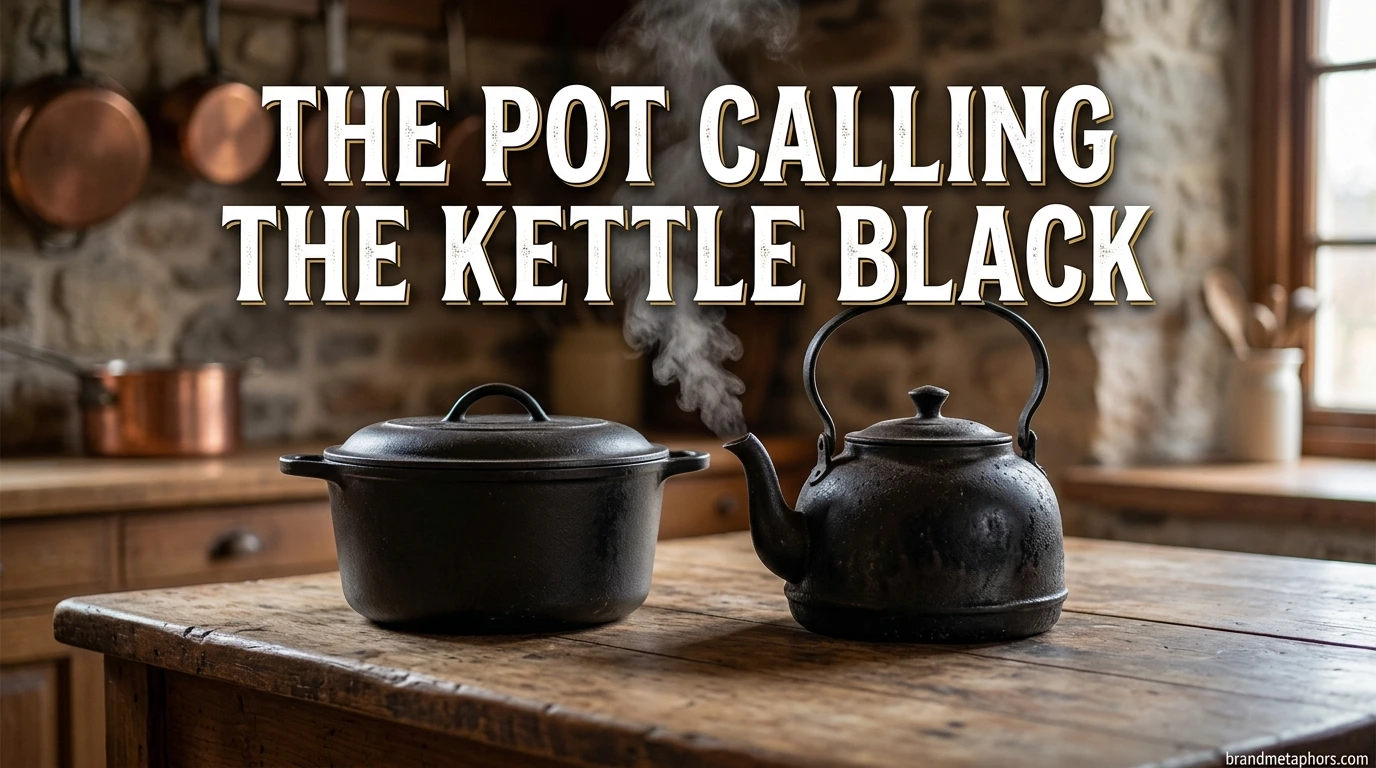
Long ago, cooking pots and kettles were commonly made of iron and used over open fires. Smoke covered both with black soot.
If one black cooking utensil called another black, it sounded funny because both looked exactly the same.
That image became a metaphor for people who criticize others while ignoring their own faults.
Why It Became Popular
People quickly understood the comparison because:
- Both objects became black from fire.
- Neither was cleaner than the other.
- Judging the other made no sense.
Today, even though modern cookware looks different, the lesson remains timeless.
Why People Use This Expression
People use this saying because it quickly explains hypocrisy without needing a long explanation.
Common situations include:
- Family arguments
- School discussions
- Political debates
- Workplace conflicts
- Friendships
- Social media conversations
Instead of giving a long speech, one short expression communicates the whole idea.
It Helps Describe
- Double standards
- Irony
- Contradictions
- Unfair criticism
- Lack of honesty
- Self-righteous behavior
Common Situations Where It Applies

You can hear this expression almost anywhere.
At School
A student complains about classmates talking during class.
Meanwhile, that student is usually the loudest.
At Work
A manager criticizes employees for arriving late.
The manager frequently arrives late too.
At Home
A sibling says another never cleans their room.
Their own room is even messier.
On Social Media
Someone lectures everyone about kindness while posting rude comments online.
In Sports
A player accuses teammates of not practicing enough while skipping practice themselves.
These examples show why this saying remains useful today.
Examples in Everyday Conversations
Learning through examples makes idioms easier to remember.
Example 1
Alex: You’re always on your phone.
Ben: You spent five hours scrolling yesterday.
Example 2
Mother says her children leave dishes everywhere.
The children remind her that she left breakfast dishes in the sink.
Example 3
A teacher reminds students not to interrupt.
Moments later, the teacher interrupts a student.
Example 4
A driver complains about reckless drivers while speeding.
Example 5
Someone says people should stop gossiping.
A few minutes later, they begin gossiping themselves.
Similar Idioms and Expressions
English has many sayings with related meanings.
ExpressionMeaningWhen to UsePractice what you preachFollow your own adviceSomeone ignores their own adviceLook who’s talkingThe speaker has the same faultInformal conversationsDouble standardsDifferent rules for different peopleSerious discussionsHypocrisySaying one thing and doing anotherFormal writingJudge not, lest you be judgedAvoid judging others unfairlyMoral discussionsLead by exampleShow good behavior yourselfLeadership and education
Each phrase emphasizes honesty and consistency between words and actions.
Why Understanding This Idiom Matters
Learning idioms improves much more than vocabulary.
Better Communication
Native English speakers frequently use expressions instead of literal language.
Knowing them helps conversations sound more natural.
Stronger Writing Skills
Creative writing becomes more interesting when characters use realistic dialogue.
Idioms also make essays and stories more engaging.
Improved Reading
Books, newspapers, and novels often include figurative language.
Understanding these expressions makes reading easier.
Better Speaking
Using idioms correctly helps English learners sound more fluent and confident.
Figurative Language Behind the Expression

This saying is an excellent example of figurative language.
Instead of talking about actual cookware, it compares people to objects.
Literary Device Used
It works mainly as a metaphor because the comparison is symbolic rather than literal.
The cooking utensils represent people.
The black soot represents shared faults.
Why Writers Like It
Authors use it because readers immediately understand the irony.
It creates memorable dialogue and emphasizes hypocrisy without lengthy explanations.
Example in Creative Writing
The mayor criticized corruption while secretly accepting gifts.
Readers immediately recognize the contradiction even if the idiom isn’t directly mentioned.
Common Mistakes People Make
Many learners misunderstand this expression.
Here are the most common mistakes.
Mistake 1: Thinking It Means Any Argument
Wrong.
It only applies when both people share the same fault.
Mistake 2: Using It for Different Problems
Incorrect:
Person A is messy.
Person B is impatient.
These are different flaws.
The saying doesn’t fit.
Mistake 3: Using It Without Evidence
Someone should actually have the same behavior before this expression makes sense.
Otherwise, it becomes an unfair accusation.
Mistake 4: Confusing It With Simple Criticism
Not all criticism is hypocritical.
Sometimes people point out real problems while following their own advice.
That situation does not fit this idiom.
Real-Life Lessons You Can Learn
Beyond vocabulary, this expression teaches valuable life lessons.
Practice Self-Awareness
Before criticizing others, ask:
“Do I sometimes do the same thing?”
Accept Personal Mistakes
Nobody is perfect.
Recognizing our own faults helps us grow.
Show Humility
People respect honesty more than perfection.
Admitting mistakes builds trust.
Think Before Speaking
A few seconds of reflection can prevent unfair criticism.
Build Better Relationships
People appreciate fairness.
Avoiding double standards creates stronger friendships and healthier workplaces.
Tips for Using This Expression Naturally
Here are simple tips for using it correctly.
Use It When
- Someone shares the same fault they criticize.
- The situation is clearly ironic.
- You want to describe hypocrisy.
- You’re discussing fairness.
Avoid Using It When
- The criticism is reasonable.
- The people have different problems.
- No evidence exists.
- You only disagree with someone’s opinion.
Example Sentences
- His complaint about cheating sounded ironic because he had cheated before.
- The coach criticized poor preparation despite missing several meetings himself.
- Her comments about wasting money surprised everyone because she spent the most.
- The politician’s speech about honesty raised many questions because of previous scandals.
- Their argument reminded everyone that people should examine themselves before judging others.
How This Idiom Improves Your English

Learning idioms offers many benefits.
Vocabulary Enhancement
You’ll understand more conversations and books.
Better Listening Skills
Movies and television often include figurative expressions.
Stronger Essays
Using idioms correctly makes writing more natural.
Better Public Speaking
Interesting expressions help audiences remember your message.
Improved Critical Thinking
Understanding irony helps you recognize contradictions in discussions.
These benefits make idioms an important part of learning English.
Frequently Asked Questions
1. What does this expression mean?
It means someone criticizes another person for a fault they also have.
2. Is it considered rude?
It can be, depending on tone and situation. Since it points out hypocrisy, some people may find it offensive.
3. Can it be used in formal writing?
Yes, but formal writing often uses words like hypocrisy, double standards, or inconsistency instead.
4. Is it still commonly used today?
Yes. It appears regularly in conversations, books, news articles, and online discussions.
5. What type of figurative language is it?
It is mainly a metaphor because it compares people to cooking utensils to express a deeper idea.
6. Can children understand this idiom?
Yes. Once explained with simple examples, children usually understand it easily.
7. Is it used only in English?
Many languages have similar expressions that describe hypocrisy, although the exact wording may differ.
8. How can I remember its meaning?
Think about two equally dirty cooking utensils. One has no right to criticize the other because both are covered in the same black soot.
Conclusion
This well-known English saying has remained popular for centuries because it captures a common human behavior in just a few words. It reminds us that criticizing others is easy, but recognizing our own mistakes requires honesty and self-awareness. Whether used in conversations, literature, classrooms, or workplaces, it teaches an important lesson about fairness, humility, and personal responsibility.
For English learners, understanding this idiom is more than memorizing a definition. It builds vocabulary, improves reading comprehension, strengthens creative writing, and helps you recognize figurative language in everyday communication. By learning when and how to use expressions like this, you’ll sound more natural, communicate more effectively, and develop a deeper appreciation for the richness of the English language.