
Introduction
Have you ever heard someone say one thing but act in a completely different way? Or perhaps you’ve met a person who constantly avoids giving a direct answer while trying to satisfy everyone. English has a colorful expression for this behavior.
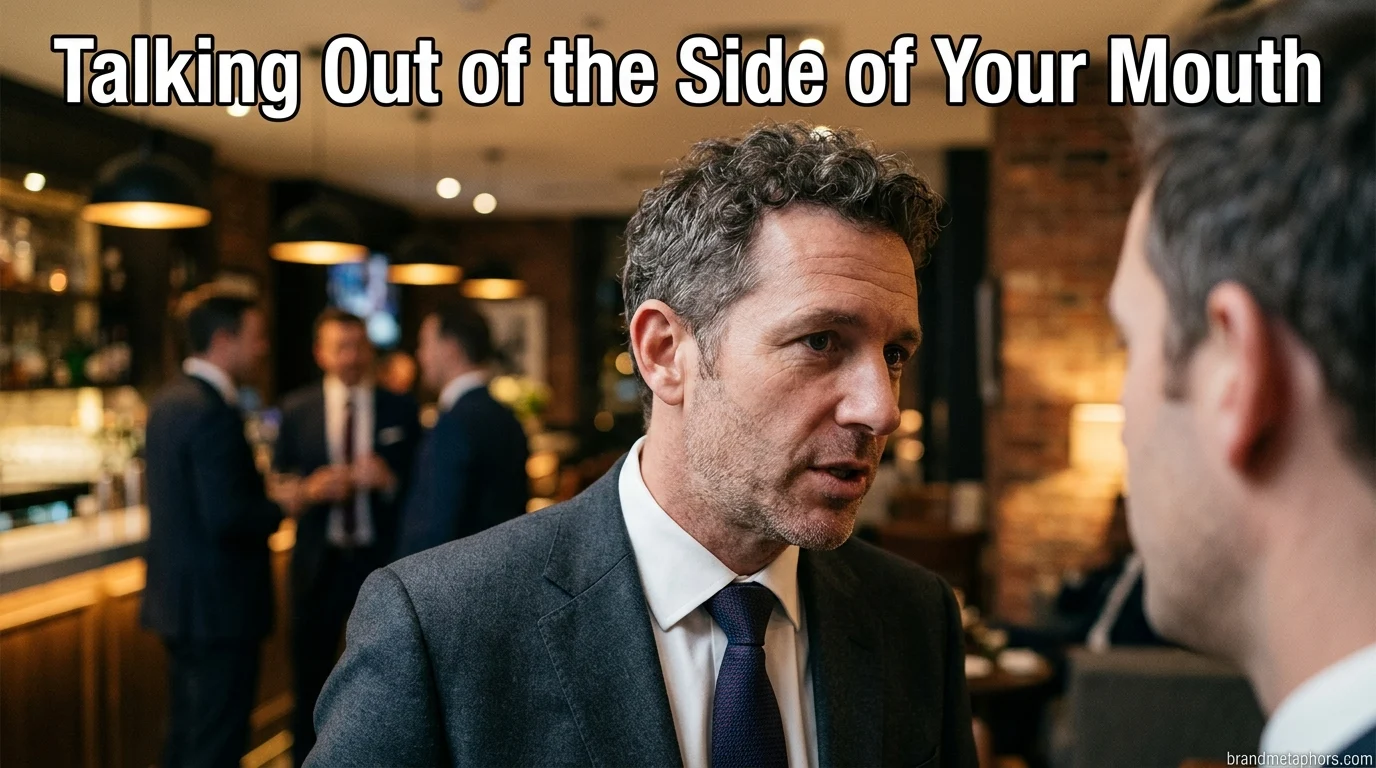
This popular idiom describes someone who speaks in an indirect, dishonest, or contradictory manner. Instead of communicating clearly, the speaker may dodge questions, hide their real opinion, or say different things to different people.
Understanding this expression can improve your English vocabulary, strengthen your writing skills, and help you recognize hidden meanings in conversations. Whether you’re an English learner, student, writer, or simply curious about everyday expressions, this guide explains everything in simple language.
What Does This Expression Mean?
The phrase refers to someone who speaks in a way that is unclear, misleading, or intentionally evasive. Instead of giving a straightforward answer, the person may:
- Avoid telling the complete truth.
- Say different things to different people.
- Speak vaguely to escape responsibility.
- Give mixed messages.
- Hide their true intentions.
It does not usually mean that someone literally speaks from the side of their mouth. It is almost always used figuratively.
Simple Definition
Someone who communicates in an indirect, dishonest, or contradictory way instead of speaking honestly and clearly.
Example
Manager: “Will everyone receive a bonus?”
Response: “Well… we’re always looking at employee performance.”
The answer avoids the real question instead of giving a clear yes or no.
Why People Use This Idiom
English contains many figurative expressions that describe human behavior more vividly than literal language.
People use this idiom because it quickly communicates that someone is:
- Being evasive
- Hiding something
- Avoiding commitment
- Speaking dishonestly
- Sending conflicting messages
Instead of saying,
“He was dishonest and unclear.”
A native speaker might simply say,
“He was talking out of the side of his mouth.”
The idiom paints a stronger mental picture.
Common Situations Where It Applies
This expression appears in many everyday situations.
Politics
Politicians sometimes promise different things to different groups.
Example:
“They supported both sides of the issue, so many voters felt they weren’t being sincere.”
Workplace
A manager may promise promotions but later deny making those promises.
Example:
“The employees felt the supervisor wasn’t being straightforward.”
Relationships
A partner may avoid discussing an important issue directly.
Example:
“Instead of answering honestly, they kept changing the subject.”
Business
Companies sometimes advertise one thing while delivering another.
Customers may feel they were misled by unclear communication.
Media Interviews
Celebrities occasionally answer difficult questions without really answering them.
Different Forms of Indirect Communication

Although this idiom has one meaning, the behavior behind it appears in different ways.
TypeDescriptionExampleEvasive speakingAvoiding direct answersChanging the subjectContradictory statementsSaying opposite thingsAgreeing with everyoneHalf-truthsSharing only part of the factsLeaving out important detailsDouble talkUsing confusing languageSpeaking without clear meaningMixed messagingSending inconsistent signalsWords and actions don’t match
Each form creates confusion and reduces trust.
Signs Someone May Be Speaking Indirectly
Not every unclear answer is dishonest. Sometimes people are simply nervous.
However, these signs often suggest someone is avoiding the truth.
- They never answer questions directly.
- Their story keeps changing.
- They contradict themselves.
- They use vague language.
- They avoid eye contact.
- They quickly change the topic.
- They make promises without details.
- Their actions don’t match their words.
Looking for several signs together gives a better understanding than relying on one clue.
Real-Life Examples
Example 1: Job Interview
Interviewer: “Why did you leave your last job?”
Candidate: “It just wasn’t the right environment.”
The answer may be truthful, but if every follow-up question receives a vague response, the interviewer may wonder if the candidate is hiding something.
Example 2: Customer Service
Customer: “When will my order arrive?”
Representative: “We’re working very hard to improve delivery times.”
The customer wanted a date, not a general statement.
Example 3: Friendship
Friend: “Did you tell everyone my secret?”
Response: “I only mentioned it to a few people.”
This answer avoids admitting the complete truth.
Example 4: Sports
Coach: “Will the injured player compete tomorrow?”
Reply: “We’re evaluating all our options.”
No real answer is given.
Similar Idioms and Expressions
English offers many phrases with related meanings.
Beat Around the Bush
Avoid discussing the main point.
Example:
“Stop beating around the bush and answer the question.”
Speak with a Forked Tongue
Speak dishonestly or say one thing while meaning another.
Double Talk
Use confusing language to hide the truth.
Give Mixed Signals
Communicate conflicting messages.
Sit on the Fence
Avoid choosing a side.
Stretch the Truth
Exaggerate or partially hide facts.
Each expression has a slightly different meaning, but they all involve unclear communication.
Why Clear Communication Matters
Honest communication builds stronger relationships.
When people speak directly:
- Trust increases.
- Misunderstandings decrease.
- Problems are solved faster.
- Teams work better together.
- Relationships become stronger.
- Decisions become easier.
- Expectations stay realistic.
Clear communication also improves leadership, customer service, and teamwork.
How to Avoid Sounding Indirect or Misleading
You don’t need perfect English to communicate clearly.
Follow these simple tips.
Answer Questions Directly
Instead of:
“We’re considering many possibilities.”
Say:
“We’ll decide next Friday.”
Be Honest
If you don’t know the answer, simply say so.
Example:
“I’m not sure yet, but I’ll find out.”
Stay Consistent
Make sure your words match your actions.
Consistency builds credibility.
Avoid Unnecessary Jargon
Simple language is easier to understand.
Instead of:
“We’re optimizing operational efficiencies.”
Say:
“We’re improving our process.”
Admit Mistakes
People respect honesty more than excuses.
Example:
“I made an error. I’ll fix it.”
Common Mistakes When Using This Idiom
Many English learners misunderstand this expression.
Mistake 1: Taking It Literally
It does not describe the physical way someone speaks.
Mistake 2: Using It for Quiet People
Being shy is different from being dishonest.
A quiet person may simply prefer listening.
Mistake 3: Using It Too Frequently
Since it questions someone’s honesty, use it carefully.
Overusing it can sound rude.
Mistake 4: Applying It Without Evidence
Sometimes people hesitate because they are nervous or unsure.
Avoid assuming bad intentions without good reason.
Benefits of Learning Figurative Expressions

Learning idioms helps you understand native speakers more easily.
Some major benefits include:
- Better reading comprehension
- Stronger writing skills
- Improved conversation ability
- Richer vocabulary
- Greater confidence
- Better understanding of movies and TV shows
- More natural English
- Stronger critical thinking about language
Idioms also make storytelling more engaging because they add personality and emotion.
Tips for Remembering This Expression
Remembering idioms becomes easier with practice.
Try these methods:
- Read authentic conversations.
- Watch English movies.
- Listen to podcasts.
- Write your own example sentences.
- Practice with friends.
- Learn similar idioms together.
- Review them regularly.
- Use them naturally instead of memorizing definitions alone.
The more you see the expression in context, the easier it becomes to remember.
Frequently Asked Questions
1. Is this expression considered rude?
Not necessarily, but it can sound critical because it suggests someone is being dishonest or evasive.
2. Is it used in formal writing?
Usually no. It is most common in informal conversations, journalism, and creative writing.
3. Does it always mean someone is lying?
No. Sometimes it simply means the person is avoiding a direct answer or sending mixed messages.
4. Can it describe politicians?
Yes. It is often used when public figures make contradictory statements or avoid clear answers.
5. Is it common in American English?
Yes. It is recognized by many English speakers, especially in conversational language.
6. What is the opposite of this behavior?
Speaking honestly, directly, openly, and transparently.
7. Can I use it in academic essays?
Generally, no. Academic writing usually prefers straightforward terms like evasive communication, contradictory statements, or ambiguous language.
8. How can I become a clearer communicator?
Answer questions directly, choose simple words, stay consistent, and be honest when you don’t know something.
Conclusion
This well-known English idiom describes people who avoid speaking honestly or directly. Instead of giving clear answers, they may use vague language, contradict themselves, or tell different stories to different audiences. Understanding this figurative expression helps English learners recognize subtle meanings in conversations while expanding vocabulary and communication skills.
More importantly, the lesson behind the phrase goes beyond language. Clear, honest communication builds trust, reduces misunderstandings, and creates stronger personal and professional relationships. By learning both the meaning of the idiom and the value of straightforward speech, you become a more confident speaker, writer, and listener.