
Introduction: Why Figurative Language Makes Writing More Powerful
Words shape how people see us. Whether you are writing an email, telling a story, speaking in class, or creating a poem, choosing the right word helps you express the exact meaning you want. This is why learning vocabulary is more than memorizing definitions. It is about understanding shades of meaning.
Figurative language also plays an important role in communication. Metaphors, similes, idioms, and other literary devices make writing vivid, memorable, and engaging. Instead of saying someone is simply “kind,” a writer might say they “treated every guest like royalty.” That image leaves a stronger impression.
Many English learners confuse similar words because they appear to mean the same thing. A common example is polite vs courteous. While both describe respectful behavior, they are not always interchangeable. Knowing the difference helps you speak naturally, write clearly, and communicate with confidence.
In this guide, you will learn the meaning of each word, how they differ, where they overlap, common mistakes to avoid, real-life examples, creative writing ideas, figurative language connections, and practical exercises to strengthen your vocabulary.
What Do “Polite” and “Courteous” Mean?
Although these words share similar meanings, they emphasize different aspects of respectful behavior.
WordMeaningMain FocusPoliteShowing good manners and respectManners and social rulesCourteousShowing thoughtful kindness and respectConsideration for others
Think of it this way:
- Polite often follows social expectations.
- Courteous often goes one step further by showing genuine thoughtfulness.
Simple Definitions
Polite
- Uses good manners
- Speaks respectfully
- Avoids offending others
Example:
Emma politely thanked her teacher after class.
Courteous
- Acts with kindness and respect
- Makes others feel comfortable
- Often includes helpful actions
Example:
The receptionist was courteous and helped every visitor with a smile.
Quick Comparison Table
FeaturePoliteCourteousShows respect✔✔Good manners✔✔ThoughtfulnessSometimesAlwaysHelpful behaviorSometimesUsuallyCommon in conversationVery commonSlightly more formalFormal writingYesYesEmotional warmthModerateHigh
Understanding the Difference in Everyday English
Imagine two people entering a building.
Person A
They say,
“Thank you.”
This person is polite.
Person B
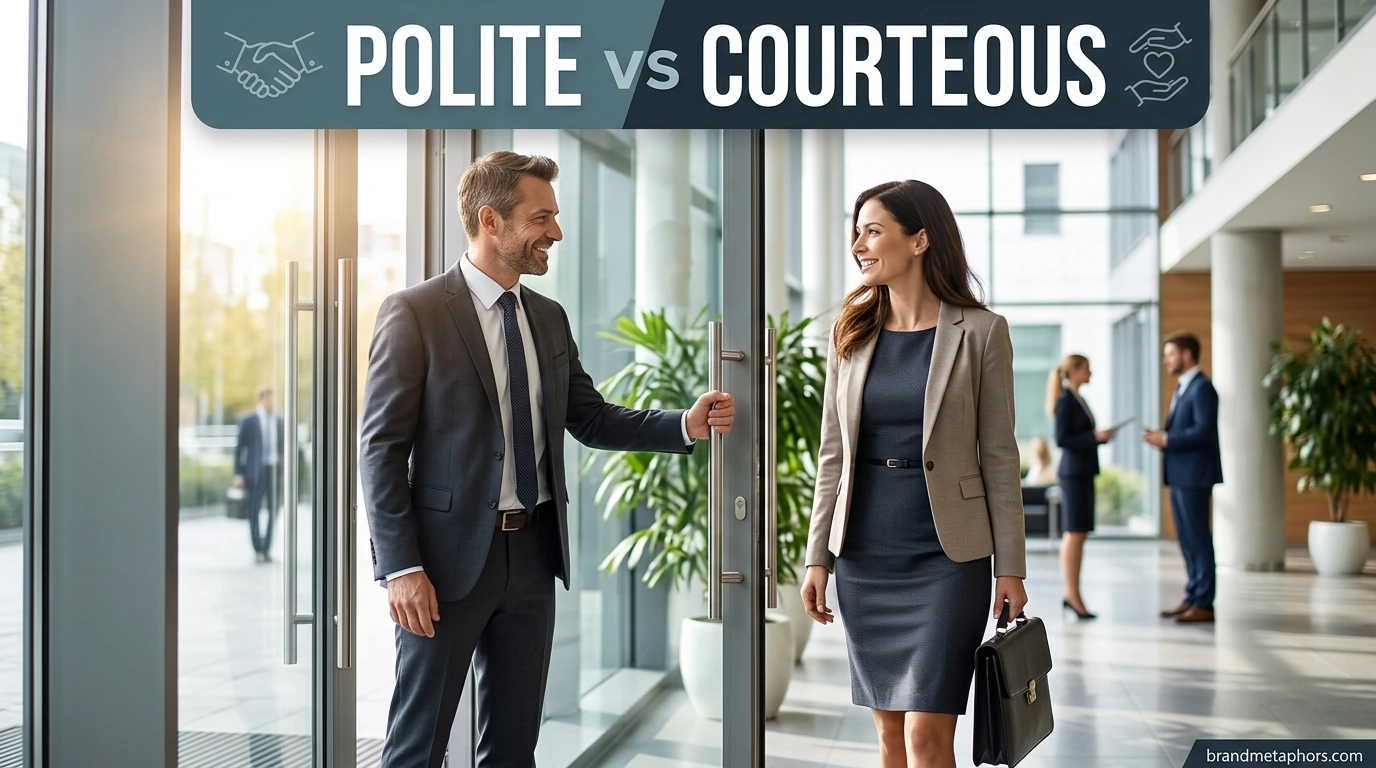
They hold the door open, smile warmly, wait for others, and then say,
“After you.”
This person is courteous.
Both behave respectfully, but the second person actively considers another person’s comfort.
Another Comparison
A waiter who says,
“Good evening.”
is polite.
A waiter who notices an elderly customer struggling with a chair and immediately helps is courteous.
Courtesy often includes action.
When to Use “Polite”
Use polite when talking about manners, speech, behavior, or following social expectations.
Examples include:
- polite conversation
- polite request
- polite reply
- polite refusal
- polite greeting
- polite smile
Sentence Examples
- She gave a polite answer.
- Always be polite to your classmates.
- The children were polite during dinner.
- He wrote a polite email to his professor.
- A polite greeting creates a positive first impression.
- They remained polite even during the disagreement.
- Please use polite language in formal writing.
- The customer stayed polite despite the delay.
Best Situations
Use “polite” when discussing:
- classroom behavior
- customer service
- interviews
- emails
- greetings
- conversations
- public speaking
When to Use “Courteous”
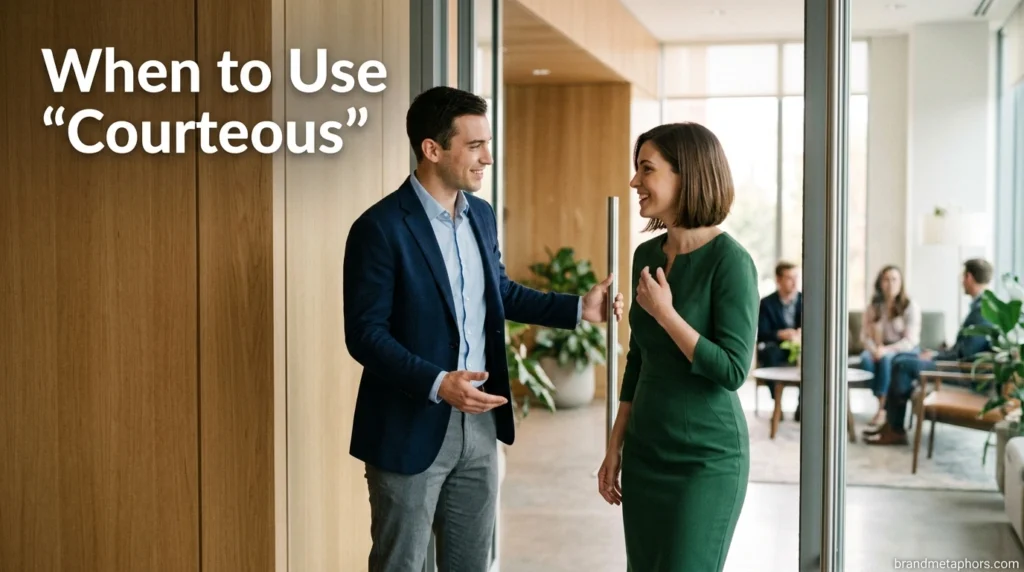
Use courteous when emphasizing kindness, generosity, or thoughtful behavior.
Common expressions include:
- courteous staff
- courteous driver
- courteous host
- courteous service
- courteous response
- courteous employee
Sentence Examples
- The hotel staff were courteous throughout our stay.
- She gave every visitor a courteous welcome.
- A courteous driver allowed pedestrians to cross.
- The librarian offered courteous assistance.
- His courteous attitude impressed everyone.
- Thank you for your courteous response.
- The nurse remained courteous during a busy shift.
- Good leaders are courteous to everyone.
Best Situations
Use “courteous” when describing:
- hospitality
- customer service
- business communication
- leadership
- professional behavior
- thoughtful actions
Comparison Examples in Different Situations
At School
Polite:
The student raised her hand before speaking.
Courteous:
The student helped a classmate understand the lesson.
At Work
Polite:
He greeted everyone each morning.
Courteous:
He stayed late to help a new employee.
At Home
Polite:
The child said “please.”
Courteous:
The child served water to visiting guests.
During Travel
Polite:
She thanked the flight attendant.
Courteous:
She offered her seat to an elderly passenger.
Online
Polite:
He wrote respectful comments.
Courteous:
He answered questions patiently and kindly.
Figurative Language Connections
Learning vocabulary becomes easier when words are connected to figurative language.
Metaphor Examples
- Courtesy is the bridge between strangers.
- Good manners are the key that opens every door.
- Kind words are sunshine on a cloudy day.
Simile Examples
- She was as polite as a royal guest.
- His courteous smile was like warm sunshine.
- Their kindness spread like gentle rain.
Idiom Meaning
Some English idioms relate to respectful behavior.
IdiomMeaningMind your mannersBehave politelyRoll out the red carpetGive a warm welcomeExtend an olive branchOffer peace or kindnessBend over backwardTry very hard to help someone
Example:
The hotel staff rolled out the red carpet for every visitor.
Literary Devices and Creative Writing
Authors often show politeness or courtesy instead of directly stating it.
Descriptive Language
Instead of writing:
She was courteous.
Try:
She greeted every visitor with a warm smile and guided them to a comfortable seat.
Show, Don’t Tell
Instead of:
He was polite.
Write:
He listened carefully, waited his turn, and thanked everyone before leaving.
Personification
- Courtesy knocked gently before entering.
- Kindness opened every door.
Symbolism
A shared umbrella can symbolize courtesy.
Holding a door open may symbolize respect.
Offering flowers may symbolize thoughtful appreciation.
Vocabulary Enhancement: Similar and Opposite Words
Synonyms of Polite
- respectful
- civil
- well-mannered
- refined
- gracious
- considerate
- mannerly
- tactful
Synonyms of Courteous
- respectful
- thoughtful
- gracious
- considerate
- kind
- accommodating
- attentive
- helpful
Antonyms
- rude
- impolite
- disrespectful
- insensitive
- discourteous
- offensive
- harsh
- inconsiderate
Common Sentence Examples
Using “Polite”
- Please remain polite during the discussion.
- The students asked polite questions.
- She gave a polite smile.
- His polite behavior earned everyone’s respect.
- A polite email often receives a faster reply.
- They made a polite request.
- Thank you for your polite response.
- The audience remained polite throughout the event.
Using “Courteous”
- The receptionist was courteous from beginning to end.
- Every employee offered courteous service.
- Our guide remained courteous despite the bad weather.
- A courteous reply can calm an angry customer.
- The manager thanked every worker personally.
- She offered a courteous apology.
- His courteous actions inspired others.
- The volunteers were courteous to every guest.
Tone Usage in Different Types of Writing
Academic Writing
Use either word depending on the meaning.
Example:
Students should remain polite during classroom discussions.
Business Writing
“Courteous” often sounds more professional.
Example:
Thank you for your courteous cooperation.
Creative Writing
Both words work well.
Use actions instead of labels.
Instead of:
She was courteous.
Write:
She welcomed every guest by name and made sure everyone felt included.
Emails
Polite opening:
Dear Professor,
Courteous closing:
Thank you for your time and consideration.
Everyday Conversation
Common:
- Be polite.
- That was very polite.
More formal:
- She was extremely courteous.
Common Mistakes and How to Avoid Them
Mistake 1
Using both words as perfect synonyms.
Incorrect thinking:
They always mean exactly the same thing.
Better understanding:
Politeness focuses on manners.
Courtesy emphasizes thoughtful kindness.
Mistake 2
Using “courteous” for simple greetings only.
Greeting someone is polite.
Helping them afterward is courteous.
Mistake 3
Thinking courtesy is always formal.
Not true.
Friends can be courteous too.
Example:
My friend carried my heavy backpack.
Mistake 4
Confusing kindness with politeness.
Someone can be polite without being truly kind.
Someone can be kind while forgetting formal manners.
The best communication combines both.
When to Use and When to Avoid
Use “Polite”
During interviews
Classroom discussions
Customer interactions
Formal emails
Public speaking
Avoid overusing it when you want to emphasize thoughtful actions instead.
Use “Courteous”
Hospitality
Customer service
Leadership
Professional communication
Acts of kindness
Avoid using it if you are only describing basic manners.
Practice Exercises
Exercise 1
Choose the correct word.
- The waiter greeted every guest warmly.
Answer: Courteous
- Please be ______ when speaking to your teacher.
Answer: Polite
- The receptionist answered every question patiently.
Repley: Courteous
- He wrote a ______ email.
Answer: Polite
- She offered her seat to an elderly woman.
Answer: Courteous
Exercise 2
Rewrite the sentence.
Original:
He was polite.
Possible improvement:
He thanked everyone, listened carefully, and spoke with respect.
Exercise 3
Add Figurative Language
Simple:
She was courteous.
Creative:
Her kindness spread like sunshine through the room.
Tips for Better Writing
- Match the word to the situation.
- Show respectful actions instead of simply naming them.
- Add descriptive language.
- Use similes and metaphors naturally.
- Avoid repeating the same adjective.
- Learn related vocabulary together.
- Read quality books to see these words used in context.
- Practice writing short dialogues.
- Expand your vocabulary every week.
- Revise your work for tone and clarity.
Frequently Asked Questions
1. Are polite and courteous exactly the same?
No. Both show respect, but polite usually refers to good manners, while courteous emphasizes thoughtful kindness.
2. Which word is more formal?
Both are formal enough for professional writing, but “courteous” often sounds slightly more formal and warmer.
3. Can someone be polite without being courteous?
Yes. A person may follow social rules but not go out of their way to help others.
4. Which word is better for business communication?
Both work well. “Courteous” is often preferred when praising customer service or professional behavior.
5. How can I remember the difference?
Think of polite as respectful words and manners, while courteous includes respectful actions that show genuine care for others.
Final Comparison Table
SituationBetter ChoiceSaying “please”PoliteHolding the door openCourteousWriting an emailPoliteHelping a customerCourteousGreeting visitorsPoliteMaking guests comfortableCourteousClassroom mannersPoliteHospitality serviceCourteousBasic respectPoliteThoughtful kindnessCourteous
Conclusion
Understanding the difference between polite and courteous strengthens both spoken and written English. While both words express respect, they highlight different qualities. Politeness centers on good manners, respectful speech, and accepted social behavior. Courtesy builds on those manners by adding genuine kindness, helpfulness, and thoughtful action.
For students, writers, and English learners, mastering this distinction improves vocabulary, writing skills, and communication. It also supports better use of figurative language, descriptive language, literary devices, comparison examples, and creative writing techniques. Whether you are composing an essay, writing a business email, crafting a story, or speaking with others, choosing the right word creates clearer, richer, and more natural communication.
As you continue expanding your vocabulary, remember that strong writing is not only about using advanced words. It is about selecting the most accurate word for the message you want to share. Practice these examples, experiment with metaphors, similes, and descriptive language, and your English will become more confident, expressive, and effective every day.