
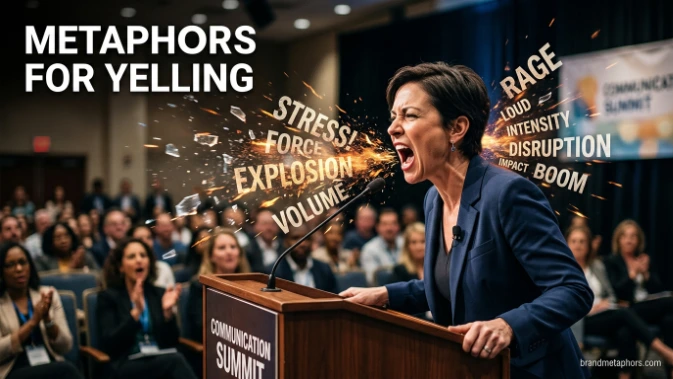
The room felt small, like the walls were inching closer with every raised voice. A cup rattled on the table, not from an earthquake—but from the force of someone yelling, their words crashing into the air like waves against stone.
You’ve heard it before: a voice so loud it feels physical, almost visible. But what if, instead of simply saying “he yelled,” you could paint that moment with words?
That’s where metaphors come in.
Metaphors for yelling transform raw sound into imagery—into storms, explosions, and breaking glass. They help writers, speakers, and even everyday storytellers capture intensity without repeating the same flat descriptions. Whether you’re writing fiction, crafting social media posts, or simply trying to express frustration more creatively, these metaphors add depth, emotion, and memorability.
In this guide, we’ll explore powerful metaphors for yelling, unpack their meanings, and show you how to use them effectively. You’ll also find exercises, storytelling ideas, and creative tips to sharpen your voice—without raising it.
What Are Metaphors for Yelling?
At their core, metaphors for yelling compare loud or intense speech to something more vivid or tangible. Instead of saying “she shouted,” you might say “her voice was thunder cracking across the room.”
These metaphors:
- Add emotional intensity
- Create sensory experiences
- Make writing more engaging and memorable
They’re especially useful in storytelling, poetry, and expressive writing where tone and atmosphere matter.
Why Use Metaphors Instead of “Yelled”?
The word “yelled” is functional—but it’s also limited. It tells us what happened, but not how it felt.
Consider this:
- “He yelled at me.”
- “His voice exploded like a firecracker in my face.”
The second sentence doesn’t just inform—it immerses.
Using metaphors helps you:
- Show emotion instead of telling it
- Create imagery that sticks
- Avoid repetition in writing
- Connect with readers on a deeper level
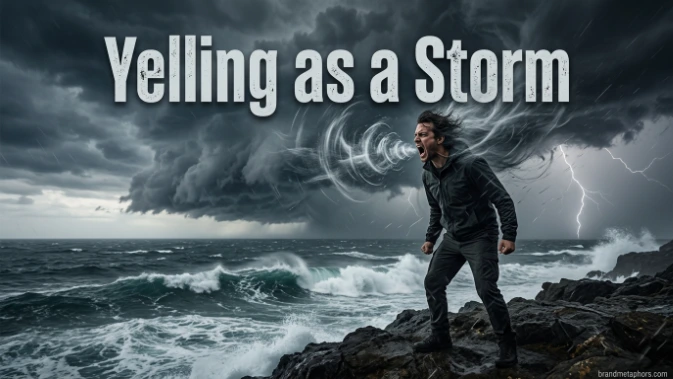
Metaphor 1: Yelling as a Storm
Meaning and Explanation
This metaphor compares yelling to a storm—unpredictable, loud, and overwhelming. It suggests emotional turbulence and a lack of control.
Example Scenario
“Her voice rolled through the house like thunder, shaking every quiet corner.”
Alternative Expressions
- “His words poured down like heavy rain.”
- “She stormed through her sentences.”
- “The argument crackled like lightning.”
Sensory Details
Think of rumbling skies, flashes of light, and the tension before a downpour. This metaphor works especially well in emotional or dramatic scenes.
Mini Story
A father stands in the doorway, frustration building. When he finally speaks, it’s not just sound—it’s thunder. The child doesn’t just hear him; they feel the storm.
Metaphor 2: Yelling as Fire or Explosion
Meaning and Explanation
This metaphor portrays yelling as something sudden, intense, and destructive—like a burst of flame or an explosion.
Example Sentence
“He erupted, his voice blasting through the silence like dynamite.”
Alternative Ways to Express It
- “Her anger flared up in a blaze of shouting.”
- “His words ignited the room.”
- “She snapped, sparks flying from every sentence.”
Emotional Layer
This metaphor conveys anger, urgency, and sometimes danger. It’s ideal for high-conflict scenes.
Cultural Touchpoint
Think of moments in films where a calm character suddenly explodes—those scenes stick because of their intensity. This metaphor captures that same energy in writing.
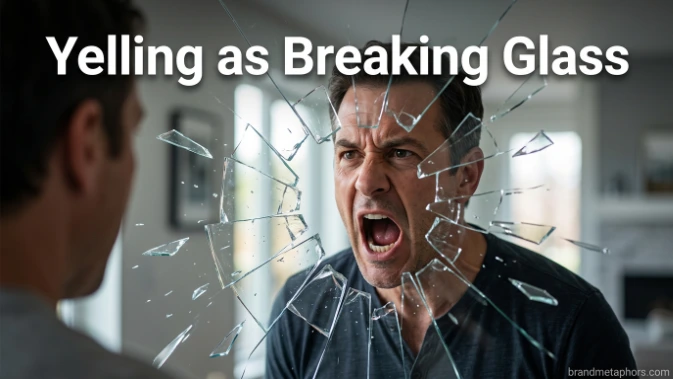
Metaphor 3: Yelling as Breaking Glass
Meaning and Explanation
Here, yelling is compared to something sharp, piercing, and fragile—like glass shattering.
Example Scenario
“Her scream cut through the air like shattered glass, sharp and impossible to ignore.”
Alternative Expressions
- “His voice splintered the silence.”
- “Her words cracked like breaking mirrors.”
- “The shout pierced the room.”
Sensory Details
This metaphor focuses on sound and texture—sharp edges, sudden breaks, and lingering echoes.
Real-Life Feel
Imagine a quiet room suddenly disrupted by a loud shout. The contrast makes the moment feel almost painful—just like glass breaking.
How to Choose the Right Metaphor for Yelling
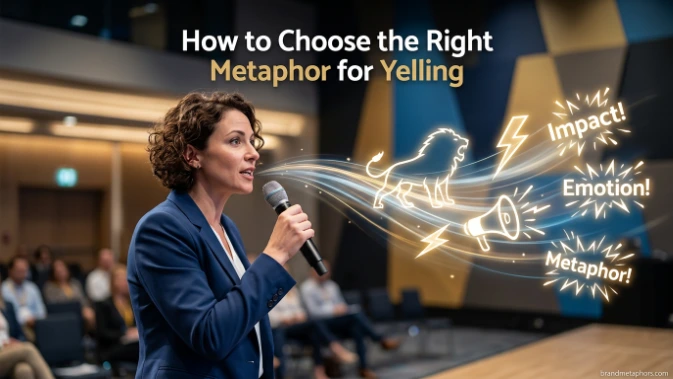
Not all yelling is the same. Some is angry, some is desperate, and some is even joyful. The metaphor you choose should match the emotion.
- Angry yelling → Fire, explosions
- Overwhelming yelling → Storms, waves
- Sharp or sudden yelling → Breaking glass, knives
Ask yourself: What does this yelling feel like? Then match it to an image.
Creative Writing Exercises for Practicing Metaphors
Exercise 1: Rewrite the Scene
Take a simple sentence like: “He yelled at her.”
Rewrite it using three different metaphors:
- Storm
- Fire
- Glass
Exercise 2: Sensory Expansion
Write a short paragraph describing someone yelling. Include:
- A sound comparison
- A visual image
- A physical sensation
Exercise 3: Emotion Matching
List emotions (anger, fear, excitement). Create a yelling metaphor for each.
Using Yelling Metaphors in Storytelling
Metaphors can shape entire scenes. Instead of describing every detail, a single powerful comparison can set the tone.
Example
“The argument rose slowly, like dark clouds gathering. Then, all at once, it broke—his voice thundered, hers cracked like lightning.”
This approach:
- Builds tension
- Creates atmosphere
- Engages the reader’s imagination
SEO Tips: Using “Metaphors for Yelling” in Content
If you’re writing for blogs or social media, incorporating keywords naturally is key.
Tips
- Use the phrase “metaphors for yelling” in headings
- Include related terms like “shouting metaphors” or “expressing anger creatively”
- Keep sentences clear and engaging
Example
“Looking for metaphors for yelling? Try comparing loud voices to storms, explosions, or breaking glass.”
Bonus Tips for Daily Life and Social Media
Metaphors aren’t just for writers—they’re for everyone.
In Conversations
Instead of saying “he was really loud,” try: “His voice was like a siren going off.”
On Social Media
Creative language stands out: “Monday hit me like a storm of shouting deadlines.”
In Journaling
Use metaphors to process emotions: “My frustration felt like a volcano ready to erupt.”
Common Mistakes to Avoid
- Overusing metaphors: Too many can overwhelm the reader
- Mixing metaphors: Stick to one clear image
- Forgetting tone: Match the metaphor to the mood
Bad example: “His voice was a storm exploding like glass.”
Better: “His voice exploded like a sudden blast.”
FAQs About Metaphors for Yelling
1. What is a good metaphor for yelling?
A strong metaphor is “his voice thundered like a storm,” which conveys both volume and intensity.
2. Can metaphors for yelling be positive?
Yes! For example, “her excitement burst like fireworks” can describe joyful shouting.
3. How do I make my metaphors more original?
Focus on sensory details and personal experiences instead of common phrases.
4. Are metaphors better than similes for yelling?
Both work well. Metaphors are more direct, while similes use “like” or “as.”
5. Can I use these metaphors in formal writing?
Yes, but use them sparingly to maintain clarity and professionalism.
Conclusion
Yelling is powerful—but describing it can be even more powerful. With the right metaphors, you can turn simple moments into vivid experiences, transforming noise into imagery and emotion into art.
Whether it’s a storm rolling in, a fire igniting, or glass shattering, each metaphor offers a new way to express intensity. The key is to match the image to the feeling—and to let your words carry the weight.
So next time you write a scene, a post, or even a message, pause before you say “yelled.” Ask yourself: What did it feel like?
Then turn that feeling into something unforgettable.