
The Sound of a Spoon Stirring Nothing
There’s a peculiar kind of silence that comes from effort without outcome. Imagine standing in a quiet kitchen, stirring an empty cup with a teaspoon. The faint clink echoes, but there’s no liquid, no aroma, no purpose—just motion without meaning. It feels almost poetic, yet undeniably hollow.
This is the essence of “uselessness”—not just the absence of value, but the presence of effort that leads nowhere. And while the word useless may sound harsh, even dismissive, it holds surprising power in language. Through metaphors, we can soften it, sharpen it, or transform it into something vivid and expressive.
In this article, we’ll explore creative metaphors for useless, unpack their meanings, and show how to use them effectively in writing, storytelling, and everyday speech. Whether you’re crafting dialogue, writing poetry, or posting on social media, these metaphors can help you communicate inefficiency, futility, or emptiness with style and nuance.
Why Metaphors for “Useless” Matter in Writing
Describing something as “useless” is blunt—but also bland. Metaphors, on the other hand, breathe life into the idea. They allow readers to see, feel, and even hear the lack of usefulness rather than just understand it intellectually.
For example, saying “that plan is useless” lacks impact. But calling it “a map with no destination” creates an image, a sense of frustration, and even a touch of irony.
Using metaphors:
- Adds emotional depth
- Enhances imagery
- Makes writing memorable
- Engages readers’ senses
In short, metaphors turn flat language into layered expression.
Metaphor #1: “Like a Screen Door on a Submarine”
Meaning and Explanation
This classic metaphor highlights something that is not just useless—but absurdly so. A screen door, meant to let air pass through, becomes completely impractical underwater. It emphasizes mismatch between purpose and context.
Example Sentence
“His advice was like a screen door on a submarine—completely pointless in the situation.”
Alternative Ways to Express It
- Like a candle in a hurricane
- Like a pen with no ink
- Like shoes made of paper in the rain
Sensory and Emotional Details
You can almost hear the rush of water flooding in, feel the panic, see the inevitable failure. It evokes chaos and inevitability.
Mini Storytelling
Imagine a character in a novel stubbornly clinging to outdated strategies in a fast-changing world. Their efforts mirror that screen door—designed for one environment, disastrously misplaced in another.
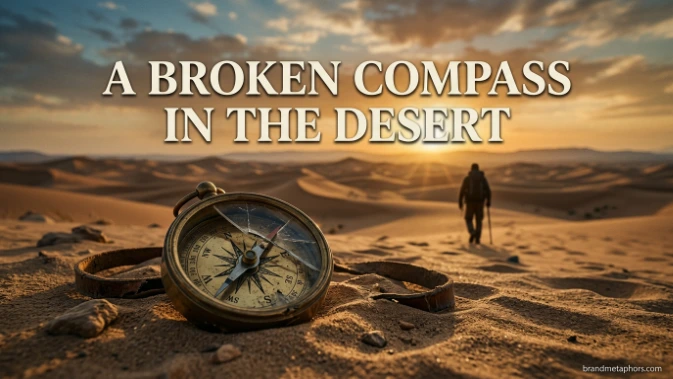
Metaphor #2: “A Broken Compass in the Desert”
Meaning and Explanation
This metaphor conveys helplessness and misdirection. A compass is meant to guide, but when it fails—especially in a vast, unforgiving desert—it becomes worse than useless.
Example Sentence
“Without clear leadership, the team felt like they were following a broken compass in the desert.”
Alternative Ways to Express It
- Like a map with missing pages
- Like a guide who’s lost themselves
- Like chasing shadows at noon
Sensory and Emotional Details
Feel the dry heat, the endless horizon, the growing panic. The metaphor adds emotional weight—confusion, vulnerability, and frustration.
Cultural/Literary Touch
This imagery echoes themes from survival literature, where direction is everything. Without it, even the strongest can falter.
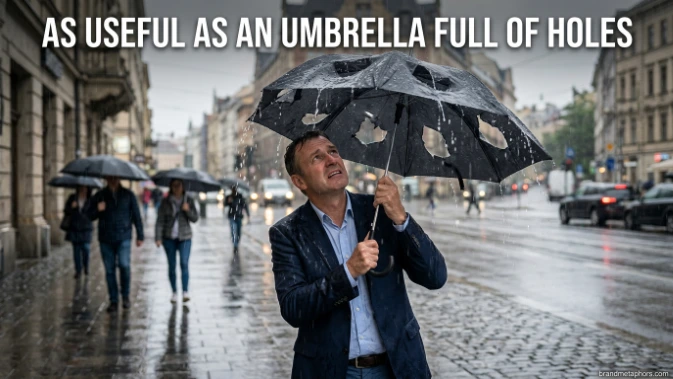
Metaphor #3: “As Useful as an Umbrella Full of Holes”
Meaning and Explanation
This metaphor highlights something that appears functional but fails in execution. It’s not just useless—it’s deceptively so.
Example Sentence
“That software update was as useful as an umbrella full of holes—it didn’t fix anything.”
Alternative Ways to Express It
- Like a lock with no key
- Like a bridge that doesn’t reach the other side
- Like a phone with no signal
Sensory and Emotional Details
You can picture rain pouring through, soaking everything despite your attempt to stay dry. It evokes disappointment and irony.
Real-Life Application
This metaphor works well in reviews—products, services, or even policies that promise much but deliver little.
Creative Ways to Use Metaphors for Useless in Daily Life
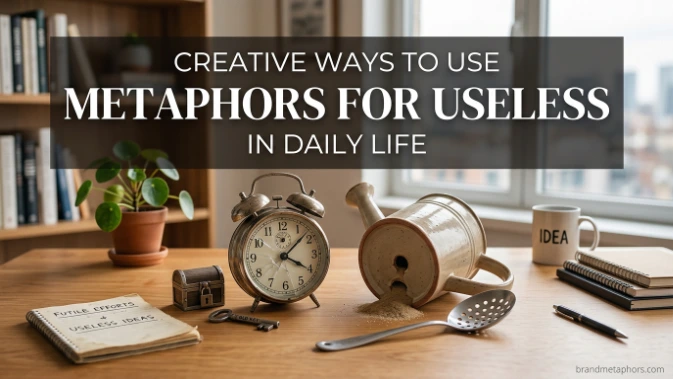
Metaphors aren’t just for writers—they’re powerful tools in everyday communication.
You can use them to:
- Add humor to conversations
- Express frustration more creatively
- Make social media posts more engaging
- Enhance storytelling in casual settings
For example:
- Instead of “This meeting is pointless,” try “This meeting feels like running on a treadmill that’s going nowhere.”
- Instead of “That idea won’t work,” say “That idea is like planting seeds in concrete.”
These small shifts make your language more vivid and memorable.
Interactive Exercise: Create Your Own Metaphor
Let’s practice.
Prompt 1
Think of something frustratingly useless in your life. Now compare it to an object that fails its purpose.
Template: “_____ is like a _____ that _____.”
Prompt 2
Add sensory detail. What does it look like, feel like, sound like?
Prompt 3
Refine it. Can you make it more surprising or poetic?
Example Response: “My procrastination is like a clock with melting hands—time passes, but nothing moves forward.”
Bonus Tips for Writing Strong Metaphors
- Be specific: Avoid generic comparisons
- Engage the senses: Sight, sound, touch, smell
- Match tone: Humorous, serious, poetic
- Avoid clichés (or reinvent them): Add a twist
- Keep it concise: Don’t over-explain
Strong metaphors feel natural, not forced. They should enhance meaning, not distract from it.
Using Metaphors for Useless on Social Media
Short, punchy metaphors thrive online.
Examples:
- “This app update is like a car with square wheels.”
- “My motivation today? A battery stuck at 1%.”
- “That advice was a whisper in a storm.”
Pair them with visuals or emojis for extra impact.
Common Themes in Useless Metaphors
Many metaphors for useless fall into these categories:
- Broken tools: Objects that fail their purpose
- Mismatched environments: Useful things in the wrong place
- False promises: Things that appear helpful but aren’t
- Endless effort: Actions that lead nowhere
Recognizing these patterns can help you invent your own metaphors more easily.
Expanding Your Metaphor Vocabulary
To grow your creative range:
- Read poetry and literary fiction
- Observe everyday objects and their functions
- Practice analogies regularly
- Keep a notebook of interesting comparisons
The more you notice the world around you, the richer your metaphors will become.
Final Thoughts: Finding Meaning in “Useless”
Ironically, describing uselessness can be incredibly useful. It sharpens your language, deepens your expression, and helps you connect with others through shared experiences of frustration, humor, and irony.
A well-crafted metaphor doesn’t just say something is useless—it shows it in a way that lingers.
So next time you encounter something pointless, don’t just dismiss it. Turn it into a metaphor. You might just create something meaningful from the meaningless.
FAQs About Metaphors for Useless
1. What is a metaphor for useless?
A metaphor for useless compares something ineffective to an object or situation that fails its purpose, like “a broken compass in the desert.”
2. Why use metaphors instead of saying “useless”?
Metaphors add imagery, emotion, and creativity, making your writing more engaging and memorable.
3. Can metaphors for useless be humorous?
Yes! Many metaphors use exaggeration or irony to create humor, like “a screen door on a submarine.”
4. How do I create my own metaphor?
Think of the object’s purpose, then imagine it failing or being misplaced. Add sensory detail for depth.
5. Are metaphors useful in everyday conversation?
Absolutely. They make your speech more expressive, relatable, and impactful.
Conclusion
Metaphors for useless are more than clever phrases—they’re tools for expression. They help us articulate frustration, highlight absurdity, and even find humor in inefficiency. By learning to craft and use these metaphors, you elevate your language from simple to striking.
So go ahead—turn that empty cup into a story, that broken tool into a symbol, that useless moment into something unforgettable.