
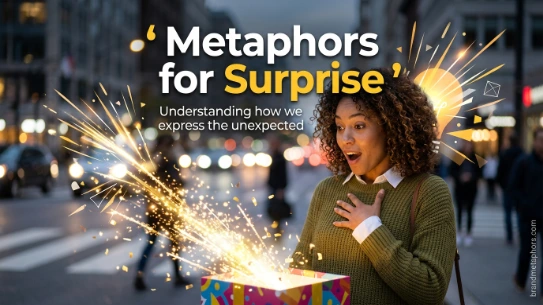
When Life Throws Open a Hidden Door
Imagine walking through an ordinary afternoon. The sky hangs still, the coffee tastes familiar, and your thoughts move in predictable circles. Then suddenly—a phone call changes everything. A friend appears at your doorstep unannounced. A sentence in a book strikes your heart like lightning. Surprise enters quietly, then shakes the room.
Human beings live on expectations. We build routines, assumptions, and mental maps of what comes next. That’s why surprise feels so powerful. It interrupts certainty. It flips the page before we are ready. In language, metaphors help us capture that emotional jolt in vivid and unforgettable ways.
Metaphors for surprise make writing sparkle. They add drama to storytelling, emotion to conversation, and color to everyday speech. Whether you are writing fiction, poetry, social media captions, speeches, or personal essays, the right metaphor can turn a simple reaction into a scene readers can almost feel in their bones.
In this article, you’ll explore creative metaphors for surprise, their meanings, examples, emotional textures, and practical ways to use them. Along the way, you’ll discover storytelling ideas, writing prompts, and bonus tips to help you use surprise more effectively in communication and creative expression.
Why Metaphors for Surprise Matter in Writing
Surprise is one of the strongest emotional tools in language. It grabs attention instantly. A good metaphor transforms a plain statement like “I was shocked” into something memorable and alive.
Compare these:
- “I was surprised.”
- “The news hit me like a firecracker in a silent church.”
The second sentence creates sound, tension, and imagery. Readers feel the moment instead of simply understanding it.
Metaphors for surprise help writers:
- Build emotional intensity
- Create vivid imagery
- Improve storytelling rhythm
- Make dialogue sound natural
- Add personality to writing
- Increase reader engagement
They also work beautifully in speeches, marketing, captions, and daily conversations because surprise is universal. Everyone knows the feeling of having the ground shift unexpectedly beneath them.
Surprise as a Lightning Bolt
One of the most common metaphors for surprise compares it to lightning. Lightning is sudden, bright, powerful, and impossible to ignore.
Meaning and Emotional Effect
This metaphor suggests:
- Instant emotional impact
- Sudden realization
- Physical shock or excitement
- A burst of awareness
It often carries energy and intensity.
Example Sentences
- “Her confession struck him like a bolt of lightning.”
- “The announcement flashed through the room like summer lightning.”
- “The realization cracked across my mind in an instant.”
Alternative Expressions
- A thunderclap from nowhere
- A spark in the darkness
- An electric jolt
- A flash across the sky
Sensory Details
Lightning metaphors create:
- Bright visuals
- Loud emotional energy
- Fast pacing
- A feeling of danger or wonder
Mini Storytelling Example
A student opens an email expecting another rejection. Instead, the words “Congratulations—you’ve been accepted” leap from the screen. Her breath catches. Her chair scrapes backward. The news tears through her thoughts like lightning across a midnight sky.
This metaphor works especially well in emotional fiction and dramatic personal writing.
Surprise as an Earthquake Beneath the Feet
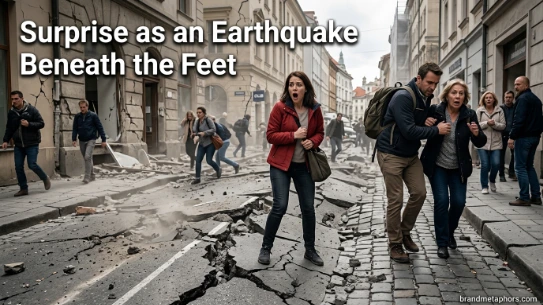
Some surprises are not exciting—they are destabilizing. That’s where earthquake metaphors become powerful.
Meaning and Explanation
An earthquake metaphor suggests:
- Emotional instability
- Shock that changes everything
- Loss of certainty
- Sudden disruption
This metaphor is often used for life-changing news.
Example Sentences
- “The truth shook his world like an earthquake.”
- “Her words cracked the foundation of everything I believed.”
- “The announcement sent tremors through the family.”
Alternative Ways to Express It
- The ground disappeared beneath me
- My world tilted sideways
- The floor cracked open
- My certainty collapsed
Emotional Texture
This metaphor often carries:
- Fear
- Confusion
- Grief
- Awe
- Vulnerability
Cultural and Literary Connection
Many classic novels use storm or earthquake imagery to symbolize emotional upheaval. In dramatic storytelling, physical disasters often mirror inner chaos.
For example, in emotional cinema or literature, shocking revelations are frequently paired with storms, collapsing structures, or trembling landscapes to visually reflect surprise.
Surprise as a Gift Wrapped in Mystery
Not all surprises explode. Some unfold gently, like opening a mysterious present.
Meaning
This metaphor suggests:
- Curiosity
- Anticipation
- Delight
- Emotional warmth
It works wonderfully for positive surprises.
Example Sentences
- “The opportunity arrived like an unexpected gift.”
- “Her smile felt like unwrapping a hidden treasure.”
- “The moment unfolded ribbon by ribbon.”
Alternative Expressions
- A hidden jewel
- A wrapped secret
- A treasure chest opening
- A surprise package from fate
Sensory and Emotional Details
Gift metaphors create:
- Warm imagery
- Soft emotional tones
- Feelings of celebration
- Childlike wonder
Real-Life Example
Think about surprise birthday parties. The joy often comes not only from the event itself but from the suspense before the reveal. That emotional layering makes gift metaphors emotionally rich and relatable.
Surprise as a Sudden Wave
Sometimes surprise arrives emotionally, washing over someone before they can react.
Meaning and Symbolism
Wave metaphors suggest:
- Emotional overwhelm
- Movement
- Loss of control
- Sudden intensity
Example Sentences
- “A wave of shock swept over me.”
- “The realization crashed into him.”
- “Surprise flooded the room.”
Alternative Phrases
- A tide of disbelief
- A crashing emotional wave
- A flood of astonishment
- An ocean of shock
Why It Works
Water imagery feels natural because emotions often move like tides. They rise, crash, retreat, and return.
Writing Tip
Use wave metaphors during emotionally charged scenes:
- reunions
- confessions
- unexpected victories
- shocking discoveries
They help scenes feel fluid and cinematic.
Funny and Playful Metaphors for Surprise
Not every surprise needs dramatic intensity. Humor makes metaphors memorable too.
Creative Funny Metaphors
- “I looked like a cat hearing algebra.”
- “The news hit me harder than stepping on a Lego barefoot.”
- “His expression popped open like a jack-in-the-box.”
- “She froze like a computer buffering during a presentation.”
Why Humor Works
Funny metaphors:
- Make writing relatable
- Create personality
- Reduce emotional heaviness
- Improve social media engagement
Example Scenario
At a family dinner, Grandma suddenly announces she is learning motorcycle racing. Forks pause midair. Silence spreads across the table like spilled milk.
That mixture of humor and surprise makes scenes feel human and entertaining.
Bonus Tip for Social Media
Funny surprise metaphors perform well in:
- memes
- TikTok captions
- reaction posts
- storytelling tweets
- short-form videos
They are quick, visual, and emotionally shareable.
Nature-Inspired Metaphors for Surprise

Nature offers endless inspiration for emotional language.
Examples and Meanings
Surprise as a Volcano
- Explosive emotional reaction
- Sudden release of pressure
Example: “His anger and surprise erupted like a volcano.”
Surprise as a Shooting Star
- Rare and magical
- Brief but unforgettable
Example: “The opportunity appeared like a shooting star.”
Surprise as a Storm Wind
- Sudden disruption
- Chaotic movement
Example: “The rumor swept through town like storm wind.”
Why Nature Metaphors Feel Powerful
Humans naturally connect emotions to weather and landscapes. Nature is unpredictable, just like surprise itself.
Sensory Details
Nature metaphors bring:
- sound
- movement
- temperature
- texture
- visual imagery
This makes writing more immersive.
Metaphors for Positive Surprise
Positive surprise deserves its own category because joy has a different emotional rhythm than shock or fear.
Bright and Hopeful Metaphors
- “The news bloomed like spring after winter.”
- “Her words opened like sunlight through clouds.”
- “The opportunity arrived like rain in a drought.”
- “Joy burst inside him like fireworks.”
Meaning and Emotional Tone
These metaphors suggest:
- renewal
- happiness
- relief
- celebration
- emotional warmth
Example Scene
After years of struggling, a writer receives a message from a publisher. The email glows on the screen like sunrise breaking over a dark ocean.
Alternative Expressions
- A garden blooming overnight
- A golden door opening
- Fireworks in the soul
- A candle suddenly lit
Positive surprise metaphors work beautifully in inspirational writing and emotional storytelling.
Darker Metaphors for Shock and Unexpected Pain
Some surprises wound instead of delighting.
Emotional Meanings
Dark metaphors can suggest:
- betrayal
- fear
- heartbreak
- emotional paralysis
Examples
- “The truth stabbed through him like shattered glass.”
- “Her words landed like cold iron.”
- “The realization spread like poison.”
- “Shock wrapped around me like ice water.”
Alternative Ways to Phrase It
- A knife in the silence
- A frozen heartbeat
- A shadow crossing the sun
- A crack in the mirror
Literary Influence
Writers often use darker surprise metaphors in thrillers, tragedies, and dramatic fiction because they instantly raise emotional stakes.
Emotional Detail
These metaphors create:
- tension
- coldness
- heaviness
- emotional realism
Use them carefully to avoid overwhelming readers.
Interactive Exercise: Create Your Own Metaphors for Surprise
The best way to master metaphor writing is through practice.
Exercise 1: Finish the Sentence
Complete these creatively:
- “The news hit me like…”
- “Her arrival felt like…”
- “The surprise burst open like…”
- “My thoughts scattered like…”
Try to avoid clichés. Think visually and emotionally.
Exercise 2: Use the Five Senses
Describe surprise using:
- sound
- smell
- touch
- taste
- sight
Example: “Surprise tasted like sharp mint and cold rain.”
This technique deepens emotional writing.
Exercise 3: Compare Different Types of Surprise
Write one metaphor each for:
- joyful surprise
- romantic surprise
- frightening surprise
- funny surprise
- life-changing surprise
Notice how tone changes imagery.
How to Use Surprise Metaphors in Daily Life
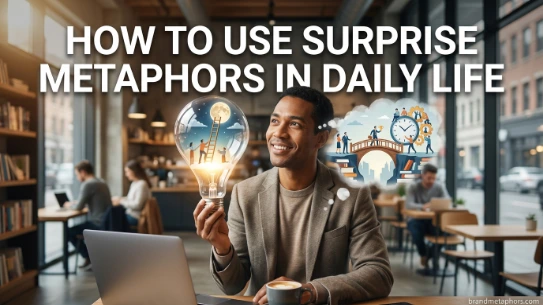
Metaphors are not just for poets and novelists. They improve communication everywhere.
In Conversations
Instead of:
- “That shocked me.”
Try:
- “That came out of nowhere like a fireworks explosion.”
This sounds more vivid and expressive.
In Social Media Captions
Examples:
- “Plot twist hit harder than a thunderstorm.”
- “Today unfolded like a movie scene.”
- “That surprise landed like confetti from the sky.”
In Creative Writing
Use metaphors to:
- deepen emotional scenes
- reveal character personality
- shape tone
- create memorable dialogue
In Public Speaking
Speakers often use surprise metaphors to keep audiences emotionally engaged.
Example: “Change doesn’t knock politely. Sometimes it crashes through the roof like thunder.”
That line sticks in memory because it paints a scene.
Common Mistakes When Using Metaphors for Surprise
Even beautiful metaphors can fail if overused.
Avoid Clichés
Phrases like:
- “shocked to the core”
- “out of the blue”
- “jaw dropped”
can feel predictable unless used creatively.
Don’t Mix Metaphors
Example of confusing imagery: “The surprise hit me like a tidal wave that exploded like fireworks.”
Choose one dominant image.
Match Tone Carefully
Funny metaphors may weaken serious emotional scenes.
Likewise, dark metaphors may feel too heavy for cheerful writing.
Keep Imagery Clear
Good metaphors create immediate understanding. If readers stop to decode the comparison, emotional flow weakens.
Bonus Tips for Writing Better Metaphors
Observe Real Reactions
Watch how people respond to unexpected moments:
- widened eyes
- frozen silence
- nervous laughter
- dropped objects
Real details make metaphors stronger.
Borrow from Everyday Life
The best metaphors often come from ordinary experiences:
- storms
- traffic
- broken glass
- fireworks
- elevators dropping
- coffee spilling
Familiar images create emotional connection.
Read Poetry and Fiction
Poets are masters of metaphor. Reading literary work expands your creative vocabulary naturally.
Keep a Metaphor Notebook
Whenever you hear an interesting comparison, write it down. Over time, you’ll build your own creative library.
FAQs About Metaphors for Surprise
What is a metaphor for surprise?
A metaphor for surprise compares unexpected emotion to another vivid image or experience, such as lightning, storms, earthquakes, or fireworks.
Why are metaphors useful in writing?
Metaphors make writing more emotional, memorable, visual, and engaging. They help readers feel experiences rather than simply understand them.
What are some positive metaphors for surprise?
Positive metaphors include:
- fireworks of joy
- sunlight through clouds
- blooming flowers
- unexpected gifts
- shooting stars
Can surprise metaphors be funny?
Yes. Funny metaphors make writing relatable and entertaining. Examples include comparisons to stepping on Legos or buffering computers.
How can I create original metaphors?
Focus on emotions, senses, and everyday experiences. Ask yourself: “What does this feeling physically resemble?”
That question often sparks creative imagery.
Conclusion
Surprise is one of life’s most electric emotions. It interrupts routine, shifts perspective, and leaves lasting impressions. Metaphors help capture those moments with color, depth, and emotional clarity.
Whether surprise arrives like lightning, crashes like a wave, blooms like spring, or explodes like fireworks, the right metaphor transforms ordinary language into something vivid and unforgettable.
The beauty of metaphor lies in its creativity. There is no single perfect comparison. Every writer sees surprise differently. Some feel it as thunder. Others experience it as falling stars, shattered glass, or hidden treasure.
That freedom is what makes metaphor such a powerful tool.
So the next time life catches you off guard, pause for a moment. Ask yourself what the feeling looks like, sounds like, or tastes like. Somewhere inside that answer is a metaphor waiting to come alive on the page.