
Introduction
Imagine meeting someone for the first time. Within minutes, you begin to form impressions—she feels like sunshine, he seems like a locked door, another reminds you of a quiet river. You don’t list traits or analyze behavior; instead, your mind reaches for images. These images—metaphors—become the language through which we understand personality.
Metaphors for personality are more than poetic decoration. They are tools that translate abstract traits into vivid, relatable experiences.
They help us grasp complexity, express emotions, and make sense of human behavior in ways that plain descriptions often cannot. When someone says, “He’s a storm,” we immediately feel intensity, unpredictability, and power—far more than any checklist of traits could convey.
In everyday life, these metaphors shape how we see ourselves and others. They influence relationships, self-awareness, communication, and even personal growth. This article explores metaphors for personality from multiple angles—what they mean, how they work, and how you can use them to better understand yourself and the people around you.
What Are Metaphors for Personality?
Metaphors for personality are symbolic comparisons that describe a person’s traits, behaviors, or emotional patterns using imagery from the physical world. Instead of saying someone is “kind,” we might say they are “a warm fireplace.” Instead of “unpredictable,” we might say “a sudden storm.”
These metaphors work because they tap into shared experiences. Almost everyone knows what warmth feels like or how a storm behaves. By connecting personality to these familiar ideas, metaphors create instant understanding.
More importantly, metaphors capture complexity. A person isn’t just “happy” or “serious”—they might be “sunlight breaking through clouds,” suggesting both joy and depth. This layered meaning makes metaphors especially powerful.
In conversation, metaphors often arise naturally. We use them without realizing it because they feel intuitive. They bridge the gap between emotion and language, helping us articulate what might otherwise be difficult to explain.
At their core, metaphors for personality are not about accuracy in a scientific sense—they’re about resonance. They aim to feel true, not just be precise. And in that feeling, they often reveal deeper truths about human nature.
Why We Naturally Use Metaphors to Describe People

Human thinking is deeply visual and experiential. When we try to understand something abstract—like personality—we instinctively connect it to something concrete. That’s why metaphors feel so natural.
Imagine trying to describe a friend who is emotionally distant. You could say, “They don’t open up much.” Or you could say, “They’re like a closed book.” The second instantly paints a clearer picture.
Metaphors simplify complexity without stripping away meaning. They allow us to communicate quickly while still conveying depth. In social interactions, this is incredibly useful.
There’s also an emotional component. Metaphors don’t just inform—they evoke. Calling someone “a lighthouse” doesn’t just describe them; it makes us feel their reliability and guidance.
Everyday Examples
- “She’s a rock” – dependable and strong
- “He’s a firecracker” – energetic and unpredictable
- “They’re a sponge” – absorbent and receptive
These expressions arise because metaphors align with how we experience the world—through senses, emotions, and stories.
Ultimately, metaphors are not just linguistic tools; they are cognitive shortcuts that help us understand people quickly and meaningfully.
The Power of Visualizing Personality
When we visualize personality through metaphor, we create mental images that stick. These images often influence how we remember and relate to people.
Think about someone you consider “a mountain.” You likely picture stability, strength, and endurance. That image shapes your expectations and interactions with them.
Visualization also enhances empathy. If someone is described as “a fragile glass sculpture,” we become more aware of their sensitivity. We handle them with care, not because we were told to, but because we feel it.
Mini Story
A teacher once described two students differently: one was “a spark waiting to ignite,” the other “a steady flame.” The first student was seen as potential and energy; the second as consistency and calm. Both were valued—but in different ways.
This shows how metaphors don’t just describe personality—they influence perception.
By turning traits into images, metaphors make personality more tangible. They help us see what might otherwise remain abstract.
Personality as Nature: Trees, Rivers, and Storms
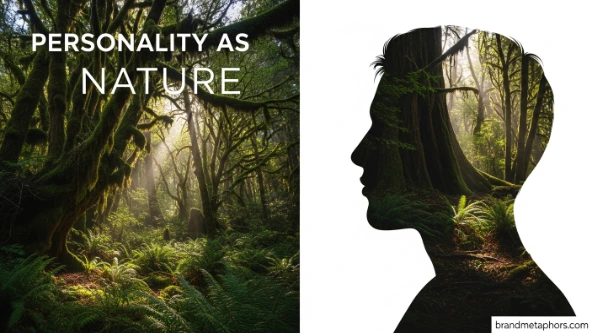
Nature provides some of the richest metaphors for personality because it mirrors human complexity.
The Tree
A person described as a tree is often grounded, patient, and resilient. They grow slowly but steadily, offering shade and support to others.
The River
A river-like personality suggests adaptability. Such individuals flow around obstacles, change direction when needed, and continue moving forward.
The Storm
Storms represent intensity. These personalities can be passionate, emotional, and sometimes overwhelming—but also powerful and transformative.
Nature metaphors highlight how personality is not static. Just as weather changes, people evolve. A calm lake can become turbulent; a storm can pass.
These comparisons remind us that personality is dynamic, influenced by environment and experience. They encourage us to see people not as fixed labels, but as living systems.
Light and Darkness: Emotional Metaphors
Light and darkness are common metaphors for emotional aspects of personality.
A “bright” person might be optimistic, uplifting, and full of energy. They bring clarity and warmth into situations.
In contrast, someone described as “shadowy” or “dark” might be introspective, mysterious, or emotionally complex. This doesn’t necessarily mean negative—it often suggests depth.
Layers of Meaning
- “Sunshine” – joyful, comforting presence
- “Moonlight” – calm, reflective, subtle
- “Shadow” – hidden emotions or complexity
These metaphors help us understand emotional tone rather than specific actions.
They also show that light and darkness coexist. A person can be both radiant and shadowed—happy in some moments, introspective in others.
Using these metaphors encourages a more nuanced view of personality, one that embraces both brightness and depth.
Animal Metaphors: Instinct and Behavior
Animal metaphors are powerful because they tap into instinctive associations.
Calling someone “a lion” suggests courage and leadership. “A fox” implies cleverness. “A dove” conveys peace and gentleness.
Common Animal Metaphors
- Lion – bold and commanding
- Owl – wise and observant
- Cat – independent and curious
- Dog – loyal and friendly
These metaphors often simplify personality into recognizable patterns. While they can be insightful, they can also oversimplify if taken too literally.
Mini Scenario
A manager described one employee as “a wolf”—independent and strategic. This helped the team understand their working style, but it also risked making the person seem unapproachable.
Animal metaphors are useful, but they should be used thoughtfully. People are more complex than any single creature.
Objects as Personality: Tools, Doors, and Mirrors
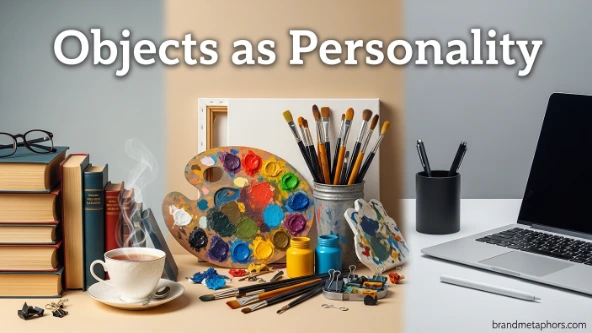
Objects offer another way to describe personality through function and symbolism.
A “mirror” personality reflects others’ emotions, showing empathy. A “door” might represent openness—or, if closed, guardedness.
Examples
- “An open book” – transparent and honest
- “A locked chest” – secretive or reserved
- “A compass” – guiding and principled
Objects often emphasize how a person interacts with the world rather than who they are internally.
These metaphors are especially useful in relationships. They help explain behaviors in practical terms—how someone communicates, responds, or connects.
They remind us that personality is not just internal—it’s expressed through actions and interactions.
Metaphors for Introverts and Extroverts
Metaphors can beautifully capture the differences between introverted and extroverted personalities.
An introvert might be described as “a quiet library”—rich with knowledge but requiring silence to explore. An extrovert might be “a lively marketplace”—full of energy and interaction.
Introvert Metaphors
- A deep ocean – calm on the surface, complex underneath
- A candle – steady, gentle light
Extrovert Metaphors
- Fireworks – vibrant and attention-grabbing
- A festival – social and energetic
These metaphors help shift the narrative from judgment to understanding. Instead of labeling one as “better,” they highlight different strengths.
They also encourage balance. A world needs both libraries and marketplaces, candles and fireworks.
Personality as Weather: Changing Moods and Traits
Weather metaphors capture the changing nature of personality and mood.
Someone might be “sunny” one day and “cloudy” the next. This reflects emotional fluctuation rather than inconsistency.
Examples
- “A breeze” – calm and easygoing
- “Thunderstorm” – intense and emotional
- “Fog” – unclear or distant
Weather metaphors remind us that moods are temporary. A storm doesn’t last forever, and neither does sadness or anger.
Mini Story
A friend once said, “I’m just having a cloudy day.” That simple metaphor made their feelings easier to understand—and easier to accept.
These metaphors encourage compassion, both for ourselves and others. They normalize emotional change as a natural part of being human.
How Metaphors Shape Self-Identity
The metaphors we use for ourselves influence how we see and behave.
If you think of yourself as “a warrior,” you may approach challenges with determination. If you see yourself as “a fragile glass,” you may avoid risk.
These self-metaphors can be empowering—or limiting.
Reflective Insight
Ask yourself: What metaphor describes you? Is it helping you grow, or holding you back?
Changing your metaphor can shift your mindset. Seeing yourself as “a seed” instead of “stuck” introduces the idea of growth and potential.
Self-metaphors act like internal narratives. They guide decisions, shape confidence, and influence how we respond to life.
Being mindful of them allows you to rewrite your story in a more empowering way.
Using Metaphors to Understand Others
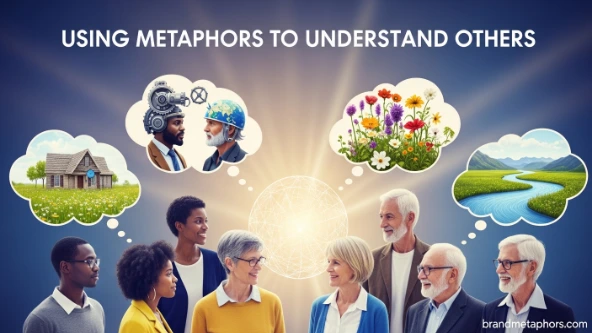
Metaphors can improve empathy by helping us interpret behavior more compassionately.
If someone is “a cactus,” they may seem prickly—but they also survive in harsh conditions. This perspective encourages understanding rather than judgment.
Practical Application
- Instead of “difficult,” think “guarded”
- Instead of “cold,” think “protective”
These shifts change how we respond. We become more patient and less reactive.
Scenario
A colleague who seemed distant was later described as “a turtle”—slow to trust but deeply loyal. This changed how others approached them, leading to better relationships.
Metaphors act as bridges between perception and understanding. They help us see beyond behavior to the underlying experience.
Common Misunderstandings About Personality Metaphors
While metaphors are powerful, they can also mislead if used carelessly.
One common mistake is taking them too literally. Calling someone “a storm” doesn’t mean they are always chaotic—it may only describe certain moments.
Another issue is oversimplification. People are multi-dimensional, and a single metaphor cannot capture everything.
Key Misconceptions
- Metaphors define a person completely
- One metaphor fits all situations
- Negative metaphors are always harmful
In reality, metaphors are flexible and context-dependent. A “storm” can be destructive—but also cleansing and necessary.
Understanding these limitations helps us use metaphors more responsibly and effectively.
Practical Ways to Use Metaphors in Daily Life
Metaphors can be applied in simple, meaningful ways.
In Communication
Use metaphors to express feelings clearly. Saying “I feel like I’m carrying a heavy backpack” can communicate stress more vividly than listing problems.
In Self-Reflection
Journal using metaphors. Describe your current state—are you a calm lake or a restless sea?
In Relationships
Use metaphors to understand others. Ask, “What might this person be like if they were a place or object?”
These practices deepen awareness and improve communication.
Metaphors are not just literary tools—they are practical guides for navigating human experience.
Conclusion
Metaphors for personality offer a unique lens through which we can understand ourselves and others. They transform abstract traits into vivid, relatable images, making human behavior easier to grasp and more meaningful to explore. From nature and animals to objects and weather, each metaphor reveals a different layer of personality—its strengths, complexities, and emotional depth.
More importantly, metaphors shape how we think, feel, and interact. They influence self-identity, guide relationships, and foster empathy. When used thoughtfully, they help us move beyond judgment toward understanding, beyond labels toward nuance.
In the end, personality is too rich to be captured by simple definitions. But through metaphors, we come closer to expressing its beauty and complexity. Perhaps the most valuable takeaway is this: the way you describe yourself—and others—matters. Choose metaphors that open possibilities, invite growth, and reflect the depth of what it means to be human.